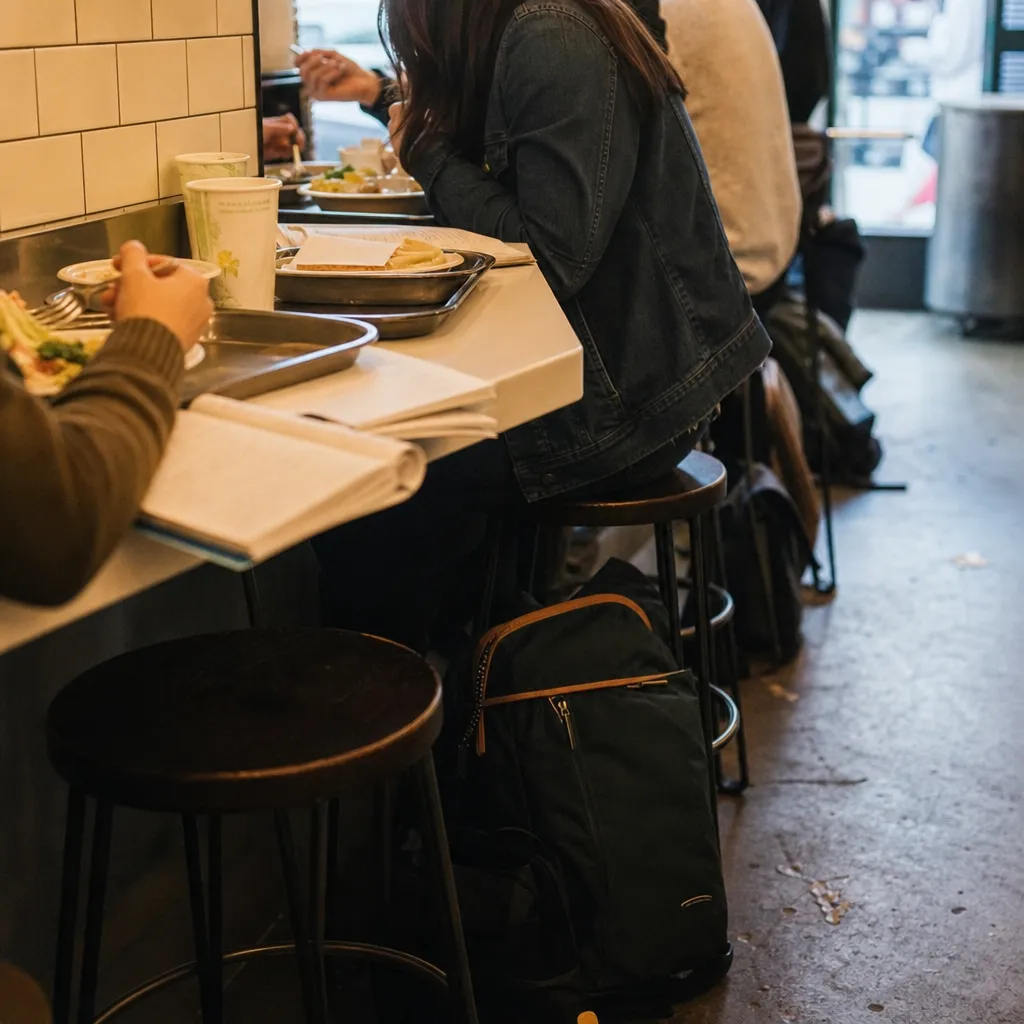
Food access is really a time question
Every New York student eventually learns that lunch is not about taste alone. It is about whether you can get fed, answer a group chat, walk back to class, and still look like you knew what you were doing. That is why the NYU versus CUNY food comparison is less about one legendary meal and more about the shape of the day.
NYU has a powerful advantage in density. Its Washington Square footprint sits inside a neighborhood where cafes, delis, bakeries, pizza counters, and quick-service spots stack block by block. CUNY has a different advantage: scale. The City University of New York is a public university system with colleges across all five boroughs, so its food life changes dramatically depending on whether you mean Baruch, Hunter, City College, Queens College, Brooklyn College, or another campus.
NYU wins the thirty-minute lunch
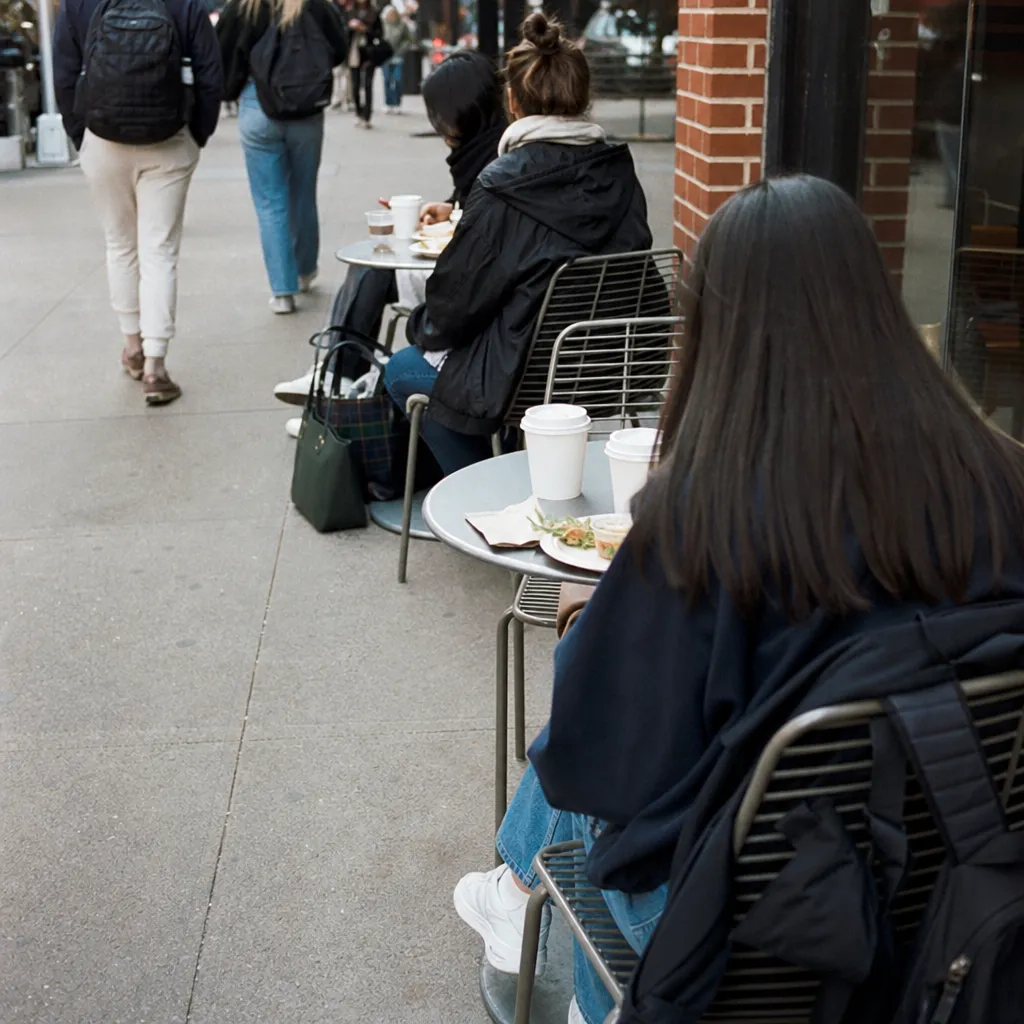
For a student near Washington Square, the food map is brutally efficient. You can leave class, cross a few blocks, and find something fast without turning lunch into a logistics project. The official NYU campus map shows why: many academic buildings cluster tightly around the park and surrounding Village streets. That tightness rewards short breaks.
The downside is cost pressure. A dense commercial neighborhood gives you choices, but not always gentle ones. NYU students need a rotation, not a fantasy list: one cheap slice, one reliable grocery stop, one dining hall fallback, one place where you can sit without being rushed. The best food campus is not the one with the most Instagram posts. It is the one where you do not make a bad decision because you were hungry and late.
CUNY wins the citywide appetite
CUNY is harder to summarize because it is not one campus. The official CUNY colleges page spans community colleges, senior colleges, graduate schools, and professional schools across New York City. That means the student food experience can be Flatiron at Baruch, the Upper East Side at Hunter, Harlem near City College, Flushing near Queens College, or Downtown Brooklyn near City Tech.
That range is the real CUNY advantage. A CUNY student can build a food life around a borough rather than a quad. The practical version looks like this: know the cheapest filling meal near your main campus, the fastest coffee near your subway transfer, and the one place you can bring a friend from another school. If NYU is a dense snack radius, CUNY is a citywide set of lunch ecosystems.
The comparison gets unfair unless you name the CUNY
Against Baruch, NYU's food advantage narrows. Baruch sits around Lexington Avenue and 24th Street, close to Flatiron, Gramercy, and a deep office-worker lunch market. Against Hunter, the comparison changes again because the campus is near 68th Street and Lexington Avenue, with a different pattern of delis, cafes, and subway timing.
Against the whole CUNY system, NYU cannot win on variety. It can only win on convenience. That is still meaningful. New students do not always need the best meal in New York; they need a meal they can repeat when orientation runs long and their next class is twenty minutes away.
Karpo's verdict: density versus range
Choose NYU if your Back to School food strategy is speed, walking radius, and social overlap. The odds are good that someone you know will be standing in the same line because the campus pulls everyone into the same small geography.
Choose CUNY if your food life is tied to commute, neighborhood identity, and budget discipline. The system rewards students who treat the city as infrastructure. The best CUNY lunch is rarely universal; it is the place that makes sense for your actual train, campus, and class gap.
Build a food map before you build a favorites list
The smartest food move for a new student is not saving twenty viral places. It is building a three-tier map. Tier one is the five-minute emergency meal: something close, filling, and not embarrassing to eat fast. Tier two is the thirty-minute reset: a place where you can sit, hear yourself think, and return to class without checking the clock every two minutes. Tier three is the social meal: where you take a new friend when you want the conversation to keep going.
NYU makes that three-tier map compact. Most of the work happens within a short walk of Washington Square, so the same neighborhood can hold emergency food, casual coffee, and an after-class plan. CUNY makes the map more personal. A Baruch student's list will not look like a Hunter student's list, and neither will look like a City College student's list. That is not a weakness; it is the system's citywide reality.
For Back to School, the winner is not the campus with the most famous food nearby. It is the campus that lets you avoid the worst student meal: overpriced, rushed, and eaten while walking because you did not know where to sit. NYU wins if your day is compact. CUNY wins if your food map is honest about your commute, budget, and borough.
Practical notes
For NYU, build a first-week food map within a ten-minute walk of Washington Square: one dining option, one grocery option, one coffee option, and one outdoor place to sit. For CUNY, build the map by campus, not by system. Baruch, Hunter, City College, Queens College, and Brooklyn College all sit in different food neighborhoods, so a useful list needs the exact campus name. Confirm current dining access and meal-plan rules on the official school site before relying on any campus facility.
Tags: #PullUpAChair #BackToSchool #NYU #CUNY #NYCCollegeFood #StudentLunch #WashingtonSquare #BaruchCollege #HunterCollege #CityCollegeNY #CampusFood #CollegeLife #NYCEats #KarpoFinds
Sources consulted: NYU Campus Map · NYU Dining · CUNY Colleges and Schools · Baruch College · Hunter College
All trademarks are the property of their respective owners.


