 Tribeca Bowling Group Night Planner for Wedding Guests
Sports Social
Baby Cobra Yoga: East Village Sunday Yin and Nidra Class
Baby Cobra Yoga runs a Sunday Yin plus Nidra class in an East Village studio with no reservations required. Learn how donations and unlimited passes work.
Baby Cobra Yoga does not take reservations. Its East Village room, on the fourth floor at 237 1st Ave, runs Yin Yoga + Nidra on Sunday at 7 pm, a 60-minute class taught by Jennifer Kuriakose, and you pay what you can on a donation basis. The studio says a $10 average drop-in is what keeps the doors open. For anyone looking for a yin yoga studio in lower Manhattan that will not cost $35 a class, this is the low-key Sunday option, as long as you arrive early enough to get a mat.
From a Bushwick Pandemic Project to First Avenue
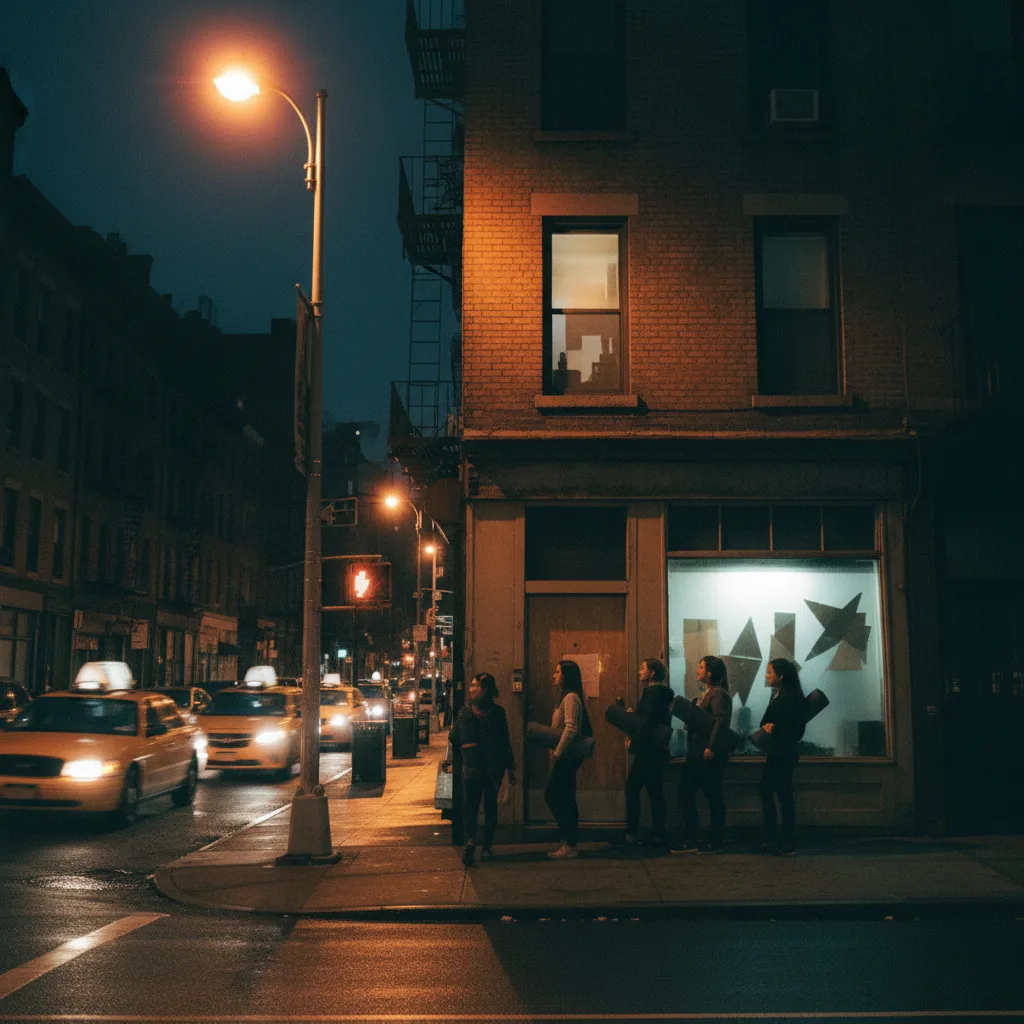
Baby Cobra was founded in Bushwick in 2021, in response to seeing favorite yoga studios close during the pandemic. The FAQ names the founders, with a straight face, as a small dog named Teemo and his pet human Spencer. The idea was walk-in, donation-based classes that anyone could afford, and it has since grown to more than one location, with the East Village studio on First Avenue as its Manhattan outpost.
The house style follows from that origin. The about page sets the tone in a few lines: everyone is welcome as long as their shoes are off, and you are expected to clean your own mat. It feels closer to a neighborhood practice space than to a boutique fitness brand, and Sunday night yin fits that mood well.
What Sunday Yin Yoga + Nidra Involves
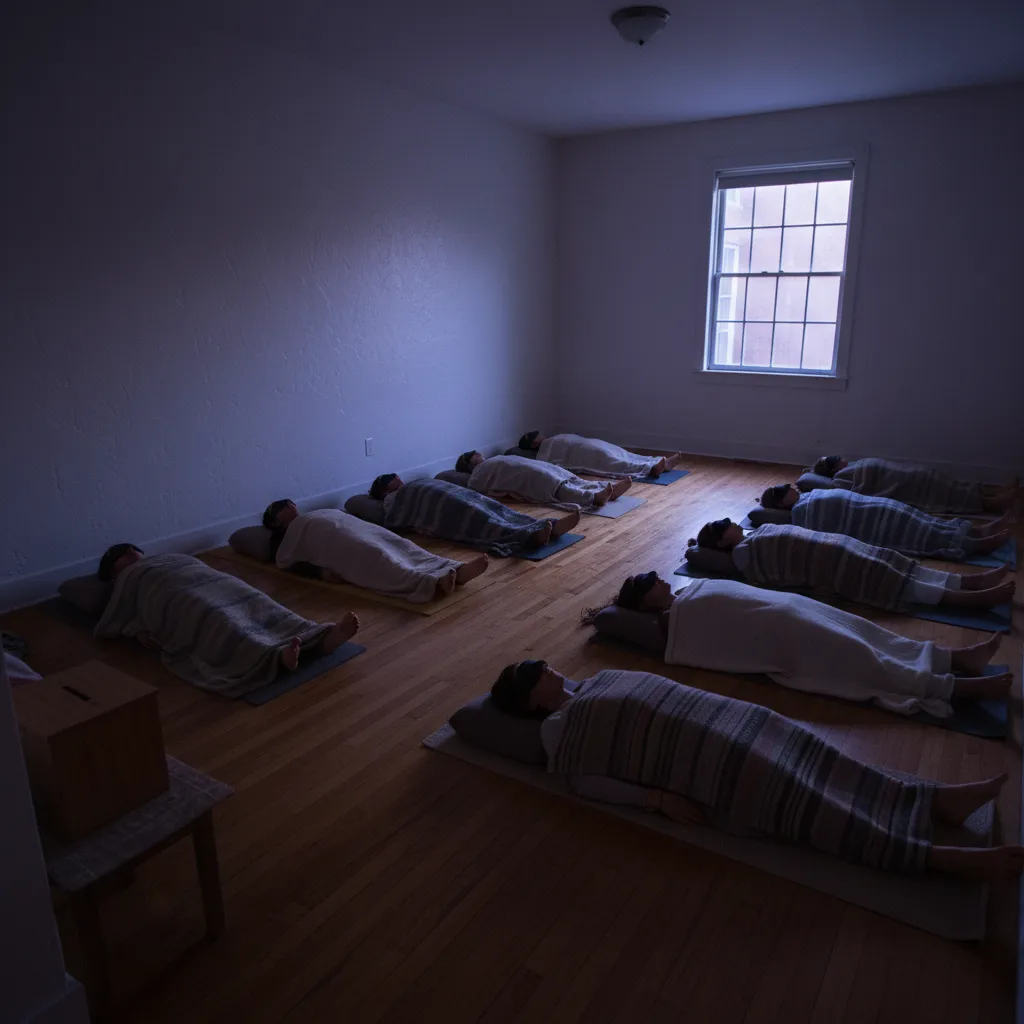
The class combines two slow practices. The first part is yin: long holds on the floor, three to five minutes each, in shapes such as a half saddle, a supported fish over a block and a seated straddle fold, letting gravity do the work instead of muscle. The second part is yoga nidra, a guided rest practice done lying down, in which the teacher talks the class through a body scan while everyone stays completely still.
Nidra is the reason to pick this class over a plain yin hour. Many people find the last fifteen minutes the deepest rest of their week, and some fall asleep, which teachers of the practice generally treat as fine. Bring a sweater or a light layer, because lying still for a guided rest after long holds cools the body quickly, and socks make the final stretch on the floor much more comfortable.
The Sunday 7 pm slot is deliberate. It lands at the end of the weekend, when a long rest on the floor is the most useful thing you can do before Monday. The schedule currently lists it every Sunday through the end of November, which makes it easy to turn into a habit rather than a one-off.
Who it suits: students on a budget, since the amount you give is up to you; office workers who carry their week in their neck and hips; and people who have tried meditation apps and given up, because nidra asks for nothing except lying still and listening. It is less suited to anyone who wants a workout, a heated room or a strict alignment class. A beginner with no yoga background can follow every part of it.
Donations, Unlimited Passes and What to Pay
Baby Cobra is donation-based, but it gives guidance. The FAQ suggests amounts by yearly income: $10-15 for people earning $30k to $59k, for example, and $25 or more for anyone earning $100k and up. The studio says it thinks a $10 average drop-in can keep it running, so paying more if you can helps keep the class available to people who cannot.
For regulars, unlimited classes cost $120 as a monthly subscription or $130 as a one-time purchase. An honest call: if Sunday yin is your only class, skip the unlimited pass and donate each week, since four Sundays at the suggested rates cost far less than $120. The pass makes sense once you add two or three of the studio's other drop-in classes during the week.
Walk-In Rules on the Fourth Floor
Because there are no reservations, getting in is first come, first served. The FAQ is direct: if you arrive 15 to 20 minutes early you will definitely make it. Arriving a few minutes late and finding the door locked is possible; the studio's advice is to try waiting five to ten minutes in case the door is opened again.
Everything you need is provided free: mats, straps, blocks and mat spray. Take your shoes off at the entrance, set up quietly, and at the end of class wipe down your own mat before you roll it back. Travel light, and keep your phone switched off, since a buzzing screen during nidra is distracting for everyone around you.
A first visit, step by step: walk up to the fourth floor around 6:40 pm, take off your shoes, pick up a mat, two blocks and a strap from the studio's supply, and choose a spot where you will be comfortable lying flat for a long time. Settle in early rather than at the last minute, because the first hold starts promptly and the room goes quiet fast. When nidra ends, sit up slowly, spray and wipe the mat, and put the props back where you found them.
Getting There and a Sunday Walk Afterward
The closest subway is the L at First Avenue on 14th Street, a short walk from the studio, and the M15 bus runs up and down First Avenue. Plan B if the room is already full when you arrive: come back for another of the studio's drop-in classes later in the week, or try the Bushwick studio, which runs on the same walk-in, donation model. Next Sunday, aim for 6:40 pm and bring a book for the wait on the stairs; that is the reliable fix.
Afterward, walk a few blocks north to Stuyvesant Square, the fenced park split by Second Avenue between 15th and 17th streets, which is quiet on a Sunday night. Or go south along First Avenue into the heart of the East Village, where St. Marks Place and the blocks around Tompkins Square Park are full of small restaurants and late-night noodle and dumpling counters for a calm, warm dinner after class.
Ask Karpo for more information.
Keep reading
- Tribeca Bowling Group Night Planner for Wedding Guests
 Flushing Bowling Group Night Planner for Thanksgiving Break
 Bushwick Bowling Group Night Planner After Band Practice