 Chelsea Consignment Shop Crawl Planner for Your First Studio
Hidden Gems & Odd Finds
Woodworking Tool Shop in Gowanus: Makeville Studio Classes
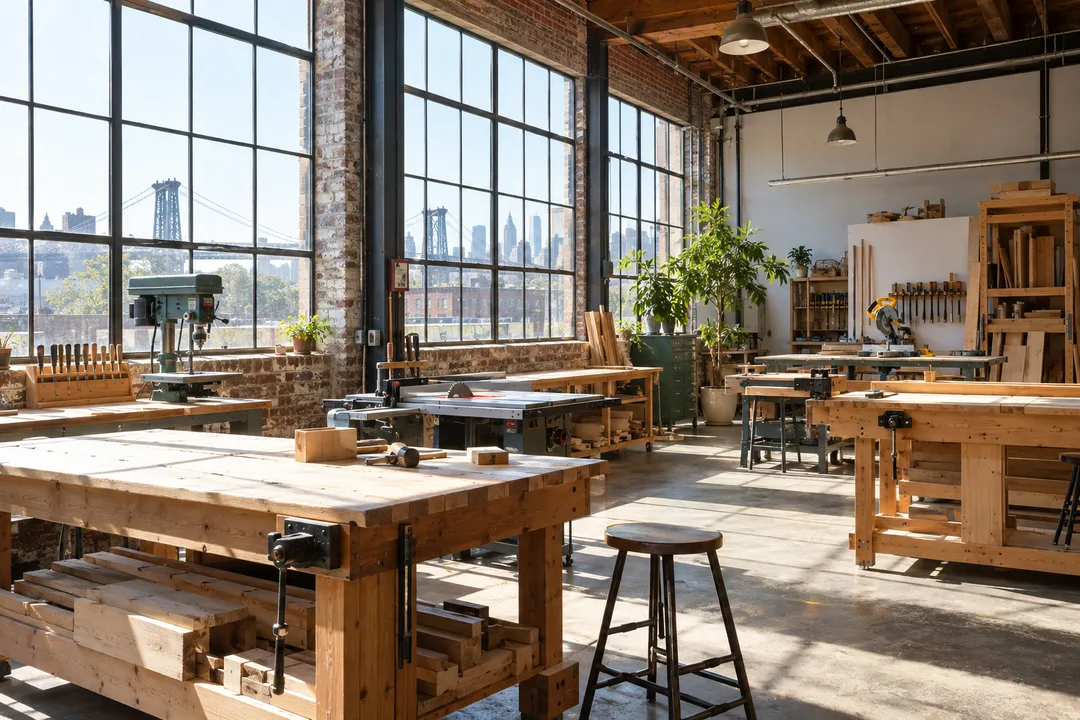
Makeville Studio at 119 8th Street is a Gowanus woodworking tool shop and public woodshop with classes, certification, lumber, and serious machines.
Makeville Studio is a different kind of woodworking tool shop. At 119 8th Street, Brooklyn, NY 11215, it combines a public community woodshop with classes, private lessons, certification, shop access, and lumber for sale. That makes it a strong choice for a person who wants to use a serious machine, learn a process, or build confidence before buying a full home setup. You are shopping for access and knowledge as much as for a physical tool.
Why Makeville belongs on a tool-shop list
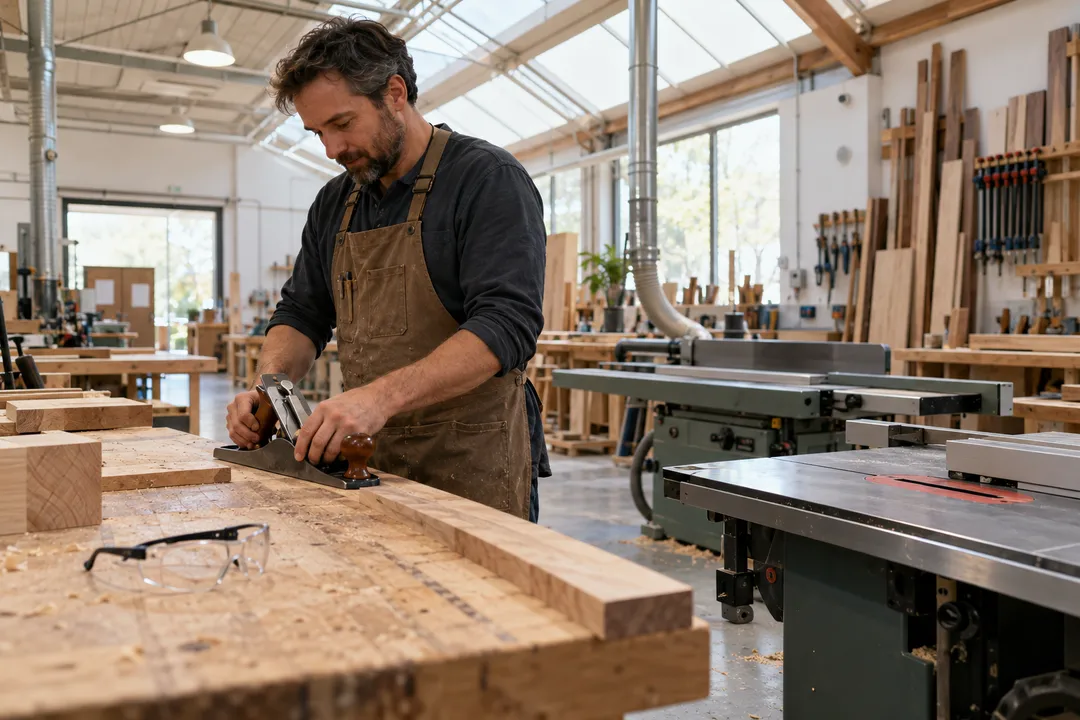
The Gowanus location is practical for project work because the shop’s machines and teaching structure are part of the same visit. Makeville lists a table saw, band saw, miter saw, and jointer among its equipment. A beginner can see how those machines fit together in a workflow; an experienced woodworker can plan a cut list around the tools available rather than guessing from a product photo online.
Getting to 119 8th Street
Use 119 8th Street as the current address. The site footer has also shown a conflicting 125 8th Street reference, so the 119 address is the one to use for directions and a first appointment. Gowanus is a neighborhood where old industrial buildings, new studios, and active construction share the same blocks, so allow a few minutes to identify the entrance and settle in before a class or shop session.
Makeville publishes hours of Tuesday 10:00 AM–6:30 PM, Wednesday 10:00 AM–6:30 PM, Thursday 10:00 AM–10:00 PM, and Saturday–Sunday 10:00 AM–6:30 PM. Thursday’s late closing is useful if you work during the day, while weekend hours make a first class or supervised shop visit easier to schedule without forcing a rushed evening commute.
What the machine list means for a project
A table saw is the anchor for accurate sheet and stock cuts, a band saw handles curves and resawing, a miter saw supports repeatable crosscuts, and a jointer prepares a true edge. Those tools do different jobs, and Makeville’s value is seeing them in a sequence rather than as isolated machines. Bring a sketch with dimensions, the rough stock you expect to use, and the joints you want to make; an instructor can help turn that sketch into a realistic shop plan.
The shop also sells lumber, which changes the logistics of a project. Instead of buying a board elsewhere and improvising around its condition, you can connect material selection to the machines and classes in the same place. That is especially useful for a first cabinet, table, or box. The key rule is to respect certification and shop-access requirements: Makeville is a working community shop, not an unsupervised public showroom where anyone can switch on a saw.
Classes, certification, and shop etiquette
The best way to avoid a long wait is to book the class, private lesson, or shop access you need before arriving. Makeville’s public model means other members may be working on their own projects, and a machine becomes available according to the schedule rather than a casual first-come promise. Arrive with your design simplified, wear appropriate clothing, and keep your materials organized so your booked time is spent making rather than searching.
Certification is part of the culture. Learn the machine’s guard, fence, dust collection, and emergency stop before making a cut, and ask questions when the setup is unfamiliar. Keep offcuts sorted, leave benches clean, and return shared tools to their place. Those habits are not formalities; they protect the next member’s booked session and make the shop usable for people at very different skill levels.
The Gowanus walk around the studio
Gowanus makes a natural materials walk because the neighborhood’s industrial history is visible in its bridges, warehouses, and canal edges. Before or after a session, take a short route along the canal and the converted industrial blocks around 8th Street. The changing streetscape helps explain why a community woodshop fits here: fabrication, construction, design, and small-scale production are all part of the local texture.
Keep the walk short when you are carrying lumber or a project. A coffee stop or a meal along the nearby commercial streets works better than a long museum itinerary, and you can return to the studio for a second session on another day. The point is to leave with a clearer next step—one cut list, one class, or one machine certification—rather than trying to complete an entire build in a single visit.
Practical notes for a first Makeville visit
Makeville Studio is at 119 8th Street, Brooklyn, NY 11215. Hours are Tue 10:00 AM–6:30 PM, Wed 10:00 AM–6:30 PM, Thu 10:00 AM–10:00 PM, and Sat–Sun 10:00 AM–6:30 PM. The studio describes itself as a public community woodshop with classes, private lessons, certification, shop access, and lumber for sale.
Bring a project sketch, a short cut list, and clothing suitable for a working shop. If you are new to woodworking, start with a class or private lesson before planning independent machine time. If you already own tools, compare your home setup with Makeville’s table saw, band saw, miter saw, and jointer workflow, then leave with one clearly defined next build. Reserve enough time for orientation before starting any machine. A first visit is more productive when you understand where lumber is staged, how dust collection is managed, and which tools require certification. Keep a small notebook for settings and lessons learned; the notes become useful when you return for a second project or decide which machine belongs in your own shop.
A first session also benefits from a realistic stopping point. Choose one joint, one panel, or one small object that can be completed safely in the time you booked. Finishing a compact exercise teaches more than rushing through a large table, and it leaves you with a repeatable process for the next reservation. Makeville’s community model rewards that measured pace.
If you are comparing a home shop with shared access, note which steps you actually need to own. A jointer may be essential for one build and unnecessary for the next; a reliable measuring setup and a few good clamps may matter every day. Use the studio visit to learn where your money and floor space will have the greatest effect.
Ask Karpo for more information.
Keep reading
- Chelsea Consignment Shop Crawl Planner for Your First Studio
 East Village Consignment Shop Crawl Planner: Leather Jackets
 Harlem Consignment Shop Crawl Planner for a Jazz Night Look