 Fort Greene Holiday Market Browsing Guide for Young Shoppers
Weekend Plans
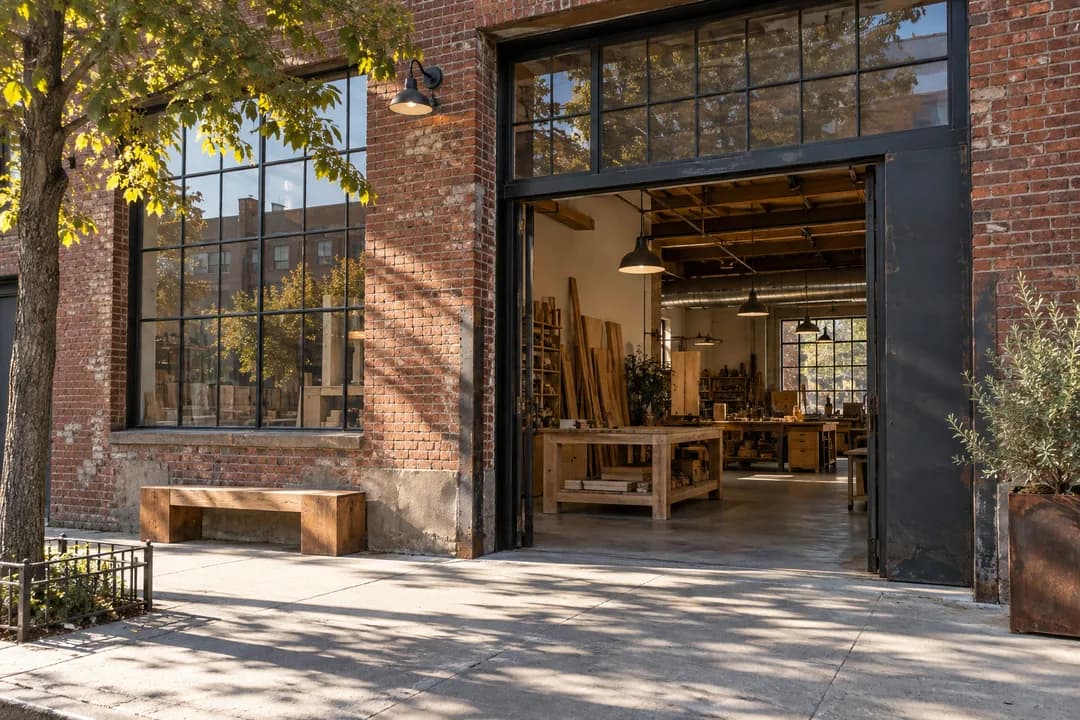
Woodworking Studio Near Me: Makeville Studio Craft and Furniture in Gowanus
Makeville Studio provides premier community woodworking at 119 8th St in Gowanus. Explore SawStop machinery, $175 Make+Take workshops, and $15 hourly bench access.
Makeville Studio operates an active community woodshop inside a classic brick industrial garage at 119 8th St, Brooklyn, NY 11215, situated between Second and Third Avenues in the heart of Gowanus. Established in 2008 by woodworker Mike Chu, the 4,000-square-foot facility serves as an essential resource for hobbyists, independent furniture designers, and creative makers searching for a dedicated woodworking studio near me in Kings County. The workshop welcomes students and certified community members Tuesday, Wednesday, Saturday, and Sunday from 10:00 am to 6:30 pm, and Thursday from 10:00 am to 10:00 pm, while reserving Monday and Friday for maintenance and private studio bookings.
Timber Craft History Along the Gowanus Canal
Mike Chu founded Makeville Studio in 2008 to solve a recurring problem faced by urban craftspeople who lacked the physical square footage, high-voltage electrical infrastructure, and dust ventilation systems required for heavy woodworking. Housed in a former light manufacturing bay near the Gowanus Canal, the space retains its rugged character with exposed ceiling rafters, sealed concrete floors, and broad casement windows that flood workbenches with natural northern illumination. The studio fosters a supportive, non-intimidating environment where absolute novices work alongside seasoned cabinetmakers refining intricate casework. Rather than operating as a sterile tech incubator, Makeville preserves the tactile heritage of Brooklyn manufacturing through shared benches, communal scrap bins, and steady shop collaboration.
Inside the main hall, a dozen heavy maple workbenches anchored with cast-iron end vises line the perimeter, providing sturdy clamping surfaces for hand planing, mortise chiseling, and dry-fit assemblies. The ambient air stays remarkably clear thanks to a commercial central cyclone dust collection network that connects directly to every stationary power tool through galvanized spiral ducting. Ambient air scrubbers suspended from the high ceiling run continuously during open shop sessions, cycling fine airborne particles through multi-stage filters to protect respiratory health. Hand-lettered chalkboards track tool maintenance logs, scheduled blade swaps, and upcoming community open houses, reinforcing a shared culture of accountability and mutual care.
Heavy Industrial Machinery and Flesh-Sensing Table Saws
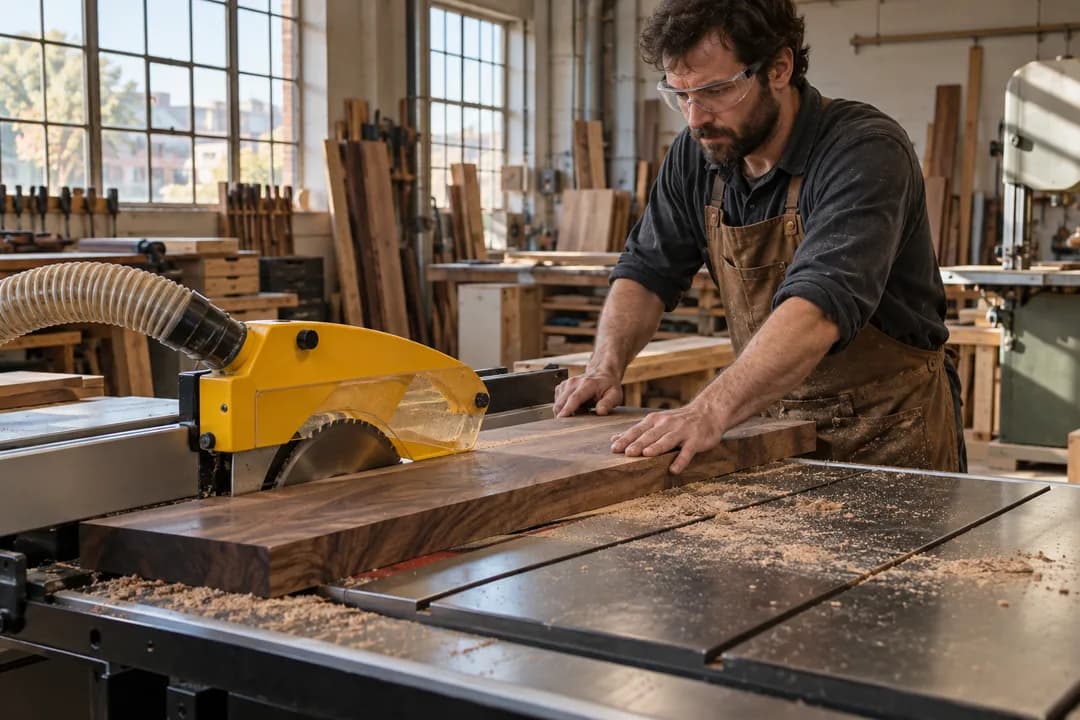
The machinery lineup at Makeville centers on professional-grade industrial tools calibrated for precision, stability, and rigorous operator safety. The table saw station features three SawStop cabinet saws equipped with flesh-sensing safety brake cartridges that halt and drop spinning blades instantly upon human skin contact. Rough milling begins at the 8-inch Laguna parallelogram jointer, where flattened faces and squared reference edges prepare raw lumber before moving through the 15-inch Powermatic thickness planer. Resawing thick hardwood cants into book-matched veneer slices happens at the 14-inch Laguna bandsaw, while a heavy-duty Powermatic hollow-chisel mortiser and Festool domino joiners streamline complex joinery tasks.
Safety standards in the machine room are uncompromising, requiring every visitor to wear ANSI-certified safety glasses, closed-toe leather work boots, and snug-fitting hearing protection before crossing the yellow threshold lines. Long hair must be tied securely back, flowing sleeves must be rolled above elbows, and gloves are strictly forbidden near rotating cutterheads to eliminate entanglement hazards. Staff technicians inspect all personal timber for embedded metal screws, salvage nails, or residual mortar with wand detectors before allowing boards to touch the planer or jointer knives. This disciplined operational protocol maintains razor-sharp tool edges and ensures that all communal machinery remains accurately squared for precision craftsmanship.
Beginner Project Tracks and Hardwood Tuition Rates
For aspiring builders without prior woodshop experience, the signature Start Woodworking course costs $395 plus a $70 raw materials fee for three four-hour intensive sessions. Over twelve structured hours, students mill raw poplar or ash lumber into a sturdy three-legged step stool, learning essential measuring, squaring, joinery, and sanding techniques. Those seeking a fast single-day project can book the popular Make+Take Hardwood Serving Board workshop priced at $175 per person or $315 for two participants registering together. In this four-hour evening session, participants select native cherry or black walnut blanks, cut organic profiles on the bandsaw, bevel edges with a router, and apply food-safe mineral oil finishes.
Intermediate craftspeople can advance into woodturning intensives priced at $245, where individual Jet and Oneway mini-lathes provide dedicated turning stations for roughing gouges and parting tools. Under skilled supervision, turners transform kiln-dried maple spindle blanks into functional wooden honey dippers, ergonomic tool handles, and graceful shallow salad bowls. Private one-on-one custom instruction is available at $100 per hour for single makers or $170 per hour for pairs, offering tailored mentorship on complex curved laminations, custom dining tables, and delicate mid-century credenza cabinetry. All class fees include premium domestic hardwoods, expendable sandpaper discs, finishing oils, and comprehensive tool usage.
Community Shop Bench Rentals and Certification Protocols
Completing the fundamental woodworking curriculum or passing a thorough practical bench certification unlocks access to Makeville community shop rental program. Certified members can reserve bench time on an affordable pay-as-you-go basis for $15 per hour, allowing hobbyists to complete ambitious personal projects without committing to expensive long-term industrial leases. Dedicated woodworkers can purchase multi-hour discounted packages, while monthly membership tiers provide assigned storage shelves for storing works in progress, custom clamping jigs, and personal hand tool chests. The online scheduling portal lets approved makers reserve specific machines in advance, preventing frustrating bottlenecks at the thickness planer or drill press stations.
Community bench access operates under clear etiquette guidelines that require every woodworker to sweep station shavings, vacuum machine tables, and coil extension cords twenty minutes prior to closing time. Solvents, oil-soaked application rags, and finishing chemicals must be deposited into fireproof self-closing steel disposal bins to prevent accidental combustion. While collaborative advice flows freely between adjoining workbenches, uncertified guests and pets are not permitted on the active shop floor during tool operating hours. This balanced approach protects member focus, respects shared work surfaces, and maintains an orderly productive workshop throughout busy weekend afternoons.
Subway Connections via Fourth Avenue and Ninth Street
Reaching Makeville Studio is straightforward via public transit, as the Gowanus facility sits within a brief five-minute walk of major subway intersections. Commuters can ride the F or G train to the 4th Avenue–9th Street station, or take the R train directly to the 9th Street station before walking two short blocks west toward the canal basin. Several regional MTA bus lines serve the corridor, including the B57 bus running along Third Avenue and the B103 bus along Fourth Avenue, stopping within two blocks of 8th Street. Cyclists will find secure indoor bike storage hooks inside the workshop entry vestibule, as well as several Citi Bike stations along Third Avenue.
For students transporting heavy lumber boards or bulky finished furniture, street parking is generally available along 8th Street and neighboring 9th Street between Second and Third Avenues. Gowanus features commercial parking regulations with metered commercial loading windows on weekday mornings, shifting to open unmetered parking on evenings and weekends. The studio ground-level freight loading door features a wide roll-up entrance that allows drivers to back vans directly up to the threshold for smooth loading of four-by-eight plywood sheets and assembled credenzas without climbing interior stairwells.
Gowanus Canal Strolls and Canal-Side Bakeries
Gowanus has transformed into a vibrant cultural pocket where industrial maritime yards coexist with independent roasteries, craft taprooms, and artist studios. Just around the corner on 3rd Avenue, artisanal bakers at Runner & Stone serve fresh sourdough baguettes, dark roast espresso, and seasonal pastries ideal for an early morning workshop breakfast. For a midday lunch break, woodworkers frequently stroll two blocks south to Table 87 for coal-fired thin-crust pizza slices and cold Italian sodas, or grab savory tortas from local taquerias along 4th Avenue. The neighborhood atmosphere feels relaxed and unhurried, offering quiet sidewalks lined with century-old brick warehouses and canal footbridges.
After completing a productive afternoon workshop, makers can gather with classmates at Finback Gowanus or Strong Rope Brewery on 4th Street to enjoy local craft ales overlooking the waterway. Art lovers can wander north toward Thomas Greene Playground to view expansive public street murals, or browse design publications and architectural hardware at specialty salvage shops nearby. Combining an immersive weekend furniture-building session with Gowanus industrial streetscapes makes for an inspiring urban retreat that showcases Brooklyn enduring maker identity.
Workshop Footwear, Dust Protection and Practical Advice
When preparing for your first class at Makeville, dress in rugged cotton work clothes that you do not mind dusting with aromatic walnut and cherry sawdust. Synthetic fleeces and baggy hoodies should be left at home, as loose fabric snags easily on machinery and melts when subjected to stray friction sparks. Sturdy leather work boots or flat-soled canvas sneakers provide the sure footing necessary when maneuvering heavy eight-foot maple planks across the jointer table. A simple pocket notebook and mechanical pencil prove invaluable for recording cut lists, blade kerf deductions, and joinery tolerances during introductory machine demonstrations.
Bypass the temptation to tackle an elaborate multi-drawer armoire or dining table during your initial open shop hours, as ambitious builds often stall without mastering grain direction and milling physics. Starting with a humble hardwood cutting board, floating wall shelf, or clean stool allows you to internalize machine balance, blade speeds, and sanding grits with minimal material waste. The experienced shop monitors at Makeville are always on hand to review cut sequences, inspect joinery setups, and guide you through safe tool operations, ensuring your path into custom woodworking remains rewarding, disciplined, and safe.
Ask Karpo for more information.
Keep reading
- Fort Greene Holiday Market Browsing Guide for Young Shoppers
 DUMBO Holiday Market Browsing Guide for Gifts to Mail Home
 Midtown East Holiday Market Browsing Guide for Commuters