 Upper West Side Free Indoor Weekend Plan Finder for Music
Free Things to Do

SoHo Winter Sunrise Photo Route Planner: Cast-Iron Dawn
SoHo has no open horizon, so a winter sunrise shoot here is about cast-iron facades on Greene and Mercer catching first light. It costs nothing to walk.
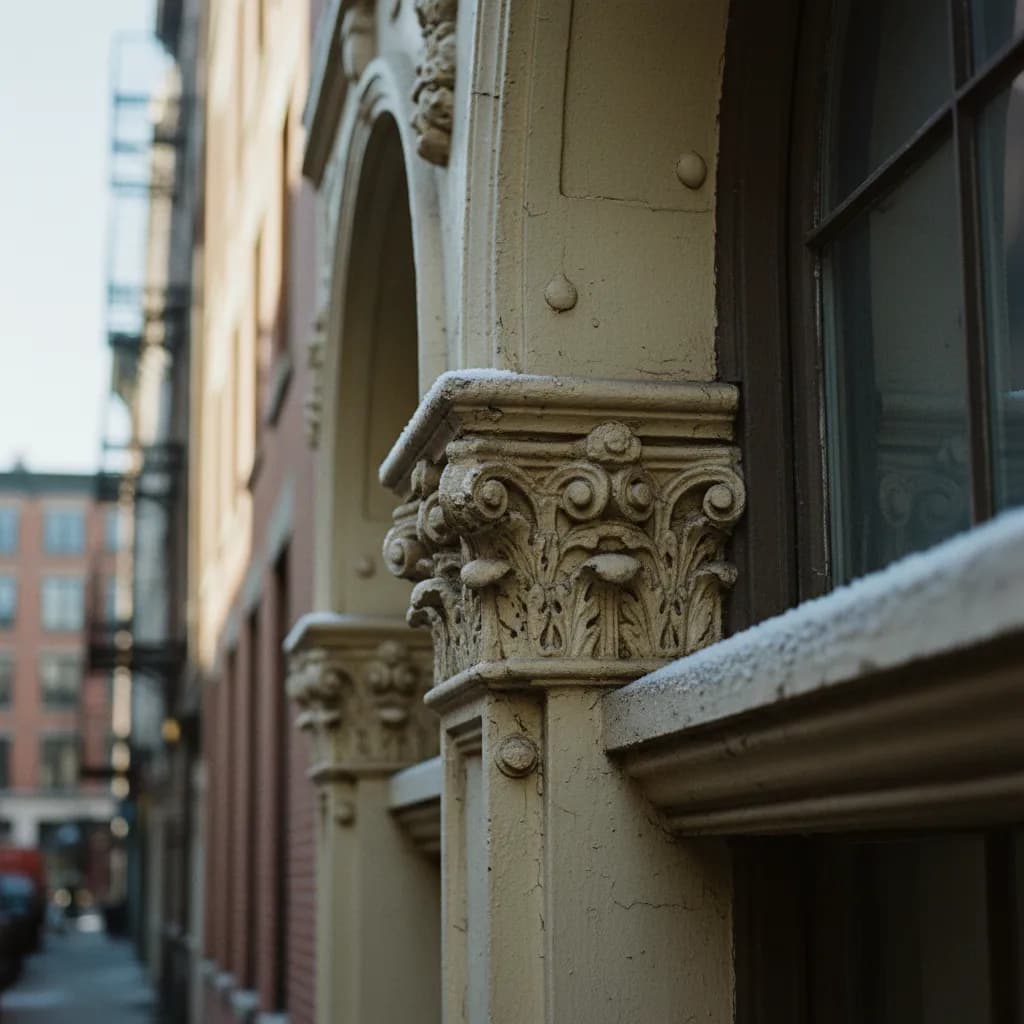
SoHo will never give you the sun rising over the water, and any winter sunrise photo route planner that promises a horizon here is selling the wrong neighborhood. What it gives you instead is better for architecture: what the city's Landmarks Preservation Commission calls the largest collection of full and partial cast-iron facades anywhere, protected since 1973 as the SoHo–Cast Iron Historic District, and a street grid angled so that the low December sun lands squarely on its painted columns. The walk is free, short, and mostly over by 8:30 am.
Read the Grid Before You Set an Alarm
Manhattan's streets are tilted roughly 29 degrees off true north. In winter, the sun rises well south of east, which means the cross streets in SoHo, such as Prince, Spring and Broome, point close to where the sun comes up around the solstice. On clear mornings, once the sun clears the buildings to the east, a beam of light can shoot straight down those blocks while the sidewalks on either side stay cold and blue.
The north-south streets work differently. On Greene and Mercer, the buildings on the west side of the street face east, toward the sunrise. The first warm light lands on their top floors, then a sharp line of shade slides down the facade minute by minute. Photographers who understand this stop chasing a sunrise and start chasing that line instead.
Fifteen Minutes Before Sunrise: Blue Hour on Greene Street
Start at the corner of Greene and Canal Street and walk north. Before the sun is up, the street sits in even, shadowless blue light that is perfect for long, symmetrical frames down the Belgian block paving. With the shops still shuttered, you can stand in the middle of the crosswalk, set the camera low, and let the cobbles lead the eye toward the vanishing point without a single delivery truck in the way.
Look for the pair of buildings nicknamed the Queen of Greene Street at 28–30 Greene, completed in 1872, with its stacked columns and mansard roof. A wide lens at this hour shows the full height of the facade with a cool, clean sky above. Keep the ISO modest and bracket your exposures, because the contrast jumps sharply once the sun arrives.
The First Thirty Minutes: Following the Light Line
As the sun crests the rooftops to the east, keep walking north toward Prince Street. The upper stories of the west-side buildings turn warm gold first. This is the moment to switch to a short telephoto, something in the 70–135mm range, and isolate column capitals, window arches and cornices against the still-shaded floors below. The two-tone contrast is the signature SoHo winter frame.
At 72–76 Greene Street stands the so-called King of Greene Street, completed in 1873 and often described as one of the most elaborate cast-iron fronts in the district. Its projecting central bay and Corinthian columns throw deep, layered shadows when the sun is this low. Shoot it from the opposite sidewalk and wait for the light line to reach the second floor for the most balanced exposure.
Do not neglect the cross streets in this window. Step onto Prince or Spring and look east. When the sun lines up, light can rake straight along the block, catching steam from the grates and the iron loading platforms in front of the old lofts.
Mercer Street and the Haughwout Building
Loop east onto Mercer Street for a quieter stretch. Mercer has fewer storefronts at street level, more raw loading docks and more surviving iron sidewalk vault lights, those small glass discs set into the pavement. When the early sun reaches them at a shallow angle, they glint like scattered coins, and a low, close shot turns them into a strong foreground.
Finish at Broadway and Broome Street, where the Haughwout Building at 488 Broadway has stood since 1857. It is widely recognized as the site of the first commercial passenger elevator, installed by Otis. Its repeating arched windows form a rhythm that photographs best when the sun is slightly higher and lights the full Broome Street side. By now, Broadway is getting busy, so this is a good last frame rather than a place to linger.
Common Mistakes and an Honest Plan B
The biggest mistake is arriving after 8 am on a weekend expecting empty streets. SoHo shopping traffic builds steadily, and by mid-morning the cobbles are full. Another is overshooting wide. These facades are about detail, so a single short telephoto will produce more keepers than a bag full of ultrawide glass.
If the morning turns out overcast, do not cancel. Flat light suits the painted ironwork, removes harsh shadows from the deep window reveals, and makes it easier to capture the subtle colors, from cream and grey to the occasional pale green, that owners have painted over the decades. Treat it as a detail study and you will still come home with a strong set.
Practical Notes for a Free SoHo Dawn Walk
The full loop from Greene and Canal north to Prince, then back down Mercer to Broadway and Broome, covers less than a mile. Give yourself sixty to seventy-five minutes so you can return to the best facades as the light changes. Every stop is a public sidewalk, and photographing exteriors from the street requires no permit or ticket.
Nearby subway stations include Prince Street on the R and W, Spring Street on the 6, Spring Street on the C and E, and Broadway–Lafayette Street on the B, D, F and M. Sunrise times move a lot over the season, from just after 6:30 am in early November to past 7:15 am at the end of December, so look up the exact time the night before.
Wear shoes with grip. Belgian block paving is uneven and can be slick with frost or melted snow, and you will be walking with your eyes up at the cornices more than down at your feet.
Building the Route With Karpo APP
Karpo APP can help you turn this into a personal plan. Tell it you want a short SoHo sunrise walk focused on cast-iron architecture, mention how much time you have, and ask for a sequence of streets plus a warm place to regroup afterward. If you prefer a weekday version or a shorter loop for a quick shoot before work, just ask it to adjust.
It will not report live light or crowd levels, so check the weather and sunrise time on your own. Use the app for what it does well: shaping a clear, realistic plan you can follow in the dark.
Ask Karpo for more information.
Keep reading
- Upper West Side Free Indoor Weekend Plan Finder for Music
 Astoria Free Indoor Weekend Plan Finder for Visiting Parents
 Williamsburg Free Indoor Weekend Plan Finder With Kids