 Upper West Side Free Indoor Weekend Plan Finder for Music
Free Things to Do
Lower East Side Winter Sunrise Photo Route Planner: Free
Shooting a free winter sunrise on the Lower East Side? Start on the Williamsburg Bridge walkway at Delancey Street, then work west past 1880s tenement facades.
The Williamsburg Bridge pedestrian path opens off Delancey Street at Clinton Street, and it is the one spot on the Lower East Side where a winter sunrise photo route planner can put you above the rooftops with an open eastern horizon. From early November, after clocks fall back, the sun clears Brooklyn close to 6:30 am; by early January it slips toward 7:20 am. That gives you a short, cold, completely free window, and this route is built to use every minute of it.
Why the Bridge Comes First
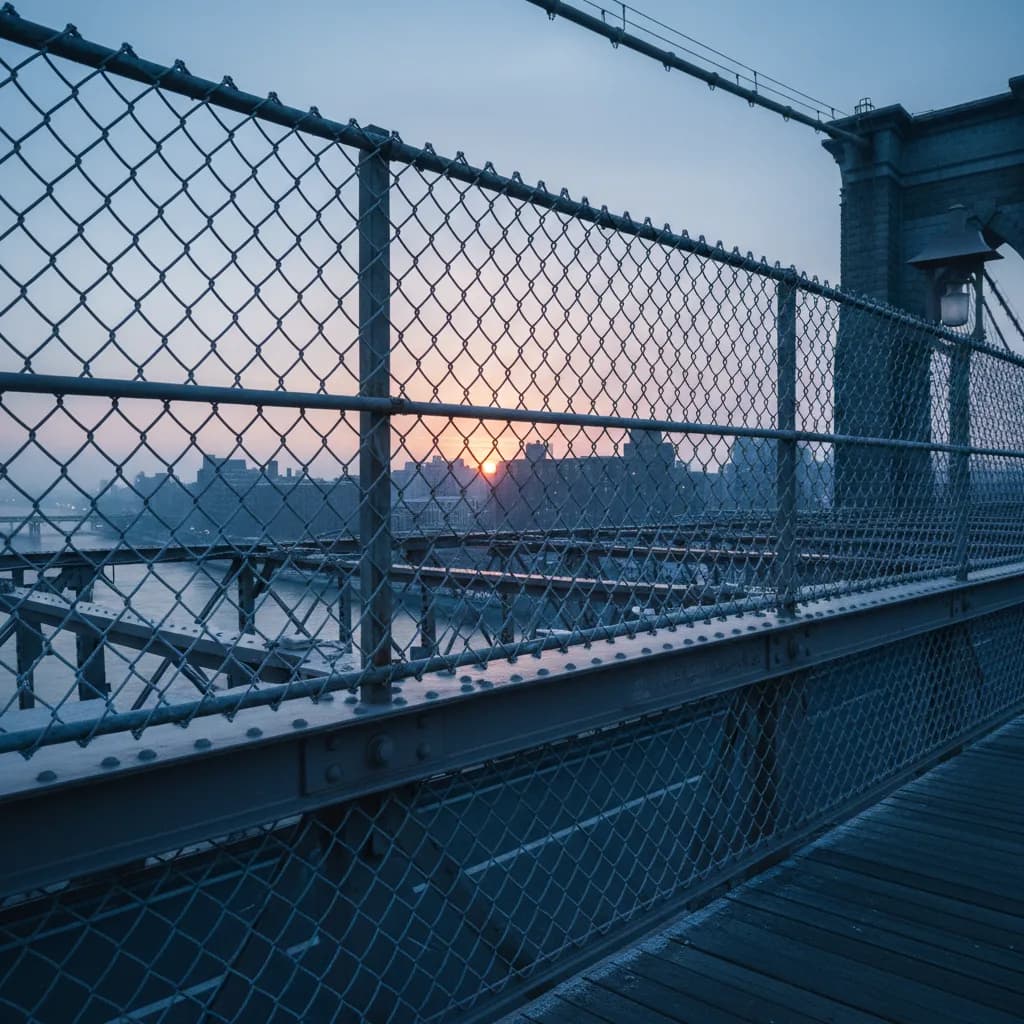
Most dawn walks in Manhattan fight the grid, because tall buildings block the low winter sun until it is well up. The Williamsburg Bridge solves that. It opened in 1903 as a heavy steel suspension span, and its shared walkway climbs steadily from the Manhattan anchorage to a central span high over the East River. Facing east-southeast, which is where the December sun actually rises, you look straight across the water toward the Williamsburg and Domino waterfront.
Arrive about thirty minutes before the official sunrise time. Civil twilight on a clear December morning paints the sky salmon and violet well before the disc appears, and that is often the more interesting frame. The steel lattice gives you strong foreground lines, while the chain-link fencing forces a choice: press the lens hood against a gap in the mesh, or step back and let the fence become a soft texture across the whole image.
Be honest with yourself about wind. The center of the span is fully exposed, and on a January morning with a northwest gust the wind chill can feel brutal within ten minutes. A small tripod is fine on the walkway as long as you keep it tight to the rail, because cyclists commute across here early and will not appreciate legs splayed into the bike lane.
Descending Into the Tenement Blocks
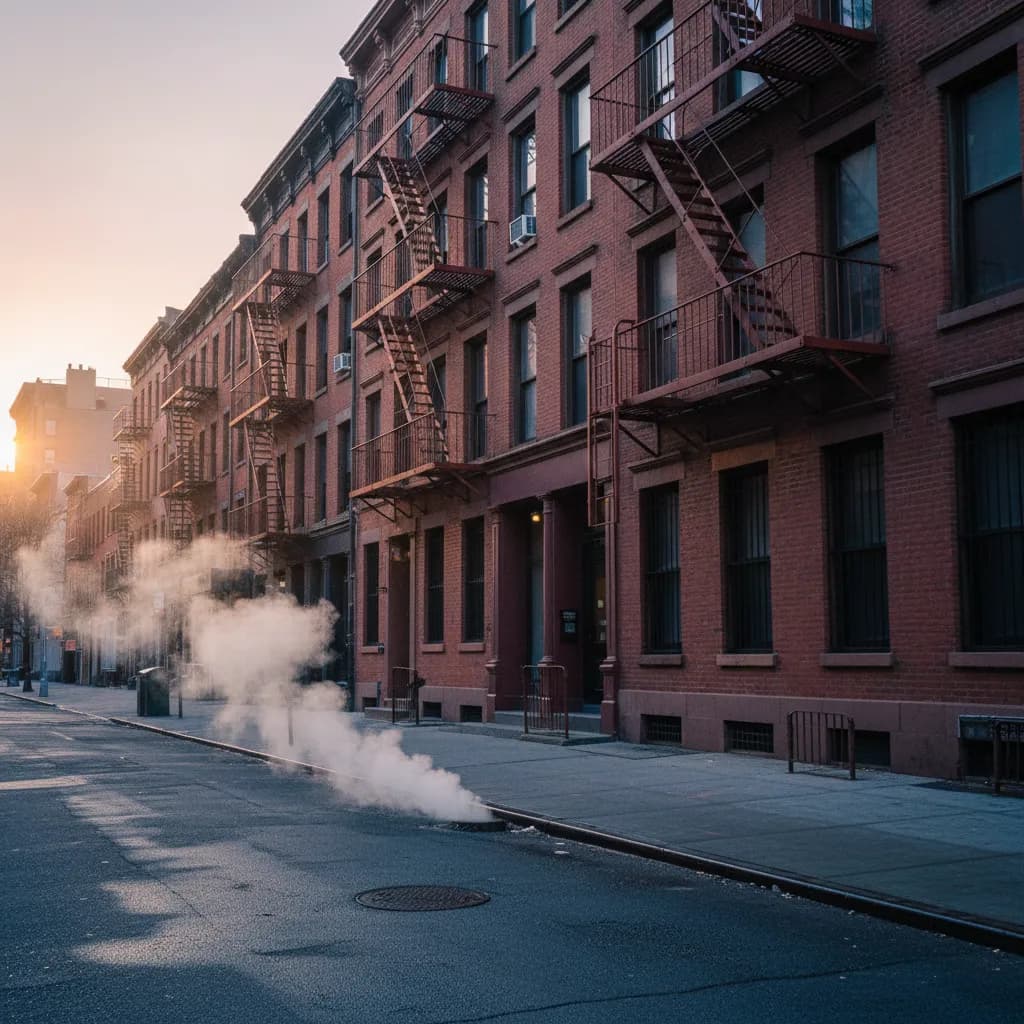
Once the sun is up, the bridge has done its job. Walk back down to Delancey Street and turn south on Clinton or Suffolk. This is where the second phase of the walk begins, and it is arguably the reason to plan the route around this neighborhood at all: the low winter angle is just right for the five- and six-story brick tenements that line these streets.
Look for the cast-iron fire escapes. In the first forty minutes after sunrise, the light comes in almost horizontally from the east, catching the zigzag stairs and throwing their shadows diagonally across the facades. Orchard Street, home to the Tenement Museum, is a good corridor for this, as is Ludlow Street a block over. Shoot the shadows as much as the metal; on the cold mornings, a hint of steam drifting out of a street grate adds depth without staging anything.
Skip Delancey itself for these shots. It is wide, loud with trucks heading to the bridge, and its storefronts are mostly modern. The narrower north-south streets hold the texture you came for, and they stay quiet until shops start pulling up their gates.
Seward Park and the East Broadway Facades
Continue south to Seward Park, which sits where Canal Street, Essex Street and East Broadway meet. NYC Parks describes it as the first permanent, municipally built playground in the country, opened in 1903, the same year the bridge was completed. On a winter morning the trees are bare, so the low light flows straight through the park and onto the buildings that border it.
Two facades reward a pause here. The Seward Park branch of the New York Public Library, a Carnegie-funded building that opened in 1909, has a pale limestone front that glows warm when it faces the rising sun. Across the park, the former Jewish Daily Forward building at 175 East Broadway, completed in 1912, still carries carved details and the newspaper's name high on its frontage. A medium telephoto from inside the park compresses the bare branches against that ornament nicely.
If you only have time for one stop after the bridge, make it this one. It combines open sky, historic architecture and a plaza you can work slowly without stepping into traffic.
A Short Detour to Eldridge Street
For a final frame, walk west along East Broadway and Division Street toward Eldridge Street. The Eldridge Street Synagogue, completed in 1887 and now home to the Museum at Eldridge Street, has a Moorish Revival facade with a large rose window. By the time you reach it, the sun is higher and the street is a little busier, so this is a better stop for detail work than for wide scenes.
Shoot upward from the opposite sidewalk to isolate the window and the horseshoe arches against a clear blue sky. Weekday mornings are noticeably calmer than weekends, when Chinatown foot traffic builds earlier.
Practical Notes for a Free Dawn Loop
The full route, from the bridge's Delancey entrance to Eldridge Street, is roughly a mile and a half on foot, plus the climb onto the span. Allow ninety minutes if you want to work each stop properly. Everything on this walk is a public street, park or bridge walkway, so there is no ticket and no reservation involved; you are simply photographing exteriors from public space.
Subway access is easy. The Delancey Street–Essex Street station is served by the F, J, M and Z lines and puts you within a few minutes' walk of the bridge entrance. Plan B for a cloudy morning: skip the bridge entirely and treat the walk as a soft-light architecture study, since overcast skies flatter the red brick and eliminate harsh contrast on the fire escapes.
Dress in layers. A thin pair of liner gloves under a warmer outer mitt lets you work the camera without losing feeling in your fingers. Bring a spare battery in an inside pocket, because cold drains lithium cells faster than most people expect.
Using Karpo APP to Shape the Morning
Karpo APP works best as a planning partner the night before. Ask it to help you organize a sunrise sequence on the Lower East Side, mention that you want the bridge first and the tenement blocks second, and it can suggest an order of stops and nearby places to warm up afterward. You can refine the list by asking for shorter versions when the forecast looks marginal, or for a weekend variation that avoids the busier Chinatown blocks.
It will not track the sun for you or tell you live conditions on the bridge, so check the sunrise time and weather yourself before setting an alarm. What it does well is turn a vague idea into a clear plan you can actually follow at 6 am, half awake, with a camera bag over your shoulder.
Ask Karpo for more information.
Keep reading
- Upper West Side Free Indoor Weekend Plan Finder for Music
 Astoria Free Indoor Weekend Plan Finder for Visiting Parents
 Williamsburg Free Indoor Weekend Plan Finder With Kids