There is a persistent assumption that a free wine tasting must be either a gimmick or a hard sell. In New York it is neither, and the reason is structural: shop tastings are largely funded by importers and distributors as a marketing channel, not by the shop out of goodwill. Somebody is paying for the wine in front of you, and that somebody wants you to remember the producer. Once you know that, the free tasting stops being suspicious and becomes what it actually is — the most efficient wine education available in the city.
A Saturday afternoon in three shops teaches more than any bottle you buy blind. Ask Karpo which shops near you are pouring this weekend and what they are opening.
Tier one: the free shop tasting
A large number of independent wine shops across Manhattan and Brooklyn run a walk-in tasting on a fixed afternoon, typically Friday evening or Saturday, pouring two to four wines with no obligation to buy. The pour is small, the person pouring is frequently the importer's own representative or the shop's buyer, and they will talk to you for as long as you are interested.
The thing that makes this so much more useful than reading is the comparison. Two wines from the same grape and two different regions, side by side, tells you more in ninety seconds than a chapter would, because your palate is doing the work rather than your memory. Visiting three shops in an afternoon on the same street is a genuinely good use of a Saturday and costs nothing.
The etiquette is simple and worth observing. Taste, ask a question, and buy something occasionally — not every time, but occasionally. The model only works because a proportion of tasters convert, and the shops that run the best tastings are the ones whose regulars understand that.
Tier two: the wine bar flight
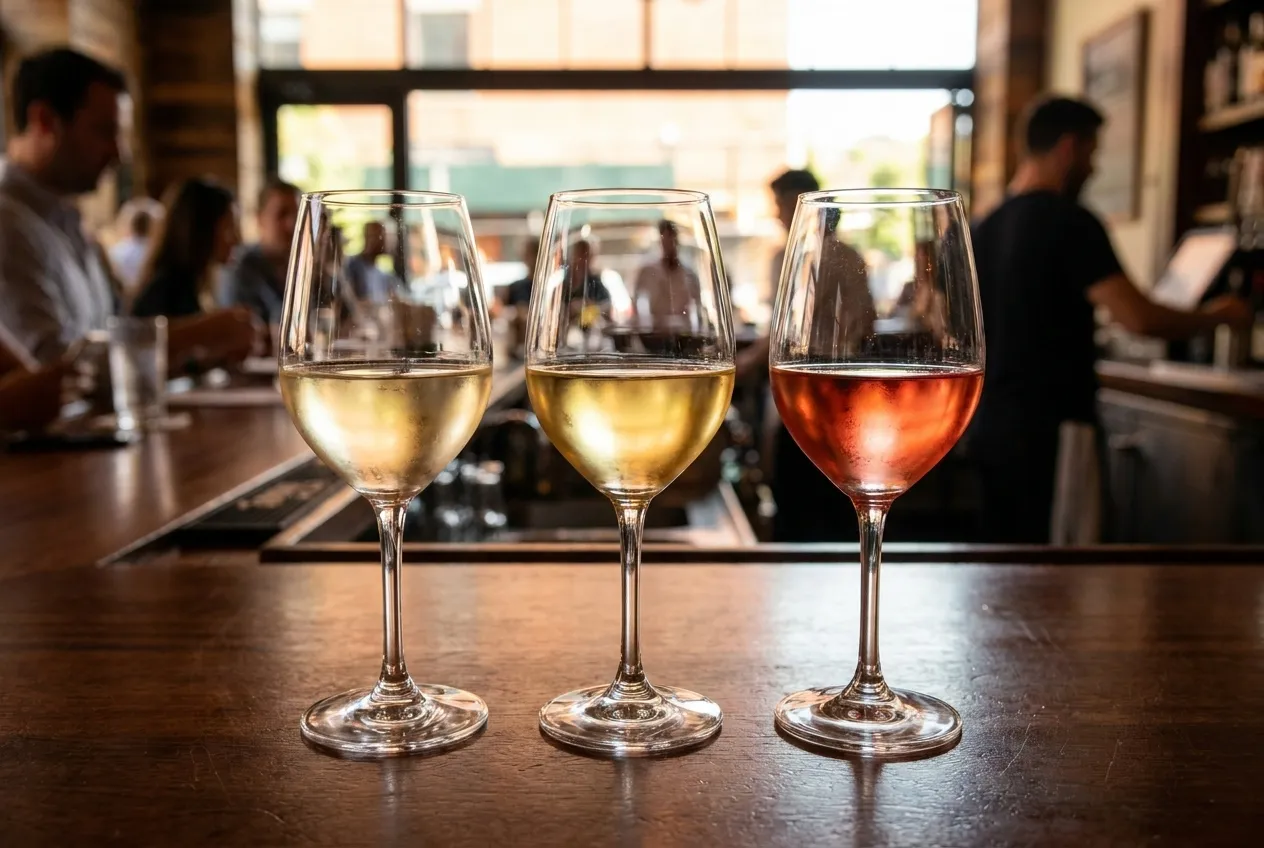
A flight is three or four small pours, themed, sold as a single item, and in New York it typically lands in the fifteen-to-thirty-dollar range depending on what is in it. This is the paid version of the same educational structure, with the advantage that you choose the theme and the disadvantage that you are paying bar prices for the privilege.
The flight is worth buying in one specific situation: when it is built around a comparison you could not construct yourself. Three producers from one small appellation, or one producer across three vintages, is a flight worth paying for. Three unrelated wines described as 'our favourites' is just three glasses of wine sold together, and you would do better ordering one properly.
Natural wine and the vocabulary problem
A significant share of New York's newer wine bars work primarily with low-intervention wine, and the category generates more confusion than any other. There is no legal definition — it broadly refers to wine made with minimal additions, wild fermentation and little or no filtration, which is why bottles are frequently cloudy and why the flavour range is much wider than in conventional wine, in both directions.
The practical consequence for a taster is that the variance is real. Low-intervention wine can be extraordinary and it can be actively faulty, and the bars that are good at it are the ones whose staff will tell you honestly which is which. The question that separates them: ask what is the least weird thing on the list, and see whether you get a straight answer or a lecture.
Tier three: the structured class
Shops, bars and independent educators run sit-down classes in the city, typically an hour and a half, six or so wines, with a theme and someone teaching. This is a different product from a tasting — you are paying for a curriculum, not for wine — and it is genuinely worth it once you have hit the ceiling of what you can learn by tasting randomly.
The signal to look for is whether the class is organised around a concept rather than a region. A class on how acidity, tannin and sugar interact will change how you drink permanently. A class on the wines of one region will teach you about that region, which is useful but narrower and considerably less transferable.
Autumn is the best season for this, for a boring reason
The wine trade's calendar restarts in early autumn: new vintages land, importers run their portfolio pushes ahead of the holiday season, and shops schedule more tastings between September and November than at any other time of year. If you have been meaning to learn something about wine, the density of free opportunity is at its annual peak right now, and it thins out sharply in January.
What to actually ask at the table
Three questions get you further than any amount of nodding. Ask what this is meant to taste like, which invites the pourer to give you the frame rather than test you. Ask what it costs by the bottle, early, because it reframes everything you taste after it. And ask what else tastes like this but costs less, which is the single most useful question in wine retail and the one that shop staff most enjoy answering. Nobody who works in wine wants to sell you something expensive that you will not repeat.
Tags: #WineTastingNearMe #NYCWine #FreeWineTasting #WineBars #NaturalWine #WineFlight #NewYorkCity #BarsAndNightsOut #WineShop #WineClass #NYCNightlife #Manhattan #Brooklyn #Autumn2026
All trademarks are the property of their respective owners.
Ask Karpo first
Want to build a tasting afternoon near you? Ask Karpo which shops within walking distance are pouring this weekend, what they are opening, and which nearby wine bars have a flight worth the money.