 Fort Greene Holiday Market Browsing Guide for Young Shoppers
Weekend Plans

NYC Weekend Plan Builder: Quiet Sunday Books and Coffee
Pair NYC Sunday book browsing with a quiet cafe in the Karpo APP. Describe seating and noise preferences, then compare a compact outing with a slower one.
A calm NYC Sunday starts with a small bookstore-and-cafe pairing and a clear idea of what quiet means to you. Use the Karpo APP as a weekend plan builder to describe your preferred atmosphere, seating needs, and walking limit. Compare a browse-first afternoon with a cafe-first alternative. Keep the outing in one neighborhood, with an optional short walk, so finding a restful pause does not become a second round of complicated decisions.
Translate quiet into useful preferences
Quiet can mean low music, fewer conversations, space between tables, or freedom from queues and hurried ordering. Pick the qualities that matter most to you and explain them plainly. A lively room with a secluded corner might suit one reader and overwhelm another. Tell Karpo whether you want conversation with a friend, time to read alone, or simply a gentle place to sit after browsing. Each purpose suggests a different sort of pairing.
Book browsing also has its own pace. Some people want a specific section and a quick purchase, while others enjoy moving through several shelves without an agenda. State whether a large selection matters more than a compact room, and name the genres you are interested in. If you want to sit and read for a while, make the cafe the seating anchor. A bookstore recommendation should not imply that lingering in a chair is automatically available.
An opening request could be: “Build a low-stimulation Sunday afternoon in NYC for one person. I want independent book browsing and a cafe where reading would feel appropriate. I prefer low music, a comfortable chair, and a short walk between stops. Show two pairings in one neighborhood. Explain the likely atmosphere and any uncertainty about seating, and include a version that finishes after just one stop.” These are search preferences, not assured conditions.
Compare browse-first with cafe-first
Browse first when choosing a book is the main purpose of the afternoon. You can keep the shop visit open-ended and let the cafe become the natural finish. Ask Karpo to suggest a pairing where the connecting walk is easy to shorten. That matters if the browsing takes more attention than expected. The plan should still feel complete when you leave the store with a book and decide that heading home is the right ending.
Cafe first can work when you want to settle after traveling before engaging with shelves and other people. You begin with a drink or snack, then decide whether you have energy for the bookstore. Request a cafe candidate near the shop rather than one that creates a detour. Comparing the order of the same two activities can be more useful than comparing entirely different neighborhoods, because the effect on your energy becomes easier to judge.
For each pairing, ask what supports the description of the atmosphere. A room's design, its stated use, and information in a listing can help you assess a candidate, but they do not establish the noise level at a future moment. Prefer language that distinguishes an observed or described feature from your desired outcome. “Small tables and soft furnishings” is a different claim from “guaranteed silent on Sunday,” and only the first can describe a stable physical feature.
Seating deserves its own decision
If you need a seat, say whether you are willing to wait or would rather shorten the outing. Someone planning a brief coffee can tolerate a standing pause that would defeat an afternoon of reading. Ask for an alternative with a similar purpose if the first cafe does not suit you on arrival. Keep the substitute nearby and make it optional, so seeking a chair does not turn into a long search through an unfamiliar area.
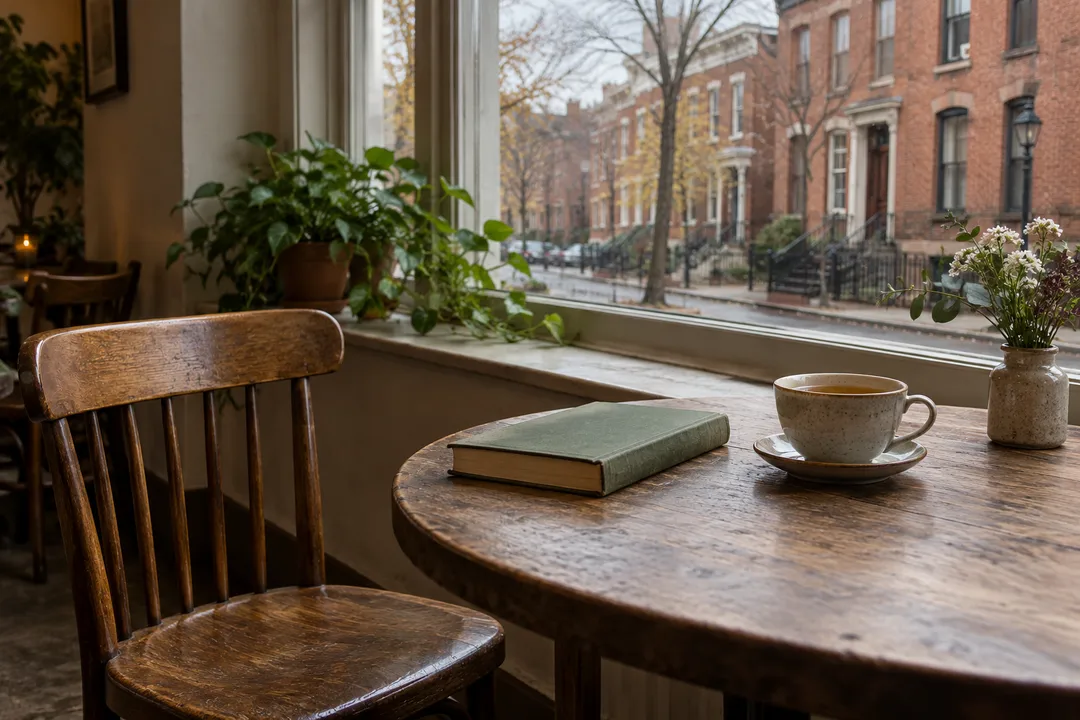
Avoid assuming that a cafe is suitable for an extended reading session simply because it serves coffee. Your intended use matters: a short chapter with a drink is different from occupying a small table all afternoon. Follow the venue's own seating and ordering rules when you arrive. In the planning chat, request candidates that fit your intended length of stay, rather than asking the assistant to promise you can remain for a fixed duration.
For sensory needs, describe functional preferences without having to disclose personal medical information. You might ask for fewer stairs, a route with fewer busy crossings, or a room where background music is less central to the experience. Keep those conditions visible when comparing alternatives. A backup chosen only because it is close can lose the very qualities that made the original option worth considering for a restful afternoon.
Give the neighborhood walk a small job
The walk between books and coffee can be a transition, rather than another attraction. Ask for a direct connection with the option of one quieter side-street loop. If you supply the Upper West Side as your preferred area, use it as a search boundary and add your starting station or block. The neighborhood name is a starting constraint, not evidence that every cafe or street in the district will meet your noise preferences.
Choose what the walk should do for you. It might provide fresh air after browsing, create a short pause before sitting, or bring you closer to your route home. That is enough. Skip a list of additional stores when you wanted fewer decisions. A planning response can be interesting without adding stops, especially when the central benefit is an afternoon whose scale feels manageable from the moment you leave home.
Make the end visible before you start. You might finish when you have read a chapter, enjoyed a conversation, or decided which book to buy. Ask for a short route toward your onward connection instead of another suggestion to extend the day. When the assistant offers more possibilities, choose whether they serve the calm mood you requested. Leaving while the outing still feels pleasant can be the most useful planning decision.
Practical Notes: keep the quieter version easy to use
After comparing the two sequences, choose the one that asks less of you on this particular Sunday. If traveling has already been tiring, the cafe-first version may make sense. If a specific book is the reason you are going, browse first and treat coffee as optional. Put that priority into a follow-up message so the final plan does not present both stops as equally important commitments that must be completed.
Keep the plan grounded in the information actually returned. A suggested venue is a candidate, and the atmosphere you experience can depend on who else is there. You can respond to that on arrival by shortening the visit, selecting the alternative you considered, or ending early. The conversation helps organize those choices but does not reserve a seat or measure the room's current sound level. Your comfort remains the deciding factor.
Ask Karpo for a compact final version with the selected order, walking limit, seating priority, and one clear stopping point. Save the outline or copy it into a note you can use without rereading the whole conversation. If a friend joins you, share the same version and explain that either stop can be shortened. Return to the Karpo APP with your neighborhood and reading preferences when you want to build another gentle Sunday pairing.
Ask Karpo for more information.
Keep reading
- Fort Greene Holiday Market Browsing Guide for Young Shoppers
 DUMBO Holiday Market Browsing Guide for Gifts to Mail Home
 Midtown East Holiday Market Browsing Guide for Commuters