 Crown Heights Rainy Day Kids Activity Finder for Toddlers
Weekend Plans

NYC Weekend Plan Builder: Late Show to Quiet Conversation
Plan an NYC post-show wind-down for friends in the Karpo APP. Compare conversation spots by group size, noise preferences, and a flexible way to end the night.
Choose the purpose of your NYC post-show stop before choosing a venue: conversation, a small bite, or a gentle end to the evening. A weekend plan builder can help friends compare nearby possibilities without turning the night into another scheduled event. In the Karpo APP, supply the theater or comedy venue's location, your approximate release window, group size, and noise preferences. Ask for a short list with an easy way to finish and head home.
What should friends decide before the curtain falls?
Agree on the one thing the group wants after the show. Some friends want to talk through what they saw, others want food, and someone may simply need a few minutes before traveling home. Name that shared purpose in your request. A nightcap does not have to mean alcohol, and a place that suits drinks may not suit a hungry group. Put food and nonalcoholic preferences into the same message rather than adding them after choosing a venue.
Use an approximate departure window until you have a reliable show end time. A performance, encore, or conversation outside can shift when everyone is ready to leave. Explain which times are your estimates and which are fixed commitments, such as a friend's intended departure. The planner can organize an outing around the inputs you supply, but an attractive timetable should not turn an uncertain release time into something the whole group feels required to meet.
Try: “Help four friends wind down after a Saturday evening show in NYC. Here is the venue location and our expected exit window. We want to hear each other, and two people prefer nonalcoholic drinks. Compare a nearby conversation stop with a food-first option. Keep the walking distance short, show a finish-only alternative, and explain what makes each candidate suitable.” Replace the sample group size and timing with your own details.
How do you compare a nightcap with a late bite?
A conversation stop earns its place through the kind of time it allows you to spend together. Ask about seating format, whether music is central to the experience, and how the setting fits your group. A standing crowd and a small seated room can both be enjoyable, but they serve different purposes. Request reasons connected to what your friends want, instead of accepting an atmosphere word such as cozy as a complete explanation.
The food-first option needs a different comparison. Say whether you want a full meal, a snack to share, or something each person can order separately. Include dietary needs and whether alcohol service is relevant. Distinguish kitchen information from general venue information when it is available. A place being open does not establish that the food you want is being served, and the assistant should not fill that gap with an assumed late menu.
For each candidate, compare the walk, the type of seating, the reason it suits conversation, and the reason someone might prefer the alternative. Keep those criteria consistent across both options. A more atmospheric destination can be less useful if it sends tired friends in the wrong direction. Choose the place that supports the shared ending you described, even when a farther option sounds more exciting in isolation.
What does walk-in friendly actually establish?
Treat walk-in friendly as a search preference about how you want to arrive. It does not mean a table is waiting for your group. State whether you are willing to stand briefly, split into smaller groups, or leave if sitting together is impractical. Those choices give the assistant useful boundaries for comparing candidates. They also keep friends from discovering at the doorway that they have different ideas about how flexible the evening should be.
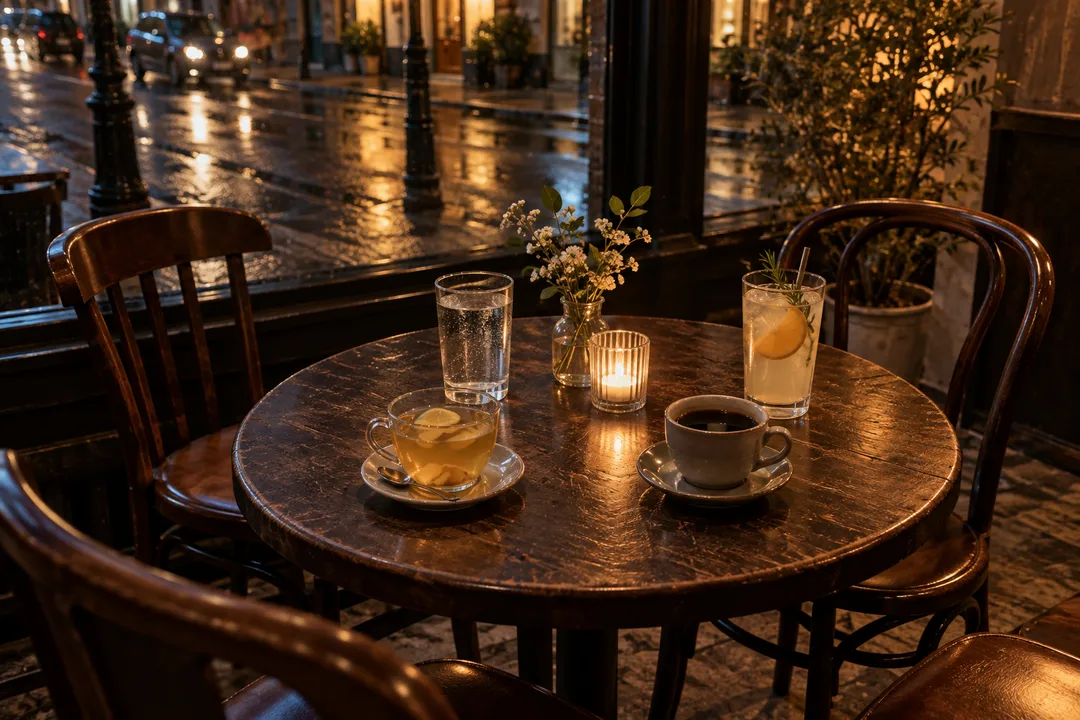
Pick a simple decision point before leaving the show area. For example, your group could agree to make one attempt at the nearby option and then choose food to take away or head home. The rule belongs to your group and can be changed. Its value is that it stops an uncertain search from stretching into a long walk between several crowded rooms when the original goal was only a relaxed conversation.
A targeted follow-up can improve the answer: “Keep the closest option, but remove places where standing is the main format. Give us one alternative that puts food ahead of drinks, and keep everyone's return direction in mind.” This changes the relevant filters without starting the research over. If the result still conflicts with your needs, explain the specific mismatch, such as music emphasis or an awkward approach, so the next comparison solves that problem.
Can the walk itself be the wind-down?
Yes, if the group wants a short conversation more than another purchase. Request a brief route from the show area toward an onward connection, with an optional stop only if it adds something useful. Let the walk have a clear endpoint and a modest distance. An unstructured wander can feel appealing at the beginning of the night and tiring after a performance, especially when friends have different journeys home.
If you supply the Theater District as the starting area, narrow it with the actual venue location. The district is a geographic reference, not a claim that every nearby street or business will suit a quiet conversation. Ask for the practical direction of travel and a place to split up naturally. This keeps the neighborhood segment connected to your evening instead of becoming a separate sightseeing route that none of the friends requested.
Consider weather and energy as conditions you set, rather than facts the plan automatically knows. If you want shelter quickly, tell Karpo to prioritize a shorter outside connection. If the group is comfortable walking, let that become the main ending and keep the indoor stop optional. The same post-show task can have two sensible answers depending on how people feel when they emerge from the venue.
Practical Notes: how do you keep the group together?
Ask friends for their departure needs before selecting the final version. Someone leaving early can still join a short nearby pause, while a distant destination may effectively exclude them. Share the chosen outline with its walking limit and optional stop clearly marked. Keep the show booking details in your own records. The assistant is helping organize the transition after the event, and a recommendation should not be presented as a reservation or a promise of admission.
Save a concise summary rather than a long list of all the candidates you discussed. It should name the purpose of the stop, the chosen first option, the one-attempt rule if you adopted it, and the point where friends can leave. You can copy that summary into your group conversation so everyone sees the same plan. Avoid assigning one person the job of interpreting several conflicting versions as the group exits into a busy street.
If the night ends differently, use that experience to improve the next request. You might discover that a shorter walk mattered more than food, or that the group preferred an early finish over another room. Bring that preference back to the Karpo APP when planning the next evening. A good post-show wind-down leaves enough flexibility for the conversation you actually want to have, with a clear and comfortable way for everyone to head home.
Ask Karpo for more information.
Keep reading
- Crown Heights Rainy Day Kids Activity Finder for Toddlers
 Jackson Heights Rainy Day Kids Activity Finder for Siblings
 Lower East Side Rainy Day Kids Activity Finder by Stroller