 Crown Heights Rainy Day Kids Activity Finder for Toddlers
Weekend Plans

Union Square Weekend Farmers Market Route Planner, 4 Loops
Union Square Greenmarket on a weekend works best as four loops: scout, buy soft produce, grab bread, then lift the heavy bags last before Madison Square Park.
The Union Square Greenmarket is the place most New Yorkers mean when they say they are going to the market, and on a weekend it rewards anyone who arrives with a route instead of a vague plan. This weekend farmers market route planner breaks the visit into four loops around the square: one to scout, one for soft produce, one for bread and dairy, and a last one for the heavy things, so your tote never gets crushed and your arms are free until the end. After that, a short walk up Broadway turns the haul into a picnic in Madison Square Park.
Why Union Square Needs a Route, Not a Wander
Union Square is a busy transit hub as well as a park, and the market wraps around the plaza on its northern and western edges, so the stands feel spread out in a way that smaller neighborhood markets never do. Farmers drive in from the Hudson Valley, the Finger Lakes, Long Island and New Jersey, and the range on a single weekend morning can run from cider apples to mushrooms foraged upstate to fish landed on the South Fork. That variety is the whole draw, and it is also why people wander in circles and leave with a sore shoulder.
The crowd shifts through the day. Early on you share the aisles with chefs pushing hand trucks and regulars who know exactly which farm they came for. By late morning it fills with families, tourists drifting over from the subway exits, and friends meeting for coffee. A route helps you move with that tide instead of against it, and it keeps the trip to a set length so the market stays a pleasure rather than an errand that eats the whole Saturday.
Loop One: Scout the Square Without Buying
Start at the northwest corner and walk the full perimeter once with your hands empty. Note which farms have the best looking greens, where the apple varieties change, which stand has the bread you like, and where the line for cider or pastries is already forming. Many regulars keep a running list on paper while they do this, because seasonal stock changes week to week and a farm that had quinces last Saturday may have moved on to storage apples.
This first lap is also where you decide what the weekend menu actually is. If the kale looks tired but the chicories are bright, change the salad. If one farm has duck eggs, plan a Sunday breakfast around them. Treat the lap as a briefing rather than a shopping trip, and you will spend less, carry less and waste less, which is the quiet goal of any good market plan in a city where refrigerators are small.
Loop Two: Soft Produce, Herbs and Anything Bruisable
On the second pass, buy only what can bruise: berries early in the season, tomatoes in late summer, pears, herbs, salad greens and soft cheeses. Ask the farmer to bag tender things separately and keep them on the top of your tote. In autumn this loop leans toward pears, grapes, delicate lettuces from hoop houses, and fresh herbs like parsley and dill that wilt quickly if they are crushed under a squash.
Talk to the people behind the tables while you shop. Union Square growers are used to questions about how a variety tastes, whether an apple is better raw or baked, and how long a green will hold in the fridge. That conversation is the real reason to come to a producer market rather than a grocery aisle, and the answers often change what you buy for the better. Skip the stands with long lines for prepared snacks during this loop and save them for later.
Loop Three: Bread, Dairy and the Picnic Basics
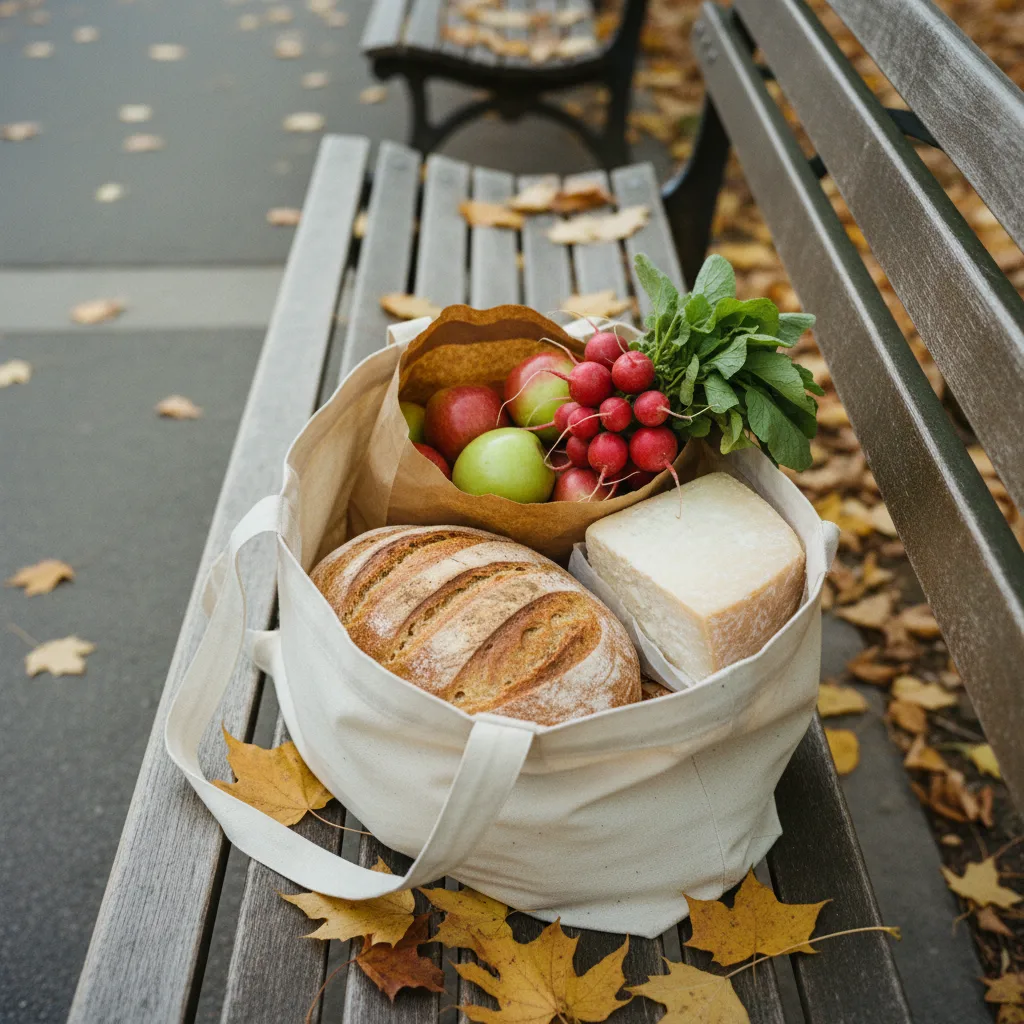
The third loop is for bread, cheese, yogurt, eggs and anything you plan to eat in the park. A dense rye or a seeded country loaf travels better than a baguette, and a wedge of farmstead cheese wrapped in paper will survive a short walk without a cooler on a cool day. Pick up a bottle of cider or a jar of pickles if you want something sharp to cut through the bread.
Keep the picnic simple and portable: bread, one cheese, a crisp apple each, a handful of radishes, and something sweet from a bakery stand. You do not need cutlery for any of that beyond a pocket knife. If you are shopping for a dinner party instead, this is the loop where you pick up the eggs, butter and cream, and you place them in the middle of the bag where they are protected on both sides.
Loop Four: The Heavy Bag Goes Last
Only now do you buy the potatoes, winter squash, onions, cabbages and a half peck of apples. Carrying them for the full visit is the single most common market mistake, and it is easy to avoid when the heavy loop sits at the very end of your route. A sturdy backpack or a folding cart makes this part painless, and many regulars bring both a tote for soft things and a rolling cart for roots.
If you came by subway, finish this loop near the station entrance you plan to use, so you are not dragging pumpkins back across the plaza. If you are heading to the park first, consider leaving the heaviest purchase for another weekend or splitting it with a friend. A route planner is honest about what one person can carry for a mile, and in late autumn that limit arrives faster than the shopping list does.
Walking the Haul Up Broadway to Madison Square Park
From the north end of the square, Broadway runs up through the Flatiron District toward Madison Square Park in a short, flat walk. The route passes bookshops, design stores and the Flatiron Building itself, which looks best from the plaza at the southern tip of the park. Find a bench under the trees, unpack the bread and cheese, and enjoy the most New York version of a farmers market picnic.
Madison Square Park often hosts a large outdoor art installation on its lawns, and the dog run on the east side is good free entertainment while you eat. In colder weeks, a bench in the sun matters more than a view, so aim for the western paths in the morning. Pack your scraps out, then decide whether the heavy bag goes straight home or rides along to a nearby café first.
Seasonal Shifts to Plan Around in Late Autumn
The Union Square Greenmarket is one of the city markets that keeps going through the cold months, but the stands change character as the season turns. Summer tables of stone fruit and corn give way to apples, roots, mushrooms, preserved goods, maple syrup and baked things, and some farms take a break in deep winter. Go in expecting a storage crop market in late autumn, and you will be pleased rather than disappointed.
Dress for standing still in the wind, because the plaza is open and the cold catches up with you while you wait in line. Gloves that let you handle coins and produce are worth bringing. On a rainy weekend, shorten the route to two loops, buy what you need for the week, and save the picnic for a drier Saturday.
Using the Karpo APP to Shape Your Weekend
Before you head out, ask the Karpo APP for farmers markets near you and nearby ideas for the rest of the day, such as a café on the walk north or a lunch spot close to Madison Square Park. Karpo can suggest options and help you sketch the order of stops, but it does not track stall inventory or hold anything for you, so think of it as a planning partner rather than a live feed.
A good weekend at Union Square ends with a lighter tote than you feared and a picnic you actually enjoyed. Keep the four loops, buy heavy last, and let the park finish the morning. Next weekend, try the same plan at a smaller neighborhood market, and you will notice how much calmer shopping feels once you stop wandering.
Ask Karpo for more information.
Keep reading
- Crown Heights Rainy Day Kids Activity Finder for Toddlers
 Jackson Heights Rainy Day Kids Activity Finder for Siblings
 Lower East Side Rainy Day Kids Activity Finder by Stroller