 Williamsburg Pierogi Lunch Spot Picker for Mixed Diets
Restaurants
FiDi Weekday Lunch Meeting Spot Picker Within Expense Rules
For a Financial District lunch meeting, pick a room that keeps the bill modest, the table discreet and the gifts policy happy, from Stone Street to the harbor.
In the Financial District, the person who quietly decides whether a lunch meeting went well is often not at the table. It is the compliance team that reviews the expense report, or the client's own gifts and entertainment policy that caps what they can accept. This weekday lunch meeting spot picker helps you choose a Lower Manhattan room that feels generous to your guest while staying comfortably inside the rules both firms live by.
Know the Rules Before You Pick the Room
Banks, brokers, insurers and the regulators who watch them all have policies on business meals. Some guests may accept lunch but not dinner, some need a modest bill, and public sector or regulator guests may need to pay their own share. Ask lightly when you invite them, for example by saying you want to choose somewhere that works with their policy. Most people appreciate the question and answer it quickly.
Once you know the limits, treat them as a design brief rather than a constraint. A modest bill does not mean a dull room. Lower Manhattan has plenty of places where the setting does the impressing, from old lanes that predate the skyscrapers to glassy halls looking over the Hudson. The goal is a lunch that feels thoughtful, not expensive, and that nobody needs to explain later.
Stone Street and the Old Lanes
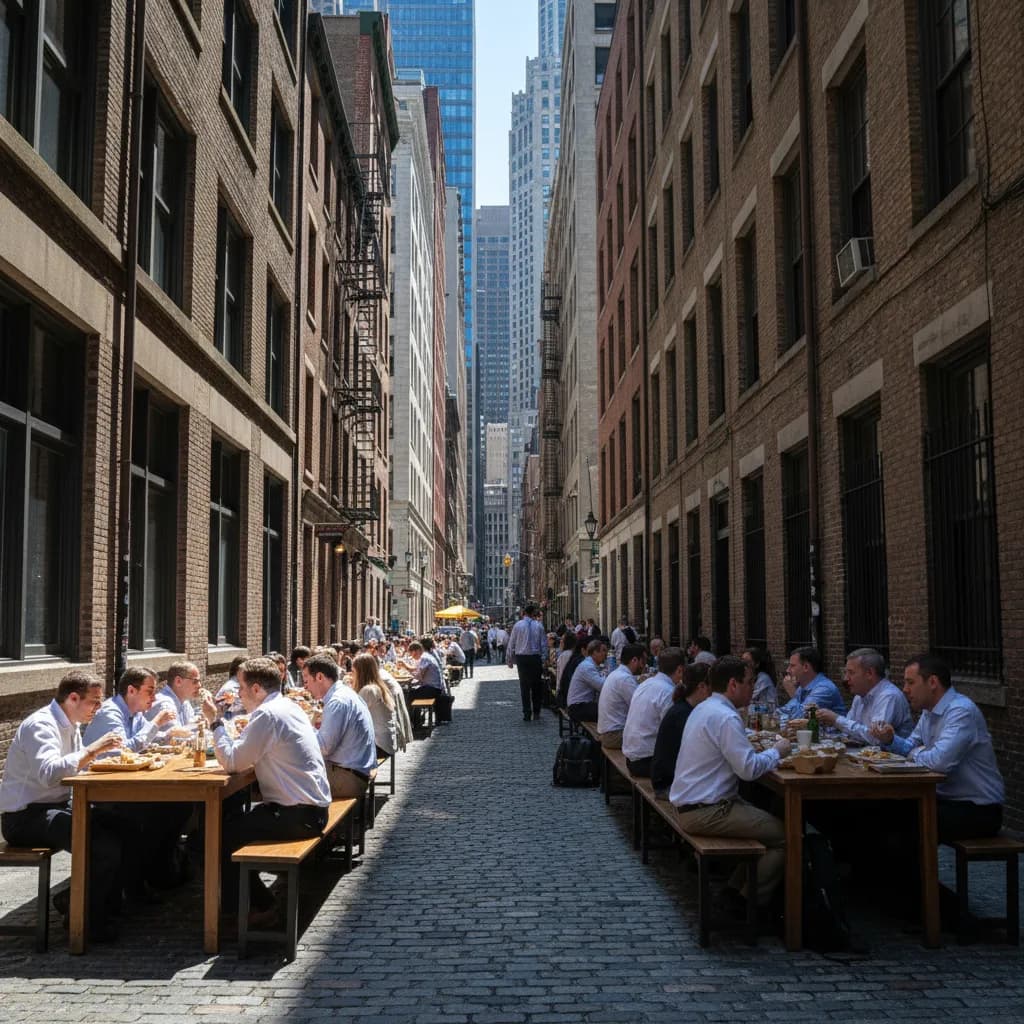
The cobblestone blocks around Stone Street and Hanover Square are some of the oldest streets in the city, and in warm months the lane fills with long communal tables where traders and analysts eat side by side. That energy makes it a fine choice for a relaxed catch-up with a counterpart you already know well. It is less suited to a first meeting, because shared tables and lunchtime noise leave little room for a careful conversation.
For something calmer in the same historic pocket, look for a room with booths or a back dining area away from the street. The surrounding blocks around Pearl Street and Broad Street hold taverns and dining rooms with deep roots in the neighborhood's history, which gives visitors something to talk about before business begins. A guest from out of town will often remember the setting long after the details of the menu.
The Waterfront Food Halls for Modest Budgets
Along the Hudson side, the covered complex at Brookfield Place gathers food counters and sit-down rooms under a glass winter garden with palm trees. It works well when you need to keep the bill small, since a counter lunch eaten at a quiet table near the windows feels relaxed rather than cheap. Find a table first, then order, so you are not juggling trays while looking for a seat in the crowd.
On the East River side, the Seaport district offers a different mood, with restored warehouses, cobbled piers and wide views of the Brooklyn Bridge. It is a good choice for a lunch that ends with a short walk along the water. Keep in mind that the waterfront can be windy on cold days, so pick a table indoors and save the walk for the brief stroll back toward the office towers.
Discretion Is Part of the Budget
In this neighborhood, the person at the next table might work for a competitor, a regulator or the other side of your deal. Choose a room with real space between tables, avoid naming companies or figures out loud and save the sensitive points for a moment when the dining room thins out. A booth against the wall or a table in the far corner gives you a natural layer of privacy without asking for a private room.
If the conversation involves anything truly confidential, consider a private dining room shared among a small group, or move the sensitive part to a short walk afterward. Battery Park and the esplanade along the harbor offer open space where nobody overhears, and a few minutes by the water often produces more candor than an hour across a crowded table.
Who Pays and How to Keep It Clean
The host pays, and the host is whoever sent the invitation. When your guest's policy requires them to cover their own meal, make it easy by suggesting a counter-service spot or asking the server for separate checks at the start rather than at the end. Nothing deflates a pleasant lunch faster than an awkward negotiation over the bill while both people are reaching for coats.
Keep the receipt, note who attended and record the business purpose in a sentence the same afternoon. Compliance teams in the Financial District see thousands of these reports, and a clear, modest, well-documented lunch never raises an eyebrow. It also protects your guest, which they will quietly appreciate.
A useful habit among FiDi regulars is to keep one dependable, reasonably priced room as a default for policy-sensitive guests. The staff come to know you, the table you like and the pace you need, and the bill lands in a predictable range every time. That familiarity is worth more than novelty when the guest is a regulator, an auditor or a client whose firm reviews every invitation it accepts.
When the Neighborhood Gets Too Busy
Lunch hour in the Financial District arrives all at once, as towers empty onto the narrow streets. If you can, sit down a little before the main wave, or push the meeting slightly later when the first rush has already returned to work. Should your chosen room be packed and loud when you arrive, walk to your backup rather than shouting through the meal. A five-minute detour is better than an hour of strained conversation.
Rain changes the calculation too. The covered passages linking the waterfront towers let a guest arrive dry, while the open lanes of the old district turn slippery and empty in bad weather. On a stormy day, the glass-roofed halls by the Hudson become the easy choice, and the cobblestones can wait for a clear afternoon when the outdoor tables come back to life.
Planning a Compliant FiDi Lunch With Karpo
The Karpo APP helps you shortlist rooms that suit both the guest and the policy. Describe the lunch in plain words, such as a quiet table for two near Wall Street with a modest bill and space to talk privately. Karpo suggests options that match, and you pick one plus a backup a few blocks away.
Add any detail that narrows the field, like a preference for counter service, a seat with a harbor view or a short walk from a particular subway stop. A clear description gives you a short list you can trust, so you spend your preparation time on the agenda rather than on comparing dozens of Lower Manhattan menus.
Ask Karpo for more information.
Keep reading
- Williamsburg Pierogi Lunch Spot Picker for Mixed Diets
 Brighton Beach Pierogi Lunch Spot Picker for Photographers
 Ridgewood Pierogi Lunch Spot Picker for Apartment Hunters