 Crown Heights Rainy Day Kids Activity Finder for Toddlers
Weekend Plans
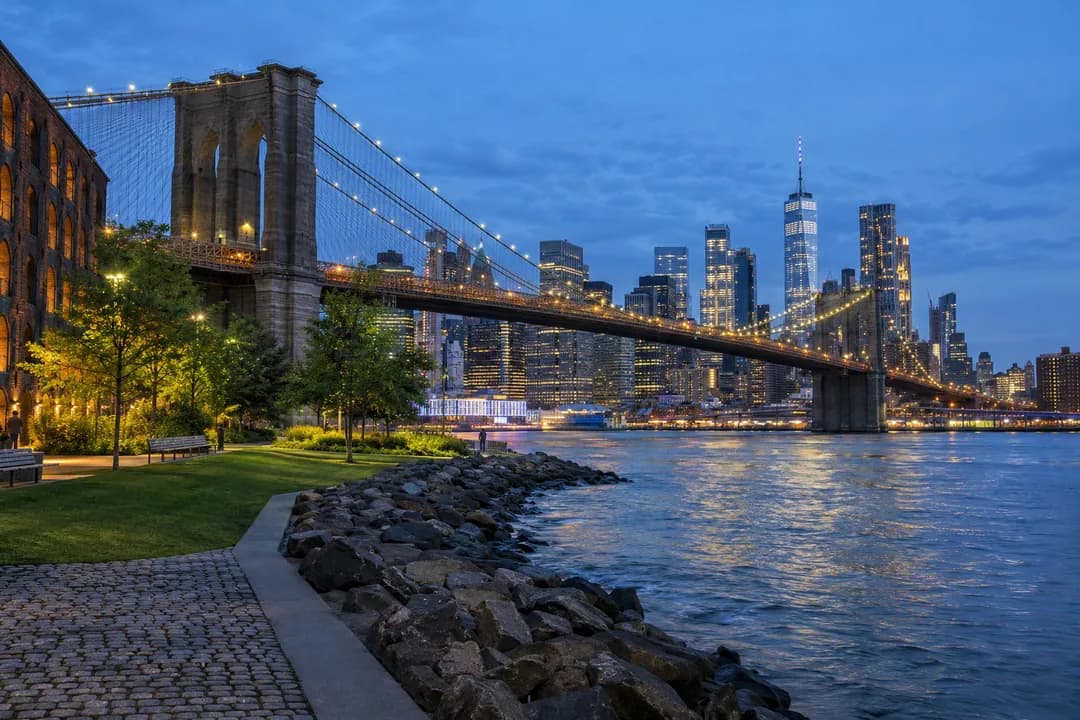
Waterfront Esplanade Walk: DUMBO Brooklyn River Route
Shape a DUMBO waterfront esplanade walk around Brooklyn Bridge Park, bridge views, a paced photo loop, and an easy branch when the promenade feels busy.
A DUMBO waterfront esplanade walk has a powerful opening image, but the route is better when Brooklyn Bridge Park becomes a sequence rather than a single photo stop. In Karpo APP, name the mood—bridge architecture, river breeze, family pacing, or a skyline loop—and say how much time the group can spend on foot. Add whether you want the busiest views early or late. The planner can then connect the bridge edge to a quieter park pause, preserve room for photographs, and create a clear exit before the promenade becomes tiring.
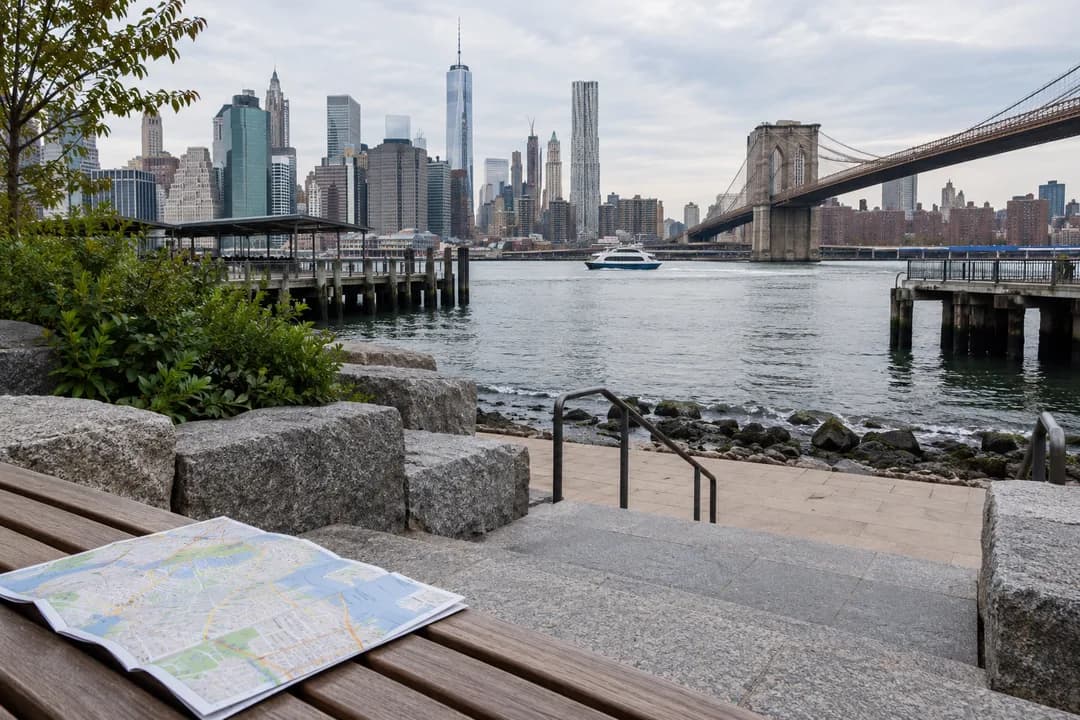
Anchor the First Bridge View
Begin with one bridge view and give it enough time to register. The stone geometry of the Brooklyn Bridge and the open East River horizon create a natural orientation point, so the first segment should not be crowded with extra instructions. Ask for a route that starts with the strongest frame, then moves toward a more relaxed walking surface. That order helps visitors who have never seen DUMBO understand where they are and keeps repeat walkers from rushing through the view they came to share. A single anchor is more useful than a dozen indistinct lookouts.
Let Pebble Beach Be the Pause
Pebble Beach works as a deliberate pause because it changes the posture of the walk. The group can sit, watch the water, or look back toward the bridge without needing another attraction to justify the stop. Put it in the brief as a reset rather than a destination with a deadline. If the river edge is busy, ask for a nearby alternative with the same visual purpose: somewhere to face the skyline, take a breath, and let the slower walkers catch up. The route stays generous when the pause is about attention, not consumption.
Use Jane’s Carousel as a Choice
Jane’s Carousel should be treated as a choice point. Families may want a playful detour; Adults on a photo walk may prefer to keep the bridge and water continuous. Tell Karpo APP which version fits the group, and make the carousel branch optional rather than automatic. This keeps the route from feeling like a list of required attractions. When the detour is selected, use it as a midpoint and return to the river afterward. When it is skipped, the walk still has a complete arc from bridge to park to skyline.
Plan Around Crowds and Cameras
DUMBO can become visually crowded around the most familiar viewpoints, so put crowd tolerance into the request. Ask for a route that takes the iconic frame early, then shifts to a less compressed stretch of park. If the group wants photographs, build in a few minutes for each person rather than assuming everyone can stop at once. A route that names its camera pauses prevents the faster walkers from disappearing and keeps the experience from becoming a series of apologies. The water is still the story when the crowd is treated as one route condition, not a surprise.
Make the Waterfront the Main Story
Let the waterfront carry the narrative: bridge stone, ferry wake, park lawn, and the skyline changing as the path turns. The planner is most useful when you ask for that progression directly. Avoid stacking unrelated landmarks from the wider neighborhood; They dilute the reason to be outside. A shorter DUMBO route can hold one bridge view, Pebble Beach, and a return along the river. A longer version can add another park segment only after the group has decided the first arc feels complete.
Offer a Short and Long Version
Offer a short and long version in the same plan. The short version should feel like a finished walk, not a cut-down compromise; The long version should add one meaningful change in scenery. This is especially helpful for groups that include visitors, grandparents, or children who cannot predict their energy. Use a visible regroup point before the branch. If the weather turns or the promenade tightens, everyone knows where to shorten without losing the essential bridge-and-river experience.
Keep Cobblestones Out of the Way
Cobblestones and uneven transitions are part of DUMBO’s texture, but they can also change the comfort of a route. Tell the planner to favour the smoothest connected waterfront sections and to flag where a slower pace makes sense. Shoes with reliable grip, a light bag, and hands free for railings are practical choices. The point is not to remove the neighborhood’s industrial character; It is to keep the route enjoyable for the people actually walking it. A good plan respects surfaces as much as scenery.
Save a Weather Backup
Save a weather backup that changes the ratio of open river to sheltered city edges. In strong wind, use the bridge view as a shorter exposure and let the park pause happen sooner. In rain, keep the route compact and avoid an ambitious return that leaves everyone wet and frustrated. Karpo APP can hold a base plan and a weather version, so the group chooses rather than improvises. Do not promise perfect conditions; Promise a clear decision rule for when to turn back.
End With the Skyline Behind You
Practical notes: bring water, allow time for photographs, and set one regroup point before the first bridge frame. The honest judgment is that DUMBO rewards restraint. Choose a few strong anchors—Brooklyn Bridge Park, Pebble Beach, and one optional carousel branch—then leave room to watch the river. End with the skyline behind you or the bridge receding into the route, not with a forced final stop. A waterfront esplanade walk succeeds when the group can remember the changing light and the shared pace more clearly than the checklist. Keep a little time for the unplanned view: a tug moving beneath the bridge, a sudden patch of sun on the water, or the way the stone changes colour after rain. Those observations are why the route needs margin. A planner can order the anchors, but the group should still have permission to linger when the neighborhood offers a better moment than the schedule predicted. This DUMBO route can end with a pause, a shorter return, or a clean handoff to the next plan; That flexibility keeps the bridge views enjoyable. Use the last few minutes to compare the view you expected with the view you actually received. The bridge may look different from the park lawn than from the waterline; The skyline may feel quieter after the crowd thins. A route that leaves this comparison unhurried gives visitors a more personal memory of DUMBO. It also gives regular walkers a reason to return without needing a new attraction. Keep the ending practical, but let one final visual question remain open: what changed between the opening frame and the walk back?
Ask Karpo for more information.
Keep reading
- Crown Heights Rainy Day Kids Activity Finder for Toddlers
 Jackson Heights Rainy Day Kids Activity Finder for Siblings
 Lower East Side Rainy Day Kids Activity Finder by Stroller