 Crown Heights Rainy Day Kids Activity Finder for Toddlers
Weekend Plans
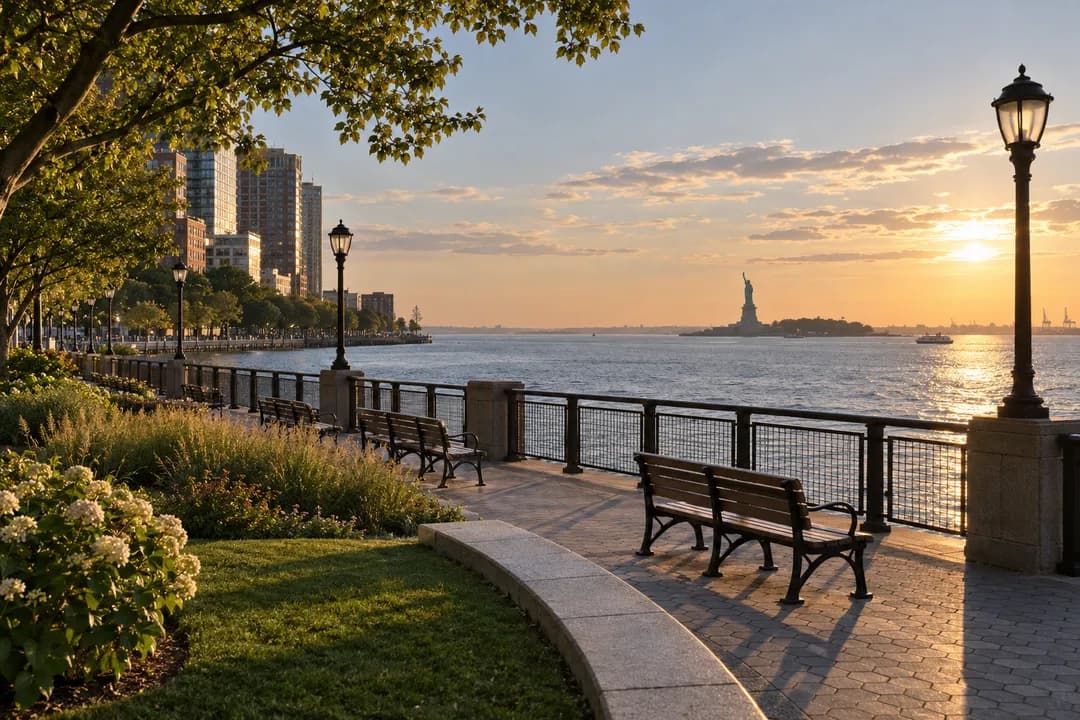
Waterfront Esplanade Walk: Battery Park City Route Plan
Build a Battery Park City waterfront esplanade walk around Hudson views, planted pauses, an easy loop, and a graceful shorter exit when weather shifts.
A Battery Park City waterfront esplanade walk works best when the Hudson is the thread, not a checklist of attractions. Start your request in Karpo APP with the mood you want: a slow river-facing reset, a stroller-friendly greenway, or a photo walk that keeps lower Manhattan in the background. Name the time you have, whether anyone needs frequent benches, and whether the group prefers a loop or an out-and-back. The planner can then shape a sequence that begins on the water, adds one planted pause, and leaves a simple exit toward the next plan. The useful result is a route with a rhythm, not a pile of map pins.
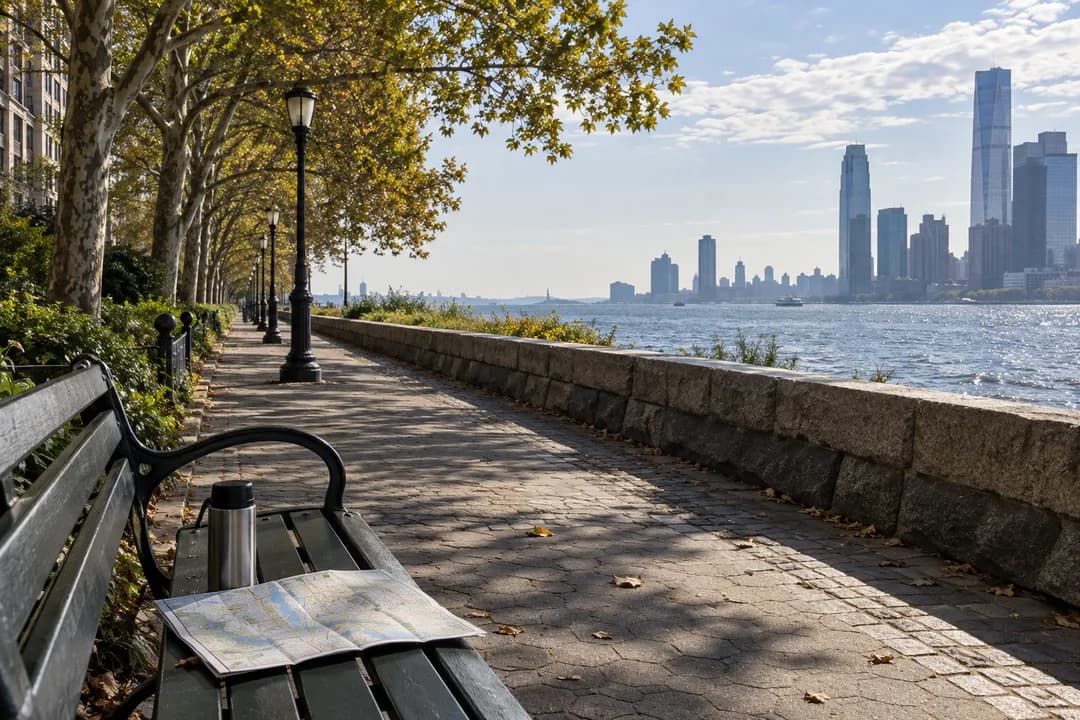
Start With the Hudson Edge
Use the Hudson edge as the opening chapter, giving the group a few minutes to settle into the scale of the river before asking it to move faster. A waterfront esplanade walk feels more generous when the first segment is uncomplicated: broad sightlines, a steady surface, and room for people to walk beside one another. Ask the planner to keep the first decision simple—stay close to the river or angle through the park—and to place the more detailed stop later. That sequencing helps a child, a visitor, or a tired friend understand the outing immediately rather than learning the route through constant instructions.
Use Rockefeller Park as Your Reset
Rockefeller Park is a strong reset point because it changes the sensory register without breaking the waterfront story. Instead of treating the green space as a separate destination, ask for a pause there between two stretches of river view. The route can hold a bench break, a quieter conversation, or a short look at the gardens before returning to the esplanade. If the group includes different walking speeds, make this the agreed regroup point. A planner brief that names the reset prevents the fastest person from turning the outing into a race and gives the slowest person a place to rejoin without apology.
Give Teardrop Park a Quiet Job
Teardrop Park earns one deliberate detour rather than a vague promise to explore every corner. Tell Karpo APP what the detour should do: add a playful landscape for children, offer a sculptural frame for photographs, or create a few minutes away from the river breeze. One job keeps the walk legible. If the group is focused on conversation, keep the detour short and return to the water. If the weather is mild and everyone is curious, let the route spend longer among the rocks, paths, and planted edges. The choice belongs in the plan so the stop feels intentional instead of accidental.
Alternate Open Water and Shade
Open water and shade should alternate across the route, especially when the Hudson side is bright or windy. Ask for a pattern of exposed view, planted relief, and another water-facing segment rather than one long stretch in the same condition. This is also a useful way to handle mixed preferences: one person gets the skyline, another gets a calmer path, and nobody has to argue about whether the walk is too sunny. Keep the transition gradual. The best Battery Park City route lets the landscape change every few minutes while the emotional pace stays steady.
Choose the Loop Before You Leave
Choose the loop before you leave the first waterfront segment. A compact circuit can use the esplanade, a park pause, and one return view; a longer version can add another northbound stretch when the group still has energy. Put the optional extension in the request as an explicit branch, not as an obligation. That gives the group a clear base route and a reason to continue. If someone wants to stop early, the plan still feels complete. If everyone wants more river, the extension is ready without another round of negotiation.
Make the Route Friendly for Mixed Paces
A mixed-pace walk needs social mechanics as much as scenery. Ask for regroup points that are visible, keep the most exposed stretches short, and avoid a sequence that forces the group to split at every crossing. The practical rule is to let one person walk ahead only between named pauses. Families can use the same structure for snack breaks or stroller adjustments; friends can use it for photographs without losing the conversation. Battery Park City rewards attention, so leave enough margin for a sudden ferry wake, an interesting planting bed, or a child who wants to stop and look.
Keep the Walk Social, Not Crowded
Build a second version for weather before the outing starts. In wind, preserve the river mood with shorter open sections and more time in the planted parks. In rain, ask for the most direct sequence between sheltered edges and a finish that does not require a long exposed return. The route does not need to pretend conditions are perfect. It needs a clear fallback, a shorter ending, and a way to keep the group together. Save both versions in Karpo APP so the decision becomes easy when the forecast changes instead of becoming a last-minute group debate.
Build a Rain and Wind Version
The neighborhood around the esplanade can support a gentle after-walk transition without turning the outing into another itinerary. Ask for a finish near the part of lower Manhattan that suits the group: a quieter residential edge, a civic landmark, or a route back toward transit. Keep that last movement short enough that the river remains the memory of the day. A good neighborhood stroll has a final visual note—water behind you, trees beside you, or the skyline opening again—so the ending feels composed rather than like the map simply ran out.
Finish Where the Mood Still Works
Practical notes: wear shoes that feel stable on a long paved promenade, bring water, and leave room for benches and spontaneous pauses. State accessibility needs in the first request, including step-free movement, stroller space, or a preference for fewer turns. Do not overfill the plan with every park and viewpoint. The honest judgment is that Battery Park City works better with three strong anchors than with a maximal route. Let Karpo APP keep the Hudson thread, Rockefeller Park or Teardrop Park as the reset, and one optional extension. Stop while the walk still feels generous; that is the difference between a waterfront esplanade walk people remember and one they merely complete. Use the final block to let the Hudson settle the pace. After the parks and planted edges, the river can become a simple horizon again, giving the group a chance to compare the route with the mood it wanted at the start. A small pause before the exit is useful for visitors, families, and anyone who needs to reset before transit. The walk does not need a dramatic finale. It needs a clear handoff and one last reason to look toward the water. Save that ending in the plan so the group leaves with energy rather than feeling they have been hurried out of the landscape.
Ask Karpo for more information.
Keep reading
- Crown Heights Rainy Day Kids Activity Finder for Toddlers
 Jackson Heights Rainy Day Kids Activity Finder for Siblings
 Lower East Side Rainy Day Kids Activity Finder by Stroller