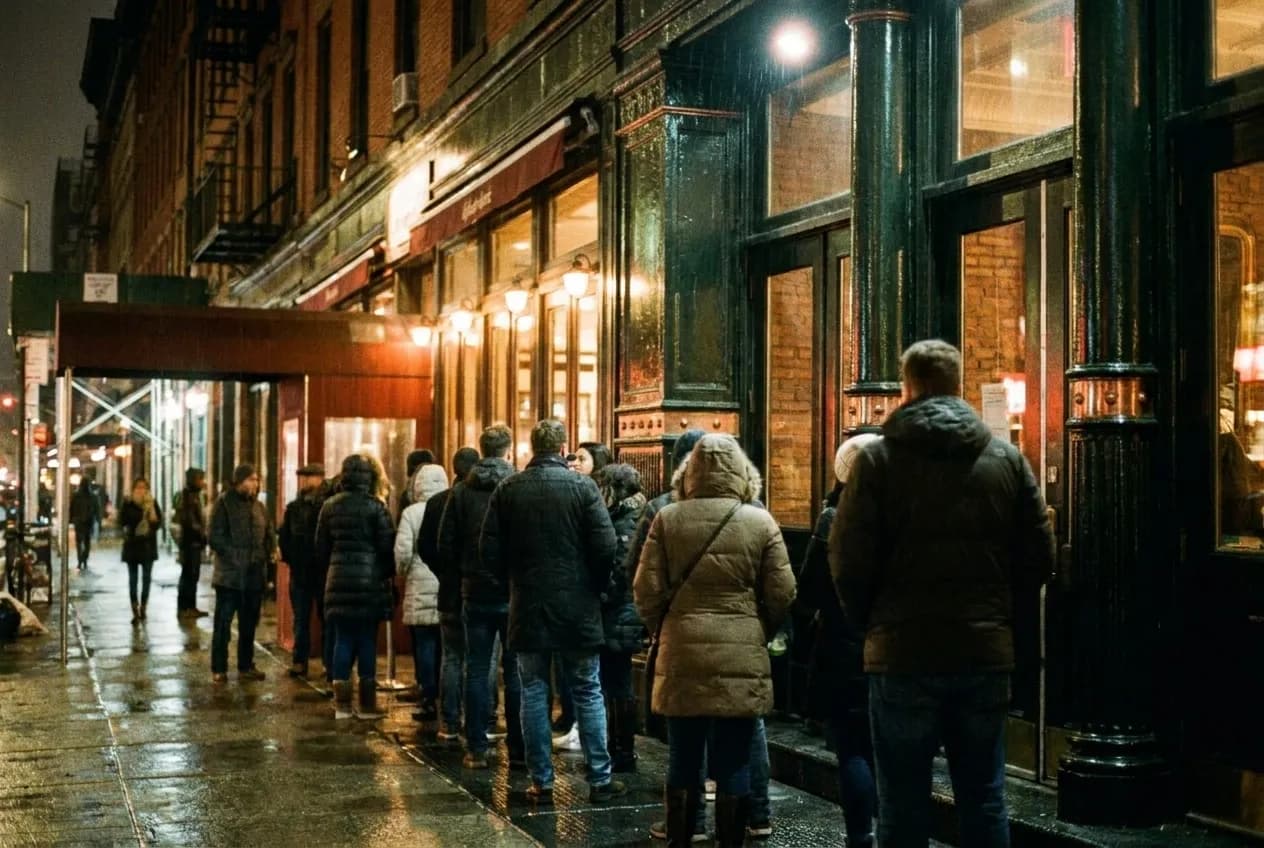
By late May, the West Village feels like it's been dipped in honey light. Trees canopy over the narrower streets, and foot traffic slows to a browsing pace. It's the season when specialty shops throw their doors open, and the neighborhood's small community of cartography dealers—tucked between the Federal townhouses and corner cafés—come into their own. These aren't the sort of stores that shout. You'll find them on second floors, in parlor-level storefronts with discreet brass plaques, or behind windows dressed with a single framed nautical chart. They cater to collectors, designers hunting statement pieces, and the happily map-obsessed who understand that old paper holds more than geography—it holds argument, error, ambition, beauty.
The West Village's cartographic lineage
The neighborhood's association with rare books and prints runs deep. By the mid-twentieth century, a cluster of antiquarian dealers had settled along the western edge of Greenwich Village, drawn by lower rents and proximity to wealthy collectors in townhouses just blocks away. That legacy persists in diminished but devoted form. Today's map dealers tend to occupy hybrid spaces—part gallery, part archive, part consultation studio—and they've adapted to a clientele that ranges from hedge-fund decorators to graduate students writing dissertations on colonial surveying techniques.
What unites them is an obsessive attention to provenance and condition. Walk into any of these shops and you'll be met with the scent of old paper—slightly musty, faintly sweet—and the sight of flat files stacked shoulder-high. Most keep their finest pieces in archival boxes; the wall displays are teasers, rotated seasonally. In late May 2026, several shops are featuring maritime charts and early American surveys, capitalizing on the school-trip and early-summer tourist traffic that wanders through the neighborhood.
Where to find 17th-century atlases
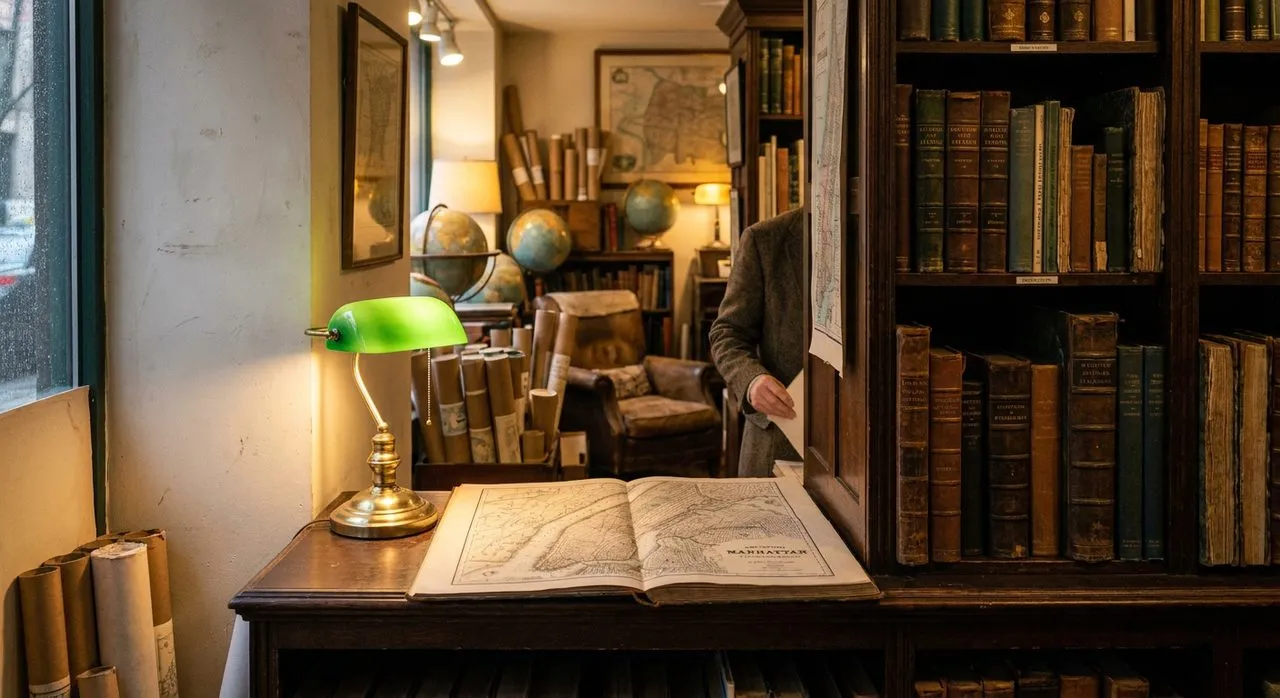
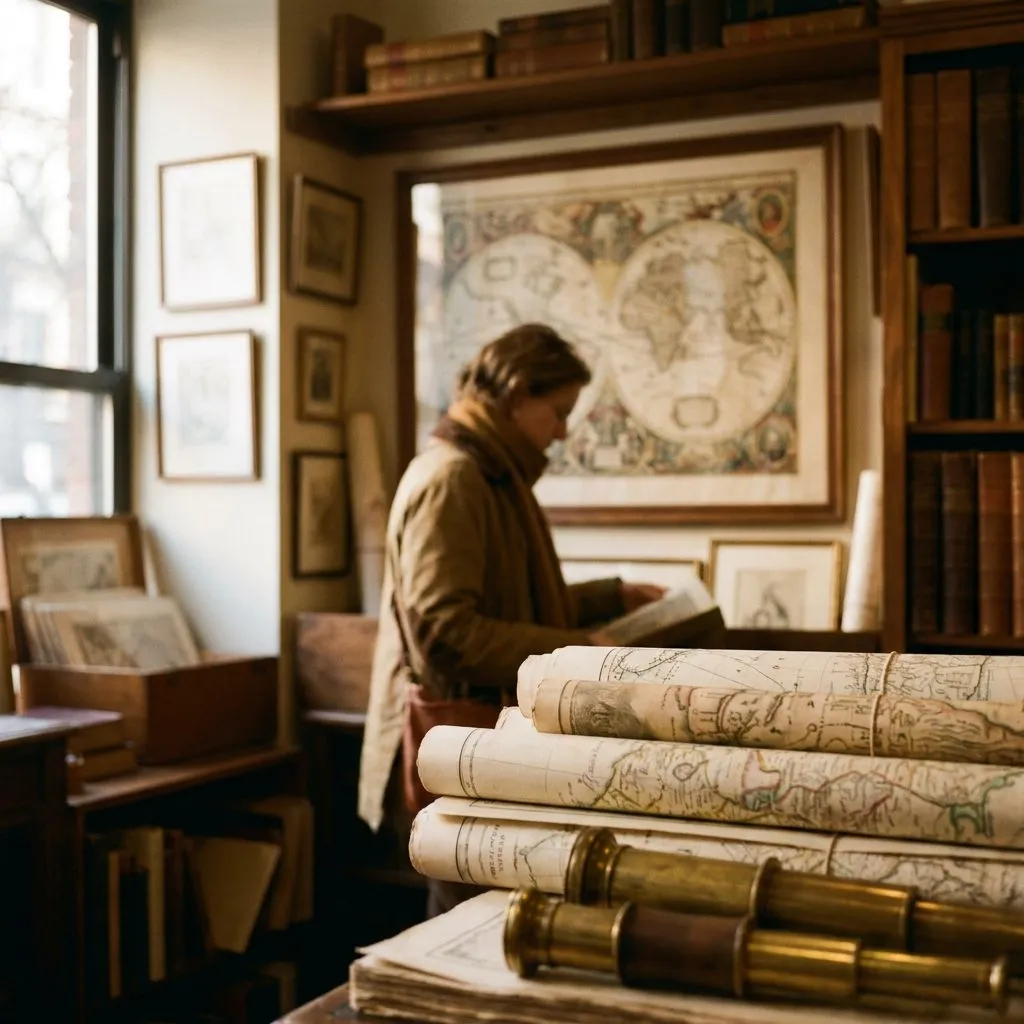
One parlor-level dealer in Lower Manhattan is known for rare atlases and maps. The shop—rarely advertised by name, known mostly through collector whisper networks—maintains a standing collection of Blaeu, Hondius, and Ortelius sheets, some hand-colored, some deliberately left in their uncolored state to showcase the engraver's line work. The proprietor, a second-generation dealer, will pull folios from a locked cabinet if you express genuine interest, handling each sheet with cotton gloves and a jeweler's care.
Prices for these pieces stretch into five figures, but the shop also stocks later reproductions and more affordable 18th- and 19th-century regional maps for those building a collection on a narrower budget. Appointments are encouraged but not required. The atmosphere is library-quiet, the kind of place where you instinctively lower your voice and mind the creak of the floorboards.
Contemporary cartography and the artist's hand
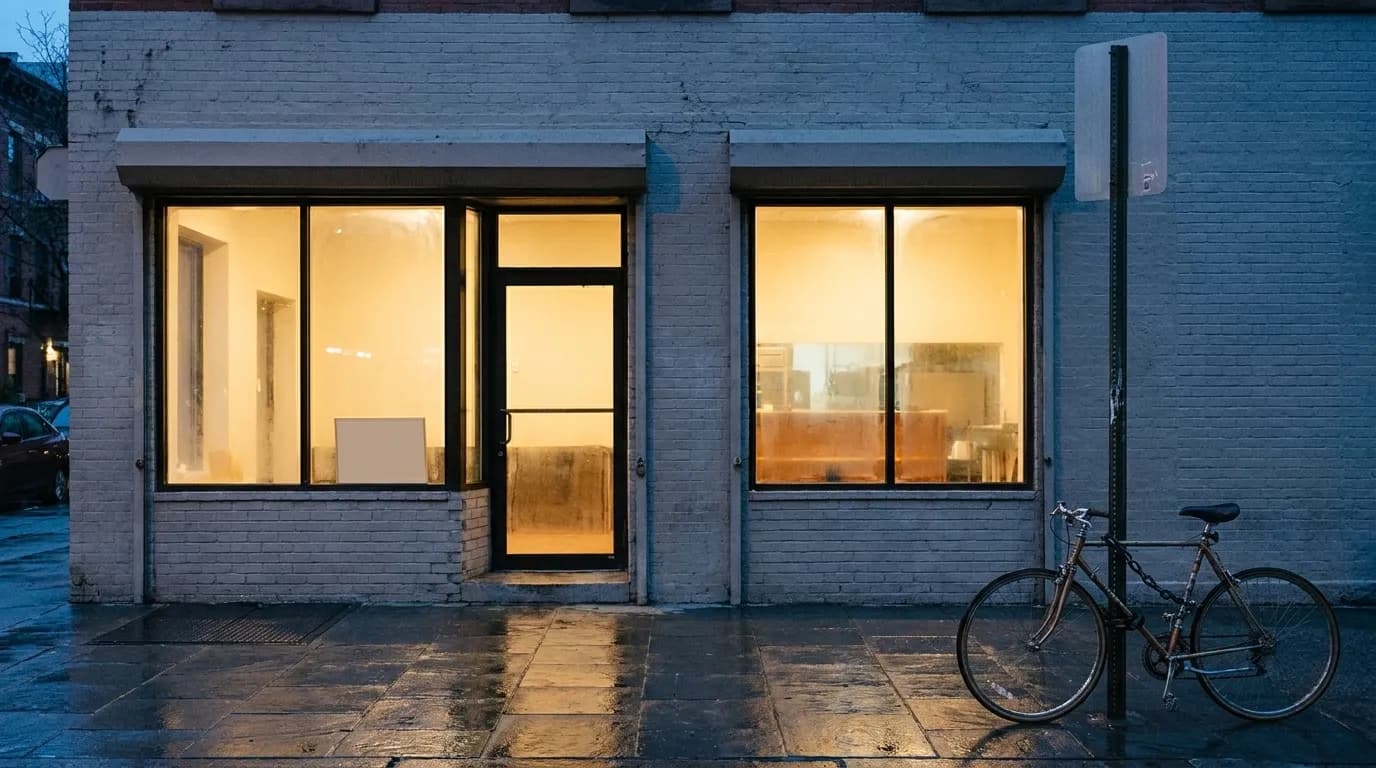
Not every map shop in the West Village deals in centuries-old paper. A small gallery space on a western stretch near the waterfront focuses exclusively on contemporary cartographic art—limited-edition prints, hand-drawn city plans, speculative geographies that reimagine subway lines or coastal boundaries in the age of rising tides. The work skews conceptual, often political. One recent series redraws Manhattan's grid to reflect Indigenous place names and pre-colonial waterways, another maps the city by sound zones rather than streets.
The gallery rotates shows every six weeks and keeps a permanent selection of smaller works in flat files along the back wall. Prices here are more accessible—often in the low hundreds—and the space attracts a younger crowd: architects, urban planners, design students. In late spring, the light through the western windows turns golden around six o'clock, and the gallery often stays open late on Thursdays, occasionally hosting informal artist talks that spill out onto the sidewalk.
Single subway map pages and transit ephemera
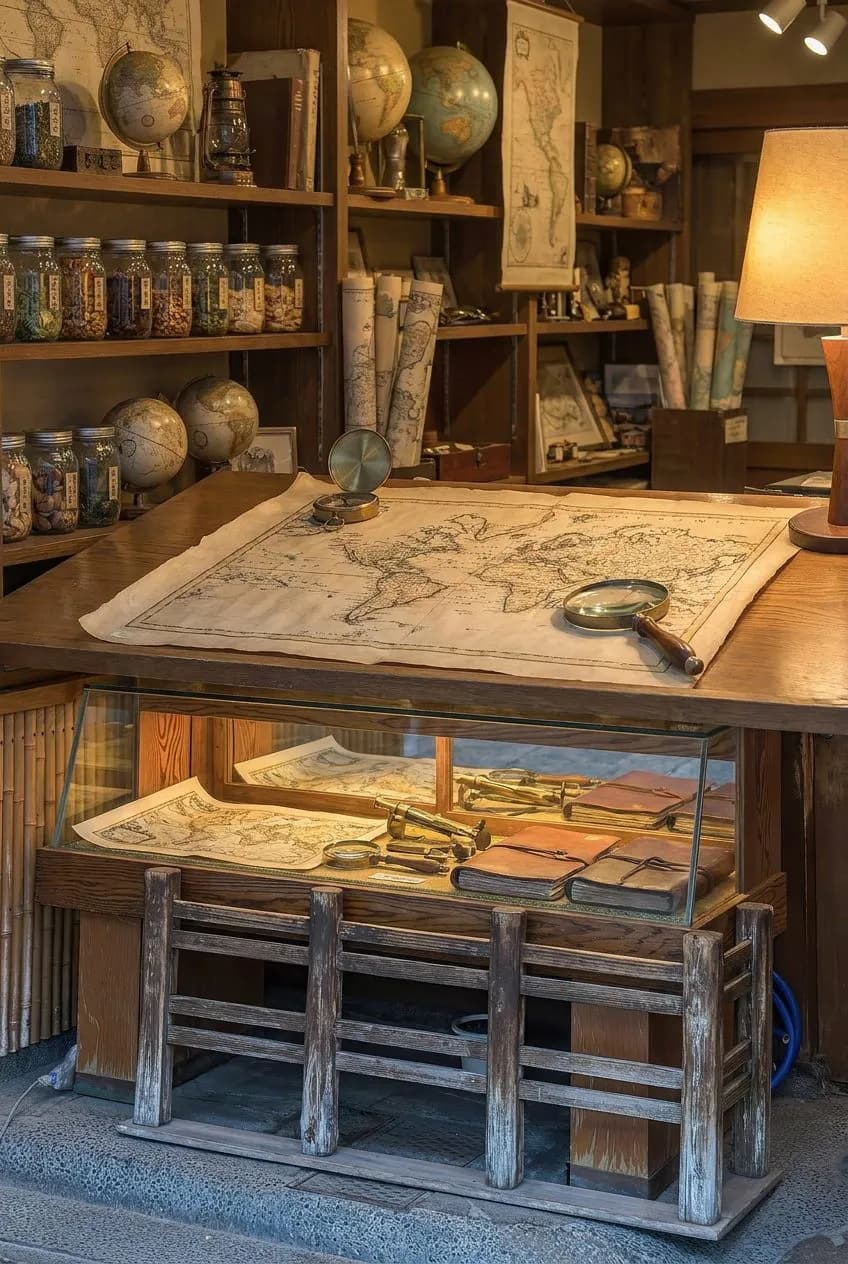
Tucked into a narrow storefront on a side street off Seventh Avenue, one dealer specializes in New York City transit ephemera. Here you can buy a single page from an original 1930s subway map, a framed token card from the 1980s, or a lithographed station sign salvaged during a renovation. The inventory is eclectic, occasionally bizarre—one bin holds rolls of outdated MetroCard designs, another contains blueprint fragments from the Second Avenue Subway's many false starts.
It's the sort of shop where regulars come in weekly to see what's new. The owner sources material from estate sales, municipal auctions, and retired MTA employees who've held onto things they shouldn't have. Prices are refreshingly reasonable; a well-preserved subway map page might run forty to seventy dollars, depending on age and condition. The vibe is cluttered, affectionate, and slightly conspiratorial—a place that understands the emotional architecture of a city as much as the physical one.
Nautical charts and the romance of coastlines
Given the neighborhood's proximity to the Hudson, it's no surprise that several dealers maintain strong inventories of nautical charts. These range from working navigation maps—still technically usable, though no serious sailor would rely on a chart from 1887—to decorative harbor surveys that capture the changing relationship between Manhattan and its waterfront. The detail is mesmerizing: depth soundings, anchorage notes, lighthouse positions, the names of long-gone piers.
One shop on a quieter block near Washington Square Park groups its charts by region—New York Harbor, Long Island Sound, the New England coast—and offers custom framing through a partner studio in Brooklyn. In late May, when sailing season begins in earnest, these charts draw a particular kind of buyer: weekend sailors looking for a piece that connects their pastime to history, or designers sourcing large-scale statement pieces for waterfront condo projects. The faded blues and sepia tones photograph beautifully, which hasn't hurt their appeal in the age of curated interiors.
Why people collect maps
Ask a dealer why someone spends thousands on a 17th-century map of a place they've never been, and you'll get variations on the same answer: maps are arguments about the world. They reveal what a culture valued, what it feared, what it misunderstood or deliberately erased. A map from 1650 might place California as an island; a survey from 1920 might omit entire neighborhoods deemed unworthy of official record. Collectors are drawn to these distortions as much as the accuracy. A map is a document of power, a snapshot of knowledge at a specific moment, often wrong in illuminating ways.
But there's also simple visual pleasure. The hand-lettering, the decorative cartouches, the sea monsters lurking in uncharted waters—these details reward close looking. In an era of frictionless digital navigation, old maps remind us that finding your way once required skill, interpretation, and a tolerance for uncertainty. They make good metaphors. They make even better wall art.
Practical notes
The West Village map shops are spread across several nearby blocks in and around Greenwich Village and Chelsea., with a few outliers closer to Washington Square Park. Nearest subway access includes the 1/2/3 at 14th Street, the A/C/E at 14th or West 4th, and the L at Eighth Avenue. Street parking is scarce and expensive; public garages cluster along Seventh Avenue South. Most shops keep limited hours—late mornings through early evenings, often closed Mondays or Tuesdays—so verify hours directly before visiting. Accessibility varies; many occupy older townhouse spaces with steps and narrow doorways. Bring patience, a willingness to browse slowly, and a phone or notebook to jot down inventory numbers if something catches your eye. Serious collectors should mention their interests upfront; dealers are generous with knowledge when met with genuine curiosity.
Tags: #VintageMapNYC #WestVillageShopping #CartographyLovers #AntiqueMapCollectors #NYCHiddenGems #TheOddEdit #ManhattanNeighborhoods #MapCollecting #GreenwichVillage #UrbanExploration #LateSpring2026 #NYCCulture #RareBooksAndMaps #CityFinds #MapArt
Sources consulted: West Village · Cartography · MTA Maps · NYC Planning · Time Out New York Shopping
All trademarks are the property of their respective owners.