 Chelsea Consignment Shop Crawl Planner for Your First Studio
Hidden Gems & Odd Finds
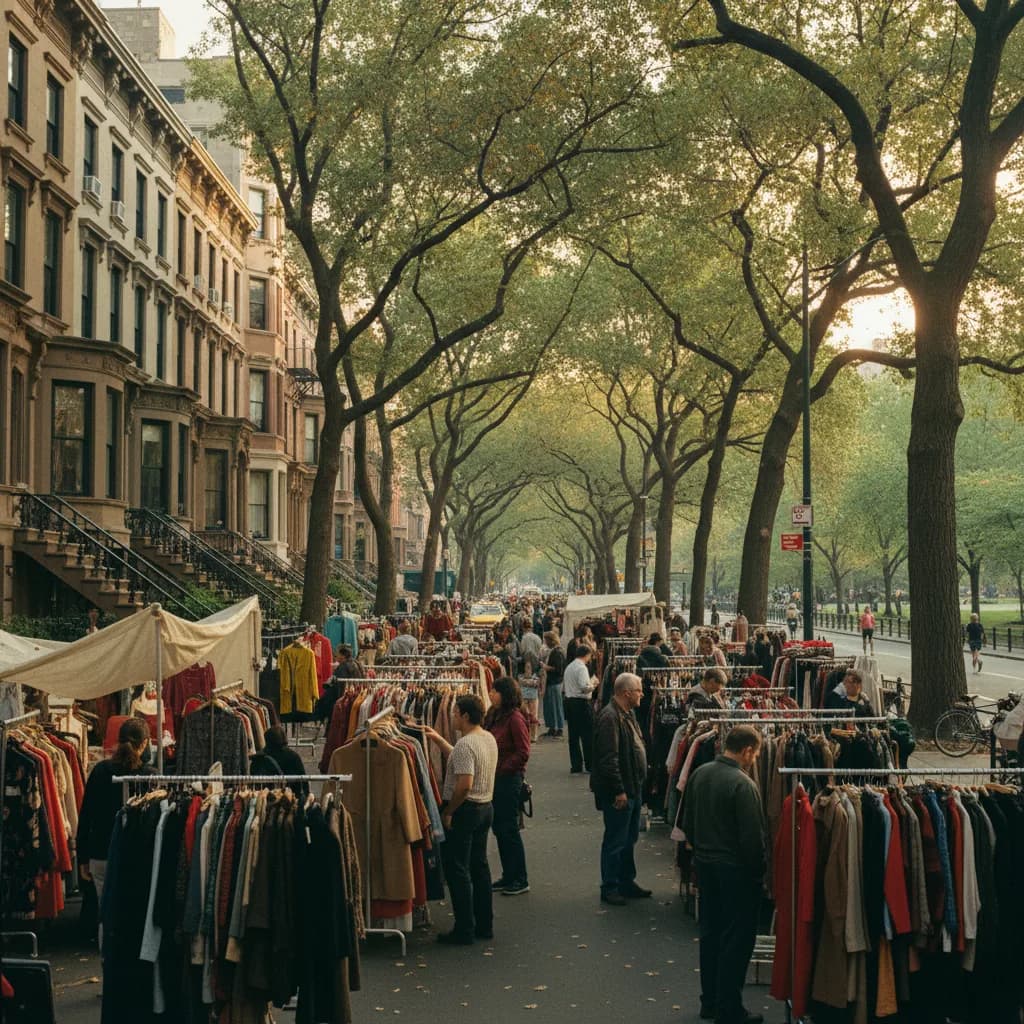
Upper West Side Vintage Clothing Market: Quiet Park Routes
Plan vintage clothing market walking loops through the Upper West Side, browsing curated garment racks, quiet residential rows, and peaceful park benches.
The Upper West Side, a venerable New York City district, offers a distinctive backdrop for vintage textile exploration, differing markedly from the frenetic energy of downtown markets. Here, the architectural grandeur of pre-war limestone buildings along Columbus and Amsterdam Avenues provides a quiet elegance, setting the stage for a more contemplative hunt for sartorial treasures. This guide navigates the nuanced landscape of the UWS, focusing on the sensory experience of garment discovery within its tree-lined corridors. Prepare for a refined urban adventure, where history is palpable in every stitch and texture encountered along these historic streets, far from generic shopping experiences.
Morning Strolls Amidst Pre-War Grandeur and Market Buzz
Beginning an Upper West Side vintage expedition necessitates an early arrival, ideally via the 72nd Street express stop (1/2/3) or the 81st Street local (B/C) subway lines, strategically positioning oneself for a leisurely eastward stroll towards Columbus Avenue. The morning light bathes the leafy pre-war limestone apartment corridors, particularly along West 77th Street, where the American Museum of Natural History’s imposing facade signals the neighborhood's rich cultural tapestry. The air carries a distinct quietude, a stark contrast to other Manhattan districts, as early risers and dog walkers comprise the initial pedestrian market foot traffic, offering an unhurried atmosphere for initial observations of street-side stalls and nascent pop-up displays.
Navigating the nexus of Columbus and Amsterdam Avenues, one immediately discerns the characteristic architectural vernacular of the Upper West Side: ornate cornices, distinguished stoops, and wrought-iron detailing that frame the retail spaces. This established elegance complements the evolving landscape of vintage textile vendors, often appearing in curated weekend markets or within established antique collectives. The gentle hum of city life begins to awaken, but the initial hours preserve a tranquility conducive to focused browsing, allowing for an intimate connection with the historical context of each garment before the mid-morning rush brings a fuller stream of shoppers and a more bustling energy to these iconic thoroughfares.
Authenticating Vintage Denim: Selvedge, Rivets, and Chainstitching
The hunt for authentic vintage denim demands a meticulous, tactile inspection, beginning with the internal seam. True vintage selvedge denim, a hallmark of earlier manufacturing, reveals a clean, self-finished edge, often characterized by a red or white thread line, indicating the fabric was woven on a shuttle loom, producing a tighter, more durable weave. Examine the weight and stiffness of the denim; older denim often possesses a heavier, more rigid hand feel due to less aggressive finishing processes. The absence of stretch fibers is a crucial indicator, as elastane became common much later, so a pair of vintage jeans will possess an unyielding quality.
Further scrutiny should focus on the hardware and construction techniques. Copper rivets, particularly those with a flat top and slightly raised edges, were prevalent in early workwear, often stamped with manufacturer names or simple geometric patterns. Union tags, sewn into the waistband or pocket lining, provide invaluable historical context, identifying the era of manufacture and the labor union involved in production. Observe the stitching: historic chainstitching, found on hems and waistbands, exhibits a distinctive, looping pattern on the underside, a labor-intensive technique largely replaced by lockstitching in modern manufacturing. The robust workwear canvas of earlier jeans possesses a coarse, honest texture, reflecting its original utility and resilience.
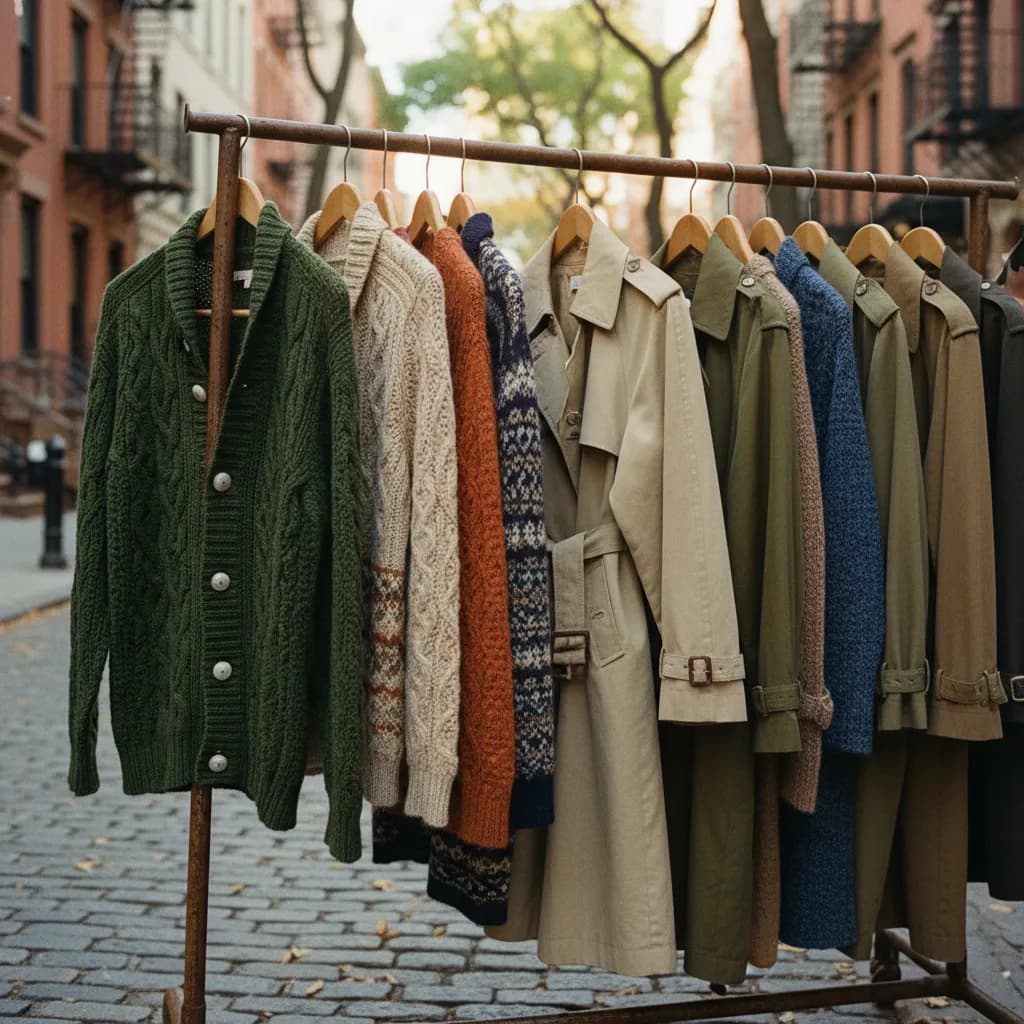
Tactile Evaluation of Vintage Knitwear, Silks, and Leathers
When assessing vintage knitwear, the hand-feel is paramount. Run your fingers over the garment to discern the fiber content; natural fibers like wool, cashmere, and angora often retain a luxurious softness, while acrylics can feel slick or synthetic. Examine the construction of retro cardigans: look for fully fashioned seams, where panels are knitted to shape rather than cut and sewn, indicating higher quality craftsmanship. Horn buttons, carved from natural material, exhibit unique striations and subtle variations in color, contrasting sharply with uniform plastic. The weight and drape of the knit, along with the resilience of the ribbing, speak volumes about its age and care.
Shifting focus to accessories, the allure of vintage silk scarves lies in their vibrant prints and delicate, yet durable, weave. Inspect the rolled edges for hand-stitching, a sign of artisanal quality. The luster of aged silk, often a soft sheen rather than a glaring brightness, signifies its authenticity. For leather jackets, the patina is a critical indicator of age and wear; a supple, worn-in texture with natural creases and variations in color across the surface tells a story, distinct from the uniform finish of new leather. Feel the weight of the hide and the flexibility of the grain; older leather, particularly from quality manufacturers, often maintains a rich, substantial feel even after decades of use.
Public Park Respite: Central Park Strawberry Fields and Verdi Square
After a concentrated period of market browsing, stepping away for a peaceful respite becomes essential for processing and reflecting on potential acquisitions. Central Park's Strawberry Fields, a short walk from the Columbus Avenue corridor near 72nd Street, offers a tranquil oasis. Here, the "Imagine" mosaic provides a contemplative focal point, surrounded by lush landscaping and mature trees. The acoustic ambiance, far removed from the city's vehicular hum, allows for an unhurried review of morning finds. Spreading garments on a bench, one can critically re-examine textures, colors, and construction details under natural light, away from the immediate pressure of the market.
Alternatively, Verdi Square, located at the intersection of 72nd Street, Broadway, and Amsterdam Avenue, presents another ideal spot for a coffee break and quiet evaluation. This triangular park, graced by the majestic Giuseppe Verdi monument, offers strategically placed benches amidst thoughtful landscaping. The gentle murmur of the city, filtered by the park's trees, provides a calming backdrop. This pause is not merely for rest, but for deliberate assessment: checking seams, scrutinizing minor imperfections, and considering how each piece integrates with one's existing wardrobe. Such moments of urban reprieve are integral to a successful and thoughtful vintage shopping experience, ensuring decisions are well-considered.
Dressing for the Urban Hunt: Layers, Footwear, and Essential Tools
Navigating the Upper West Side's vintage markets effectively demands practical attire, beginning with adaptable layers to accommodate shifting indoor and outdoor temperatures, a constant in New York City's dynamic climate. A lightweight, packable jacket or cardigan proves invaluable, allowing for quick adjustments as one moves between sun-drenched streets and cooler interior spaces of market stalls or antique collectives. The ability to shed or add a layer prevents overheating or chilling, maintaining comfort during extended periods of walking and focused inspection of garments. Prioritizing comfort over strict fashion ensures sustained energy throughout the day's expedition.
Footwear choice is equally critical: comfortable walking shoes with adequate arch support are non-negotiable for covering significant ground across multiple blocks and standing for prolonged periods during garment evaluations. Blisters or aching feet detract significantly from the experience. Furthermore, equipping oneself with essential tools enhances the vintage hunt: a small, retractable measuring tape is indispensable for checking garment dimensions against personal preferences, especially for items without clear sizing. Finally, a durable, reusable canvas tote bag or two will accommodate purchases, reducing reliance on single-use plastics and signifying a mindful approach to both shopping and sustainability in the urban environment.
Seamless Transit and Digital Navigation: 72nd Street & 81st Street Connections
The Upper West Side’s vintage market corridors are exceptionally well-served by public transit, facilitating a seamless exploration of connected pedestrian loops. The 72nd Street transit hub, encompassing the 1/2/3 express lines and the B/C local lines further west, provides immediate access to Columbus and Amsterdam Avenues. This central location allows for easy entry and exit from the neighborhood, minimizing travel time and maximizing market browsing. The 81st Street station (B/C lines) offers an alternative northern entry point, ideal for those wishing to explore the markets southward, creating a natural flow for a self-guided walking tour without backtracking.
For a truly optimized vintage market experience, leveraging digital navigation tools becomes invaluable. The Karpo APP, designed for urban exploration, allows users to save favorite spots, meticulously map walking routes between various market clusters and public parks, and accurately time neighborhood transit connections. This functionality streamlines the day, ensuring efficient movement and preventing unnecessary diversions. By integrating public transit options with tailored walking paths, the Karpo APP empowers vintage enthusiasts to fully immerse themselves in the Upper West Side's offerings, transforming a simple market visit into a comprehensively planned and enriching historical fashion expedition, connected by precise digital guidance.
Ask Karpo for more information.
Keep reading
- Chelsea Consignment Shop Crawl Planner for Your First Studio
 East Village Consignment Shop Crawl Planner: Leather Jackets
 Harlem Consignment Shop Crawl Planner for a Jazz Night Look