 Fort Greene Holiday Market Browsing Guide for Young Shoppers
Weekend Plans
NYC Urban Wildlife Sanctuary: Walk Saint Francis Woodlands
Saint Francis Woodlands pairs a pond with wooded slopes in Staten Island, offering a shared boardwalk outing built around close looking and patient pauses.
Saint Francis Woodlands puts wooded slopes and an upland swamp inside an NYC urban wildlife sanctuary outing on Staten Island. DEC places it within the Greenbelt and describes short trails alongside a boardwalk and pond setting. The appeal is a change of level and perspective, rather than a long expedition: look across the damp ground, follow the forest rising beyond it and give a small landscape your full attention. Build the visit around those contrasts instead of arriving with a demand to see a particular animal.
Let the pond be the meeting point for your attention
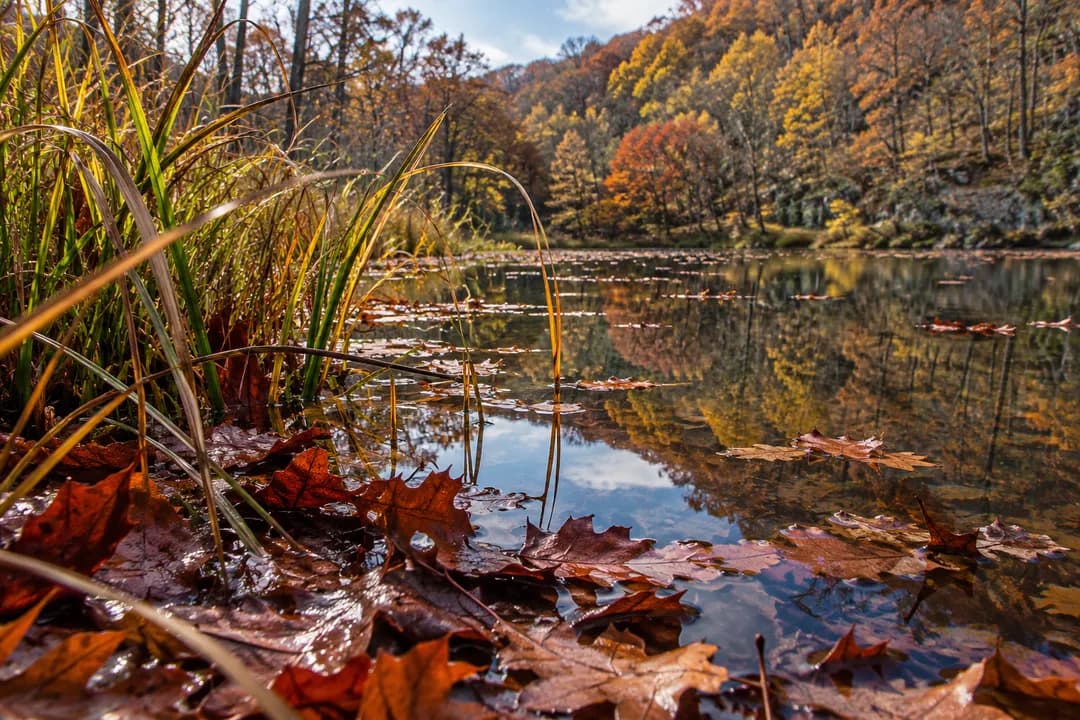
A group can walk together and still miss what the others are noticing. At Saint Francis, begin with a shared subject: the woodland around Priory Pond. Ask each person to choose something visible across the water, then explain how they found it. One might notice reflected branches, another a gap between trees. Giving directions through a real landscape is a useful skill, and the pond provides a common frame without requiring anyone to identify a species.
Keep the exercise conversational rather than competitive. If a companion cannot locate the detail you mean, change the description rather than insisting it is obvious. The purpose is to slow the group enough to look together. You might discover that the most interesting part is not the chosen object but the difference between your viewpoints. A tree reflected in water can be clear from one position and disappear behind glare from another.
Why a raised route changes the experience
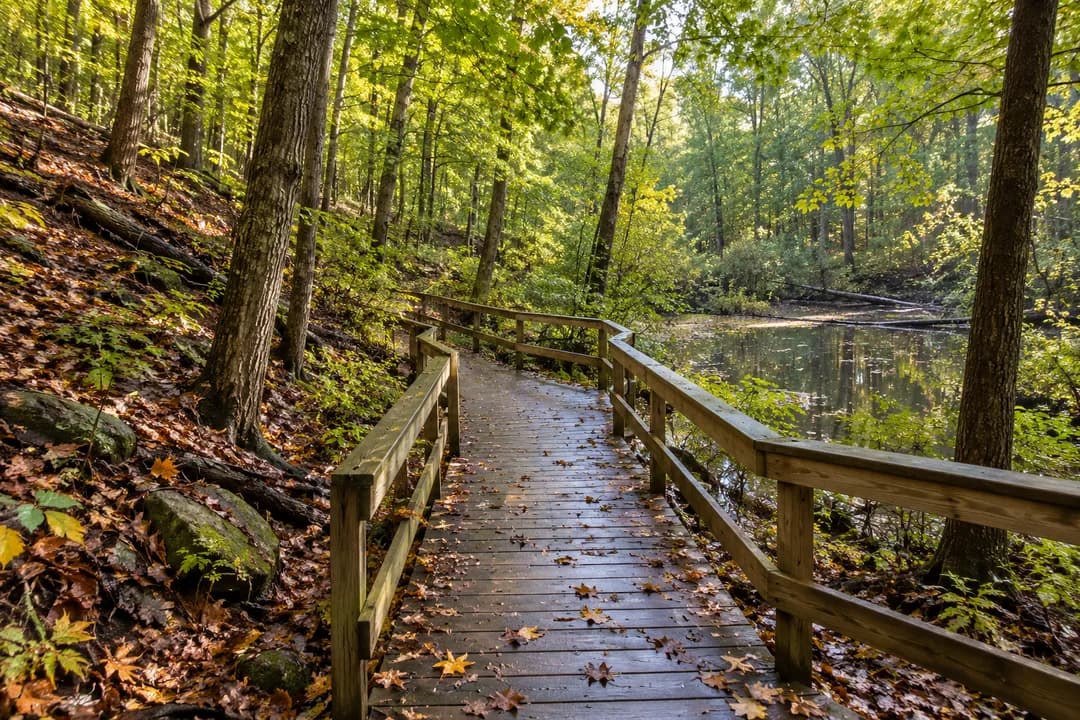
DEC describes an accessible boardwalk and viewing platform at Saint Francis Woodlands. These create an opportunity to look into wetland surroundings while keeping visitors on an established surface. Notice how the view changes when the walking route has a definite edge. Instead of choosing the closest piece of ground, you compose the scene from the places provided for people. That limitation can make an outing more deliberate and keep a camera from dictating every movement.
A boardwalk is also shared space. Pause where there is room for others and gather bags close to your body. If your group spreads out, step back together before discussing the next feature. People using mobility equipment need the same unhurried passage as anyone else. Let a passing visitor go by before lifting binoculars again. Courtesy here is practical: it keeps attention on the woodland rather than on negotiating around a cluster of spectators.
Look uphill before deciding where to go next
The state's description includes forested hills as well as upland swamp. That combination gives Saint Francis a different visual rhythm from a broad, open marsh. From a permitted viewpoint, compare the layered tree cover above you with the vegetation closer to damp ground. Where does the background vanish? Which trunks appear continuous, and which disappear behind leaves? You are reading the depth of a small woodland, rather than counting how many paths you can finish.
Short trails can tempt visitors into treating every junction as an invitation to add one more section. Resist that impulse if your companions are enjoying the pond. Agree on whether the next part is a walk or another observation stop. An outing for someone testing binoculars will move differently from one for a child who likes reflections. There is no need to force both people into a brisk loop simply because the map shows connections.
Small animals should remain small in the plan
DEC associates the main stream's small dam with opportunities to glimpse reptiles and amphibians. Read that as habitat context, not an appointment with wildlife. Look from the established route and let vegetation screen whatever it screens. Turning stones, lifting wood or moving leaves to expose an animal changes the encounter. It also gives children the wrong lesson about how to approach places where much of the life is hidden.
A good alternative is to talk about what the visible scene offers an animal: cover, water and places you cannot see from the path. You need not claim a particular creature lives beneath a particular branch. If something moves, watch its direction before reaching for a camera. If it disappears, stay with the wider scene. The woodland remains interesting after a momentary sighting ends, and your group can return to it without searching for a replacement spectacle.
Make a pair of pictures instead of a collection
For a simple photography project, take one wider picture showing the relationship between the pond and woodland, then a second of a visible detail. The two images should answer different questions. The first explains where you were looking, while the second explains what held your attention. Reflections, leaf edges or a pattern of trunks can do that work. You do not need a close view of wildlife to give the pair a subject.
Choose your position first and keep the route clear. If the detail requires leaning beyond a railing or walking into damp ground, choose another one. A restrained project can be especially enjoyable for a family because it provides an ending: once everyone has a pair, put the cameras away. Share the pictures later, when you can look properly, instead of spending the entire woodland visit deciding which image deserves to be sent to someone immediately.
Keep the Greenbelt connection as context
Saint Francis is part of a wider Greenbelt landscape, but that does not mean a first visit has to become a traverse of it. Treat this woodland as one chapter. If you want to explore another part of the Greenbelt, make that a separate plan with its own mapped route and purpose. The smaller visit can help you learn what your group likes: shaded paths, water views, pauses for photography or the feel of walking under trees.
For a neighborhood finish, retrace the established exit rather than following an apparent opening toward nearby property. Discuss the next stop once you are out of the narrow woodland route. You can use the Karpo APP to ask for ideas for somewhere to sit afterward, describing whether you want conversation or a quiet break. Keep enough time for that ending so the last part of the visit is a choice rather than an impatient rush away from the pond.
Practical Notes for a shared-surface visit
Carry water and a layer you can put on during a stationary pause. Keep equipment compact and accessible without spreading it across the path. DEC's site guidance includes carrying litter out and avoiding unauthorized trail building or tree cutting. Leave the place arranged as you found it. Even a fallen branch can be part of the woodland scene, and tidying it for a photograph serves the picture at the expense of the subject.
Use DEC's Saint Francis Woodlands map to understand the trail layout and its separate accessible features. Choose a route that fits your own needs, and shorten the outing if a section is uncomfortable. A satisfying finish might be one person showing another a reflection they had overlooked. That is a modest achievement, but it suits this small woodland: people sharing a real view, with no need to stage an encounter or turn a quiet pond into a performance.
Ask Karpo for more information.
Keep reading
- Fort Greene Holiday Market Browsing Guide for Young Shoppers
 DUMBO Holiday Market Browsing Guide for Gifts to Mail Home
 Midtown East Holiday Market Browsing Guide for Commuters