 Fort Greene Holiday Market Browsing Guide for Young Shoppers
Weekend Plans
NYC Urban Wildlife Sanctuary: Brookfield Grassland Bird Walk
Brookfield Park offers a Staten Island grassland bird walk beside tidal marsh, where a restored landscape makes habitat observation more than a species list.
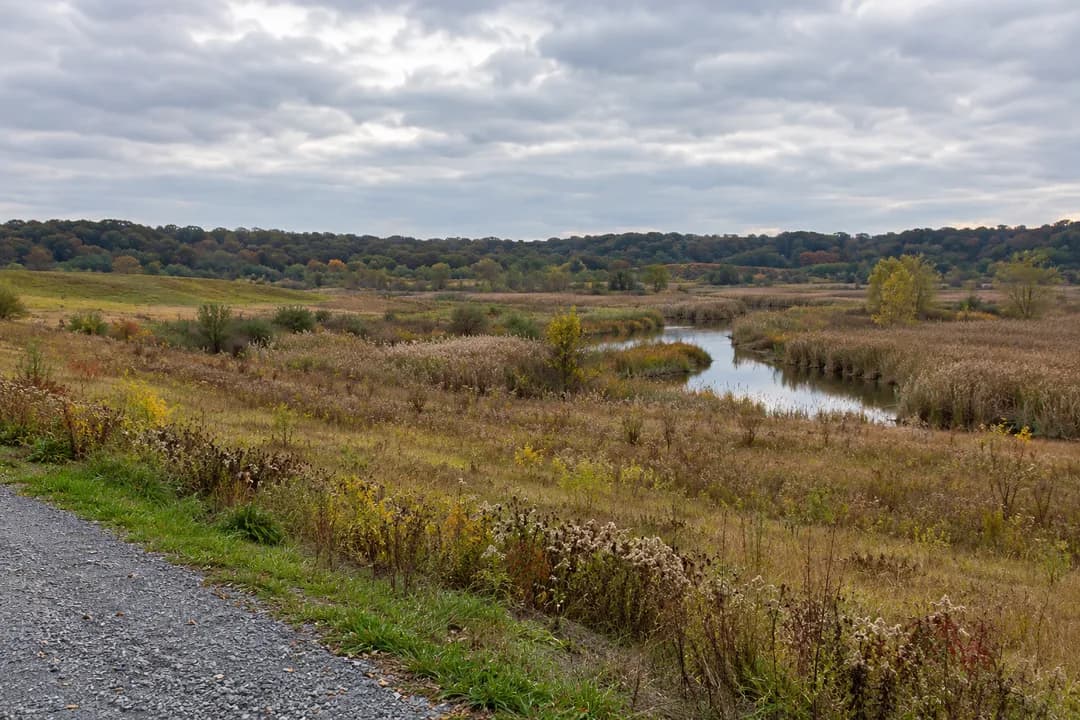
Brookfield Park makes an NYC urban wildlife sanctuary outing a lesson in landscape repair. On Staten Island, a former landfill became a public park with meadow habitat beside Richmond Creek's wetlands. Birds are part of the attraction, but the deeper question is how a worked landscape becomes useful to wildlife again. Begin with the broad view across grass and marsh. You can understand something important here before identifying a single bird: city infrastructure and living habitat are not always separate worlds.
The landscape has a before and an after
The city's account of the transformation describes a landfill cap, clean soil and plantings intended to stabilize the ground and attract wildlife. Freshkills Park's account places Brookfield's opening in December 2017. Those facts change how to read the scene. The low-growing vegetation is not evidence that you have found a piece of untouched countryside. It is part of a managed recovery, with a public walking landscape above a site whose earlier use still matters.
Look at that recovery without turning it into a simple success slogan. The interesting subject is the arrangement of habitats: grassland, tree cover and wetland near one another. From an established path, notice which edges are sharp and which are gradual. A line of shrubs can interrupt a field, while a reed bed can conceal the boundary of water. You need not decide whether every patch is healthy or restored perfectly to see how varied the landscape is.
For a first visit, choose one stretch with a view of both meadow and marsh, then spend time there. A long circuit can scatter your attention across too many subjects. If you are walking with someone new to birding, tell the site's transformation story before opening a field guide. It supplies a reason to look at familiar birds as well as unusual ones. Every ordinary use of cover, water or vegetation belongs in the story of what this place has become.
Scan the open sky without neglecting the grass
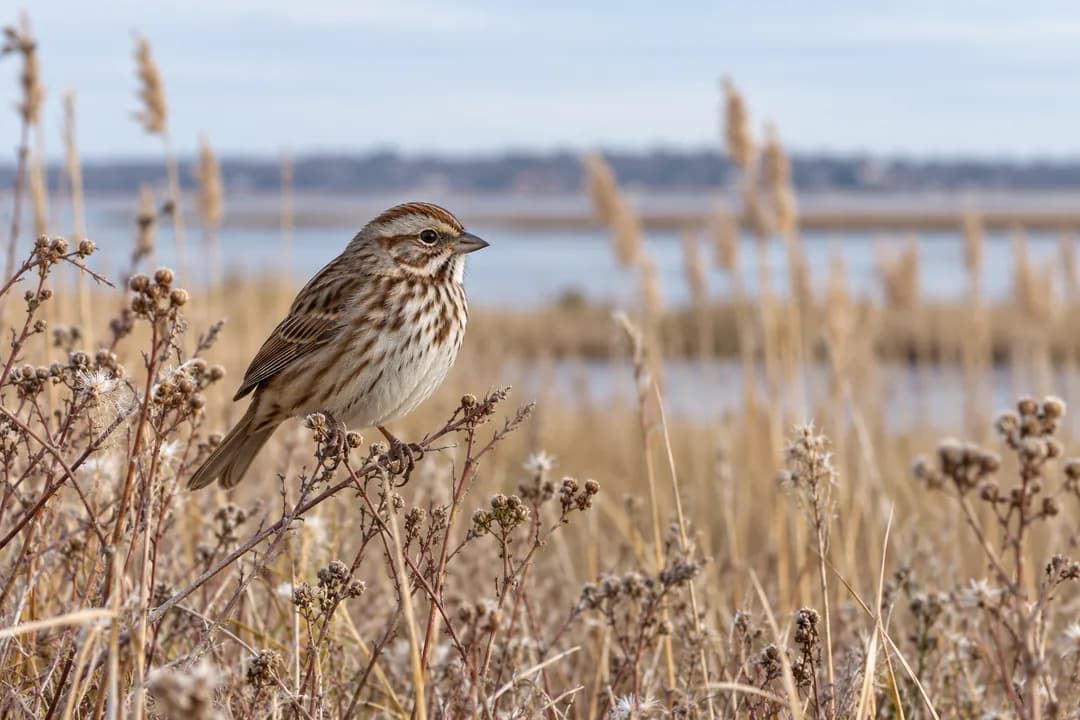
An open meadow invites people to look for large birds overhead. NYC Bird Alliance's seasonal guide to Brookfield lists shorebirds, raptors and sparrows during fall migration. Let that range guide your attention between sky, marsh and grass rather than concentrating on a single kind of bird. Pause on the path, scan above the reeds and then look back toward the field. A quiet patch of vegetation deserves a patient look even when the sky is empty.
Make that movement slow. Scan a portion of sky, rest your eyes and look at the lower vegetation. If something flies across your view, follow it only as far as you can from the path. Trying to chase an overhead bird usually turns a quiet outing into a hurried walk with your head tilted back. Instead, notice its direction and whether the movement crosses grass, trees or water. A brief description can be more useful than an uncertain species name.
A lower perch can reward equal patience. NYC Bird Alliance describes Brookfield as a place for waterbirds, migrating shorebirds and breeding birds associated with its habitats. You do not need to locate all those groups. Watch a visible patch of vegetation and notice where movement enters and leaves it. Keep binoculars lowered long enough to retain the wider scene. The small subject makes more sense when you can remember the field or marsh edge around it.
A restored meadow is not a shortcut
A photograph of open grass can make the terrain look freely walkable in every direction. Here, stay with the park's established routes. The visual simplicity of a field does not make it empty space, and the site's restoration history is another reason to avoid casual digging or collecting. Treat the meadow as the subject beside the path. The goal is a clearer view of habitat use, rather than a closer position at any cost.
If you are visiting with children, explain this through an observation game that keeps everyone on the route. Ask them to find a place where a bird could disappear from view without flying far. It might be a reed margin, a clump of grass or a shrub. There is no need to prove something is hiding there. The exercise helps them understand why low vegetation matters and why walking through it would change the scene they came to watch.
Skip the urge to enlarge a noisy group around a reported sighting. A bird seen earlier may have moved, and another observer's excitement does not create an obligation to pursue it. Choose a different visible part of the landscape if the path becomes crowded. Brookfield's broad subject makes that easy: a line of clouds, a patch of field or the relation between higher ground and marsh can hold your attention while people disperse.
Keep meadow and marsh in the frame
A useful photograph of Brookfield might include the path, a meadow edge and the wetland beyond. Keeping those elements together shows more than a tightly cropped bird portrait would. If you also take a close image, pair it with the wider view so you remember the setting. Your own record can remain modest and still explain what interested you about the place.
Try a paired view of the park's different surfaces. From the path, frame a planted slope, then turn toward the wetland and look for a contrasting texture. Notice how the outline of a reed bed differs from the edge of a mown route, or how a reflection changes the apparent shape of a bank. Add those details to a sketch or a short note, then compare your observations with a companion before walking on.
If a companion asks whether the park feels natural or artificial, leave room for both observations. Its origins involve substantial engineering, while plants and wildlife use the resulting space in their own ways. Ask what in the scene prompted the question. A path, a planted slope or a marsh margin may lead to different answers. The conversation can be a satisfying part of the outing, especially for someone more interested in cities than in bird identification.
Practical Notes and a considered finish
Open views can make stationary observation feel different from an energetic walk. Bring water and a layer, and choose a turning point before your group becomes tired of standing still. Keep eyes on the path while walking and stop before raising binoculars. If conditions make it difficult to look comfortably, shorten the visit rather than trying to complete a planned circuit. The broad landscape will still provide a subject on another day.
End by looking back at the place where meadow meets wetland. Choose one relationship you understand better now, then put the equipment away for the return. A separate neighborhood stop can follow once you have left the park by an established exit. In the Karpo APP, ask for ideas that fit the group's mood after an outdoor visit. A conversation about the changing city may be a better ending than immediately adding another nature destination.
Ask Karpo for more information.
Keep reading
- Fort Greene Holiday Market Browsing Guide for Young Shoppers
 DUMBO Holiday Market Browsing Guide for Gifts to Mail Home
 Midtown East Holiday Market Browsing Guide for Commuters