 Fort Greene Holiday Market Browsing Guide for Young Shoppers
Weekend Plans
NYC Urban Wildlife Sanctuary: Watch Arden Heights Woods
Arden Heights Woods brings forested wetlands and a woodland pond to Staten Island, with a slow approach to reflections, birds and the stream between trees.
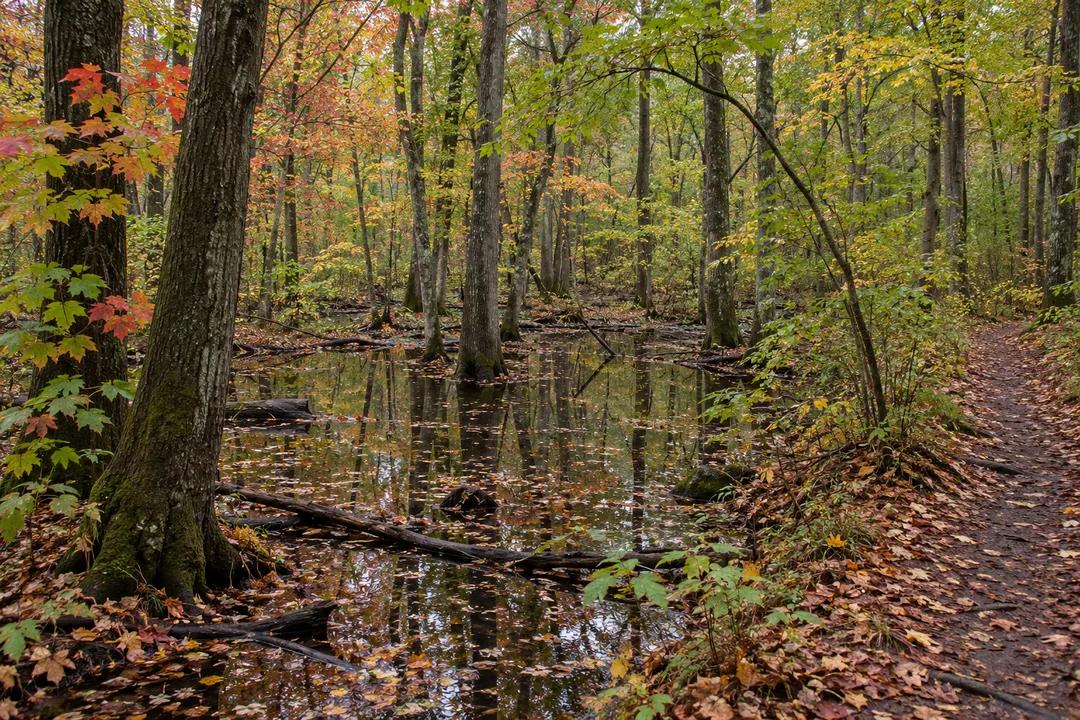
Arden Heights Woods gives an NYC urban wildlife sanctuary walk a close, enclosed subject: water moving through trees. DEC describes forested freshwater wetlands, a stream and a woodland pond here on Staten Island. Instead of planning a march past landmarks, make this a study of the boundary between wet ground and dry ground. The woodland can reward a patient look even when no animal appears. A bird list is an optional outcome, while the stream, tree trunks and changing reflections provide the outing's starting point.
Begin with the water, rather than a species list
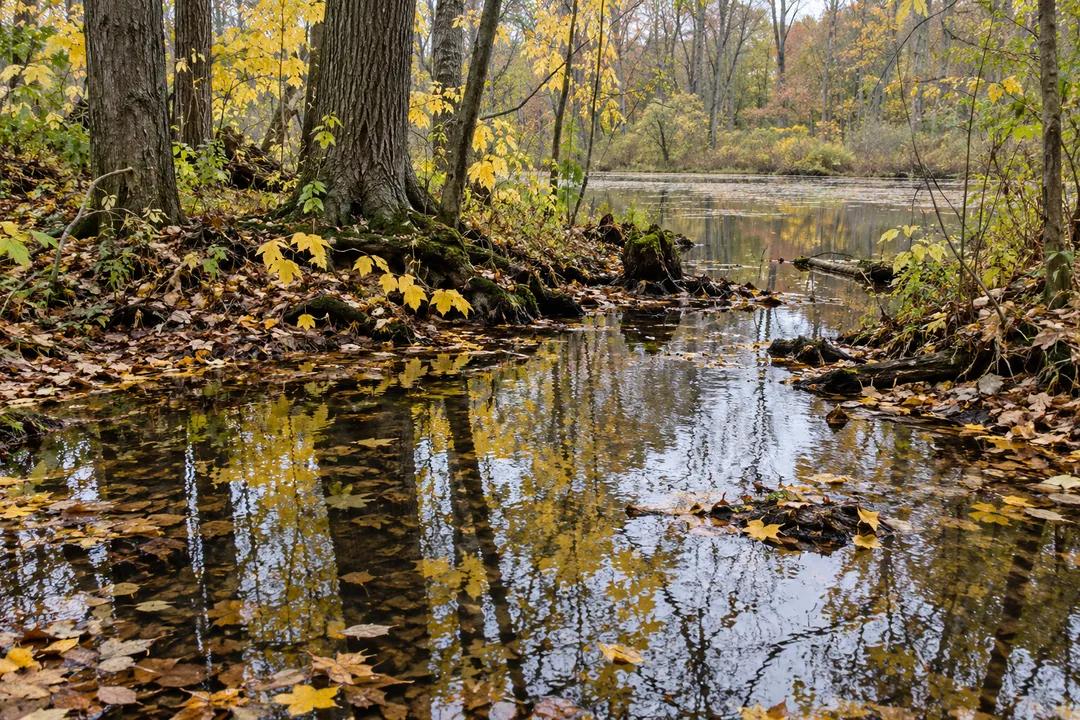
Find a comfortable position on the established footpath where you can see the wetland without descending into it. Let your attention follow whatever water is visible between the trunks. Notice whether the surface is still, broken by leaves or carrying a reflection. You are looking for relationships rather than a perfect photograph. Water can make an ordinary stand of trees feel layered: a trunk above the surface, its reflection below and the submerged ground disappearing between them.
Give yourself a small observation task. Choose a patch of water you can see without moving vegetation and look at it before reaching for binoculars. Is there a clear edge, or does shallow water dissolve into damp leaves? Can you distinguish a reflection from something beneath the surface? These questions make sense in a forested wetland and remain interesting if birds are quiet. They also help a mixed group take part without anyone needing specialist knowledge.
A small state parcel beside a larger city woodland
The names need a little care. DEC distinguishes its Arden Heights Woods property from neighboring Arden Woods Park, which belongs to the city. The state account describes a footpath connection between them. Treat the official map as the guide to those boundaries rather than assuming every wooded opening is a trail. A clear idea of which parcel you are exploring makes a short visit easier to follow and avoids an improvised detour through someone's residential surroundings.
For a first outing, choose a recognizable stretch and return along the route you already understand. Connecting everything on a map can wait for another day. A compact plan makes room for stopping, which matters more here than covering ground. If one companion wants exercise and another wants to watch the pond, agree on that difference before setting off. A woodland observation visit works better when everyone knows that pauses are part of the activity.
Listen without trying to manufacture an encounter
DEC lists birds and amphibians among the wildlife associated with this habitat. That makes listening a useful approach, but it does not establish what will call during your visit. Stop talking briefly and separate nearby sounds from distant ones. A rustle, a repeated note and a passing vehicle can coexist in the same soundscape. You do not need to turn every noise into an animal identification for the listening exercise to be worthwhile.
Skip recorded calls and attempts to draw a hidden creature closer. The point of the pause is to hear what is happening already. If something catches your attention, use a broad landmark to share its location with a companion: the forked trunk or the low branch. Speak softly and give the other person time to find it. A missed glimpse is preferable to everyone pushing toward the wet ground to recover the moment.
Photograph a woodland that does not pose
A photograph here can begin with the arrangement of trunks instead of a recognizable animal. Look for a place where reflected branches make the water visible, or where a pale leaf interrupts a dark surface. Keep the camera on your side of the path and let the composition include the habitat's density. An untidy view can explain a wooded wetland more honestly than a frame that crops out every fallen branch and patch of vegetation.
If an animal happens to appear, stop adjusting your position once further movement would take you off the route. A small subject within a wider frame can still show a meaningful encounter. With children, offer a different assignment: find three visible textures without collecting them. Bark, a leaf and the water surface are enough. This turns waiting into a manageable activity while leaving the ground and its smaller inhabitants undisturbed.
The dry edge deserves as much attention
Turn away from the pond occasionally and compare the woodland beside the path. Notice where the light reaches the ground and where overlapping leaves obscure it. DEC describes hardwood forest around the wetland, so the relationship between trees and water is central to this site. You can explore that relationship visually without naming every tree. Describe what distinguishes one patch from another, using only details that are actually visible during your walk.
A return visit could use the same viewpoint as a reference. The useful comparison is not whether the landscape looks like an online photograph, but what has changed since your previous observation. More visible sky, a different water reflection or a heavier carpet of leaves can provide a record. Keep that record brief enough to use again. One clear picture and a sentence about the conditions are more helpful than a long list of uncertain names.
When a short woodland visit is the right choice
Choose Arden Heights for interest in a close landscape rather than a sweeping harbor view. Someone expecting a visitor attraction with a sequence of staged stops may prefer a different plan. Here, the creek and pond supply the subject, and you supply the patience. Avoid adding an ambitious second woodland simply to make the journey feel substantial. The quality of the visit depends on having enough attention left to notice small differences.
If the established path becomes uncomfortable underfoot, turn around rather than widening it around a muddy section. Finish the nature portion before fatigue turns every junction into an argument. A neighborhood stroll afterward can be a separate choice, following public streets rather than seeking a shortcut through the woods. In the Karpo APP, you can ask for ideas for an indoor stop after a woodland walk and describe the sort of atmosphere your group wants.
Practical Notes
Bring drinking water and footwear appropriate for a woodland path. Keep your hands free when footing needs attention and put the camera away while moving through a narrow section. Follow posted instructions, leave vegetation in place and carry your belongings and litter back out. DEC's visitor guidance asks people to avoid cutting trees or making new trails. Watching from the route preserves the very mix of water, cover and quiet that drew you here.
Use DEC's Arden Heights Woods page and map as the geographic reference for this outing. Let the best detail of the visit determine its ending: an unexpected reflection, a sound you cannot identify or simply the point where you finally understand how the stream sits among the trees. None of those needs a dramatic animal sighting to count.
Ask Karpo for more information.
Keep reading
- Fort Greene Holiday Market Browsing Guide for Young Shoppers
 DUMBO Holiday Market Browsing Guide for Gifts to Mail Home
 Midtown East Holiday Market Browsing Guide for Commuters