 SoHo Tailor Alteration Shop Finder for Sample Sale Finds
Neighborhood Guides
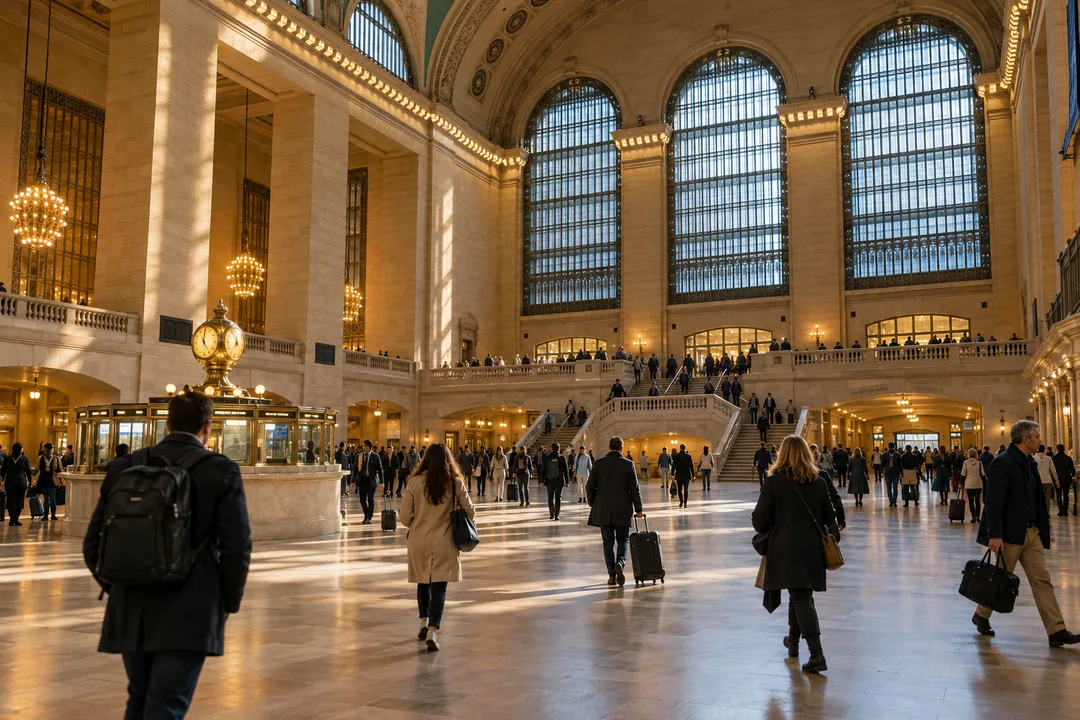
NYC Transit Station Pitstop Finder: 10 Minutes for Coffee
Plan a ten-minute Grand Central coffee pause around your boarding route, baggage, and a protected return margin, with a simpler option if time runs short.
Grand Central can turn a ten-minute coffee break into a surprisingly complicated decision: the drink is nearby, but your boarding point may be somewhere else. Use a transit station pitstop finder in the Karpo APP to describe where you are standing, which train you intend to board, and how much time you can spend away from that route. The useful outcome is a compact coffee-and-pastry plan with a clear return margin, rather than a long list of Midtown cafes.
Ten minutes begins where you stand
Start the clock at your actual location. Someone already inside the terminal has a different problem from someone approaching along East Forty-Second Street with a suitcase. Give Karpo the entrance or concourse name you can identify and the departure time you are working toward. If you only know that you are near Grand Central, say that too. A plan built around an uncertain starting point needs a larger orientation allowance before any purchase becomes sensible.
Treat the ten minutes as your personal planning window, not a promised service time. A simple illustrative split is two minutes to reach a candidate counter, three minutes for ordering and collection, two minutes to return, and three minutes left untouched. Those numbers are deliberately conservative assumptions. They do not describe a measured route or a merchant's queue. If your own walking pace or baggage requires more time, take that time out of the shopping portion first.
Write a coffee request that can be narrowed
Try this request: “I am inside Grand Central with ten minutes before I need to head to my boarding area. I want a small coffee and a ready-made pastry, have a rolling suitcase, and prefer to stay indoors. Suggest one convenient stop and a fallback that keeps me moving toward my train.” This supplies the drink, food format, mobility constraint, and direction in a single message. Add a particular concourse or entrance when you know it.
Milk preferences and food restrictions belong in the initial request because they can alter what a practical stop looks like. A black coffee and a packaged pastry present fewer preparation steps than a customized drink and a warmed meal. Ask for options matching what you actually want, however. Saving two minutes by buying something you cannot eat defeats the purpose of the pause. If the food restriction is essential, describe it as a requirement rather than a preference.
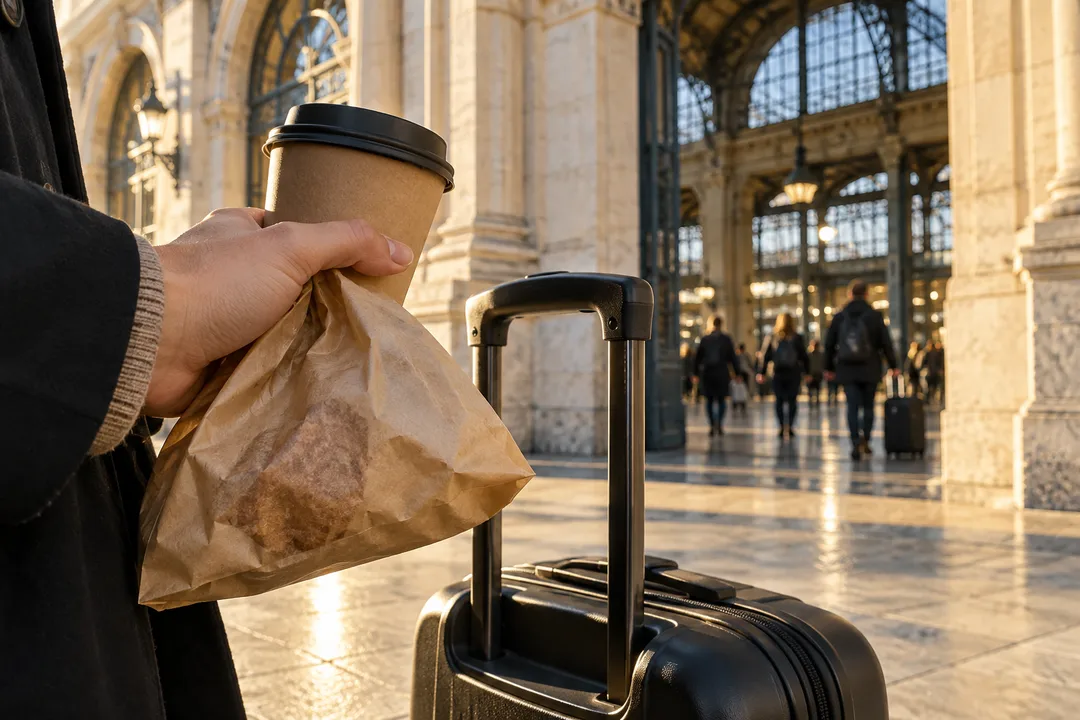
AI-generated coffee travel illustration, rather than a photograph of an identified terminal vendor.
Choose a route before choosing a pastry
Evaluate the suggested stop by the whole journey. The relevant distance includes reaching the counter, collecting the order, and returning to the correct departure approach. A candidate that looks close on a street map can still require an unfamiliar doorway or a change of level. Ask Karpo to explain the proposed walking sequence in plain language and keep any unestablished access detail separate from the recommendation. You need to understand the route before committing to it.
An indoor preference should mean something concrete. Perhaps you want to avoid rain, avoid carrying a suitcase over a curb, or avoid losing sight of the terminal's circulation route. State the reason so an alternative can satisfy the underlying need. Staying inside does not itself establish that a specific counter is accessible from your current position. Choose the proposal whose access you can understand, and use the terminal's posted directions for the actual boarding approach.
Buy for a moving journey
A short train connection rewards food that is easy to carry. Ask for a pastry that can travel in a bag and a drink with a secure lid. Make clear whether you intend to eat before boarding or keep the purchase for later. That distinction helps narrow the format without inventing a seat reservation, a dining area, or permission to consume food on a particular service. Carrying your order and following your operator's rules remain separate parts of the trip.
If a hot drink will leave you managing a suitcase, ticket, and shopping bag with too few hands, change the order. A smaller drink, a sealed cold beverage, or food alone may be more comfortable. These are choices about your load, not judgments about any cafe. Someone traveling with a child might prioritize a spill-resistant snack and a free hand over a particular coffee style. Mention the companion's needs before selecting the stop so the plan fits the entire party.
Give the queue an exit condition
Decide what would make you abandon the purchase before joining a line. For example, you might proceed only when the order can be placed promptly and nothing needs cooking. If collection is unclear or the line has stopped moving, return to the boarding route. A visible short line still gives no guarantee about the work behind the counter. Your decision should depend on the time you have left and the order's complexity, not the number of people alone.
Keep the fallback deliberately modest. Ask Karpo for a simpler purchase along the same direction, or choose to continue without buying anything. A backup across the terminal adds another navigation problem at the exact moment your margin is shrinking. Avoid turning the fallback into a second attempt at a full cafe visit. The coffee is optional, while the train remains the fixed commitment. That priority makes an otherwise disappointing skip feel like a successful travel decision.
Know what the plan establishes
Karpo can help organize a request around your location, preferences, and time budget. A proposed pitstop does not establish a live queue length, stock count, confirmed opening status, platform assignment, or boarding clearance. Use transport announcements and the operator's own travel information for your departure. When you tell Karpo that the situation has changed, ask for a shorter plan based on the new information you provide. Do not assume the conversation is monitoring the terminal for you.
Before setting off, reduce the plan to three things you can remember: where the stop sits relative to your current route, the latest moment you are willing to leave it, and your fallback. Keep the return margin separate from money and food preferences. If your departure approach becomes uncertain, spend that margin on orientation. The most useful Grand Central coffee pause ends with you carrying something manageable and already moving toward your train, with enough attention left for the journey ahead.
Ask Karpo for more information.
Keep reading
- SoHo Tailor Alteration Shop Finder for Sample Sale Finds
 Williamsburg Tailor Alteration Shop Finder for Bike Riders
 Upper West Side Tailor Alteration Shop Finder for Kids