 SoHo Tailor Alteration Shop Finder for Sample Sale Finds
Neighborhood Guides
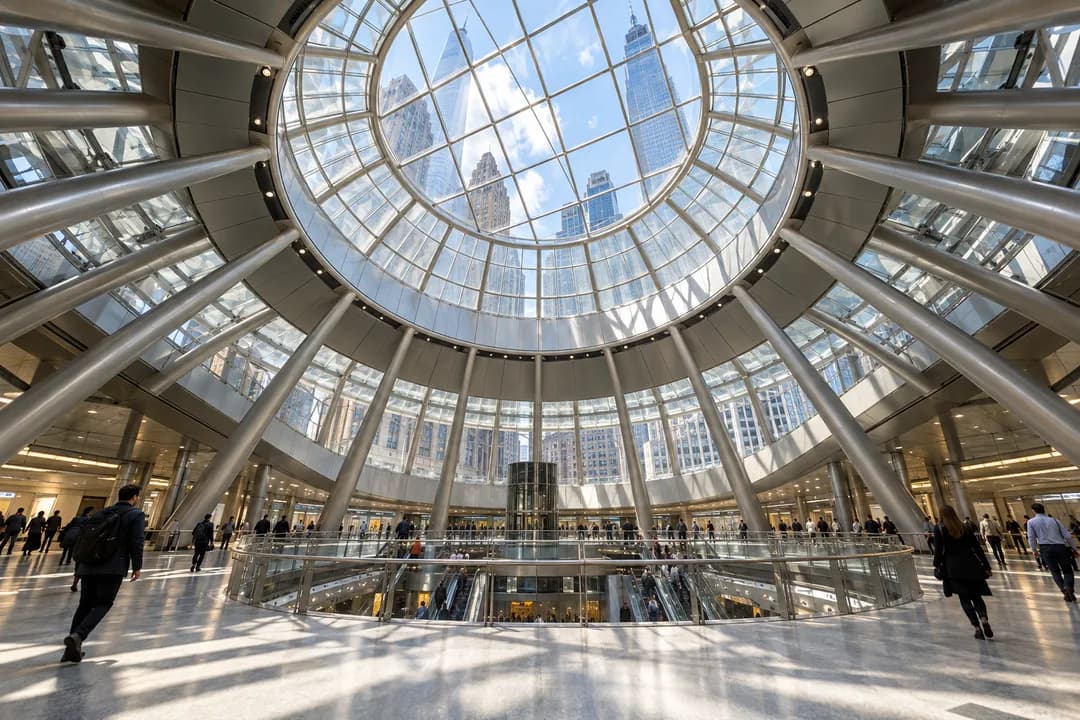
NYC Transit Station Pitstop Finder: 15 Minutes for Lunch
Plan a fifteen-minute Fulton lunch pickup around your subway direction, food needs, and return time, with a compact fallback that avoids a second detour.
Lunch during a Fulton transfer should solve hunger without adding a second navigation problem. A transit station pitstop finder can help you organize a fifteen-minute pickup around the subway direction you need next, your food preferences, and the place you are starting from. Open the Karpo APP with those details and ask for one manageable choice. The goal is a meal you can collect and carry while preserving enough time to regain your route through Lower Manhattan.
Name the next journey first
Tell Karpo the subway service and direction you intend to use after lunch, rather than only naming Fulton. A station complex is a collection of paths and decisions, and “near the station” does not explain which side of your transfer a suggested stop belongs on. Add the entrance, street corner, or recognizable concourse feature nearest you. If you cannot identify your position confidently, make orientation the first task and postpone the food search until the starting point is clearer.
Distinguish a transfer you hope to make from a fixed commitment beyond it. A flexible ride home allows different choices from an appointment that starts at a specified time. Tell the app which commitment is firm, and keep the travel allowance to that destination outside the lunch budget. Fifteen minutes for food should not silently consume the time you reserved for finding the platform or reaching a meeting. This distinction also helps you decide whether leaving your current route is worthwhile.
Put fifteen minutes on paper
For an example planning exercise, reserve three minutes for the outward walk, four for ordering and collection, three for the return, and five as an untouched transfer margin. This is arithmetic for your own decision, not a measured Fulton itinerary. Replace each allowance with a more suitable figure when you have luggage, walk slowly, or need an accessible route. If the sum becomes too large, simplify the purchase rather than borrowing from the time allocated to the next journey.
Set a food decision deadline as well as a return deadline. Without one, comparing three similar sandwiches can eat the entire buying window. You could allow yourself one minute to choose between a ready-made sandwich, a compact salad, and a snack combination. Once you have chosen a format, ask Karpo to narrow the search around it. A shorter answer is more useful here than an exhaustive ranking because the remaining task is movement, collection, and return rather than restaurant research.
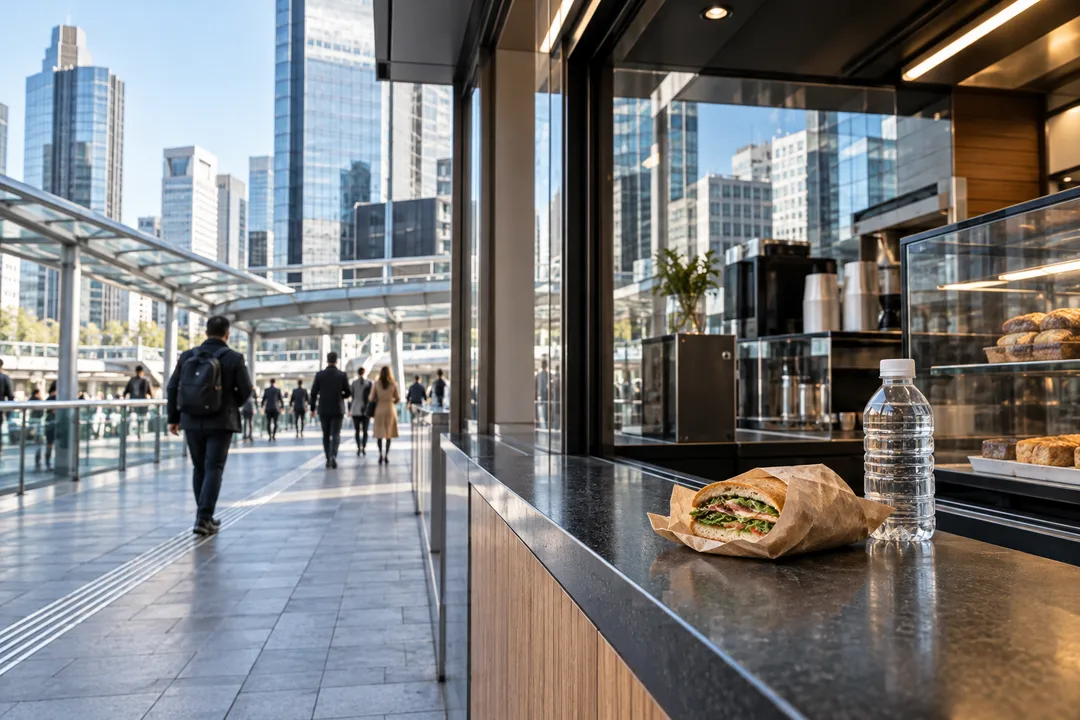
AI-generated lunch pickup scene illustrating the intended food format, with no particular merchant depicted.
Use a request with an obvious tradeoff
A practical message is: “I am near Fulton Transit Center with fifteen minutes for lunch before continuing on my downtown subway route. I want a vegetarian meal that travels easily, no table service, and no long street detour. Suggest one pickup idea and a simpler backup, with the return walk included.” Substitute your actual direction and starting point. The request makes it clear that convenience outranks a destination meal and that the food must fit a moving journey.
If you are carrying documents or a laptop, mention that you want packaging that stays upright in a bag. If you need utensils, include that requirement before selecting a salad or rice bowl. If you have an allergy, state it directly and discuss ingredients with the seller before eating. A conversational recommendation does not establish a kitchen's allergen handling. For this kind of short stop, choosing a familiar, clearly described food can reduce the number of decisions at the counter.
Read a suggestion as a walking sequence
For each candidate, ask how the stop relates to the direction you are already traveling. Is it an out-and-back diversion, a possible continuation toward your exit, or a change of level? Do not assume a business described as being at Fulton is on the particular passage you can reach. Ask for the access information the recommendation relies on. When that information is missing, an understandable street approach can be preferable to an optimistic shortcut through an unfamiliar interior.
Keep fare boundaries distinct from ordinary walking distance. A lunch detour that requires leaving the paid area can have different consequences from remaining on your transfer path. This page does not establish a free reentry or a particular transfer entitlement. Use the transit operator's fare rules and posted station directions for those decisions. Ask Karpo to prioritize staying within the boundary you specify, but do not interpret a convenient food suggestion as permission to pass through a gate without paying.
At the counter, reduce uncertainty
Choose the actual item before reaching the register when you can see enough information to do so. Ask whether it is ready to take, whether anything must be heated, and where collection occurs. Those small questions reveal more about your immediate timing than the apparent length of the line. A counter with separate payment and pickup queues can be quick or slow depending on the order. Your personal cutoff remains the deciding factor once the route and food format are settled.
If the seller describes a wait that uses your return margin, decline the order before payment and continue toward transit. Avoid paying first and then treating the purchase as a reason to risk the next leg. If you have already ordered, handle any change directly with the merchant. Karpo can help you think through a revised plan using the delay you report, but this planning conversation does not cancel a transaction, move your order forward, or reserve a collection slot.
Make the backup smaller than lunch
A fallback might be a packaged snack and a drink you can carry, followed by a fuller meal after the next journey. Ask for that explicitly instead of requesting another restaurant with the same preparation demands. Keep the backup on your return side so it does not introduce an extra crossing or another unfamiliar passage. If neither option fits, continue without a purchase. A missed lunch opportunity is frustrating, but it is easier to repair than a missed connection with consequences downstream.
Finish with a simple personal handoff: food secured, hands free enough for the trip, return direction understood, and transfer margin intact. Karpo's contribution is organizing choices around the constraints you supplied. It is not a live feed of merchant queues, stock, train departures, or lift status. Transport announcements and operator information govern the onward journey. A useful Fulton lunch plan is complete when you have one clear purchase decision and a route back that you can explain without reopening a long list.
Ask Karpo for more information.
Keep reading
- SoHo Tailor Alteration Shop Finder for Sample Sale Finds
 Williamsburg Tailor Alteration Shop Finder for Bike Riders
 Upper West Side Tailor Alteration Shop Finder for Kids