 SoHo Tailor Alteration Shop Finder for Sample Sale Finds
Neighborhood Guides

NYC Transit Station Pitstop Finder: Dinner in Two Blocks
Plan Atlantic Terminal dinner pickup within a two-block limit, balancing bags, food portability, and your next journey without adding an ambitious detour.
Picking up dinner near Atlantic Terminal is easier when you define the detour before deciding what to eat. A transit station pitstop finder in the Karpo APP can help you frame a compact search around the Brooklyn hub, a two-block walking limit, and the food you can comfortably carry. Give it your arrival point and onward journey, then ask for a dinner idea with a simpler alternative. The aim is a manageable pickup, not an evening of searching multiple restaurant menus.
Two blocks is a boundary, not a travel time
Explain what your two-block limit means. You might accept two blocks outward and two back, or you might mean two blocks of additional walking in total. Those are different requests. At a large interchange, the distance from your platform to the street is another part of the journey, and a busy crossing can consume more attention than a short block. Tell Karpo whether the limit begins at your current entrance, your street corner, or the point where you expect to emerge.
Include the direction you want to travel afterward. A pickup that continues toward home may be less disruptive than one that requires returning to the station. If you are boarding another train, however, the return approach needs its own allowance. Do not let the phrase “near Atlantic Terminal” substitute for that distinction. Ask for an explanation of the detour in relation to the next leg so you can judge the meal and the movement together rather than comparing food in isolation.
Dinner needs a carrying plan
Choose the meal's format before narrowing the cuisine. Soup, a loosely wrapped sandwich, and a sealed bowl create different carrying problems when you have a backpack or shopping bags. Tell Karpo whether the dinner will be eaten shortly, carried on transit, or shared at home. Ask for packaging preferences such as a stable container and one compact bag. These details can make a familiar meal more suitable than a more exciting option with several containers and sauces.
If you are buying for two people, settle the key restrictions before reaching the counter. A shared vegetarian option may simplify ordering, while separate allergy requirements need more direct discussion with the seller. Do not rely on a broad cuisine label to establish ingredients. Keep the order small enough to carry with one hand when that matters, and think about whether utensils are needed. A convenient pickup should leave you able to handle the next part of the trip without balancing dinner against a ticket or railing.
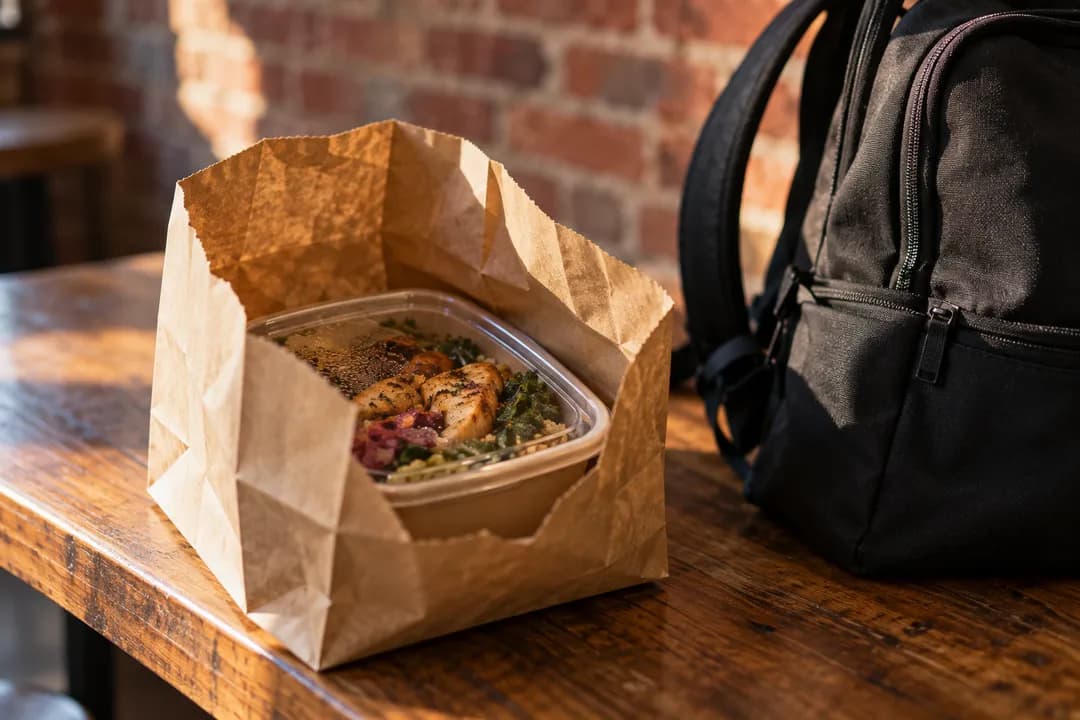
AI-generated Brooklyn takeout illustration, with no claim about an actual counter or order.
A prompt built for the evening commute
Try: “I am arriving at Atlantic Avenue–Barclays Center and want dinner to take home. Keep the detour within two blocks of the exit I name, avoid table service, and suggest a meal that travels in one bag. I have twenty-five minutes available, but want to preserve ten for finding my onward route. Give me one choice and one easy fallback.” Replace the time and entrance with your own details rather than treating the example as a timed station itinerary.
The request can also express a spending limit without claiming that a particular dinner is available at that price. Tell Karpo your maximum and whether it covers one meal or the whole order. Any suggested menu price needs to belong to the actual merchant and item. This article supplies no restaurant prices or guaranteed offers. If a candidate's details are incomplete, keep the recommendation provisional and prefer a choice whose practical requirements you can establish directly before paying.
Compare the complete pickup task
Distance alone cannot tell you how long a takeout order will require. Include walking, selecting an item, payment, preparation, collection, and the next departure approach. For a hypothetical twenty-five-minute gap, you might allocate five minutes outward, five to the purchase, five back, and ten to orientation and spare time. These are personal allowances. A cooked-to-order meal could exceed them, so ask about the actual preparation process and use your own latest-departure cutoff at the counter.
A confirmed pickup arrangement you made directly with a merchant belongs in your message to Karpo because it changes the task. In that case, ask for help planning the walking detour around an existing order. Do not assume that asking for dinner has placed an order or reserved a collection time. The conversational planning described here does not establish merchant acceptance, payment, stock, or kitchen readiness. Any purchase you choose to make remains a separate interaction with the business.
Crowds and bags change the right answer
The streets around a busy Brooklyn interchange can feel very different when a large crowd is moving through. Describe what you encounter rather than assuming the app is watching it. If your walking path feels congested, shorten the detour or choose the simpler fallback. A route that works well on a quiet afternoon may demand too much attention when you are tired, carrying bags, and navigating around groups. Comfort is a legitimate reason to change the plan even if the distance remains short.
When traveling with children, consider buying the food after the hardest transfer rather than during it. If a child needs an immediate snack, a small ready-to-carry item may solve that need while postponing dinner. When traveling with someone who walks slowly, preserve their pace in both the outward and return allowances. Avoid sending one person to collect dinner while another waits at an imprecise meeting point. If you deliberately split up, agree on a specific reunion location and the latest time to leave.
Leave with a useful stopping rule
Before selecting a restaurant, decide which conditions make the detour unsuitable. Examples include a preparation time longer than your purchase allowance, packaging that needs two hands, or an approach that sends you away from your next leg. These conditions help you decline a tempting option quickly. Ask Karpo to use the same priorities when suggesting a fallback. Otherwise, the backup can become another attractive dinner that recreates the problem instead of making the evening easier.
Keep the final plan short enough to remember while walking: the chosen pickup approach, what food format you intend to buy, and the point when you stop trying. Transit signs and operator updates determine the onward journey, while the merchant determines the order. Karpo helps you organize the choices using the information you provide. A successful Atlantic Terminal dinner detour ends with food secured, your hands manageable, and a clear next movement, even when the sensible choice is to eat after reaching home.
Ask Karpo for more information.
Keep reading
- SoHo Tailor Alteration Shop Finder for Sample Sale Finds
 Williamsburg Tailor Alteration Shop Finder for Bike Riders
 Upper West Side Tailor Alteration Shop Finder for Kids