 SoHo Tailor Alteration Shop Finder for Sample Sale Finds
Neighborhood Guides
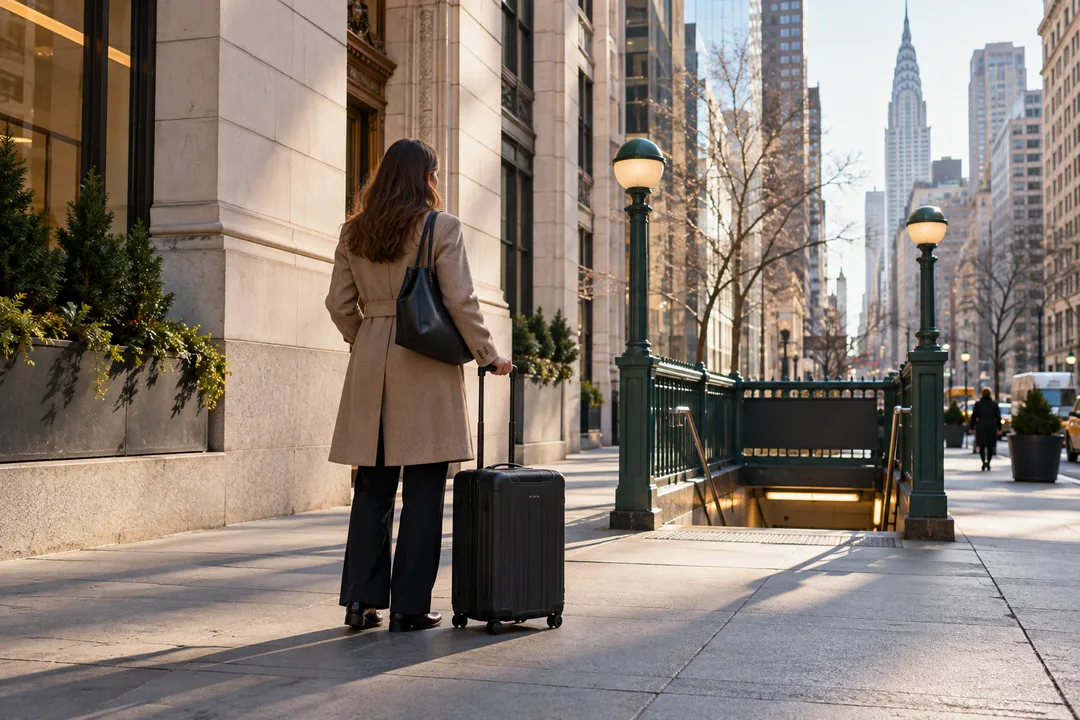
NYC Transit Pitstop Planner: 15 Minutes With Luggage
Plan a Midtown breakfast with a 15-minute personal allowance, one rolling case, and a simple fallback that puts reaching your appointment ahead of coffee.
A Midtown breakfast stop works only if you can manage it alongside your luggage. This NYC transit pitstop planner uses a hypothetical 15-minute window between arriving on foot and continuing to a morning appointment. Give Karpo APP the station entrance or corner you are using, your destination, and the bag you are rolling. Ask for a breakfast idea along that walking leg, with an alternative that needs no purchase. The useful outcome is a manageable sandwich or drink and an unhurried departure, rather than an impressive cafe across the neighborhood.
Put the suitcase in the first sentence
A rolling case changes the question before food preferences enter it. Describe its size, whether you can lift it, and whether you also have a backpack or shoulder bag. A narrow standing counter might be awkward even when it looks close on a map. Request a ground-level approach if that suits your needs, but treat any unestablished step-free detail as unresolved. The conversation can narrow your preferences without certifying an entrance, an elevator, or a business's luggage policy.
Use a starting prompt such as: “I am walking from my Midtown station entrance to a morning meeting with one carry-on. Suggest a simple breakfast on that same side of my route. I have 15 minutes for the whole interruption and need a hand free for the case.” Add the actual entrance and destination yourself. This example describes your allowance; it does not say that a particular kitchen will prepare breakfast in that time.
Spend the allowance before spending money
Divide the hypothetical window into finding the counter, ordering, receiving the food, packing it, and resuming the walk. For example, you might reserve five minutes for entering and buying, three for settling your belongings, and seven for returning to the original route and absorbing delays. These are deliberately conservative choices, not measured travel or service times. If the approach alone would consume most of your allowance, ask for breakfast after the appointment instead of squeezing the purchase into a shrinking gap.
Set a leave-by time on your own clock before joining a queue. The important decision happens before payment, while changing your mind is easy. A short ordering line can conceal several unfinished drinks or toasted sandwiches. Choose an item already available only when you can see that it meets your needs. Do not ask staff to guarantee completion against an unfamiliar appointment deadline. Your schedule remains your responsibility, and a busy counter has its own sequence of orders to finish.
Choose food that travels with one hand
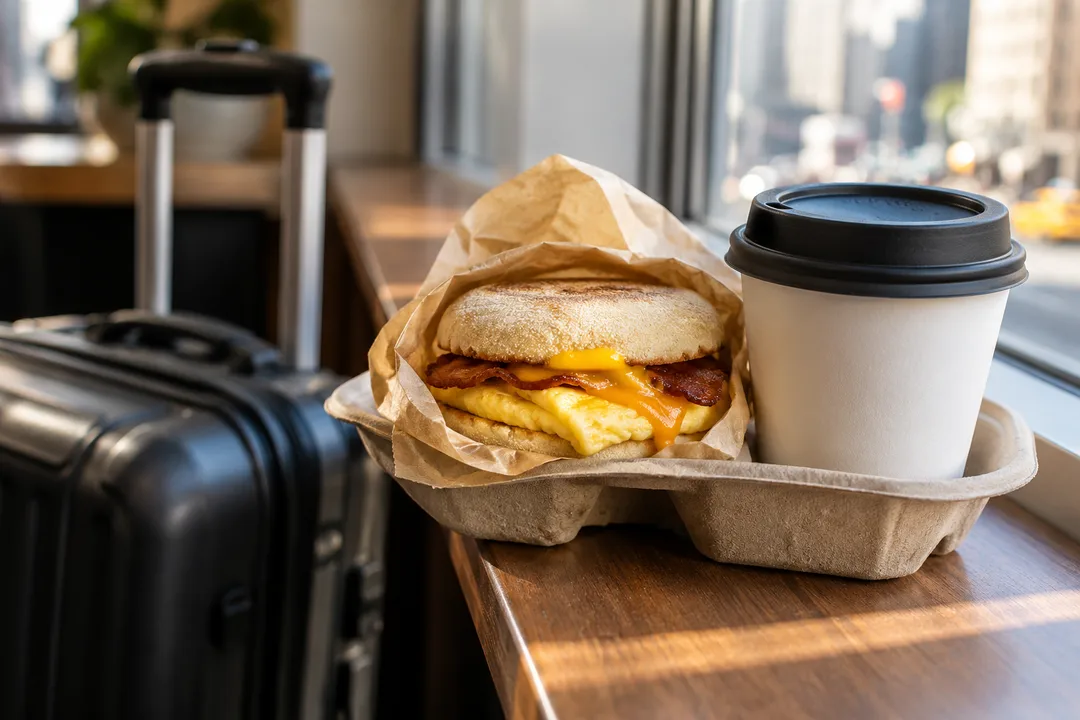
A wrapped breakfast sandwich is a useful request because its packaging can reduce the number of loose pieces you carry. Ask about a vegetarian filling, an ingredient you avoid, or whether the food needs utensils. Those are personal requirements, not a prediction about today's menu. If you have an allergy, make the ingredient question directly to the business before ordering. A recommendation is a starting point for choosing food, not evidence that a kitchen can meet a medical requirement.
Coffee adds a second object. Consider buying breakfast first and drinking from the water you already carry, or taking a lidded cup only when you have a secure way to hold it. A tray balanced on a suitcase handle is a poor substitute for a free hand. Avoid an elaborate order whose handling defeats the reason for a quick stop. For this scenario, skipping the drink can be the more useful recommendation even when coffee is the first thing you wanted.
Compare approaches rather than ratings
Ask for two possible approaches: a counter that lies ahead on your walk and a breakfast pause after reaching the appointment area. Compare them by crossings, changes in direction, and how much luggage handling they require. A highly rated place behind your arrival point introduces a return trip. A slightly less exciting option near the destination may leave you able to put down your case. The task is to find the better sequence for your morning, with food quality as one consideration.
Keep the exact start point visible in a follow-up. “Use the entrance I supplied, rather than the center of the station” is more useful than asking the same broad question again. If the response names a cafe but leaves its approach unclear, request the missing explanation before treating it as a suitable stop. No particular counter is endorsed here. The product workflow is a conversation about location, preferences, and available time, without a claim to observe sidewalk congestion or breakfast queues.
Deal with the bag before the bite
Once you have the food, move clear of the ordering position before arranging it. Keep the case close enough to control while freeing the counter for the next customer. Secure payment items, close the bag, and settle the cup lid while you are stationary. Eating while pulling luggage through a busy crossing combines several tasks that are easier separately. If the breakfast needs both hands, the practical choice is to eat later where you can stop comfortably.
A companion can help, but agree on the arrangement explicitly. One person might hold the luggage while the other orders, provided both are comfortable and remain together. Do not assume an unfamiliar shop will store bags or let them block circulation. Put a request for adequate standing room into the conversation, then make the actual decision at the entrance. If the space feels unsuitable, the planned fallback should be simple enough that leaving does not require another round of research.
When breakfast moves past the meeting
The fallback is not another distant cafe. It is to finish the original walk, attend the appointment, and make a fresh food request from the place where you emerge. Tell Karpo the new time window and whether you still have the case. This changes the task from a constrained transfer to a proper breakfast pause. You can then ask for seating, a more substantial meal, or a neighborhood walk without pretending those extras fit into the earlier fifteen minutes.
If your appointment has a waiting area, use it only under the host's actual rules. Do not turn a map pin for an office building into permission to eat in its lobby. Likewise, a hotel lobby or covered doorway is not an automatic public resting place. A useful planning question asks where a pause is appropriate; it does not manufacture access. Keeping that distinction clear prevents a breakfast idea from depending on a space that is unavailable when you arrive.
Practical Notes for a lighter morning
Prepare one compact message before walking: arrival entrance, destination, luggage description, food preferences, and the time you will leave any queue. Keep the breakfast request small enough to repeat without opening several competing searches. Ask for the reason behind the first recommendation and one workable fallback, rather than a long ranking. When you begin moving again, put the screen away and follow the surroundings. Planning is easier when it leaves attention available for the street itself.
After the trip, remember the handling detail that helped: perhaps a single wrapped item was easier than a cup, or arriving near the meeting before buying food removed the luggage problem. Use that observation in a later request without treating one experience as a standing promise about a business. The successful Midtown pitstop is the one that leaves you fed enough, able to manage your case, and ready for the appointment. A postponed breakfast can meet those priorities better than a rushed purchase.
Ask Karpo for more information.
Keep reading
- SoHo Tailor Alteration Shop Finder for Sample Sale Finds
 Williamsburg Tailor Alteration Shop Finder for Bike Riders
 Upper West Side Tailor Alteration Shop Finder for Kids