 SoHo Tailor Alteration Shop Finder for Sample Sale Finds
Neighborhood Guides
NYC Transit Pitstop Planner: Three Coffee Crossing Choices
Compare a coffee before the bridge with a pause after the crossing, using your actual commute, walking comfort, and available time to choose the stop.
A disrupted subway journey can become a walking commute with a pleasant cafe pause, but the river crossing has to make sense before the coffee does. This NYC transit pitstop planner compares stopping before a bridge, stopping after it, and skipping the stop altogether. Use the Karpo APP to describe both banks of your journey and the time you are willing to spend walking. A cafe is a possible addition to a workable route, rather than a reason to assume that every bridge is a sensible substitute for the L train.
Compare complete journeys rather than bridge names
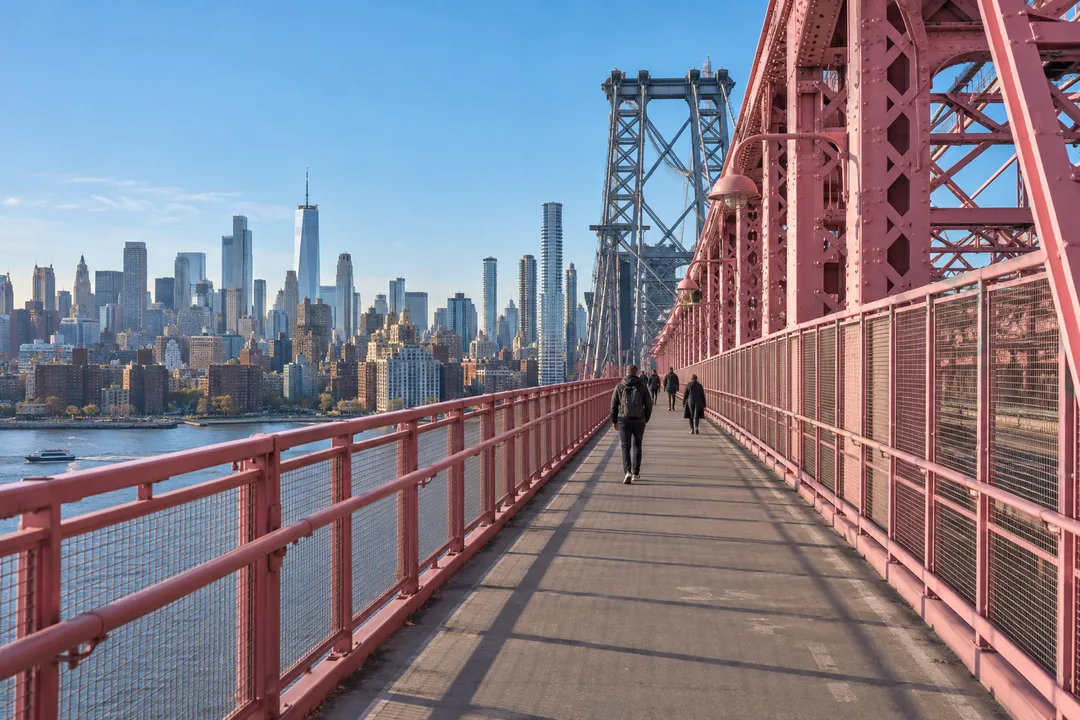
The Williamsburg Bridge connects the Lower East Side with Williamsburg and has pedestrian access documented by NYC DOT. That makes it a relevant crossing to consider for some journeys between Manhattan and northern Brooklyn. It does not make it the closest crossing to every L station or every workplace. Begin with the place you are leaving and the place you need to reach. Then compare the approach to the bridge, the crossing itself, and the remaining walk on the far bank.
A route that looks direct across the river can add a substantial approach on either end. You might also need another train or bus after walking. Include those stages in the question rather than asking only for “cafes near the bridge.” If your destination is in a different part of Brooklyn, a different transport alternative may fit better. This article does not announce an L shutdown or prescribe a replacement service. It shows how to plan a walking option when your own journey calls for one.
Coffee before crossing: a pause while you still have choices
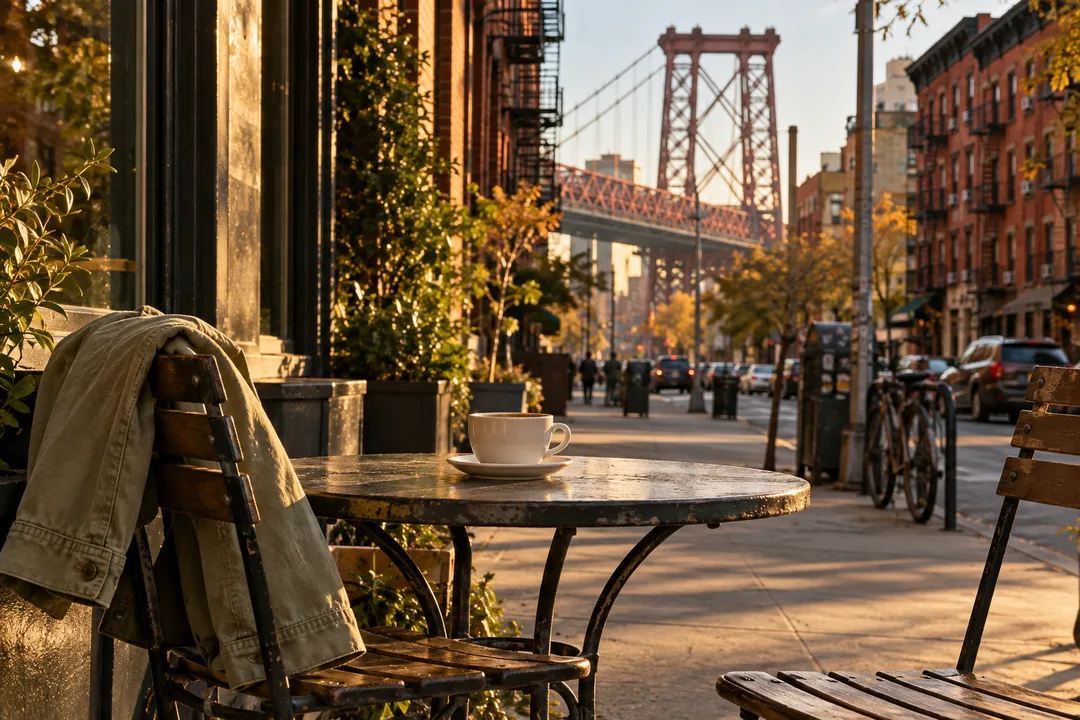
Stopping on the departure side lets you decide whether the walk still feels right before committing to it. You can sit briefly, organize a bag, and adjust clothing while you are near the start of the crossing. It may suit someone who wants a deliberate pause after leaving the subway. The drawback is that the longest outdoor part of the journey remains ahead. Do not spend the time you had reserved for reaching work simply because the cafe feels like a convenient starting point.
If you plan to drink before walking, say so in the request. That allows the route to include a brief seated pause rather than assuming you will carry a hot cup along the bridge. A stop on the departure side also needs to sit along the approach you actually use. A cafe on the opposite side of a busy intersection can introduce a small but unhelpful loop. Compare total added walking, not just how close the cafe appears to the bridge on a map.
Coffee afterward: finish the exposed part first
A stop after the crossing puts the outdoor effort before the reward. This can work well if you prefer to reach the destination bank before deciding how much spare time you have. Ask for a cafe along the final approach to work or to your onward station. That keeps the stop attached to the rest of the commute. It also makes it easier to abandon coffee if the crossing takes more energy or time than you expected.
The tradeoff is that you are postponing the pause. Someone who needs a rest before tackling the bridge may find that uncomfortable. Someone carrying a bag may prefer to settle it at a table before the climb onto the path. Treat those preferences as real route requirements. There is no universal best side for a cafe stop. The useful comparison is between your comfort at the beginning, the amount you need to carry, and the time left when you reach the far bank.
A takeaway cup is a third, different option
Buying coffee to carry can remove a seated break, but it adds another object to manage throughout the crossing. If the drink is not the point of the walk, a stop afterward may be simpler. If you do carry one, choose secure packaging and keep the route comfortable for your balance and pace. Do not plan around drinking while navigating stairs, crowds, or narrow approaches. A shorter cafe visit should not make the rest of the commute harder to handle.
Consider the weather as part of the decision rather than adding it as an afterthought. A long outdoor crossing and a hot cup are not interchangeable with a sheltered transfer. Describe your tolerance for wind, rain, and heat in practical terms. If you only want a pleasant-weather walk, make that a condition of the plan. Your route choice can then remain a choice, without turning a coffee recommendation into a claim that outdoor conditions will suit you when you arrive.
Ask for the comparison in one message
Try: “Compare a cafe stop before and after my East River walking commute. I am traveling from my starting point to my destination and considering the Williamsburg Bridge. I want to finish drinking before walking again, avoid unnecessary stairs where a supported route exists, and add no more than ten minutes of cafe detour. Show the whole journey on each bank. Keep a no-cafe version so I can choose it if the walk uses my spare time.” Insert your actual start and finish.
Read the answer for differences that matter. Which version adds a crossing of a major road? Which one leaves the longest walking stage until last? Where does the cafe visit end and the commute resume? If the two versions are effectively identical except for the name of a cafe, ask for a route comparison instead of a venue comparison. You are deciding how to distribute effort and rest, so the location of the pause should change the shape of the journey.
Keep the bridge route grounded in official guidance
NYC DOT's bridge information identifies the crossing and its pedestrian facilities. Use official transport and bridge information for access restrictions and service changes. A suggested route from a conversation should not be taken as evidence that an entrance is open, a path is quiet, or a train disruption is continuing. On the walk itself, use signs to stay on the pedestrian route. If a signed diversion changes the approach, remove the cafe detour before trying to preserve every part of the original plan.
The cafe search can remain unbranded until the route is settled. You can ask first for the better side of the river, then narrow to a suitable pause near the chosen approach. This avoids inventing a business, an opening time, or a menu merely to make a commute plan look complete. When a specific cafe enters the conversation, keep its details distinct from your personal timing allowance. A ten-minute detour is a limit you set, not a promise about a queue or table.
Choose the pause that leaves the commute comfortable
Your final choice might be a quiet coffee before setting off, a short rest on the destination side, or a direct crossing with no purchase. Record the one that fits your whole journey and the conditions that would make you choose differently. A pleasant stopover works because it has a place in the commute: before the effort, after the effort, or outside today's available time. That is a more useful result than a long cafe list detached from the river you actually need to cross.
Ask Karpo for more information.
Keep reading
- SoHo Tailor Alteration Shop Finder for Sample Sale Finds
 Williamsburg Tailor Alteration Shop Finder for Bike Riders
 Upper West Side Tailor Alteration Shop Finder for Kids