 SoHo Tailor Alteration Shop Finder for Sample Sale Finds
Neighborhood Guides
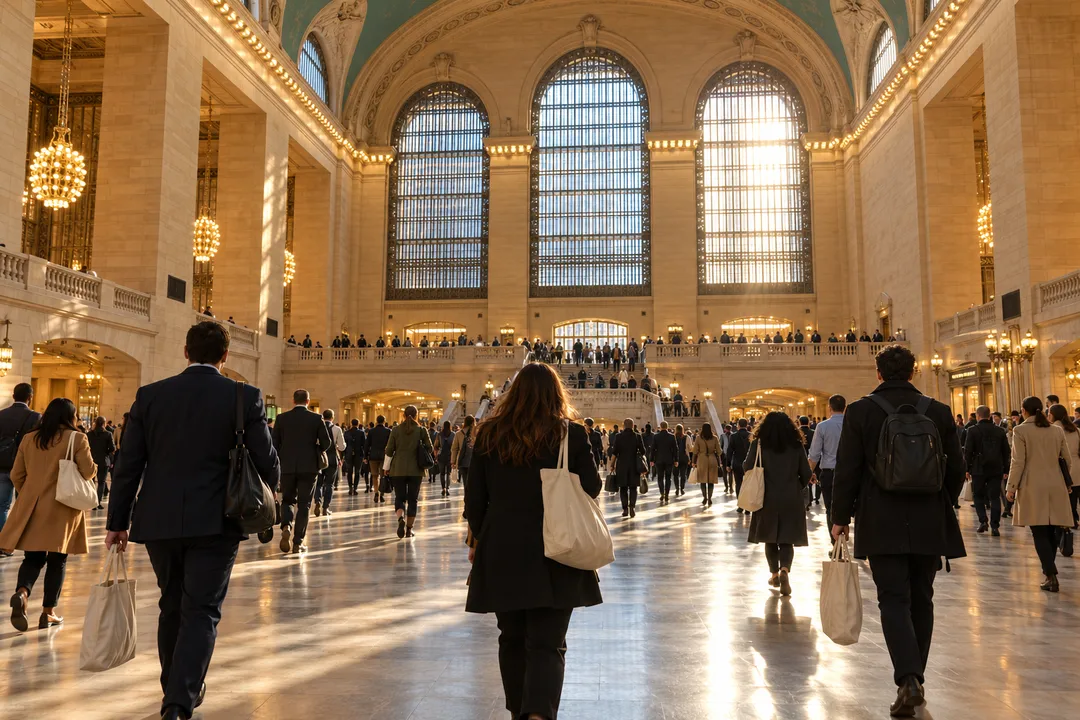
NYC Transit Pitstop Planner: A 20-Minute Grand Central Run
Turn twenty minutes at Grand Central into a focused food pickup, with a short shopping list, a boarding buffer, and a fallback that keeps you moving.
Twenty minutes before a Metro-North departure can feel like enough time to collect dinner ingredients, until choosing one more item consumes the boarding margin. A NYC transit pitstop planner is most useful here as a way to narrow the errand. In the Karpo APP, describe the train you intend to take, where you will enter Grand Central, and exactly what you need to carry home. Build a compact shopping sequence around that journey rather than opening an unlimited search for food near the terminal.
Start with the train you intend to board
Use the departure information for your intended Metro-North service as the anchor. Grand Central Terminal and Grand Central Madison serve different railroad journeys, so do not substitute one destination label for the other. In your request, write “Metro-North from Grand Central Terminal” and include your line or destination. That simple distinction helps keep a grocery errand attached to the correct boarding task. It also avoids treating every underground concourse with Grand Central in its name as an interchangeable endpoint.
Allow time for finding the departure display, following the platform information, and reaching your train with groceries. The buffer is yours to choose based on familiarity, mobility, and the amount you are carrying. A twenty-minute shopping window does not mean twenty minutes at a register. If you already know that a particular approach takes effort, put that in the brief. The goal is to arrive at the boarding stage with enough attention left to read the signs and manage the bags.
Reduce the list to one meal
Make a list you can explain in one sentence: a ready-to-eat dinner, bread and two ingredients, or a sealed lunch for tomorrow. Grand Central's official directory distinguishes Grand Central Market from the terminal's dining choices. That gives you a sensible first fork between shopping for ingredients and buying a prepared meal. It does not establish that any specific item is in stock. Choose the category before asking for a route so the answer can stay focused on one useful purchase.
For ingredients, specify the meal and the equipment you have at home. Someone with a microwave needs a different collection from someone planning to cook after a long commute. Mention whether perishables will remain in a bag for an extended journey. For prepared food, state whether you need utensils, whether strong smells are an issue for your onward trip, and whether a drink would create an unnecessary carrying problem. These small details help narrow options without relying on invented menus or guessed prices.
Divide the twenty minutes on paper
An example allocation is three minutes to orient yourself, seven to select or collect food, four for payment and packing, and six to reach the departure area and board comfortably. These numbers are a planning exercise, not measured station walking times or a merchant's service guarantee. Change them to match your entry point and familiarity. If your train buffer needs more time, the shopping portion shrinks first. Do not borrow from the boarding allowance because a display of groceries looks appealing.
Set an intermediate decision point before you begin. If the intended counter is difficult to locate, or a queue would consume the remaining shopping allowance, switch to the smaller fallback. That might mean one prepared item instead of ingredients from several counters, or postponing the purchase until after the rail journey. A time budget works only when it changes your behavior. Writing down a cutoff is useful because the next attractive option otherwise makes the errand expand quietly.
Send a request with the route and the load
A useful message is: “Plan a twenty-minute grocery pitstop before my Metro-North train from Grand Central Terminal. I will arrive from my usual subway entrance and need a dinner for one that fits in a single tote. Prefer one purchase point and keep my last six minutes for getting to the train. Give me an ingredient-shopping path and a simpler prepared-meal fallback. Do not assume an order is placed.” Add your destination and exact approach before asking Karpo to refine it.
Then evaluate the response as a sequence. Can you identify the first stop without circling? Does the proposed food fit the carrying limit? Does payment come before the departure buffer begins? If the answer reads like a guide to the neighborhood, ask for fewer choices and a direct return path. You can also remove a category completely: “Skip produce and keep only a complete meal.” That adjustment is easier to follow under time pressure than comparing six different shopping combinations.
Keep checkout and boarding compatible
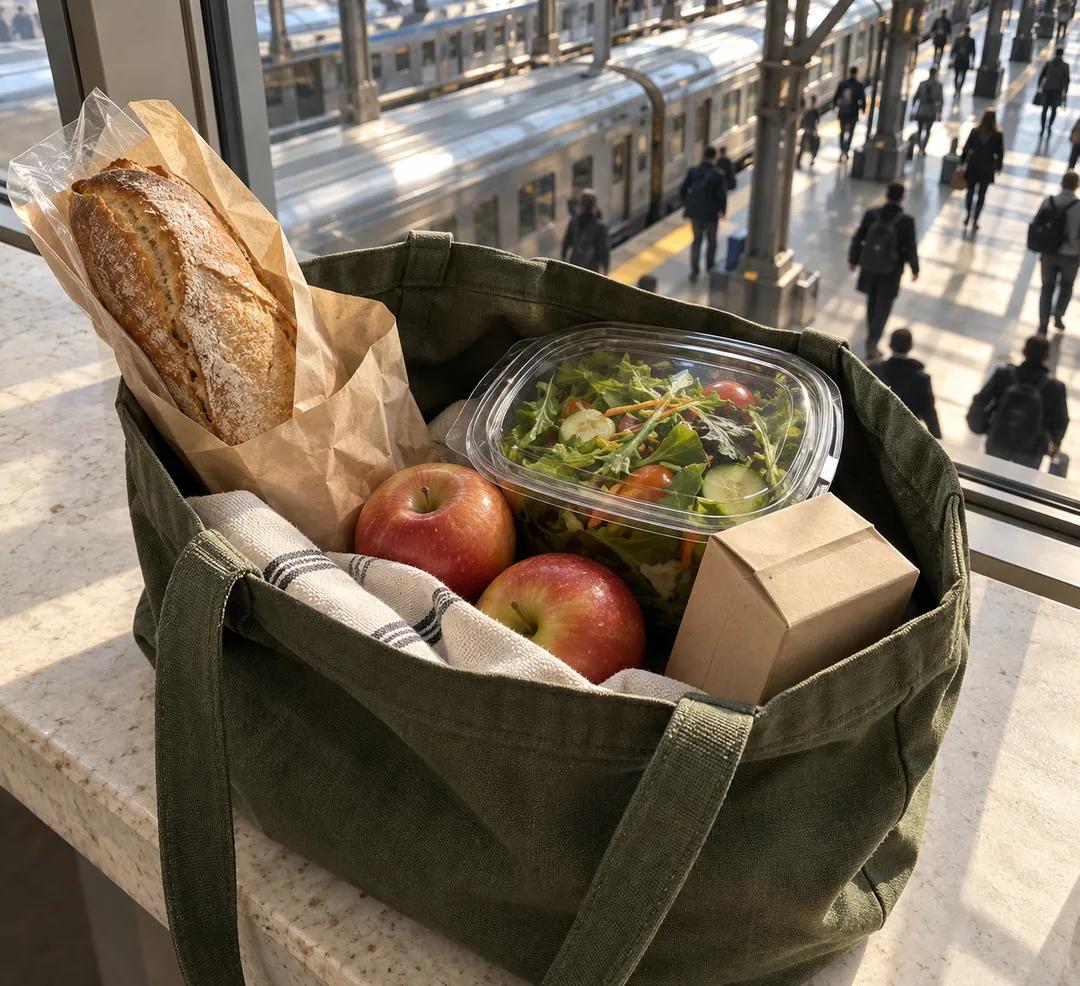
Bring the bag you intend to use into the shopping decision. A rigid carton, a loaf, and a bottle can be more awkward than their individual sizes suggest. Ask for a purchase that travels upright, stays closed, and leaves your hands manageable. This is especially helpful if you expect to stand or negotiate stairs later. Avoid making several separate purchases simply because they appear close together in a directory. Each transaction introduces its own queue, payment, packing, and chance of distraction.
Payment and packing deserve their own allowance. A meal that is selected quickly still needs to be secured before you return to the terminal flow. Close the container and put small loose items together while you are out of the way. Keep your ticket or payment method accessible rather than buried beneath dinner. This is a personal organization step, not a requirement imposed by a food merchant. It protects the transition from shopping attention to train attention, which is the vulnerable part of this errand.
What to do when the departure plan changes
Treat a change to your intended train as a new decision, not free shopping time. Read the MTA's service information and the terminal's departure information for the railroad journey. If you choose a later departure, say so explicitly in the Karpo conversation and recalculate the errand. If you are keeping the original departure, stop adding items. A planning tool should help you make the tradeoff visible, while train operations and platform directions remain with the operator and the station.
You can save a reusable request after the first successful trip, but keep the personal inputs separate from merchant claims. Your preferred entrance, tote size, and dinner style are useful recurring information. A remembered shop suggestion does not guarantee a queue length, opening time, or a product on another day. Reusing the brief should save you from restating your needs. It should not turn a previous visit into a promise about the next one.
Finish with a small commuter checklist
Before moving toward the train, count the bags, secure the food, and bring the railroad journey back to the front of your attention. The useful result of this grocery run is a meal you can carry and a calm transition to boarding. It is not the largest possible purchase in twenty minutes. A focused list, one manageable transaction, and a deliberate fallback make Grand Central a possible errand stop without asking your commute to absorb an open-ended shopping trip.
Ask Karpo for more information.
Keep reading
- SoHo Tailor Alteration Shop Finder for Sample Sale Finds
 Williamsburg Tailor Alteration Shop Finder for Bike Riders
 Upper West Side Tailor Alteration Shop Finder for Kids