 SoHo Tailor Alteration Shop Finder for Sample Sale Finds
Neighborhood Guides
Fulton Transit Pitstop Planner for a Fast Lunch Transfer
Fit lunch around a Fulton Center transfer by choosing the right side of the fare gates, limiting the search, and keeping the onward platform in view.
At Fulton Center, lunch can look close while sitting on the wrong side of the transfer you need to finish. A fast stopover is therefore a route decision before it is a food decision. Use this Fulton transit pitstop planner to describe your incoming train, intended connection, and appetite in the Karpo APP. The aim is to choose between continuing the transfer, making a controlled food detour, or postponing lunch until the next station area. Each is a useful answer when it fits the time you actually have.
First decide whether food belongs inside this transfer
Ask yourself what would make the stop worthwhile. A commuter who needs a substantial lunch has a different problem from someone who wants a small snack to reach a later meal. If food is optional, protect the connection first. If eating soon is important, give it a real place in the journey rather than pretending it can happen without taking time. You may need to accept a later train or finish the transfer before starting the food search.
The building, its public circulation spaces, and the paid subway passages should not be collapsed into one location label. A shop described as being at Fulton does not establish that it sits along your specific paid-area route. Make the fare boundary one of your decision criteria. A proposed lunch that involves an exit and another entry is a different plan from picking up something while remaining inside the subway. Keep that distinction visible even when both options appear under the same station name.
If your connection is the hard deadline
Choose a latest point for leaving the food search, then work backward from reaching the onward platform. Include the walk from the incoming platform, wayfinding, any stairs, and the return or continuation after pickup. The result may leave very little time for a transaction. That is useful information. A planner should expose the shortage rather than fill it with optimistic queue estimates. When the calculation fails, finish the rail transfer and ask for lunch near the destination instead.
A simple request could be: “I am changing trains at Fulton Center and want a quick lunch only if it fits without compromising the connection. My incoming line is the one I have listed, and my next train goes toward my destination. Limit the food detour to five minutes of extra walking in total. Separate any option that requires leaving the paid subway area. Prefer a complete, portable meal from one counter.” Supply the line names and travel direction before sending.
If lunch matters more than the next departure
You have more flexibility if you are willing to take a later connection. Say that explicitly, and replace the urgency with a maximum overall delay you find acceptable. You can ask Karpo to organize a short stop around a specific exit or re-entry point. The response should identify the path back into the journey, not merely the place to buy food. A meal recommendation without a return route leaves the most confusing part of the stop for you to solve while carrying lunch.
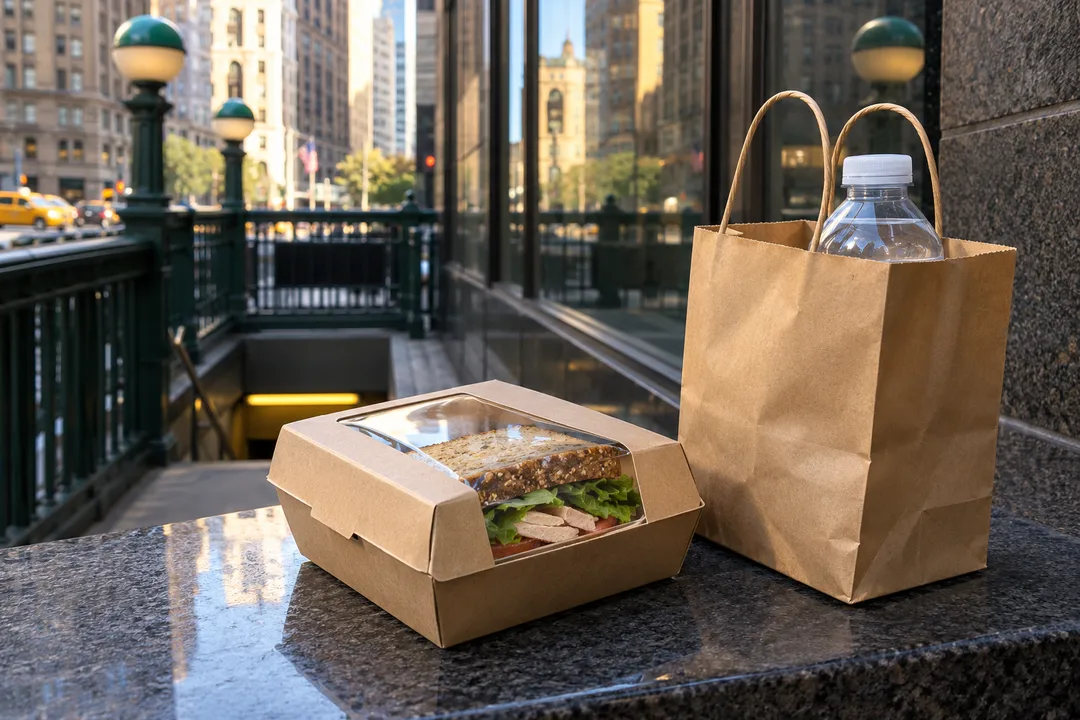
For this version, start with a meal category and a carrying limit. A wrapped sandwich, sealed bowl, or small boxed meal can be considered as categories without claiming a particular business has them available. Ask for one primary choice and one simpler substitute. Keep drinks and side orders optional. The more separate containers the meal requires, the more attention you will need for doors, stairs, bags, and the return to the station. Portability can be more valuable than variety in this setting.
Compare walking complexity with food preference
A short distance on a map can conceal an awkward sequence of turns and changes of level. Explain whether you are comfortable with stairs, have luggage, or are unfamiliar with the complex. Ask for a route description that uses the actual entry and onward connection rather than a generic center point. You can reject an answer that adds several crossings or sends you toward an exit unrelated to your journey, even if the food itself sounds appealing.
For someone using an accessible route, the food stop must fit the whole connection. It is not enough to know that one entrance has an elevator. Tell Karpo which parts of the journey need step-free access, and use the MTA's accessibility information for the transport route. A suggested pitstop should remain conditional on the accessible path you can actually use. Do not replace a manageable rail connection with a shorter-looking route that assumes stairs are acceptable.
Let the counter decide whether the attempt continues
Once you reach a possible pickup point, judge the queue and packing situation directly. The planning response cannot promise that the next customer will order quickly or that a prepared meal is waiting for you. If a line uses up your allowance, stop there. Avoid switching to another counter across the space unless your original budget explicitly allowed a second attempt. Repeatedly choosing “just one more option” is how a controlled lunch detour becomes a missed connection.
If you decide to buy, choose food that can stay closed while you navigate. Collect utensils and napkins together, secure the bag, and move out of the ordering area before reorganizing your belongings. Those are your own habits, not claims about a merchant's service. A fast lunch transfer ends with a packed meal and a clear direction of travel. It does not require eating while walking down stairs or balancing an open container as other passengers pass.
What the daylight landmark does and does not solve
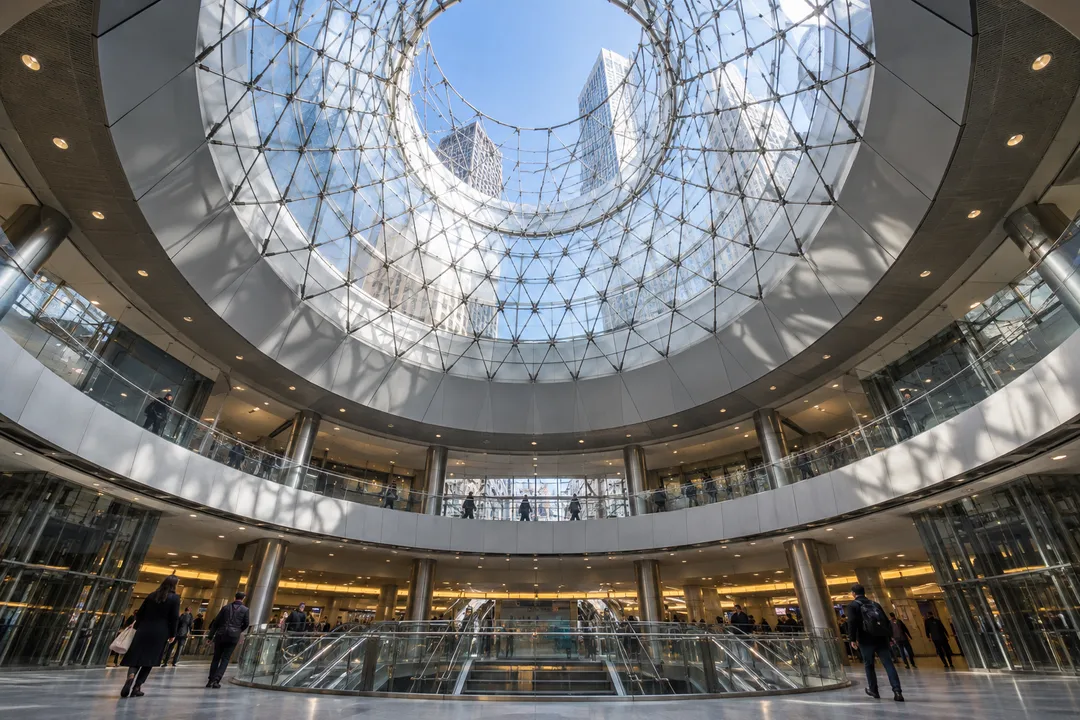
Fulton Center's circular skylight and the Sky Reflector-Net are documented architectural features, and the visible light-filled space can be an orientation landmark when you are there. It is not a substitute for platform signs. Your onward route may continue away from the most recognizable part of the building. Keep the landmark useful as a reference in your conversation, but describe the line and direction you need. That is more precise than asking to return “under the big skylight” after lunch.
If the response sends you on an unsuitable loop, revise the route rather than the menu. For example: “Keep the same onward train, remove that exit, and give me a stop only along the path I already need to take.” If no supported stop meets the condition, ask for a destination-side meal. That keeps the decision connected to the commute. It also prevents the conversation from drifting into a general Financial District restaurant list when the original problem was a difficult transfer.
Use a three-part answer at the decision point
A usable result has three parts: the meal attempt, the route back to the onward train, and the condition that cancels the attempt. Keep all three short enough to remember while moving through the station. Train directions and operating information belong to the MTA and the signs you encounter. Karpo helps organize your preference and your time budget. When those pieces stay distinct, Fulton becomes a place to make a deliberate lunch decision rather than a reason to improvise every turn while hungry.
Ask Karpo for more information.
Keep reading
- SoHo Tailor Alteration Shop Finder for Sample Sale Finds
 Williamsburg Tailor Alteration Shop Finder for Bike Riders
 Upper West Side Tailor Alteration Shop Finder for Kids