 SoHo Tailor Alteration Shop Finder for Sample Sale Finds
Neighborhood Guides
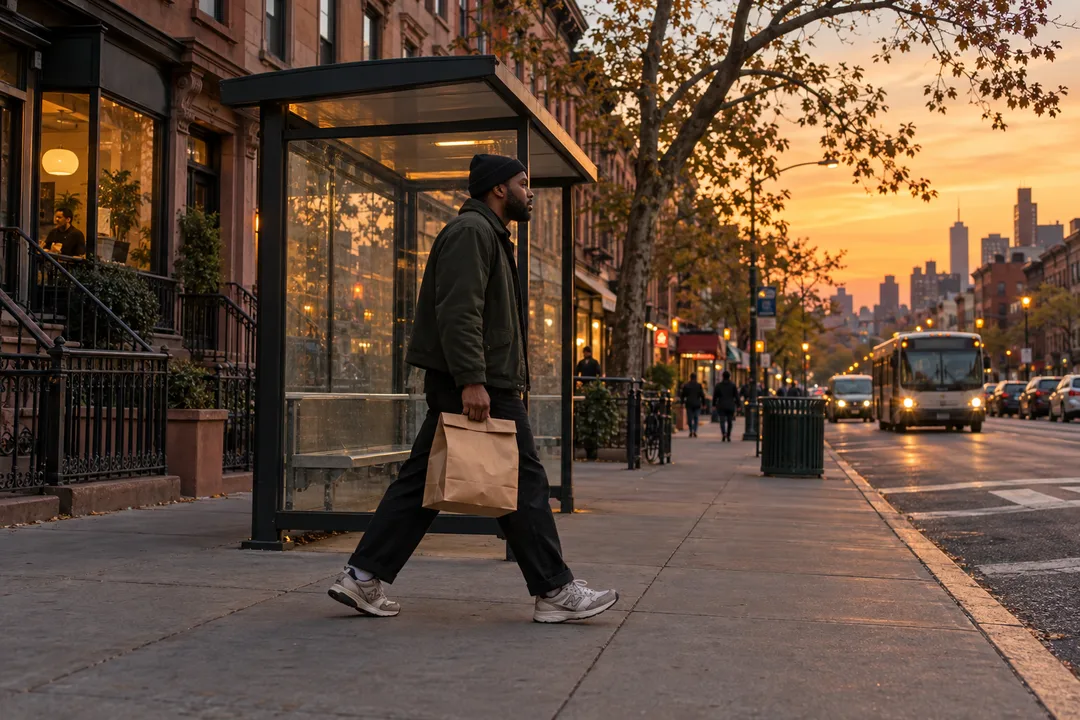
NYC Transit Pitstop Planner: 20-Minute Brooklyn Dinner Plan
Use a 20-minute personal window in Brooklyn to compare dinner before your ride with pickup near home, choosing closed packaging and fewer things to carry.
Dinner that reaches home intact is a better transit purchase than dinner that merely photographs well. This NYC transit pitstop planner focuses on a Brooklyn evening trip with a hypothetical 20-minute allowance for collecting a meal before the last leg home. Start a conversation in Karpo APP with the path you already intend to take, how long the food will be carried, and whether you have a hand available for a bag. Ask for an easy-to-carry dinner idea, then compare buying along the route with waiting until you reach your home neighborhood.
Order for the ride that follows
Begin with the shape of the journey. Walking several blocks, standing aboard a bus, and sitting on a train create different handling problems. Describe the parts that actually apply to you without assuming a seat will be available. A recommendation for a large tray or an open bowl may sound appealing until you imagine holding it while balancing. Choose packaging you can carry upright and keep clear of other passengers, even if that means choosing a less elaborate dinner.
A practical prompt could say: “I am going home through Brooklyn this evening. I want one vegetarian dinner that travels well in a closed container, with sauce packed separately. Keep the stop on the walking segment I provide and include an option near my destination.” Replace the example diet with your own. This is a request for suggestions and comparison; it does not establish what any particular kitchen offers, how an item is packed, or whether it is available now.
Compare buying now with buying later
The first candidate should answer why collecting food before the ride is useful. Perhaps you want to complete one errand before arriving home or share a dinner with someone waiting there. The second should show what improves if you buy after the transit leg: less carrying, fewer opportunities for spills, and a shorter interval between collection and eating. These are practical tradeoffs you can evaluate without inventing a nearby restaurant, its prices, or its service speed.
Use the 20 minutes as an illustrative total interruption, rather than a promised preparation time. Account for stepping off your route, reaching the counter, placing the order, receiving it, and returning to the journey. Protect part of that allowance for packing and orientation. If most of it would be spent waiting for cooked food, the “buy later” option becomes stronger. The planner's useful contribution is making that tradeoff explicit before an attractive menu causes you to ignore the transport part.
Packaging belongs in the decision
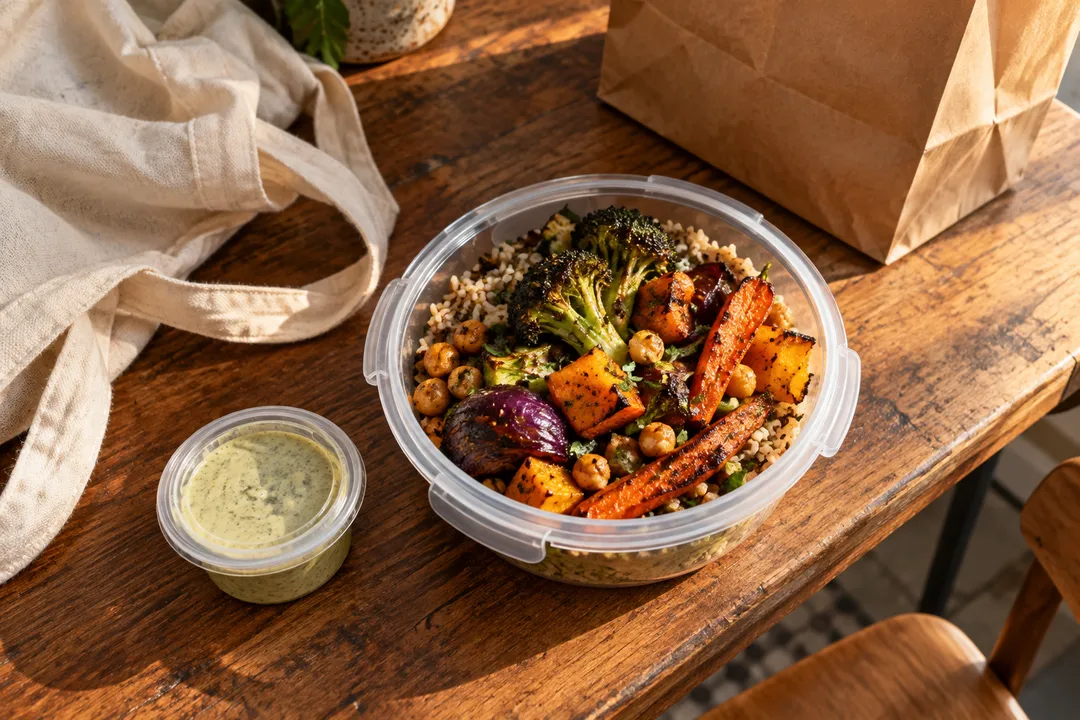
Roasted vegetables and rice in a closed container illustrate a meal that can be carried as one unit. The example does not identify a current menu item. You might instead prefer a wrapped sandwich or a cold dish, depending on your appetite and the actual options presented. Ask for the form you want, and ask the business directly about the container before paying. A dish that requires several uncovered pieces is difficult to rescue after the collection has already happened.
Separate sauce, tight lids, and an upright carrier are useful preferences to state. They are not guarantees about spill prevention. Keep the bag out of a backpack containing a laptop unless you are confident about its contents and closure. Request fewer separate parcels when ordering for yourself, and tell the planner if you need to carry another bag too. A manageable load matters more than squeezing a drink, dessert, and extra side into the same small stop.
Avoid turning collection into a moving meal
Plan to eat where you can settle, rather than making the ride your dining room. This simplifies the order because you do not need to open utensils, manage loose packaging, or dispose of food waste during a transfer. Consider the people around you when choosing strongly scented or messy food. Keep the sealed bag close to your body and away from seats that other passengers need. Those handling choices remain useful whether the last leg is busy or relatively quiet.
Temperature is another reason to keep the pickup near the end of the journey. Food safety depends on the food and how it is held, so do not treat this page's hypothetical allowance as a safe storage limit. If the meal needs refrigeration, plan access to refrigeration; if the trip is longer than expected, reconsider collecting it early. A good recommendation can omit a dish that is awkward to transport instead of pretending every appealing dinner survives an unpredictable ride equally well.
Ask what changes when the route changes
If your evening destination changes, revise the request before ordering. A meal chosen for a direct ride may be inconvenient when you add a friend, a shopping stop, or another connection. Tell Karpo the new destination and whether dinner is still for one. Keep dietary needs and carrying capacity in the message, rather than starting over with only the new neighborhood name. You want a revised choice that reflects the changed evening, not another broad list detached from the first plan.
Where a suggested restaurant lies on the opposite side of the route, ask what the detour adds and why it is worthwhile. Avoid accepting a vague “near the station” description as proof of an easy collection. You can compare the relative appeal of food options through conversation, while assessing the actual approach yourself. This workflow makes no promise of live transit timing, stock visibility, order submission, or restaurant acknowledgement. A recommendation and a completed food order are separate things.
Keep the queue decision reversible
Pick a point at which you leave before ordering. If the visible queue, ordering process, or preparation backlog makes the stop feel incompatible with your allowance, continue with the destination-side option. You have not failed to find dinner; you have chosen where the purchase belongs. Once you pay, allow staff to complete the order without tying their kitchen to your personal connection. A small errand should not depend on someone promising to accelerate it because a vehicle is approaching.
Online ordering can create its own uncertainty. A menu visible on a page does not mean your order has been accepted, and an estimated collection time does not make the transit plan certain. Only treat an order as placed when the actual ordering channel acknowledges it. If you use a restaurant's ordering service, keep its confirmation separate from the planning conversation. The article does not claim Karpo will complete checkout, hold a meal, or resolve a missed pickup on your behalf.
Practical Notes for getting dinner through the door
Before leaving the pickup area, count the parcels, inspect the closure, and put any receipt away. Carry the dinner in a stable position rather than hanging a thin handle from a fingertip already occupied by other bags. Once home, unpack promptly and put food where it belongs. The useful end of the plan is a meal you can enjoy with little additional work, not a trail of containers that makes the commute harder to manage.
For your next Brooklyn evening, keep a short preference such as “one closed dinner container, no extra drink, collect near the end of the trip.” It is specific enough to improve a recommendation without anchoring you to yesterday's restaurant. If the route or appetite changes, the preference can change too. This pitstop works when dinner supports the evening you actually have. Sometimes that means collecting before boarding, and sometimes it means arriving homeward with empty hands and buying food one neighborhood later.
Ask Karpo for more information.
Keep reading
- SoHo Tailor Alteration Shop Finder for Sample Sale Finds
 Williamsburg Tailor Alteration Shop Finder for Bike Riders
 Upper West Side Tailor Alteration Shop Finder for Kids