Every list of free things to do in New York has the same structural dishonesty: it mixes things that cost nothing with things that cost nothing under conditions you have to engineer. Both are useful. They are not the same category, and conflating them is how you end up at a museum desk being told the suggested admission is not actually suggested for you. So here is the split, done honestly, with the conditions spelled out.
Free is easy. Free and open right now, near you, is the hard part. Ask Karpo which of these is closest and actually running today before you get on a train.
Category one: unconditionally free, no asterisk
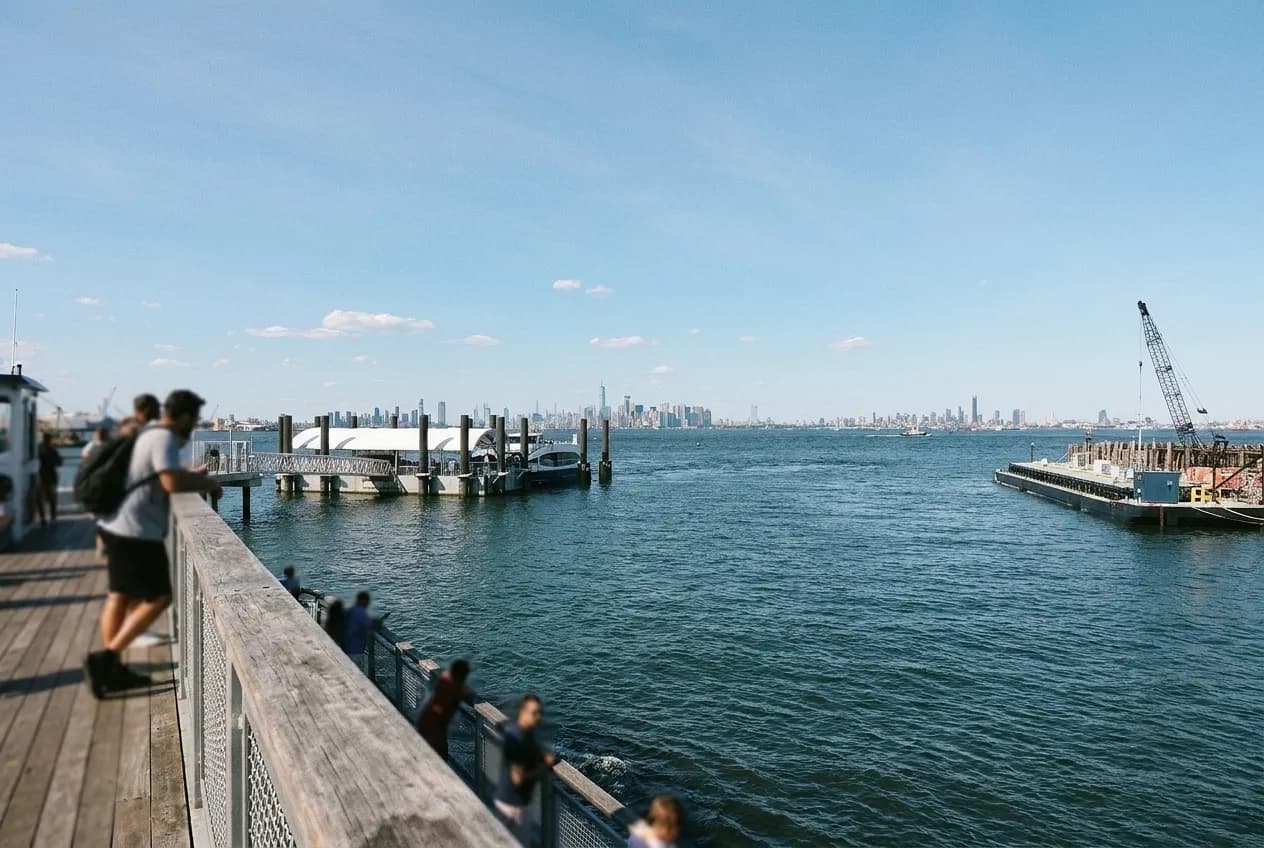
The Staten Island Ferry is the cleanest example in the city. It runs around the clock, it costs nothing, it takes about twenty-five minutes each way, and it passes the Statue of Liberty at a distance that is genuinely better than most paid harbour tours. You have to disembark at St George and re-board rather than staying on, which takes a few minutes and is the only friction in the whole thing.
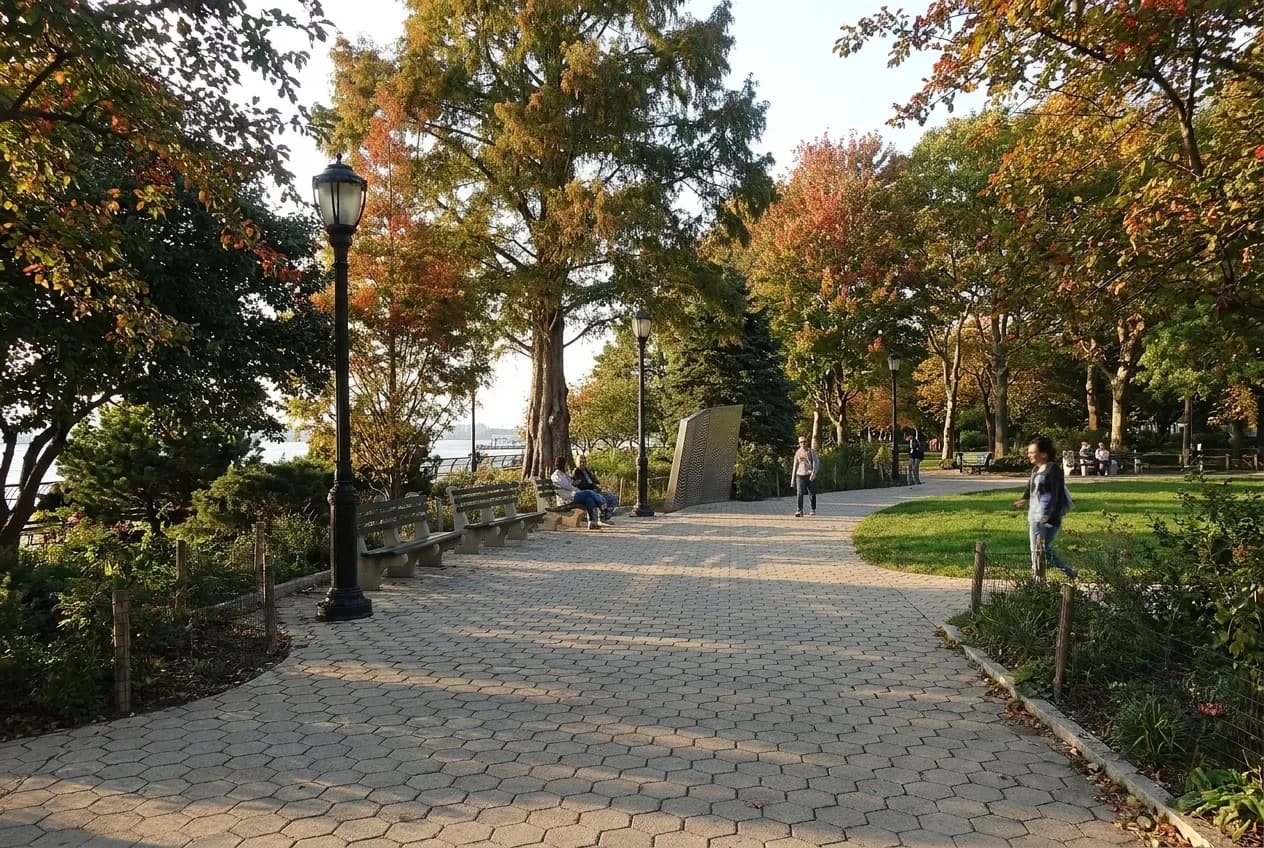
The public parks are the same: Central Park, Prospect Park, Fort Tryon, the whole waterfront chain in Brooklyn Bridge Park and Hudson River Park. So is the High Line, which is a genuinely free elevated park despite being spoken about like an attraction. So is walking the Brooklyn Bridge, which is best done at dawn and worst done at 3pm on a Saturday, when the promenade is a slow-moving crowd.
Two more that people forget are free because they feel institutional: the New York Public Library's main branch on Fifth Avenue, where the Rose Reading Room is open to anyone who walks in, and the Federal Reserve and other civic buildings that run free public tours on booking. Free, unconditional, and considerably more interesting than the ticketed observation deck you were considering instead.
Category two: free if you know the mechanism
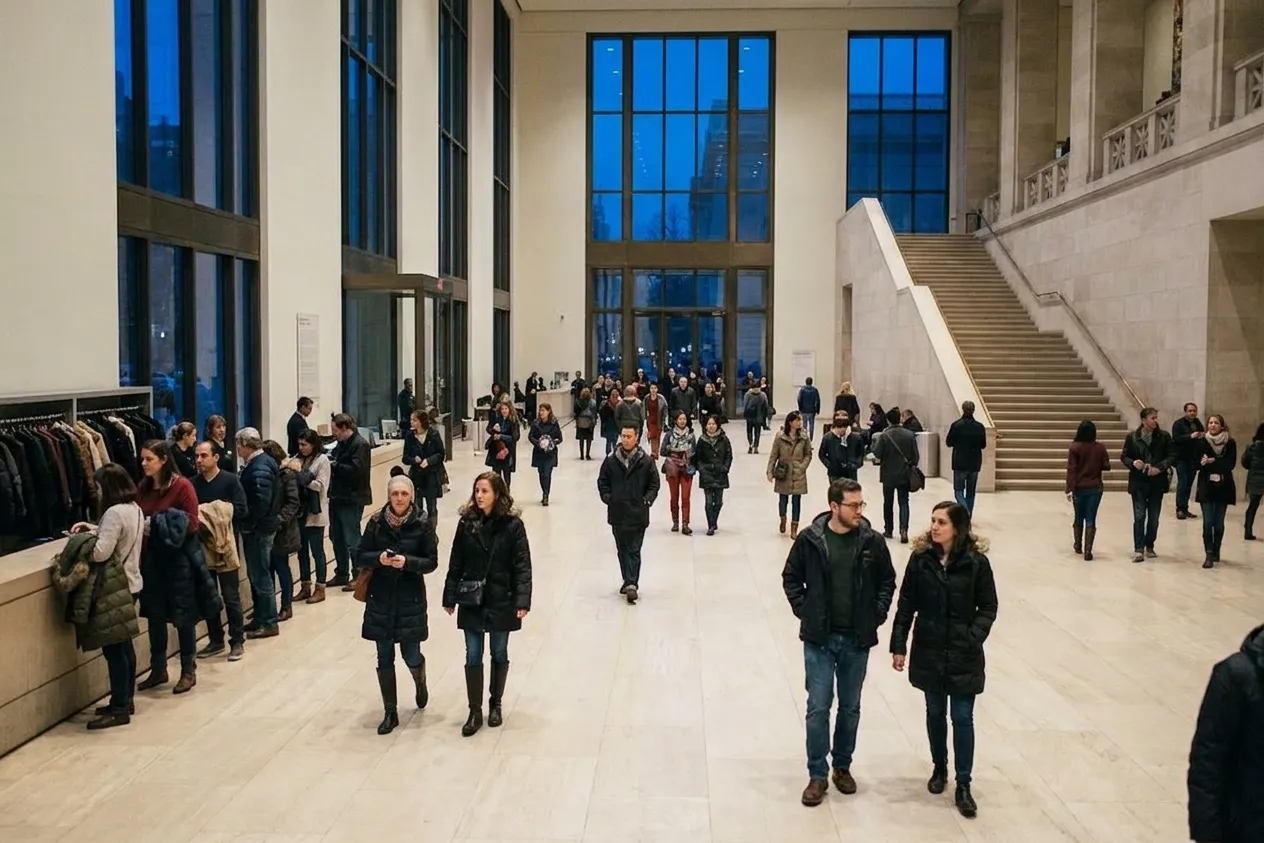
This is where most of the value is, and where most lists get vague. The Metropolitan Museum of Art operates a pay-what-you-wish admission for New York State residents and for students from New York, Connecticut and New Jersey — with proof. For everyone else it is a fixed ticket. That is a real distinction and it is the single most misreported fact in New York tourism writing.
Several major museums run a free evening or a pay-what-you-wish window on a specific day, sponsored and reliably scheduled. The mechanism differs by institution — some release timed passes online in advance and they go quickly, some simply open the doors and you queue. The rule that follows from that: for any museum you want to visit free, the question to research is not whether it has a free window but whether that window is ticketed in advance. Getting that wrong costs you either the ticket or the evening.
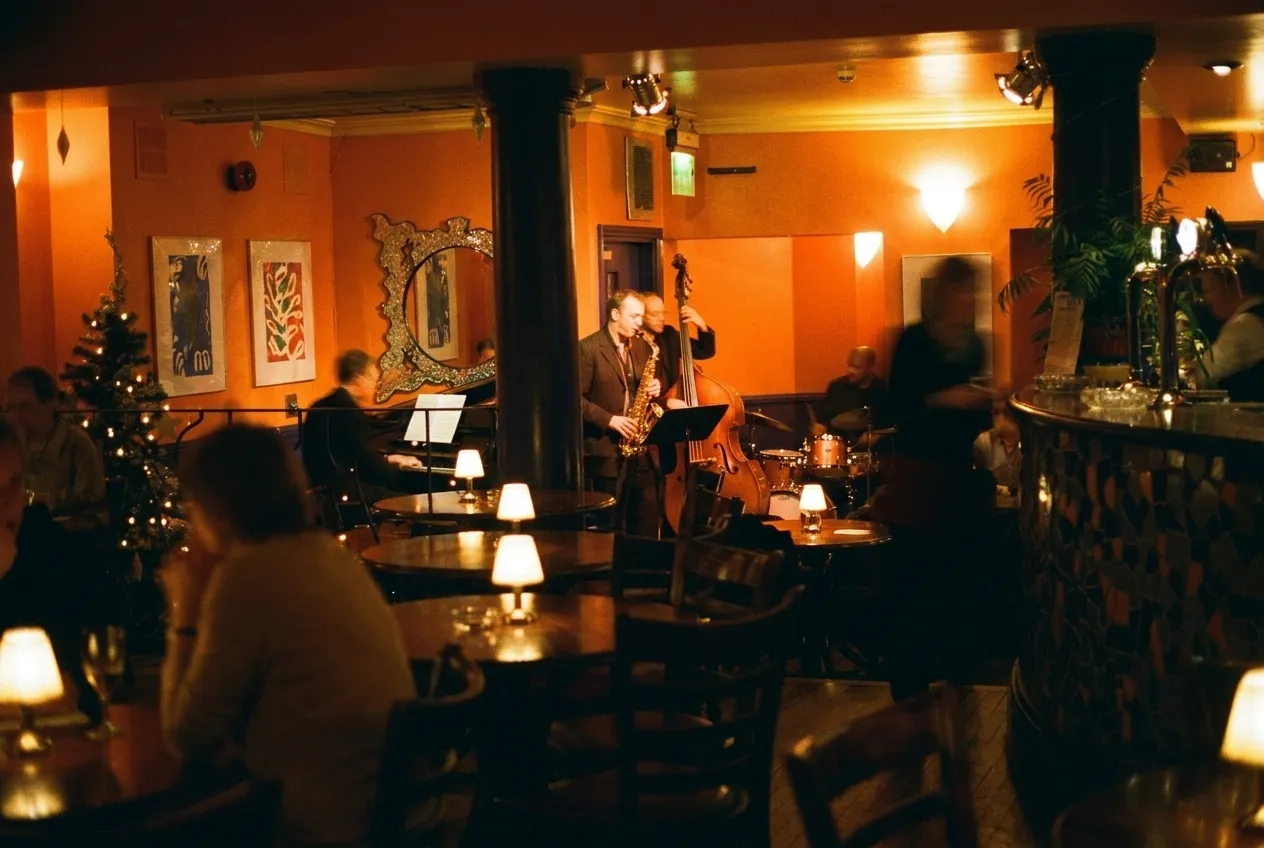
The same logic applies to performance. Free summer programming across the city — outdoor concerts, park performances, Shakespeare in the Park at the Delacorte — mostly runs on distribution rather than price. Some is first-come queueing on the day, some is a digital lottery, some is a standby line. Nothing about it is expensive; all of it is a scheduling problem.
Category three: free but you will spend money anyway
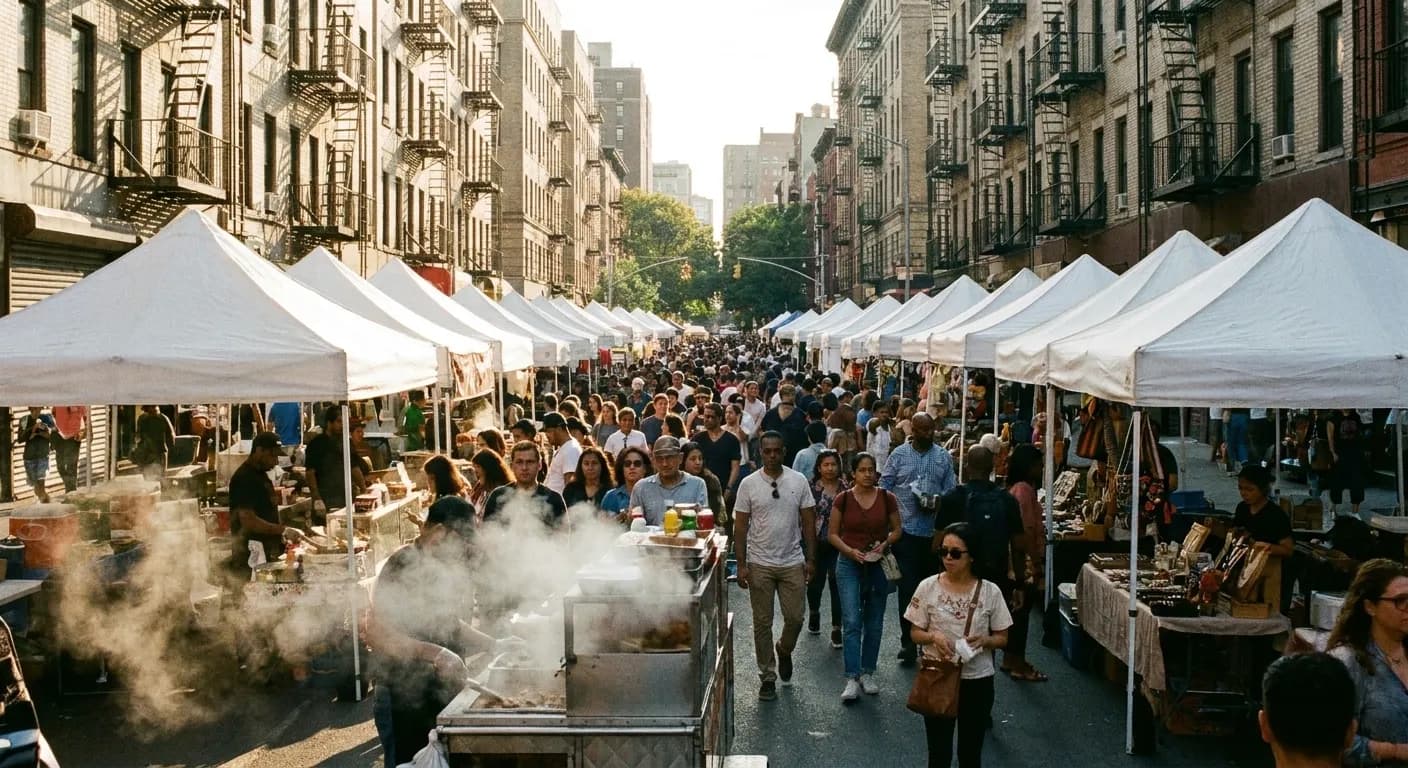
Worth being honest about. Wandering a market — Chelsea Market, Smorgasburg, the Union Square Greenmarket — is free to enter and is a genuinely good afternoon. You will buy something. Gallery-hopping in Chelsea on a Thursday evening is free, openings frequently have wine, and it is one of the best value evenings in the city; you will still buy dinner afterwards. This is not a criticism. It is just the difference between a free activity and a free day, and knowing which you are planning changes what you bring.
The seasonal window nobody plans around
September and early October are the best weeks of the year for free New York, for a reason that is entirely structural: the summer outdoor programming has not finished, the weather has stopped being punishing, and the school-holiday crowds have gone. The same free concert that was standing-room-only in July is comfortable in September. If you have been putting off the free version of something, this is the fortnight.
The corresponding trap is that a lot of the outdoor programming ends abruptly rather than tapering, frequently in the first half of October. Check the season end date rather than assuming next weekend will still work.
How to plan a free day that does not fall apart
Anchor the day on one unconditional thing — a ferry, a park, a bridge, a library — because that cannot be cancelled, sold out or gated. Put the conditional things around it, and check the specific mechanism for each one the day before rather than the morning of. Keep everything within one or two subway lines, because a free day with four transfers is not free of anything except money. And have one indoor unconditional option in reserve, because the weather in this city can end an outdoor plan in twenty minutes.
Tags: #ThingsToDoNearMe #FreeThingsToDoNYC #FreeNYC #StatenIslandFerry #HighLine #CentralPark #BrooklynBridge #NYPL #PayWhatYouWish #NYCOnABudget #NewYorkCity #FreeMuseums #WeekendNYC #NoBudget
All trademarks are the property of their respective owners.
Ask Karpo first
Want a free afternoon built around where you already are? Ask Karpo which of these is closest to you, which free windows are actually running today, and whether the one you want needs a pass booked in advance.