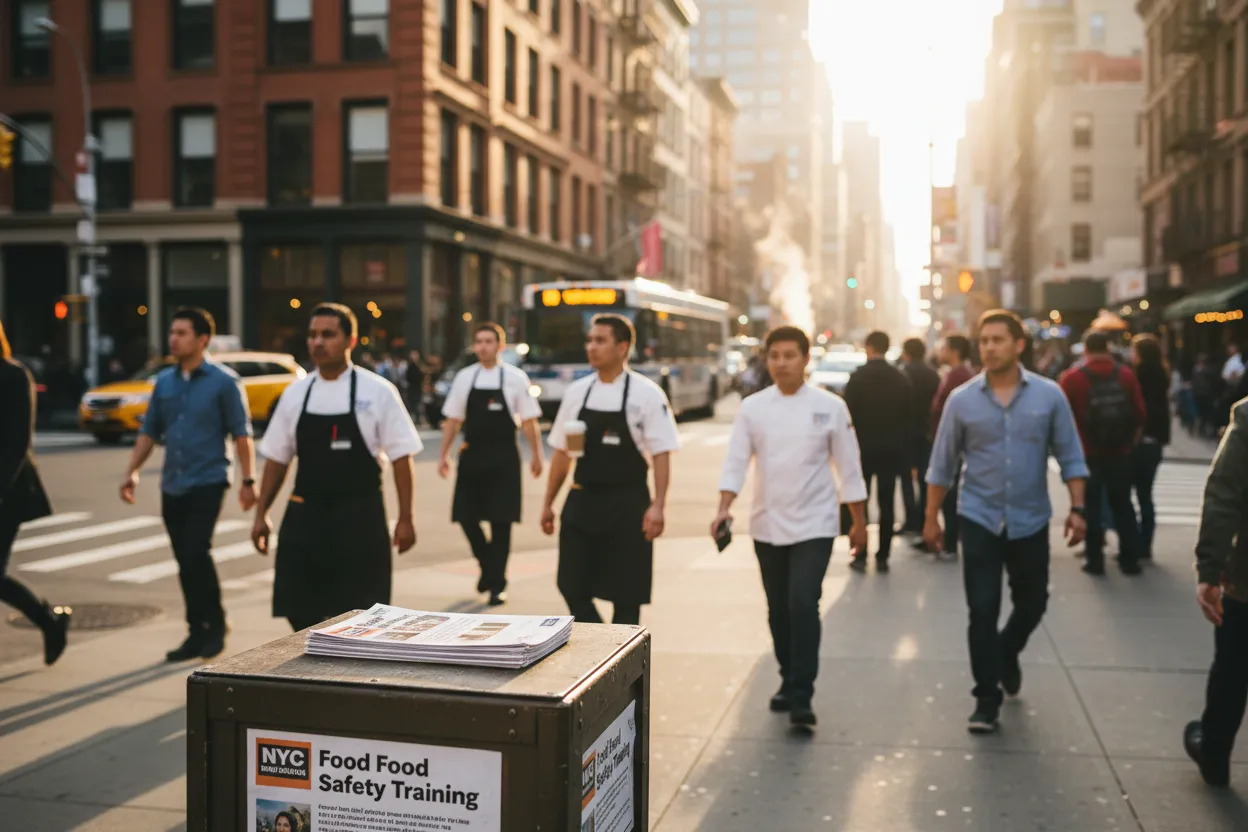
New Yorkers do not need panic to take earthquake readiness seriously, but they do need a plan that fits dense apartments, crowded trains, older buildings, school pickup, and multilingual households. New York City does not sit on a major fault line, yet NYC Emergency Management says earthquakes can and have affected the area. If the word terremoto is suddenly making your family anxious, treat that worry as a prompt for practical work: request a workshop, sign up for alerts, rehearse safe positions, and decide who checks on whom when phones, elevators, or transit do not behave normally.
Want a borough-specific prep route before you request a workshop? Text Karpo to compare NYC alert setup, family go-bag priorities, and nearby training options in one quick city checklist.

New York City Emergency Management request form for Ready New York events
The strongest public-learning option is NYC Emergency Management’s Ready New York event request page, which allows workplaces, schools, community centers, and houses of worship to ask for preparedness education. The city says knowledgeable staff members and NYC CERT volunteers can support community sessions, and presentations or materials may be requested in other languages. That makes it especially useful for parent associations, tenant groups, and faith communities that need shared vocabulary before a stressful event.
The timing tradeoff is real. NYCEM posted limited summer 2026 availability because of FIFA World Cup activity and other large citywide events, with August or later encouraged for better support. A request should be treated as a scheduling step, not a guaranteed immediate booking. If your family wants action this week, use the workshop request as the anchor and start with the city’s online Ready New York plan materials while waiting.
Downtown Brooklyn NYCEM headquarters for CERT basic training
For adults who want deeper skills, NYC CERT is the city’s volunteer training route. The program covers disaster preparedness across hazards and lists fire safety, light search and rescue, team organization, disaster medical operations, communications, and related response skills. Applicants must be at least 18, live or work in one of the five boroughs, pass a background check, and complete required onboarding before basic training eligibility.
CERT is not a drop-in family workshop. NYCEM describes basic training as an 11-session course meeting in the evening, with a hybrid format and several in-person exercises currently held at NYCEM headquarters in downtown Brooklyn. Children should not be brought to basic training because some exercises may be unsafe for them. The payoff is stronger neighborhood capacity, but the cost is time, paperwork, and an expectation of service after graduation.

Manhattan apartment shelves, mirrors, and a reachable go-bag
NYCEM’s earthquake page starts preparedness inside the home: identify safe places in each room, secure bookcases and top-heavy objects, store large or heavy items on lower shelves, and avoid hanging large mirrors or pictures above beds, sofas, or sitting areas. In a tight Manhattan apartment, that means looking at the path from bed to door, the shelves over a child’s desk, and anything glass near a usual work spot.
A useful go-bag is reachable, not theatrical or buried. NYCEM’s broader Be Ready guidance points households toward water and food that will not spoil, prescription information, important papers in waterproof bags, flashlight, radio, batteries, chargers, first aid kit, and pet supplies where relevant. Add allergy notes, school contacts, lease or insurance copies, and one paper phone list. The common failure mode is overpacking until nobody can lift or find the bag.
Notify NYC texts for subway, school, and caregiver coordination
Notify NYC is New York City’s official source for emergency alerts and important city services, and its public page says residents can text NOTIFYNYC to 692-692 for citywide alerts. The site also points people to the free mobile app and displays recent borough-specific notices, such as power outage and roadway updates. For families split between school, work, caregiving, and transit, alerts are coordination infrastructure, not background noise.
Accessibility and redundancy matter more than a single signup. Notify NYC shows language options including Arabic, Bengali, Chinese, French, Haitian Creole, Italian, Korean, Polish, Russian, Spanish, Urdu, and Yiddish, and recent notifications include American Sign Language viewing options. Families should use more than one contact method, add the neighborhoods that actually matter, and confirm that an older relative, aide, or co-parent knows where alerts arrive if one phone is off.
Drop, Cover, and Hold On in high-rises and subway cars
NYCEM and USGS both emphasize Drop, Cover, and Hold On during shaking. Indoors, drop down, protect your head and neck, take cover under sturdy furniture if possible, and stay where you are until shaking stops. NYCEM specifically warns against using a doorway as protection because it does not protect well from falling or flying objects. In high-rises, the practical rule is to stay away from windows and avoid elevators.
Transit creates a different instinct problem. New Yorkers are used to moving quickly when something feels wrong, but during shaking the safer choice may be to hold on and wait for instructions if you are already inside a train or station environment. Do not run for stairs, platforms, or street exits while the ground is moving. Rehearse the rule with children in plain words: get low, protect your head, wait, then listen for official instructions.
Community preparedness training at schools, houses of worship, and tenant rooms
The best workshop location is often where people already gather. A school cafeteria, church hall, mosque classroom, synagogue meeting room, senior center, or tenant association space can turn emergency planning into a shared exercise instead of a private worry. Ready New York event requests are built for those community settings, which helps families practice contact trees, language access, disability needs, and supply decisions with people they may actually rely on after a disruption.
The limitation is that group sessions can become too broad. Ask the organizer to include earthquake-specific apartment actions, communication backups, and child pickup scenarios, not only general hazard awareness. If the session cannot cover every question, assign follow-up roles: one person verifies Notify NYC settings, one reviews building exits, one updates supply lists, and one checks neighbors who may need help. That keeps the workshop from ending as notes nobody uses.
Verify alerts, meeting places, and building details before the next drill
The final action is a verification pass, because the facts most likely to fail are personal and local. Check that each adult can log into or receive Notify NYC alerts, confirm the family meeting place, and choose an out-of-neighborhood contact who can relay information if local calls are overloaded. Walk the apartment once more for unsecured furniture, breakables over beds, blocked exits, and supplies that have expired, leaked, or disappeared.
Then verify what changes outside your door. Ask building management how elevator outages, gas odor reports, lobby closures, or stairwell access are handled after a shaking event, and do not assume every building uses the same procedure. Before attending or hosting a workshop, re-open the NYCEM event request page, earthquake guidance, Notify NYC page, and CERT page for current instructions. If a schedule, alert channel, or rule cannot be confirmed, build the plan around checking it again.
Tags: #AskKarpo #BeforeYouGo #NYC #NewYorkCity #NYCEM #ReadyNYC #NotifyNYC #CERT #EarthquakeSafety #EmergencyPreparedness #FamilySafety #DisasterReadiness #Terremoto #PublicSafety
Sources consulted: Source 1: nyc.gov · Source 2: nyc.gov · Source 3: nyc.gov · Source 4: a858-nycnotify.nyc.gov · Source 5: nyc.gov · Source 6: usgs.gov
All trademarks are the property of their respective owners.
Ask Karpo first
Tell Karpo your date, group size, budget, and starting point. We’ll check current access, timing, transit, and the cleanest New York City plan for New York City Office of Emergency Management before you head out.