 Tribeca Bowling Group Night Planner for Wedding Guests
Sports Social
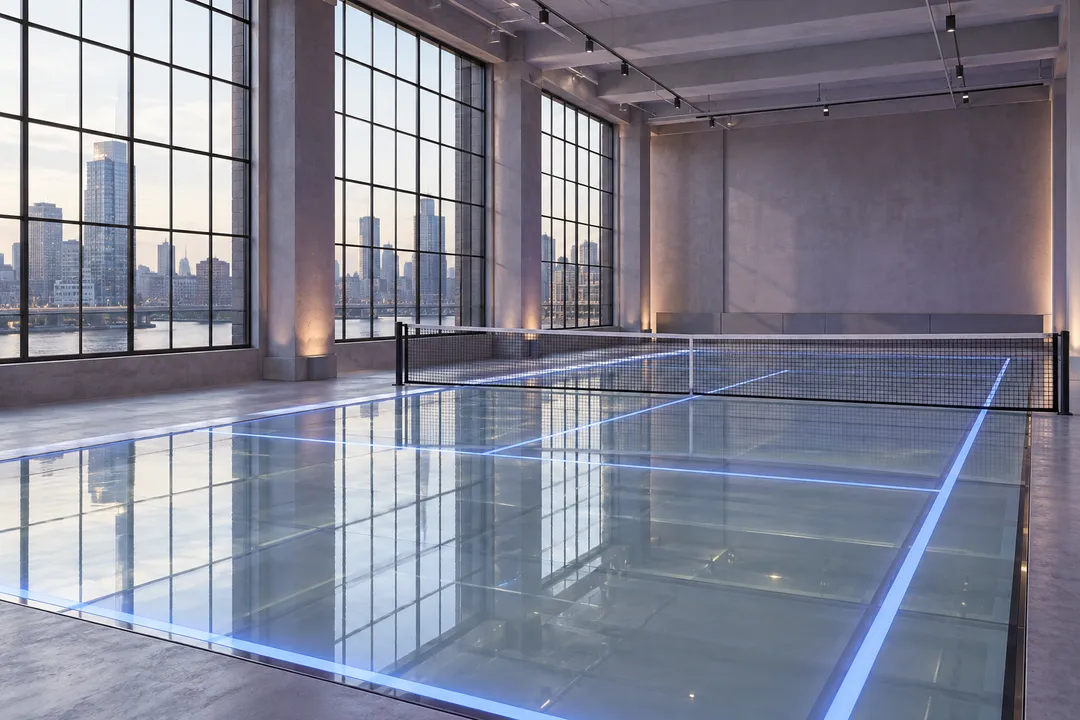
Queens Tennis Court With LED Lines: Court 16 Practice
Court 16 in Long Island City offers LED-lined training courts up to 60 feet long. Adults can take lessons without membership, including beginner groups.
Court 16 Long Island City offers indoor tennis instruction on shorter courts with a glass floor and customizable LED lines. Its listed tennis formats reach 60 feet rather than the 78-foot length of a regulation court. That makes this Queens tennis court option relevant to learning and focused practice. It is a poor substitute for a full-size singles match. Court 16 gives the location as 13-06 Queens Plaza South, Long Island City. Adult classes welcome nonmembers, so a membership purchase is not a prerequisite for trying instruction.
Understand the illuminated floor before booking
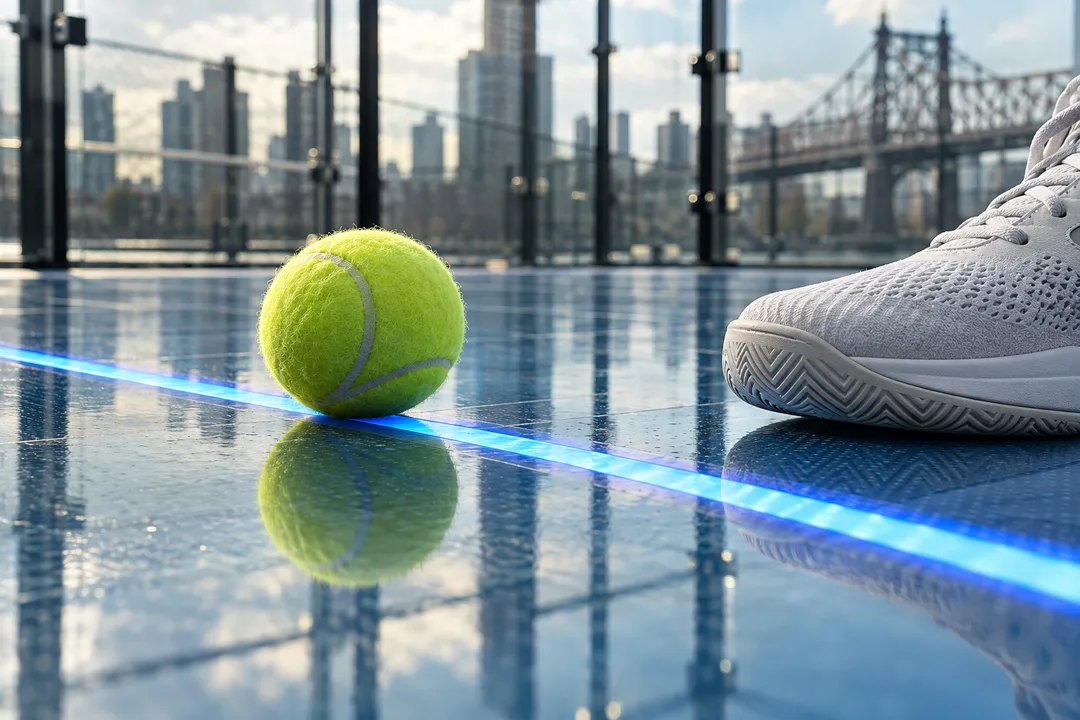
The Queens club's official page highlights a glass playing surface with customizable LED lines and lists 30-foot, 36-foot and 60-foot tennis formats. The visual novelty has a practical purpose: court dimensions can support different teaching tasks. This is not simply a conventional outdoor court moved inside. If you are picturing long baseline exchanges with an experienced opponent, read the format carefully before committing. The location's smaller playing spaces are central to its offer, not a minor detail hidden behind the photographs.
For a new player, a shorter distance can make the first exchange easier to understand. You can concentrate on preparation, contact and sending a manageable ball back toward the coach. That does not mean every exercise will feel effortless, or that one visit guarantees a rally. The sensible expectation is instruction suited to your stage. Let the coach establish where to stand and how to use the marked space instead of importing the habits of a full court into every drill.
Describe your rally instead of guessing a label
A useful booking conversation begins with what you can actually do. Court 16's Introduction to Tennis track is aimed at people brand new to the sport. Its Beginner category covers the fundamentals of strokes and serving. Advanced Beginner asks for an established grip and swing path, consistent serving and the ability to rally from a 60-foot baseline with the coach. That last detail is especially relevant here because 60-foot courts are among the Queens facility's listed formats.
If you can return a gentle feed but struggle when the ball moves you sideways, say so. If you played at school and have not picked up a racket in years, explain that too. Those descriptions help distinguish learning a motion from recovering an old skill. A friend who plays regularly may enjoy joining you, but their level should not determine yours. Choose a shared lesson only when its goals allow both people to participate productively rather than making one person rush through the foundations.
Decide how much individual attention you need
Court 16's adult offerings include one-to-one coaching, semi-private lessons for two and groups capped at six players. Private instruction gives you space to work through a particular difficulty. A group introduces rotation and learning alongside other people. Neither is universally better: the right format depends on whether your immediate need is technical feedback, a return to regular activity or a sociable introduction. The club also describes coached private group pods for friends and families enrolling together.
For a couple planning a first visit, separate the social outing from the lesson decision. If one person is completely new, an introductory session may make more sense than seeking a competitive exchange together. You can meet afterwards without needing identical tennis goals. A pair with comparable skills can use semi-private coaching to develop a shared rally. Tell the instructor what you hope to practice rather than treating the lesson as an improvised match that happens to have a coach nearby.
Machine repetitions have a different purpose
Ball-machine training appears on the Long Island City facility page. Court 16's dedicated training page describes private, group and solo formats across its program. The useful distinction is between receiving repeated feeds and learning how to respond to an opponent. A machine can support concentrated work on a contact point or recovery pattern. It does not reproduce every decision in a live rally, and booking it does not turn a shorter training court into a regulation match court.
For solo practice, write down one objective before travelling. A returning player might aim to keep the racket prepared earlier or finish each stroke in balance. Start with manageable repetitions and pause when the movement becomes hurried. These are planning suggestions rather than promises about the club's equipment settings or an instructor's lesson sequence. If you cannot identify why a shot keeps failing, a coaching appointment can be a more useful first purchase than a longer block of unsupervised hitting.
Accounts and arrival rules deserve five quiet minutes
Adults register through individual Mindbody profiles. Two adults attending together need two profiles, according to the enrollment page, even when one person organizes the booking. Complete that administration while you have time to read the location and class name. Selecting the Queens club is particularly important if a search result also presents the brand's Brooklyn or Manhattan programs. Court sizes differ between locations, and a familiar logo does not tell you where your reservation takes place.
Non-marking athletic soles are required, and the adult page encourages bringing your own racket. Its arrival policy holds anyone more than five minutes late until the next ball pickup before joining class. Treat that as part of the session rather than an invitation to arrive just after the start. Leave enough room for finding the entrance and putting your belongings away. The learning experience is calmer when the opening explanation reaches you directly instead of being reconstructed while everyone else is already hitting.
Use the published timetable, not a generic club schedule
The location page lists Monday 9am to 10pm, Tuesday 7am to 10pm, Wednesday 9am to 10pm and Thursday 7am to 10pm. Friday is 7am to 8pm. Saturday and Sunday are each 8am to 5pm. Those are facility hours, not a list of available lesson starts. A morning window on one weekday does not imply the same opening on another, and the shorter weekend schedule matters if you are planning a late-afternoon visit.
Queensboro Plaza and Queens Plaza are among the transport stops named on the club page. Choose your route according to the service you are actually taking rather than assuming those similarly named stations are interchangeable. After playing, you could head toward Court Square for a neighborhood walk, leaving a riverfront excursion for a day when you want a longer outing. The club's Queens Plaza South address should remain the fixed destination, while any extra walking follows your energy and return route.
Practical Notes
The adult policy gives a 24-hour rescheduling deadline, with group changes handled in the account and private lessons changed by emailing the office. Membership is optional for adult enrollment. No class price is quoted here. Select the Queens location, coaching format and level as separate decisions, and remember that the largest tennis format listed on this branch's page is 60 feet.
Ask the Karpo APP to help fit a Queens tennis lesson around your travel time and experience. Include that you want a shorter training court or beginner coaching, and name Long Island City to avoid mixing branches. Finish the purchase through Court 16's own system. The glass floor is a memorable feature, but the more useful outcome is leaving with a clear practice goal and a session that matched what you could do when you arrived.
Ask Karpo for more information.
Keep reading
- Tribeca Bowling Group Night Planner for Wedding Guests
 Flushing Bowling Group Night Planner for Thanksgiving Break
 Bushwick Bowling Group Night Planner After Band Practice