The phrase sam altman singularity can make AI feel like a distant forecast, but New York’s useful AI story is more grounded: founders, public agencies, libraries, campuses, coworking desks, and pilots trying to turn models into working products. For a curious solo evening in NYC, the best approach is not to chase a single lecture or private demo. It is to map where applied AI is being supported, where the public can physically visit, and where access is limited to applicants, members, or scheduled events. Treat this as a decision guide for reading the city’s AI ecosystem without overstating what you can walk into tonight.
Want a verified NYC AI-startup route before you head out? Text Karpo for current transit, weather, access notes, and backup stops around incubators, campuses, and public business resources.

NYCEDC AI Nexus: Start With the City’s Applied AI Signal
NYCEDC is the clearest official starting point because its Tech Entrepreneurship and AI pages frame AI as an applied business ecosystem, not just a research topic. The agency lists NYC AI Nexus as a citywide initiative led by C10 Labs and Plug and Play, with accelerator programs for startups building AI across sectors such as healthcare, climate, robotics, retail, professional services, media, real estate, and hospitality. That makes it useful for deciding which part of the ecosystem you want to track before choosing a place to visit.
The tradeoff is that NYCEDC is not a public drop-in venue for watching startups work. Its pages are a verification hub: use them to confirm program names, operators, eligibility language, and whether applications or industry partner pathways are active. If a founder event, demo night, or cohort announcement is not listed or linked from an official page, assume it needs separate confirmation before you make evening plans around it.
Cornell Tech on Roosevelt Island: Walk the Public Campus, Not the Labs
Cornell Tech gives the AI-curious visitor a physical read on NYC’s tech infrastructure. The official visit page lists the campus at 2 West Loop Road and says it is open daily from 7 a.m. to 9:30 p.m. Subway, tram, ferry, bus, bike, and car directions are published, with the Roosevelt Island stop and a short walk south as the core subway route. For a solo evening, the campus works best as a quiet observation stop, not a networking shortcut.
The failure mode is expecting access to classrooms, offices, or research spaces just because the grounds are open. Cornell Tech’s policies also matter: it is smoke-free, only service animals are permitted inside buildings, companion animals are allowed on the grounds, and parking is limited around campus. If weather turns wet or windy along the river, use the visit page to recheck transit options and choose SNFL or a coworking lobby visit instead.

Newlab Brooklyn: Read Hardware Ambition Through Membership Access
Newlab Brooklyn is the strongest venue-specific signal for startups building beyond software-only AI. Its official Brooklyn page describes an 84,000-square-foot home for startups inside the Brooklyn Navy Yard, with prototyping labs, workspaces, product realization support, and pilot space for air, land, and marine applications. It also identifies commercialization work with partners including Verizon, Con Edison, Amazon, NYCDOT, NYCEDC, and the City of New York.
The practical catch is access. Newlab’s page sells the community to founders and members; it does not make the Brooklyn Navy Yard site a casual public evening attraction. Treat it as a place to research membership, events, fellowships, and partner projects before visiting. If there is no public event registration or confirmed meeting, do not plan to wander the facility. The better backup is to study current Newlab stories online, then pair that research with an accessible waterfront or transit stop nearby.
Transit Tech Lab: Use the Program Page to Separate Pilots From Public Events
Transit Tech Lab is useful because it links AI-adjacent innovation to something every New Yorker understands: moving people through the region. The official program says it provides an accelerated pathway for early- to growth-stage companies to solve public transportation challenges for major transit agencies. Its numbers, including alumni companies, proofs of concept, pilots, and commercially scaled technologies, help show whether a startup idea has moved beyond a pitch deck.
For visitors, the main decision is whether you are a founder, transit professional, or observer. The application page describes eligibility, including growth-stage status, a beta or working prototype with active users, deployment with at least one customer, New York State registration before proof of concept, U.S. data storage, and possible insurance or cyber reviews. That is not an evening itinerary by itself. Use it to verify claims when a company says it is working with transit agencies.
The Yard Lower East Side: Choose Coworking Only When You Need a Desk
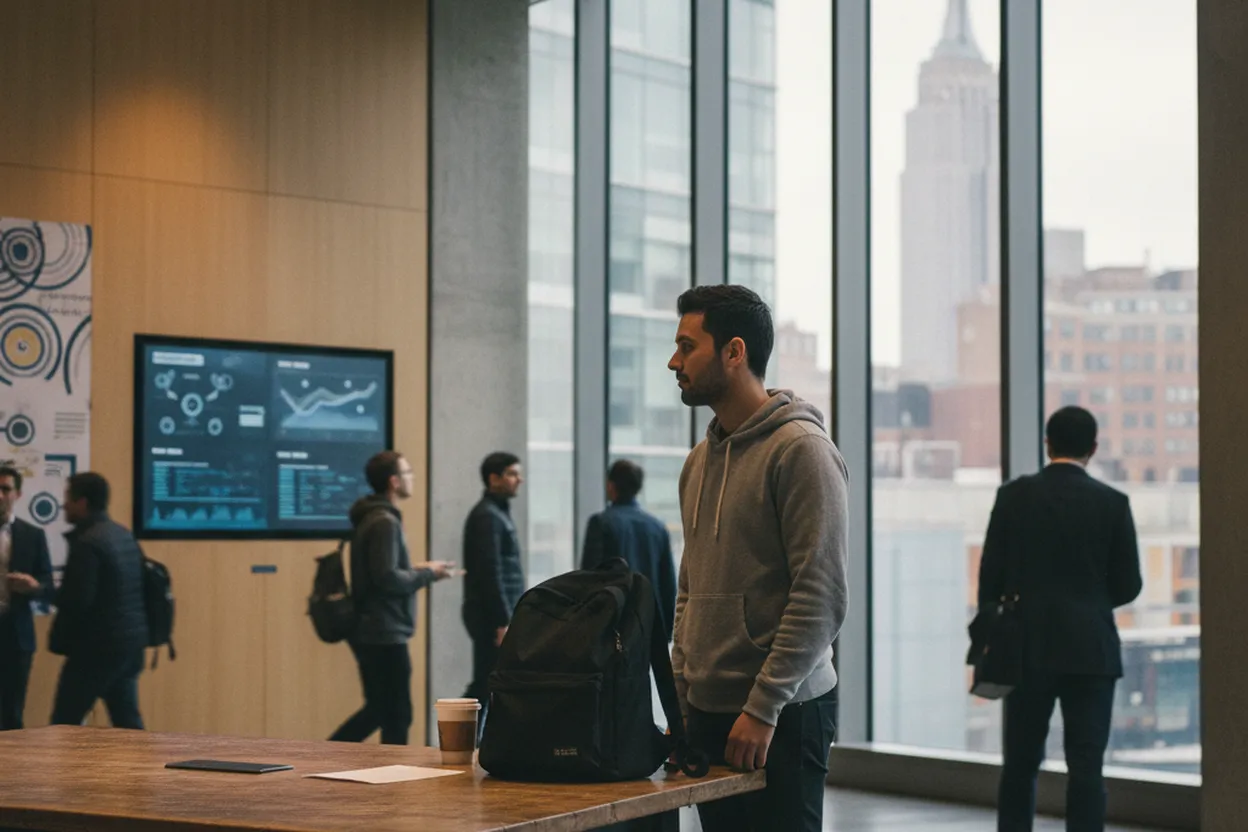
The Yard is not an incubator in the city-program sense, but coworking is part of the practical startup layer. Its NYC page lists multiple locations across Manhattan and Brooklyn, and the Lower East Side page confirms 85 Delancey Street, day pass and multi-day pass options, meeting rooms, open space, private offices, virtual offices, and dedicated desks. For a solo reader trying to work through AI notes after hours, it is a workspace decision, not a sightseeing stop.
Verify pricing and availability before committing. The Lower East Side page lists open coworking membership starting at $320 per month, dedicated desk rental starting at $550 per month, virtual office space at $75 to $125 per month, and private offices by inquiry, with pricing subject to change. Members have 24/7 access, while the onsite team is listed weekdays from 9:30 a.m. to 5:30 p.m. Evening usefulness depends on whether your access is already arranged.
NYPL Business Center at SNFL: Use Public Research Before Paid Startup Rooms
The Thomas Yoseloff Business Center at the Stavros Niarchos Foundation Library is the most accessible stop in this guide. NYPL lists it at 455 Fifth Avenue on the fifth floor, fully accessible, with regular weekday and weekend hours. The center offers free resources for small business, financial research, investing, career services, and startups, including premium business databases and librarian consultations. For a curious solo evening, this is the best low-friction research base.
The fit is strongest if you are validating markets, competitors, funding context, or customer segments behind AI startup claims. The limitation is that specific workshops and consultations depend on current listings and registration. NYPL’s events page explicitly tells users to check listings for format and service updates. Before leaving, confirm today’s hours, whether the event is onsite or online, and whether any database or consultation you need requires a library card or appointment.
Evening Route Decision: Roosevelt Island, Midtown Research, or Stay Online
For July 28, 2026 planning, split the evening by access level. If the weather is comfortable and you want a visible tech-campus setting, choose Cornell Tech and keep expectations to public grounds. If you need practical startup research, choose SNFL because it is public-facing and fully accessible. If you are evaluating founders or programs, stay online first: NYCEDC AI Nexus, Newlab, and Transit Tech Lab are stronger as verification sources than as unscheduled walk-in destinations.
The final verification step is simple: re-open the official page for each stop the same day, then confirm transit on current MTA or ferry tools, weather, registration, and building access. Skip any venue whose public page does not confirm hours, address, or access path. The strongest AI itinerary in NYC is not the one with the most buzzwords; it is the one where every claimed door, program, and backup option still exists when you arrive.
Tags: #NYCAI #NYCStartups #TechNYC #NYCEDC #AppliedAI #CornellTech #Newlab #TransitTechLab #NYPL #StartupResearch #HiddenGemsNYC #AskKarpo #BeforeYouGo #SoloNYC
Sources consulted: Source 1: edc.nyc · Source 2: edc.nyc · Source 3: tech.cornell.edu · Source 4: newlab.com · Source 5: transitinnovation.org · Source 6: nypl.org
All trademarks are the property of their respective owners.
Ask Karpo first
Tell Karpo your date, group size, budget, and starting neighborhood. We’ll check current access, timing, transit, and the cleanest plan for New York City Economic Development Corporation before you head out.