 Tribeca Bowling Group Night Planner for Wedding Guests
Sports Social
NYC Strength Conditioning Gym Intro: Your First 60 Minutes
Your first strength conditioning gym intro in NYC is usually a coached hour of movement screening, light lifts and a short finisher. Know what to bring and ask.
Nobody walks into a New York strength conditioning gym already knowing how to deadlift, and good gyms do not expect you to. Most coached facilities in the city start new members with an intro session, sometimes called an assessment, onboarding or foundations class, that lasts about an hour. It is the cheapest way to learn whether a gym fits you before you sign anything. Here is what that hour usually looks like, what to wear, and which questions separate a careful coach from a salesperson.
Before You Arrive
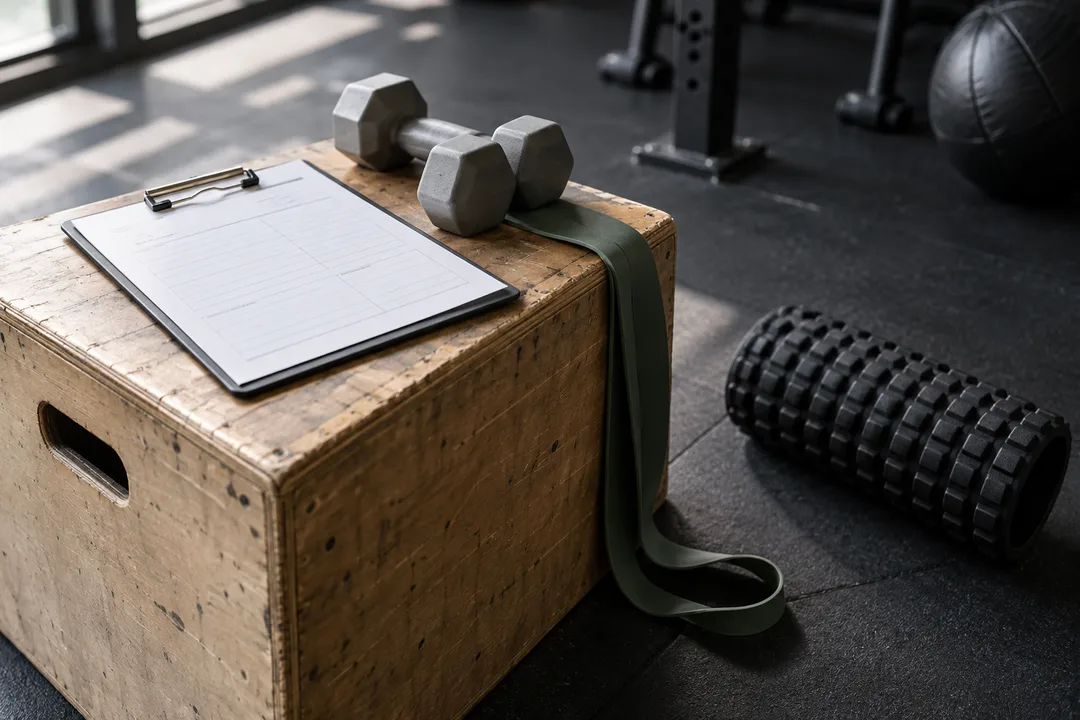
Expect to fill out a health and goals form, often online the day before. Be honest about old injuries, recent surgery, back pain or blood pressure issues, because a coach uses that sheet to pick your first movements. Wear flat shoes with a firm sole rather than thick running cushions, and clothes you can squat and lie on the floor in. Bring water. Leave jewelry at home. If the gym is in a walk-up building, as many are in Manhattan and Brooklyn, give yourself a few extra minutes to find the right door and stairwell.
Minutes 0 to 10: The Conversation
The first part should feel like an interview, and you should be the one being interviewed. A coach will ask what you want, how often you can train, what you have tried before, and what has gone wrong. Pay attention to whether they listen or start pitching packages. Good coaches ask follow-up questions, such as how your knee feels on stairs or what time of day you usually have energy. Generic coaches ask nothing and move straight to a workout.
Minutes 10 to 25: The Movement Screen
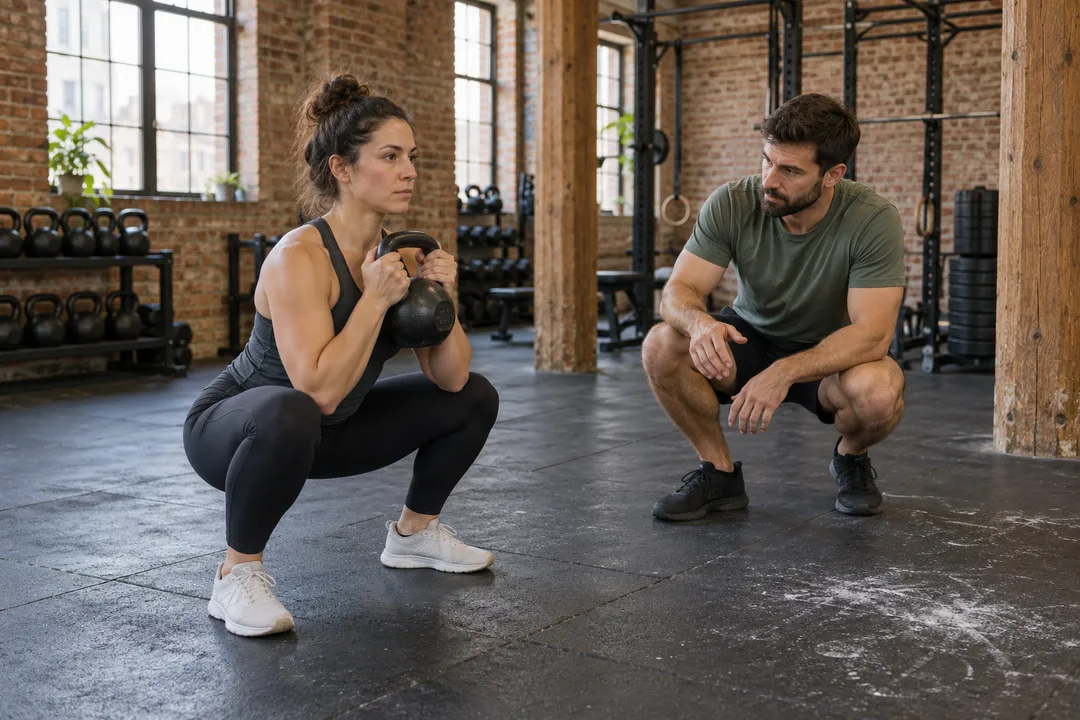
Next comes a short screen. Typical tests include a bodyweight squat, a goblet squat holding one kettlebell, a hip hinge with a dowel along your back, a push-up from the floor or an incline, a plank and sometimes a single-leg balance. Nothing here should be heavy. The coach is watching how your hips, knees and spine move, where you compensate, and what you can already do well. Ask them to explain what they see. A useful answer sounds like your hips shift left at the bottom, so we will start with box squats, not just looks good.
Minutes 25 to 45: Learning a Real Lift
Most intros then teach one or two foundational lifts. Usually that means a kettlebell deadlift or a trap bar deadlift, plus a press or a row. You will do several light sets with lots of feedback. Expect cues like push the floor away, ribs down, or keep the bell close to your shins. This is the part that tells you the most about coaching quality: a good coach changes one thing at a time and lets you feel the difference before adding another cue.
Minutes 45 to 60: A Taste of Conditioning
The last stretch is often a short finisher: a few rounds on a rower, an air bike, sled pushes or carries. It should be challenging but not punishing. If you are lying on the floor gasping at the end of your very first session, that is a warning sign rather than a badge. Strength conditioning gyms that know what they are doing build capacity gradually, because a client who is too sore to walk for three days rarely comes back for session two.
Questions Worth Asking Before You Leave
Ask how new members progress: is there a set number of foundations sessions before joining group classes? Ask how class sizes work and how many coaches are on the floor at peak times. Ask whether programming follows a written cycle or changes daily without a plan. Ask what happens if you miss a week. And ask about the cancellation policy for whatever membership they suggest. Clear, specific answers are a good sign. Vague answers and pressure to sign today are not.
It also helps to ask who your coach usually works with. Some gyms in the city skew toward athletes and former college players; others mostly serve office workers in their thirties and forties, postpartum clients or older adults. None is better in general, but the right room for you is the one where your goals are normal rather than unusual.
How to Compare Two or Three Gyms
Try to book intros at two or three places within the same two weeks so the memory is fresh. After each one, write three lines: what the coach corrected, how you felt the next day, and whether you would happily return at your usual training time. Tell the Karpo APP which gyms you tried and what you noted, and ask it to narrow the list by neighborhood and commute. The gym that wins is often not the fanciest space, but the one where the coaching made one movement noticeably better in a single hour.
If You Already Lift
Experienced lifters sometimes skip the intro, but it is still worth doing. Treat it as a chance to see how the gym coaches, not to prove your numbers. Mention your current training split, your recent best lifts and any nagging joints. Ask whether you can test into open gym access or advanced classes after one session, and whether the platforms, bars and plates suit the lifts you actually train. A powerlifter who needs a competition bench, or a former athlete who wants sled space, should see those specifics before paying for anything.
What to Skip
Skip any intro that starts with a heavy max test, because there is no reason to find a one-rep max on day one. Skip gyms that refuse to tell you the membership terms until after a long sales talk. And do not judge a place by its equipment wall alone. Rows of shiny racks mean little if nobody is watching your form on them.
Practical Notes
Eat a light meal two to three hours before the session. Expect mild soreness in your legs and upper back for a day or two, which is normal. Walk, sleep and drink water afterward. If the gym offers a second foundations session, book it within a week while the movement patterns are still in your head. Keep any notes the coach gives you, and bring them to your next visit so you do not start from zero.
Ask Karpo for more information.
Keep reading
- Tribeca Bowling Group Night Planner for Wedding Guests
 Flushing Bowling Group Night Planner for Thanksgiving Break
 Bushwick Bowling Group Night Planner After Band Practice