 Upper West Side Free Indoor Weekend Plan Finder for Music
Free Things to Do
Street Art Near Me in Astoria: Welling Court Murals to Walk
A free Astoria street-art walk through the Welling Court Mural Project, with the residential setting, annual-change context, and practical visit notes.
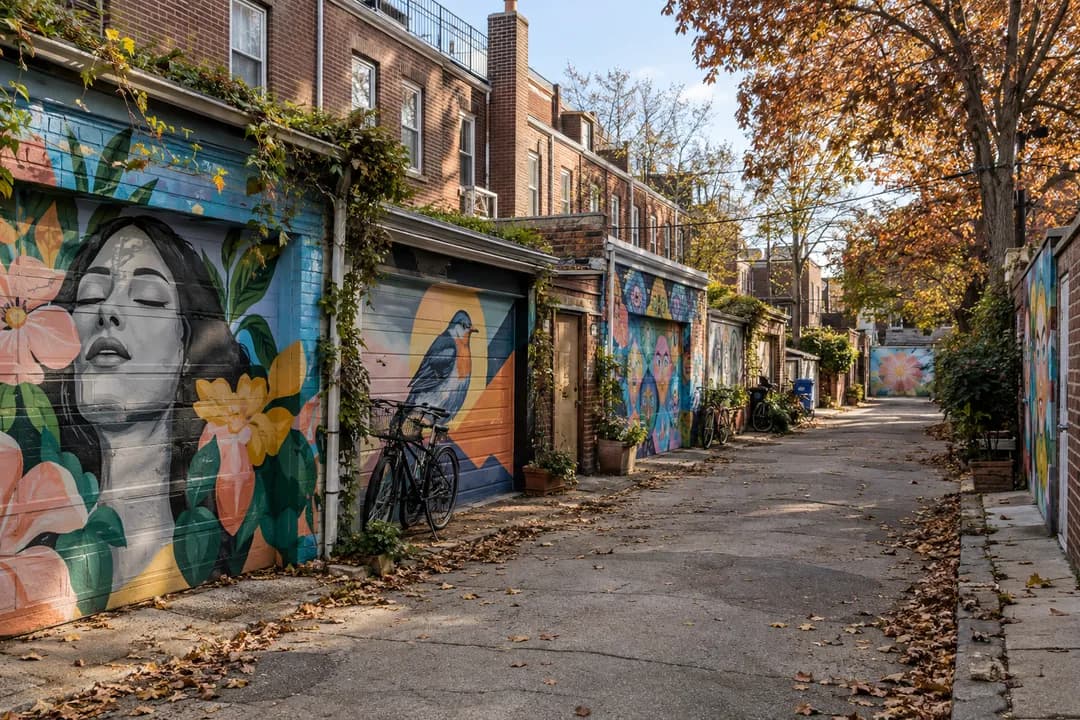
For street art near me in Queens, Welling Court offers a different experience from a warehouse district. The project sits in a residential pocket of Astoria where painted garage doors, fences, side walls, and small facades form an open-air exhibition. There is no admission fee and no formal turnstile. The appeal is the way ambitious public art shares space with stoops, parked cars, bicycles, and ordinary daily routines.

The mural project grew from local collaboration and has become known for bringing artists into a small Astoria community each year. Its history is less about one permanent signature wall than about a recurring exchange between residents, organizers, and artists. That means the surface changes. Some pieces remain recognizable for years, while others are painted over or altered. Treat the current season as a snapshot, not a promise about the next visit.
The route is easiest by subway plus a short walk from the Astoria-Ditmars Boulevard area, although the exact approach depends on which entrance you choose. The neighborhood has regular sidewalks, but the lane can feel narrow when cars are parked on both sides. Comfortable shoes matter more than technical gear. You can see the main work without paying $1, but a camera with a moderate lens is more practical than a large setup.
The art ranges from dense figurative scenes to graphic shapes, surreal characters, animals, and panels that use garage architecture as part of the composition. Look for how a door handle, hinge, or horizontal seam interrupts an image. Those constraints create a visual language that would not exist on a blank gallery wall. Photograph the whole facade before moving closer, because the relationship between neighboring doors is part of the project.
Welling Court is a place where the difference between public art and private property stays visible. Some walls are painted, but the homes and garages remain active parts of the neighborhood. Do not climb a curb or step into a driveway for a cleaner frame. If a resident is opening a garage, move aside immediately. A free street-art stop should never make the people who live there feel like they are inside an exhibit.
Visit in daylight. Morning offers softer shadows and fewer casual visitors, while mid-afternoon gives brighter color but can make the lane busier. After rain, painted surfaces may look more saturated, but puddles and slick pavement make close viewing less comfortable. There is no queue, no timed ticket, and no price to pay at the entrance. The useful reservation advice is to reserve time in your itinerary, not a seat.
Bring water and plan a short food or coffee pause before or after the murals rather than carrying an elaborate picnic into the lane. Astoria makes it easy to extend the outing toward Steinway Street, Ditmars Boulevard, or Astoria Park. A simple route is better than trying to cover all of northern Queens in one afternoon. The project is small enough to pair with another neighborhood plan without becoming an exhausting art marathon.
The project's neighborhood context also changes how you read the work. A painted garage may face a private yard, while another panel sits beside a front stoop with seasonal plants. The mix keeps the murals from feeling interchangeable. Look for the points where color from a wall echoes a nearby awning or window frame. This is not a curated white-box sequence; it is a conversation between art, architecture, and residents.
If you want people-free photographs, arrive early and be patient. If you want to understand how the project works socially, a busier hour can be more revealing. Visitors often pause, compare panels, and then move on in small groups. Give them space instead of treating the lane as a stage. Keep your visit moving, especially when a family is using a driveway or a resident is carrying groceries.
Street art near me searches can lead to large branded attractions, but Welling Court is valuable because it stays intimate. The walk has no gift shop, branded ticket, or single marquee wall. Its strongest moments are often small: a figure tucked around a door frame, a carefully painted utility box, or a weathered panel whose colors have softened into the brick. That modest scale makes looking feel more attentive.
For a longer outing, continue toward Astoria Park after the murals. The East River views, open lawns, and bridge perspectives create a useful contrast to the close painted surfaces in Welling Court. You can also make the project part of a museum day, but leave room between stops. The murals work best when you are not rushing toward a reservation. Astoria's street grid gives you plenty of ways to extend the walk.
Practical Notes: the project is an outdoor public-art experience with free sidewalk viewing, not a ticketed indoor venue. Wear walking shoes, bring a light layer, and check current project updates for newly painted walls or organized events. Keep photography respectful, do not enter private property, and avoid blocking garage doors. Because the display evolves, a current map or organizer update is more reliable than an old list of featured artists.
This is a good match for families with older children, first-time visitors who want a manageable mural route, and photographers who enjoy architectural context. It is also a strong choice for locals who have seen the project before because returning reveals new panels and repainted surfaces. It is not the right plan for visitors who need guaranteed accessibility through every narrow edge or who want a fully guided historical lecture at each wall.
When you finish, the most useful takeaway is not a favorite mural but an understanding of scale. Welling Court proves that a street-art destination can be made from ordinary doors and a community willing to share its surfaces. Search street art near me for ideas, then choose the Astoria walk when you want public art that asks you to notice where it lives, how it changes, and who lives beside it. A small planning trick makes Welling Court easier: leave your headphones off for at least part of the walk. You will hear whether a driveway is in use, notice when a resident approaches, and catch the ordinary sounds that make the murals feel grounded. Keep your route short enough that you can return to the subway before dark, especially in October when daylight fades earlier. Write down the panel or artist that stayed with you, then look up the project history after leaving. The lane rewards attention that is patient, quiet, and aware of its neighbors.
Ask Karpo for more information.
Keep reading
- Upper West Side Free Indoor Weekend Plan Finder for Music
 Astoria Free Indoor Weekend Plan Finder for Visiting Parents
 Williamsburg Free Indoor Weekend Plan Finder With Kids