The transfer nobody takes
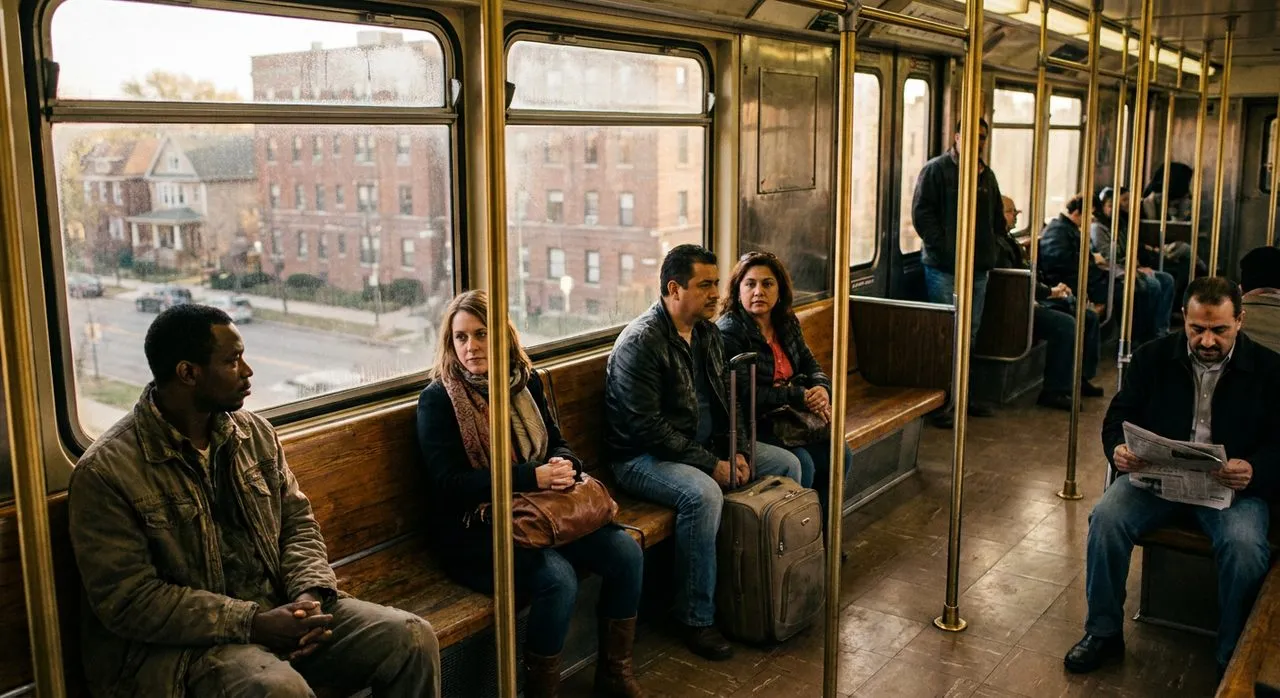
You step off the Staten Island Ferry with five thousand commuters and tourists, but while they're queuing for the return boat or summoning rideshares, you follow the blue-and-white signs toward the railway platform. The Staten Island Railway—SIR to locals—occupies the eastern edge of the St. George terminal, a utilitarian station that feels more regional rail than subway. Here's where the fare system gets interesting: SIR only collects at St. George and Tompkinsville, the two stations with turnstiles. If you're starting your journey at St. George (as you are, coming from the ferry), you'll pay the standard fare. But travel between any other stations along the line? That's free. The trains themselves are retired R44 subway cars, their orange-and-silver paint schemes faded to an industrial patina. Board the Tottenville-bound train on the left platform. Thursday mid-morning or Saturday afternoon means you'll likely get a two-seater to yourself.
Updated August 2026: hours, prices, reservations, event dates, transit details, and venue policies can change. Use the linked official venue, city, or operator sources in the Sources section as the final reference before you go.
Tompkinsville to Clifton: the industrial corridor
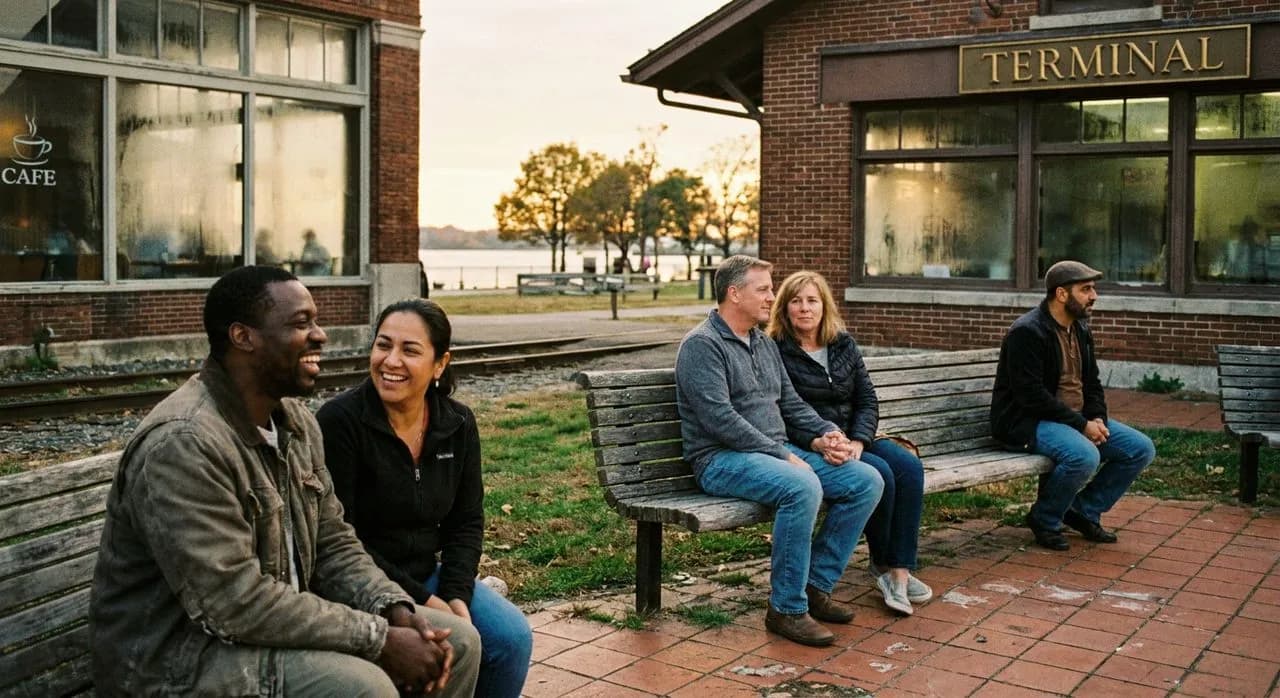
The first stretch runs parallel to the waterfront through neighborhoods the tour boats never mention. Tompkinsville Station sits beside a former brewery complex, now luxury condos but still recognizable by the brick smokestacks. Between stations, you pass container yards and auto body shops, their hand-painted signs in Spanish and Arabic. At Stapleton, the platform offers a clear view of the Verrazano-Narrows Bridge's eastern tower. The train curves inland after Clifton, leaving the harbor behind. Row houses press close to the tracks here, their backyards revealing above-ground pools covered for winter, satellite dishes pointed south, laundry lines strung between ailanthus trees. This is the Staten Island that exists in no guidebook.
Mid-island: where the suburbs begin
Grant City Station marks the transition. Suddenly there are driveways, detached homes, actual front lawns. The railway cuts through backyards at eye level—you see trampolines, tool sheds, the occasional above-ground koi pond. Between New Dorp and Oakwood Heights, the train runs through a cut so deep you're traveling in a man-made canyon of exposed bedrock and chain-link fence. Local teenagers use the Oakwood Heights platform as a shortcut between neighborhoods. The station booth at New Dorp sometimes keeps historical materials about the old shoreline before the landfill extensions, worth asking about if you're curious and the window isn't busy.
Bay Terrace to Great Kills: marshland interval
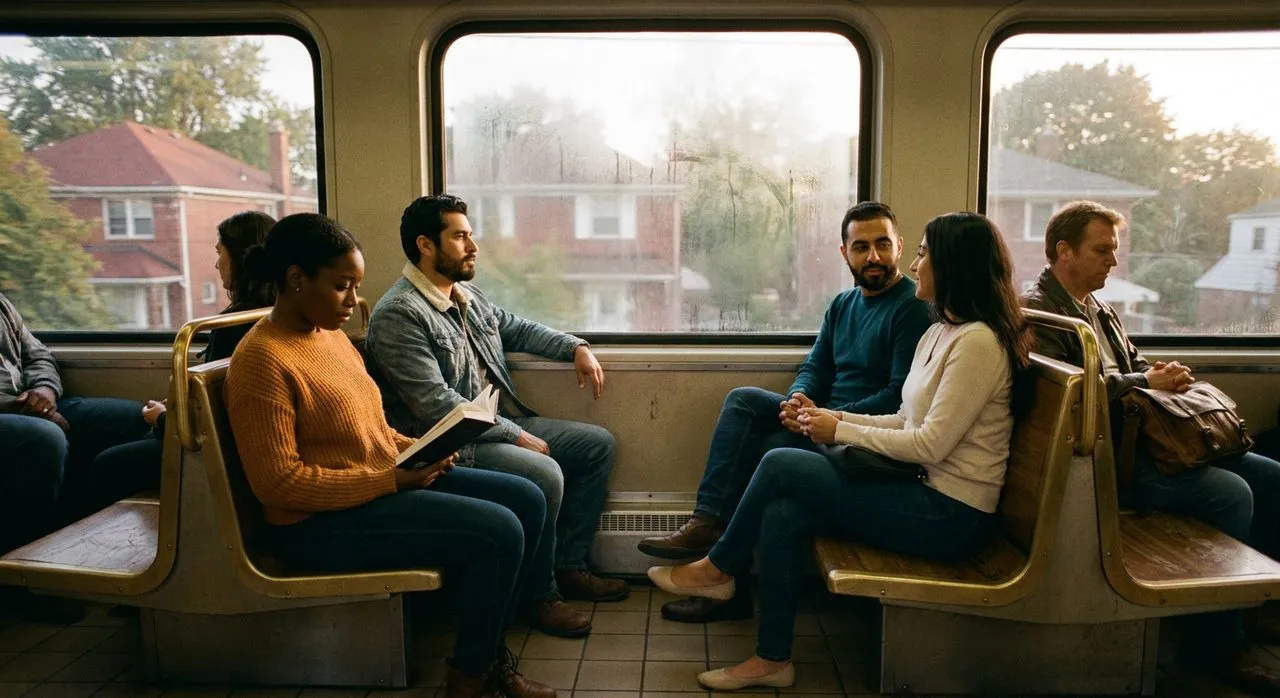
The middle stretch offers the route's most unexpected landscape. After Bay Terrace, the train emerges from residential streets into the Great Kills Park wetlands, part of the Gateway National Recreation Area. For several minutes, you're riding through salt marsh and scrub pine, the only sounds the rail joints and occasional seabird. The Eltingville station sits on the edge of this greenbelt, its parking lot perpetually half-empty. This is where the commuter density drops—most riders have already disembarked by Great Kills. In autumn, the phragmites turn golden-brown and the marsh becomes a study in horizontal lines: reeds, water channels, distant tree line, sky. It's the closest New York City gets to the Pine Barrens, that New Jersey wilderness bleeding across the Arthur Kill.
Huguenot to Tottenville: the forgotten end
The final stations serve neighborhoods that feel more New Jersey suburb than New York borough. Huguenot, Prince's Bay, Pleasant Plains—names that could belong to Long Island towns from the 1950s. The houses grow larger, the lots deeper. You'll see boats in driveways, American flags on porches, corner delis with hand-written specials boards. At Arthur Kill Station, the train crosses a trestle over the kill itself—look right for the rusting hulks of the boat graveyard, dozens of decommissioned ferries and tugboats slowly dissolving into the marsh. Then Tottenville, the end of the line. The station is a simple two-track affair with a single stairway to Bentley Street. Everyone gets off. The conductor walks through to check for sleepers, then disappears into the crew room.
Conference House Park and the return
From Tottenville Station, Conference House Park is a short walk down Hylan Boulevard, then left on Satterlee. The park occupies the city's southernmost point, where the Arthur Kill meets Raritan Bay. The Conference House itself—a colonial-era stone manor where Benjamin Franklin met with the British in 1776—keeps weekend hours only, but the park's trails remain open. Walk to the southern tip and you're standing closer to New Jersey than to Manhattan. The waterfront path offers views of Perth Amboy's refineries across the kill, their flare stacks visible at night. When you've had enough, retrace your steps to the station. The return train offers the same landscapes in reverse, but the light changes everything—afternoon sun illuminates the eastern faces of buildings, throws different shadows across the marsh. Most riders sleep on the way back. You should stay awake.
Practical notes
The Staten Island Railway runs from St. George Ferry Terminal (connecting directly to the Staten Island Ferry) to Tottenville, approximately 14 miles in roughly 40 minutes. Trains operate 24/7, with frequencies varying by time of day. Fares are collected only at St. George and Tompkinsville stations; as of 2026, the fare is $3.00 (OMNY or MetroCard accepted). Travel between other stations along the line is free. The St. George terminal connects directly to the ferry—follow signs from the boat's right side exit. Tottenville Station is at 7420 Amboy Road at Bentley Street. Conference House Park is open dawn to dusk daily; the historic house operates Saturday-Sunday 1-4 PM, April through October. Bring water—there are no vendors between St. George and Tottenville.
Tags: #StatenIslandRailway #SIR #NYC #StatenIsland #Tottenville #ConferenceHouse #TheLongWayHome #NewYorkCity #PublicTransit #UrbanExploration #HiddenNewYork #ForgottenBorough #TrainRide #NYCTravel #OffTheBeatenPath
Sources consulted: en.wikipedia.org · mta.info
All trademarks are the property of their respective owners.