
Spyscape opened in Midtown in 2018 at 928 Eighth Avenue, between 54th and 55th, and the first friction point isn't the entrance—it's understanding what you're paying for. The museum sells timed tickets online, and walk-up prices shift depending on demand and day of week. As of late 2024, expect somewhere in the $40–$50 range for adults, but that number flexes. The website shows dynamic pricing, and third-party resellers sometimes list bundles that look cheaper until you notice they include things you didn't ask for. Check Spyscape's own ticketing page the day you want to go, and if the price feels steep, know that it includes the full interactive experience—your entry time matters because the space is small and they manage capacity to keep the touchscreens and profiling stations usable.
Text Karpo before you book—it'll check current ticket pricing, tell you how crowded Spyscape typically runs on your day, and map the fastest subway route from wherever you're starting in the city.

The admission price confuses more visitors than the cryptography exhibit
The museum occupies roughly 60,000 square feet, but it's carved into distinct rooms rather than open galleries, so even moderate crowds create bottlenecks. Weekday mornings before 11 a.m. tend to flow better than weekend afternoons, when school groups and tourists converge. You'll move through themed zones—encryption, deception detection, surveillance, cyberwarfare—each anchored by a hands-on challenge that feeds data into your personalized spy profile. The profile is Spyscape's hook: you take a series of timed tests and psychological assessments, and at the end the system assigns you a role like analyst, agent, or hacker. It's more sophisticated than a Buzzfeed quiz but less rigorous than a vocational assessment. Whether that payoff feels worth the ticket depends on how much you enjoy structured interactivity versus open browsing.
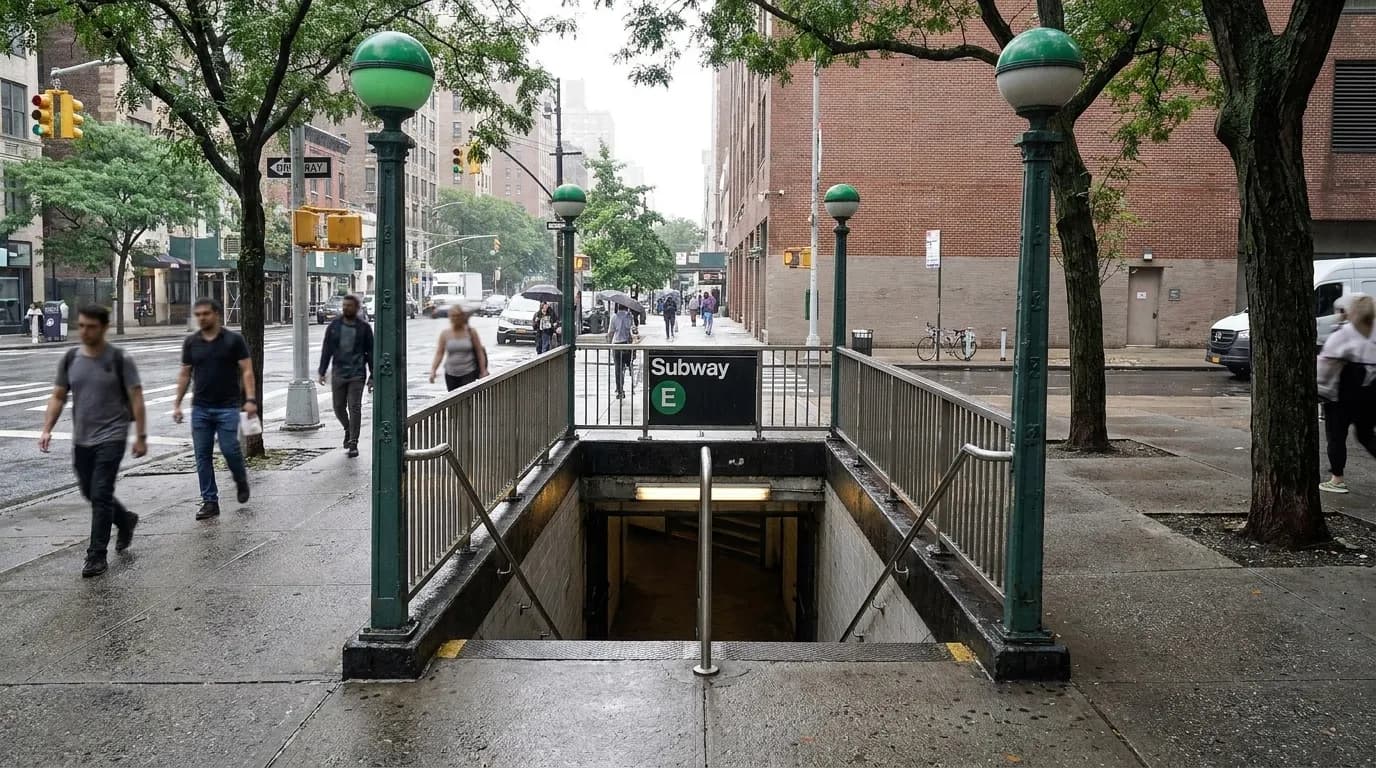
The location puts you two blocks west of the E and C trains at 50th Street and Eighth Avenue, or a slightly longer walk from the 1 at 50th and Seventh. The B, D, and F at 47–50th Rockefeller Center are within range if you're already near that hub, but the transfer from those lines to street level involves long corridors, and you'll walk north once you're up. The neighborhood is tourist-dense—you're near the Ed Sullivan Theater, Restaurant Row, and the southern edge of Hell's Kitchen—so foot traffic on Eighth Avenue between 50th and 57th can be thick from late morning through evening. Plan an extra five minutes if you're arriving during afternoon rush.
How the experience actually unfolds once you're inside
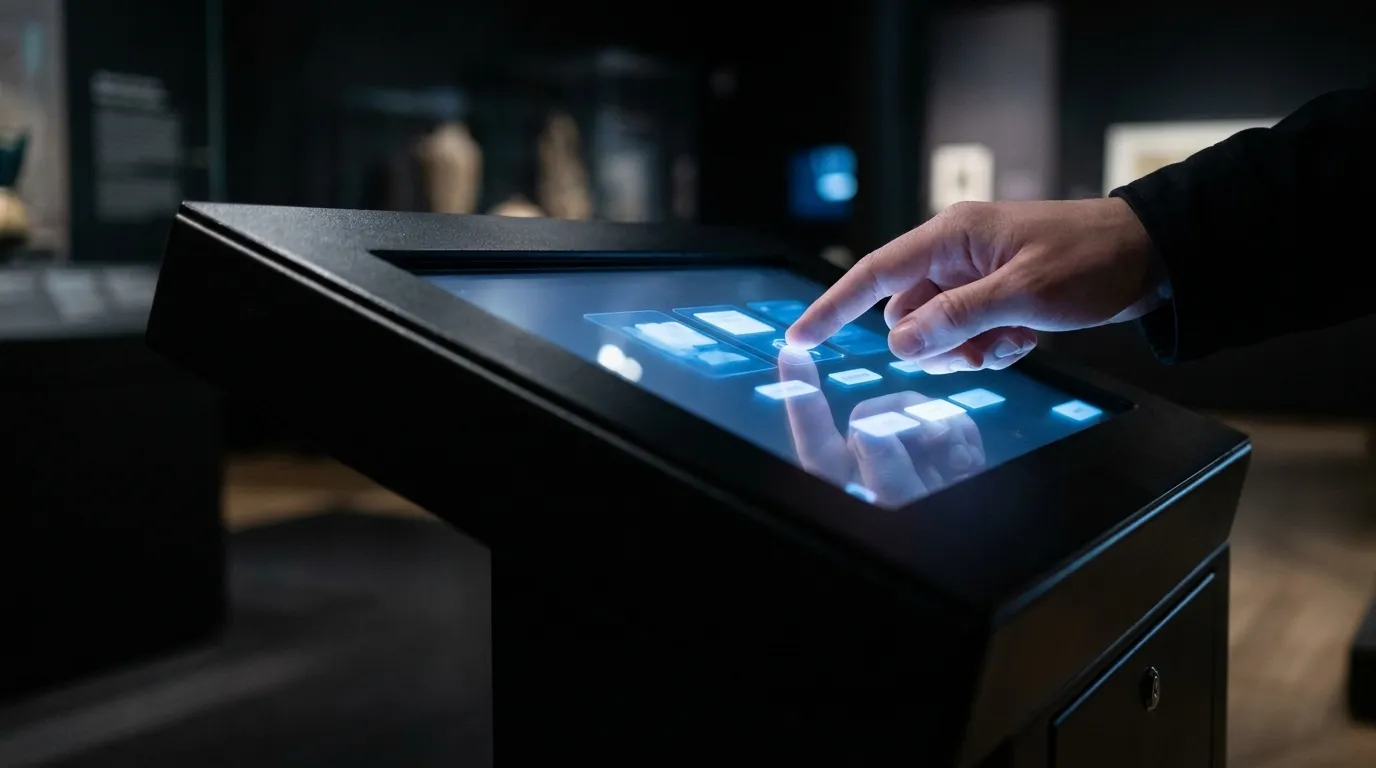
You start in a sleek, dark lobby that feels more like a tech startup than a traditional museum. Staff scan your timed ticket and hand you a wristband embedded with an RFID chip; this tracks your progress and scores as you move through the challenges. The first major space is the Briefing Room, where a video introduction sets up the premise. From there, the path is technically self-guided, but the layout funnels you through a sequence: you'll hit the encryption and code-breaking stations early, then move into deception detection (a lie-spotting video test), a laser-dodging agility challenge, a drone piloting sim, and a social-engineering scenario where you decide how to manipulate a target. Each station is timed, and your wristband logs your performance.
The interactivity is real—you're tapping screens, pressing buttons, stepping on pressure plates—but the stations are not infinitely replayable in one visit. Once you've completed a challenge, you move on; there's no queue to retry for a better score unless the room is empty and staff allow it. On busy days, you'll feel the push to keep moving. The museum does a better job than most at keeping the tech functional—touchscreens respond, the laser grid resets properly, the video playback doesn't stutter—but the rooms are small, and if you arrive during a surge, you'll spend time waiting for a free terminal. The encryption room, in particular, has only a handful of active stations, and it's a chokepoint.
The Spyscape profiling system synthesizes your results at the end and delivers a printed card with your role, strengths, and a QR code linking to a detailed breakdown. The profile feels credible enough to be interesting—it's not just flattery—but it's also not a personality deep-dive. You'll learn whether you skew more toward risk-taking or caution, pattern recognition or improvisation. The gift shop sits at the exit, and the merchandise is higher-end than typical museum tchotchkes: leather passport covers, encryption-themed puzzles, sleek notebooks. Prices match the Midtown location.
One local-knowledge detail: the building has no dedicated parking, and the nearest garages (Icon on 55th, Edison ParkFast on 54th) charge Manhattan daytime rates. If you're driving in, factor $40–$60 for a few hours. The subway is faster and cheaper from almost anywhere in the city. The M50 and M104 buses run on Eighth Avenue if you're connecting from the west side, but they're slow and get stuck in traffic near the Port Authority.
Who should skip this and spend the afternoon elsewhere
Spyscape is not a passive museum. If you prefer to wander at your own pace, read wall text, and sit on a bench when you're tired, you'll find the format exhausting. There are no galleries in the traditional sense—almost every space demands that you interact with something, and the flow is designed to keep you moving. The timed challenges create a low-level urgency that some visitors enjoy and others find stressful. If you're bringing kids under eight, know that many of the stations require reading comprehension and quick decision-making; younger children often lose interest or need help at every stop, which slows everyone down.
The museum also skews toward a specific kind of content: Cold War espionage, NSA surveillance history, and hacker culture. If you're looking for a broader take on intelligence work—human rights implications, contemporary whistleblowing, the ethics of mass data collection—you'll find some of that, but it's not the center of gravity. Spyscape leans into the thriller aesthetic, and the tone is more admiring than critical. That's not a flaw, but it's a choice, and if you're expecting a more journalistic or sobering treatment, adjust your expectations.
The experience takes about 90 minutes if you're moving steadily, two hours if you're thorough. It's not an all-day visit, which means you'll need a plan for the rest of your afternoon. The Museum of Modern Art is a ten-minute walk east on 53rd, and Central Park's southern edge is fifteen minutes north. If you're hungry after, avoid the immediate blocks around Eighth Avenue and 54th—most of the options are tourist-priced and unremarkable. Walk east toward Ninth or Tenth if you want something more neighborhood-scaled, or head south toward Hell's Kitchen proper, where the restaurant density improves below 50th Street.
What to verify before you book your ticket
Check Spyscape's official site for current hours and any temporary closures. The museum occasionally books private events, especially on weekday evenings, and those can reduce public hours without much advance notice. Confirm your timed entry slot carefully—if you miss your window, re-entry is not guaranteed, and you may have to rebook for a later time or a different day, depending on capacity.
Look at the day's weather only because it affects your arrival logistics: the subway entrances near Spyscape are exposed, and Eighth Avenue has limited awning cover if you're walking from Seventh. The museum itself is fully climate-controlled, so once you're inside, weather is irrelevant. If it's raining and you're coming from the east side, the covered corridors at Rockefeller Center let you stay dry until you hit Sixth Avenue, but you'll still have two avenue blocks west in the open.
Late-night subway service on the C and E lines can be spotty, especially after 10 p.m. on weekends, when planned work often reroutes trains or adds long gaps between arrivals. If you're planning an evening visit and heading home via those lines, check the MTA's service updates before you leave. The 1 train is more reliable late, and the A runs express north of 59th, so if you're flexible on your route home, have a backup in mind. The walk from Spyscape to the 1 at 50th and Seventh is flat and well-lit, and you'll pass the Gershwin Theatre and a handful of late-open delis if you need to kill time waiting for a train.
One last practical note: Spyscape does not allow large bags or backpacks, and the coat check is small. If you're visiting in winter, wear layers you can carry rather than a bulky coat you'll need to stow. The museum is kept cool—low 70s Fahrenheit—so you won't overheat inside, but you also won't want to carry a heavy parka through the challenges. If you're coming straight from another part of the city and carrying shopping bags or a daypack, ask about locker availability when you arrive; on crowded days, storage fills up quickly.
Practical notes
- Timed tickets required; prices fluctuate by day and demand—check Spyscape's official site the day you plan to visit.
- Nearest subway: E, C at 50th Street and Eighth Avenue, or 1 at 50th and Seventh; allow extra transfer time from Rockefeller Center lines.
- Visit runs 90 minutes to two hours; weekday mornings before 11 a.m. are least crowded.
- No large bags or backpacks allowed; coat check is small, so travel light in winter.
- Check MTA service alerts if you're leaving after 9 p.m.—C and E lines often have weekend night work.
- Nearest parking garages charge $40–$60 for a few hours; subway is faster and cheaper from most neighborhoods.
Tags: #karpo #spyscape #spyscapenyc #nycmuseums #midtownmanhattan #interactivemuseum #thingstodonyc #nycplans #midtownnyc #nyctravel #theoddedit #museumreview #spymuseum #nycattractions #eighthavenue
Sources consulted: Spyscape official site · MTA service updates
All trademarks are the property of their respective owners.
Ask Karpo first
Text Karpo for today's Spyscape ticket pricing and crowd expectations, plus a live subway route from your current location that accounts for any service changes. It'll also suggest a backup plan nearby if Spyscape is sold out or you finish early and want to stay in Midtown.


