 Upper West Side Hot Chocolate Cafe Crawl on Balloon Eve
Coffee & Dessert
Williamsburg Specialty Coffee Bean Roaster: 3 Stops, 1 Bag
Williamsburg's roaster stops cluster near Grand Street and Bedford Avenue. Watch cupping and roasting first, then pick light or medium beans for home.
Devoción opened a 2,500-square-foot flagship on Grand Street in Williamsburg on November 5, 2025, two blocks from the café where it first put its roaster behind glass. That move says a lot about this stretch of Brooklyn: the former warehouses between Bedford Avenue and the East River now hold some of the city's most transparent coffee operations. Choosing a specialty coffee bean roaster here works well when you treat the morning like a field trip, watching and tasting before a bag ever goes in your tote.
What a Roast Teaches You Before You Pick a Bag
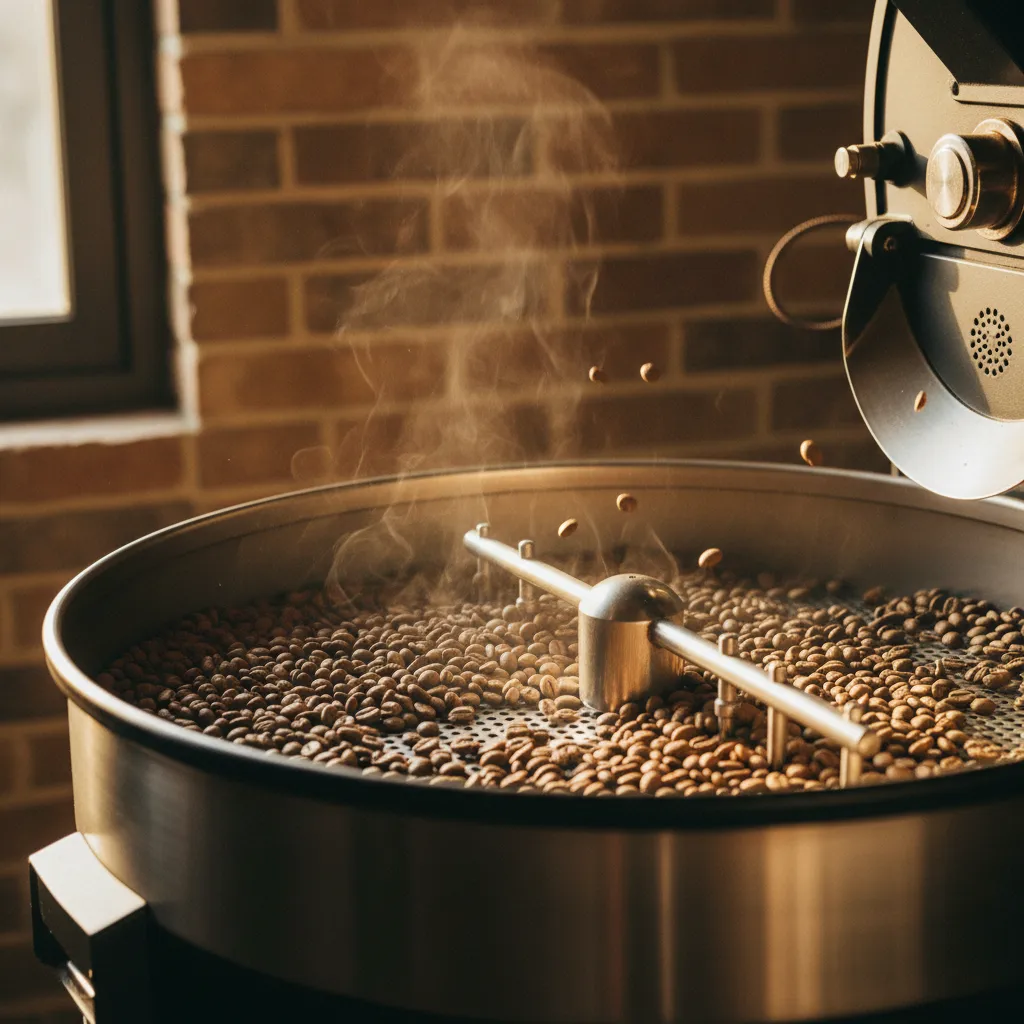
Watch any drum roaster long enough and you will hear first crack, a popcorn-like snapping that usually arrives around 385 to 400°F as moisture and gas escape the bean. Roasters who drop the batch within a minute or two of that sound are making a light roast; letting it run three or four minutes longer pushes it toward medium. In Williamsburg's converted industrial spaces, high ceilings carry that sound well, so it is easy to time if you stand near the glass.
The cooling tray is the second lesson. Beans pour out steaming, and steel paddles sweep them around while a fan pulls air through the perforated floor, stopping the roast in about four minutes. Notice the color: light roasts look cinnamon-brown and dry, medium roasts look chestnut with almost no oil. A shiny, oily surface means darker development. Remember what you saw, because the bag label rarely describes color as precisely as your own eyes on the tray.
Devoción on Grand Street: Fresh Colombian Coffee and a Lab Window
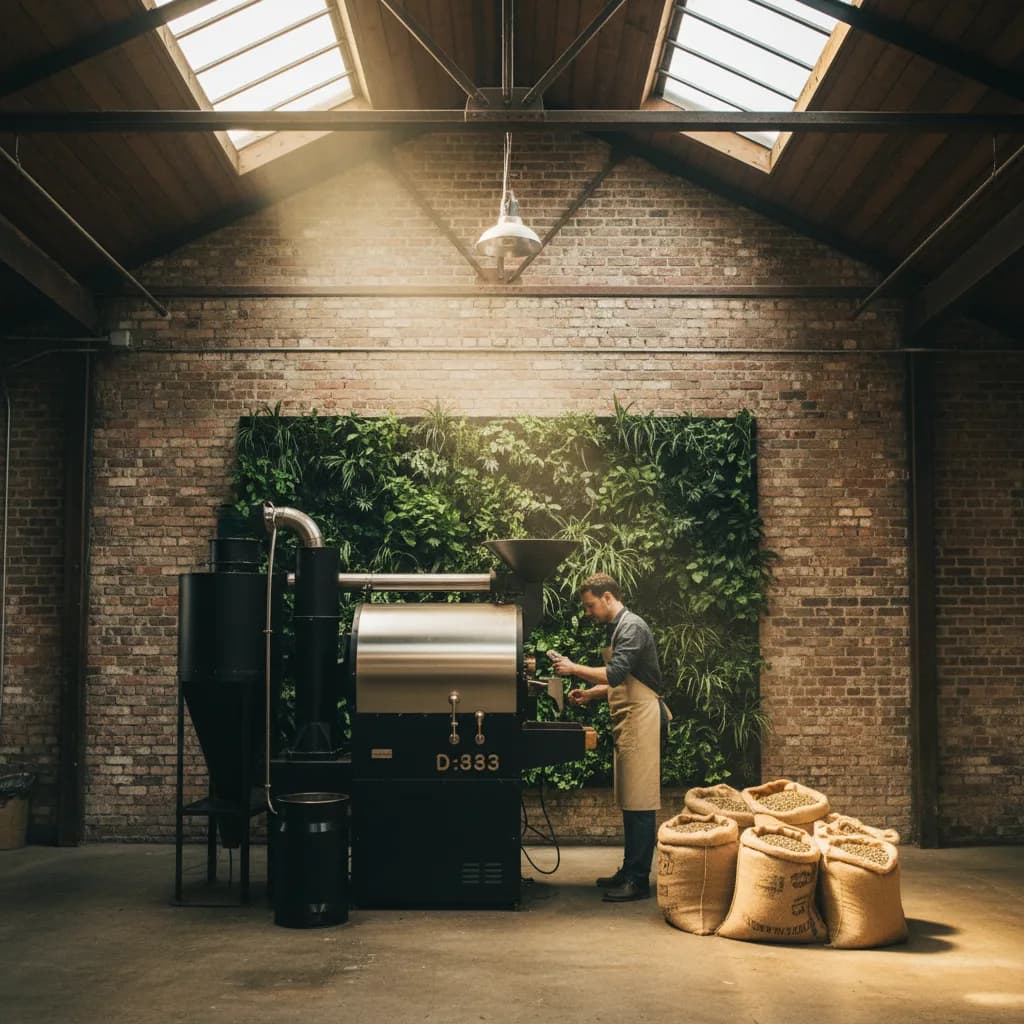
Devoción was founded in Colombia in 2006 by Steven Sutton, a Medellín native, and its first Williamsburg home was a onetime meatpacking plant turned woodshop. Early visitors could see a giant Probat roaster behind the counter in a glassed-in area, under a skylight that lit a wall of about 2,000 live plants. That image, sunlight on green leaves and a working drum, is still what most coffee people picture when they hear the name in this neighborhood.
The newer Grand Street flagship borrows from Colombian farm architecture, with a pitched roof, skylight, sunlit courtyard and an exposed-brick corridor opening onto greenery. The detail that matters for bean shoppers is the coffee laboratory visible from the street, used for trainings, cuppings, tastings and public classes. Devoción says it roasts coffee only 10 days after it leaves origin, so a cupping here is the clearest way to taste what freshness does before you commit to a full bag.
Partners Coffee: From North 6th Street to Bedford Avenue
Adam Boyd and Amber Jacobsen opened their flagship café and roastery in 2012 on what was then a deserted stretch of North 6th Street, originally under the Toby's Estate name. In 2019 they renamed the business Partners Coffee, with Boyd explaining that the company is about partnering with people. That first block of North 6th Street sits a short walk from the Bedford Avenue L stop at North 7th Street, the busiest Brooklyn station outside Downtown.
Partners now roasts in Bushwick, and in February 2026 it opened Bedford, a 50-seat café at the corner of Bedford Avenue and North 9th Street with the longest single-origin lineup across its cafés. Skip Bedford if your only goal is to watch a drum turn, because the roasting happens elsewhere now. Go there instead to compare several single origins side by side, which is the quickest way to learn whether you prefer bright washed coffees or heavier naturals. Order two small filter cups rather than one large drink.
Café Grumpy Just Over the Greenpoint Line
Keep walking north and Williamsburg shades into Greenpoint, where Café Grumpy opened its first and most spacious café in 2005. The café sits beside the Café Grumpy Roastery, which is half a block away down Diamond Street, so the coffee on the bar has barely traveled from drum to grinder. It makes a natural second stop after Grand Street if you want a different roasting style to compare against Devoción's Colombian focus, and the walk up through North Williamsburg's side streets takes little effort.
This is also your Plan B. If Grand Street is packed with a weekend line out to the sidewalk, or the single origin you tasted has already sold through, head up to Greenpoint instead and ask what came off the roaster most recently. Having two roasters a short walk apart means a crowded counter never ends the outing; it just reorders it, and the second stop often gives you a useful contrast in roast style and a second opinion from a barista.
Light or Medium: Matching the Bag to Your Brewer
For pour-over at home, a light roast from a washed coffee is the safest place to start, because the clean acidity and floral or citrus notes come through clearly at a 1:16 ratio, roughly 15 grams of coffee to 240 grams of water. Naturals, dried inside the fruit, taste jammier and more berry-like. Ask the barista to brew one of each so you can taste the difference between processing styles rather than guess from the tasting notes printed on a label.
Espresso is less forgiving with very light roasts, which can taste sour at home unless your grinder and machine are dialed in. A medium roast, dropped a few minutes after first crack, usually pulls sweeter at a 1:2 ratio, such as 18 grams in and 36 grams out. Let espresso beans rest seven to 14 days after the roast date, and filter beans three to seven, so trapped carbon dioxide does not make extraction uneven or the crema overly bubbly.
Practical Notes for a Williamsburg Bean Run
Ride the L to Bedford Avenue, start at Partners on the corner of North 9th Street, then walk south along Bedford toward Grand Street and the lab window at Devoción, adding Greenpoint first if you have time. Finish at Domino Park, the waterfront park that opened in 2018 on the Domino Sugar Refinery site, where salvaged syrup tanks line the riverside walk. It is a good place to sit with your bags and decide which one is the keeper before heading back to the train.
Read the roast date, not an expiry stamp, and choose whole beans; grinding at home just before brewing keeps aromatics that store grinding loses within hours. Store bags sealed in a cool cupboard, away from light, and finish them within a month. If you would rather not plan the route alone, ask Karpo APP in chat for a short list matched to your brewer and taste, save it with map links, and come back later to compare.
Ask Karpo for more information.
Keep reading
- Upper West Side Hot Chocolate Cafe Crawl on Balloon Eve
 Park Slope Hot Chocolate Cafe Crawl After a Snow Day Sled
 Upper East Side Hot Chocolate Cafe Crawl With a Grandparent