 Upper West Side Hot Chocolate Cafe Crawl on Balloon Eve
Coffee & Dessert
West Village Specialty Coffee Bean Roaster: 3 Shops, One Bag
Three West Village roasters, Joe, Partners and Porto Rico, sell whole beans worth a small kitchen. Here is which roast to pick and how long a bag lasts.
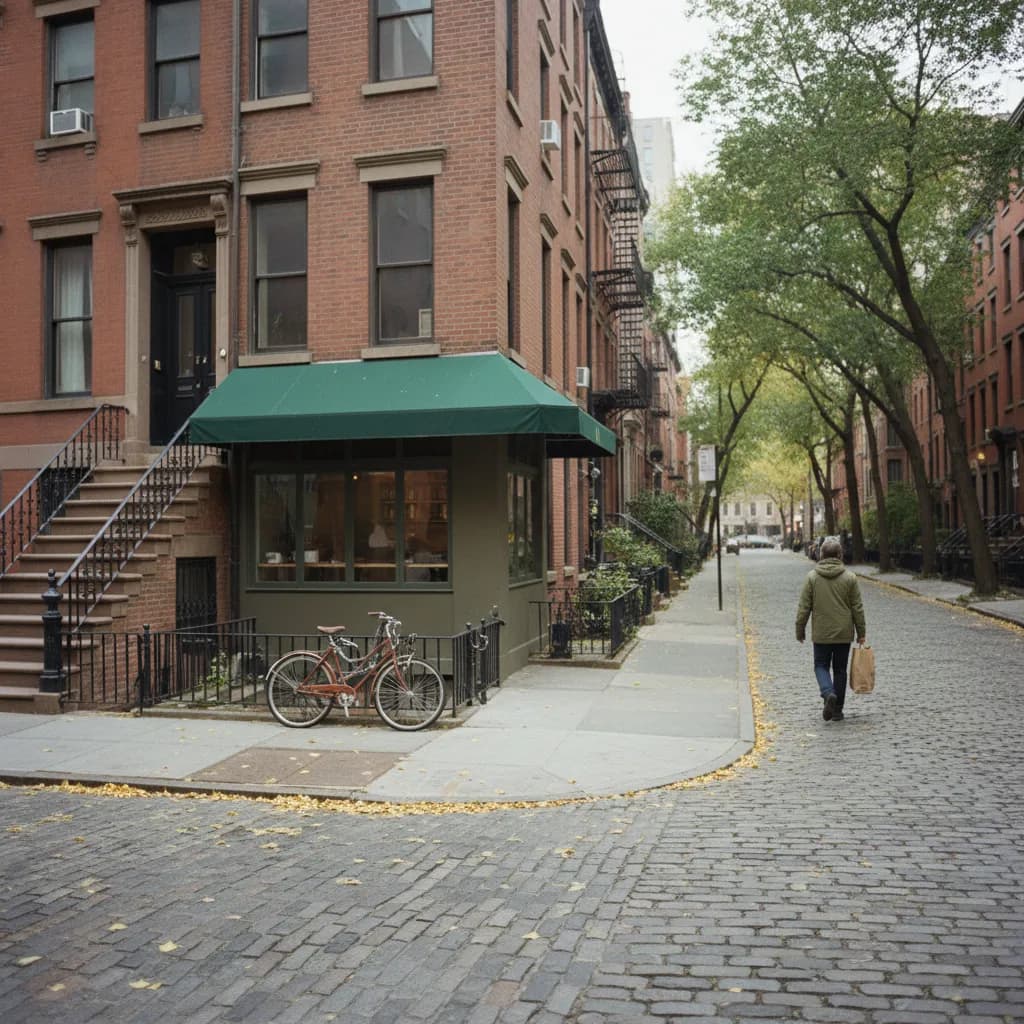
Joe Coffee was born in 2003 on the corner of Waverly Place and Gay Street, and the West Village still holds three places within a short walk of each other where a small-kitchen brewer can trade pre-ground for whole beans. This guide treats each specialty coffee bean roaster as a stop on one afternoon loop, then covers the decisions that actually matter in a walk-up kitchen with two feet of counter: roast style, bag size, grinder, and storage.
Three Village Roasters Worth the Walk
Start where the neighborhood's modern coffee story began. Jonathan and Gabrielle Rubinstein founded Joe Coffee in 2003 at the corner of Waverly Place and Gay Street, in the heart of the historic West Village. Joe began roasting its own coffee in 2013 and now roasts at a dedicated roastery in Long Island City, so the bags on the Waverly shelf come from its own program rather than a wholesale supplier.
A few blocks west on Bleecker, Porto Rico Importing Co. has been selling coffee since Patsy Albanese founded it in 1907, and the Longo family has run it for decades. The shop roasts daily in Brooklyn and stocks around 130 coffees, with sacks of beans and tins of loose tea filling the room. For a new whole-bean shopper, that range is the point: you can compare origins side by side and ask staff to explain them.
Partners Coffee, founded in Williamsburg in 2012 by Adam Boyd and Amber Jacobsen, keeps a West Village cafe on Charles Street, where the crooked grid of the old Village meets Seventh Avenue. Its coffee is roasted in Brooklyn at the company's Bushwick roastery, and the cafe sells bags alongside drinks. Big windows looking out on the West Village make it a good place to taste a filter coffee first, then take home the same beans.
Filter Roast or Espresso Roast for a Two-Burner Kitchen
Most tiny Village kitchens have no room for an espresso machine, so the honest default is a filter roast. Light and light-medium roasts are developed for pour-over, drip, and AeroPress, where hot water passes through slowly and brings out fruit, florals, and acidity. Espresso roasts are usually taken darker so they stay sweet under pressure. Skip the espresso shelf entirely if a cone or drip brewer is your only tool; dark beans brewed at filter ratios tend to taste flat and bitter.
Processing is the second filter worth learning. Washed coffees, where the fruit is removed before drying, usually taste cleaner and brighter, which suits a cup you drink black before work. Naturals, dried inside the cherry, lean jammy and heavy, which some people love and others find funky. The simplest shortcut at Joe, Partners, or Porto Rico is to ask what the bar is brewing on filter today, taste it, and then pick that bag.
How Long a 12oz Bag Lasts at Your Dose
A standard 12 ounce bag holds about 340 grams of beans. At a common 1:16 ratio, a mug brewed with 15 grams of coffee and 240 grams of water gives roughly 22 cups per bag. One cup a day means a bag lasts about three weeks; a couple sharing two mugs each morning will finish it in under a week. A 250 gram bag gives about 16 cups, which is the better size for a single drinker trying new origins.
Match that pace to the roast date printed on the bag, not a use-by sticker. Filter coffee usually tastes most open from about four days to four weeks after roasting, while espresso often needs a week or more of rest before it settles. If you finish a bag in ten days, pick one roasted within the past week. If a bag will stretch to a month, choose a smaller size and come back to Bleecker for a fresh one sooner.
For a household drinking two cups a day, a sensible rhythm is one 12 ounce bag every ten or eleven days, which lines up with a weekend walk through the Village. Write your dose on a sticky note above the scale and keep it the same for a full bag; changing grind and ratio at the same time makes it impossible to tell whether the beans or your technique moved the cup.
Burr Grinder or Grinding at the Counter
Ground coffee loses aroma within minutes, which is why pre-ground tasted dull no matter how good the brand. A burr grinder crushes beans to an even size, while a blade grinder chops them unevenly and leaves dust that over-extracts. For a narrow galley kitchen, a hand burr grinder is the practical pick: it fits in a drawer, makes no noise for neighbors through thin townhouse walls, and grinds 15 grams for a pour-over in under a minute.
If you are not ready for a grinder, many roasters will grind a bag for you on request; ask for a medium-fine pour-over grind or a medium drip grind, matched to your brewer. In that case choose the smallest bag offered and plan to finish it within about a week, because ground coffee fades far faster than whole beans. Treat it as a bridge month while you decide whether the upgrade is worth the drawer space.
Storing Beans When the Counter Is a Windowsill
Old Village apartments come with two enemies of coffee: steam radiators and sunny south-facing sills. Keep beans in an opaque, airtight container or the original valve bag rolled tight and clipped, and store it in a cabinet away from the stove and the heat. Skip clear glass jars on open shelves, however good they look against exposed brick. Light and warmth push stale flavors forward within days, especially for delicate washed coffees.
The refrigerator is a poor home for beans because opening the door brings in moisture and odors. If a bag will last longer than a month, split it the day you open it: keep a week's worth in the cabinet and freeze the rest in small, sealed portions, then let each portion reach room temperature before opening. In a freezer the size of a shoebox, two flat zip bags take less room than a canister.
Practical Notes for a West Village Bean Run
The 1 train stops at Christopher Street–Stonewall on Seventh Avenue South, which puts all three shops within an easy loop on foot. Walk west to Charles Street for a tasting cup at Partners, cut down Bleecker to Porto Rico for comparison shopping, then finish at Joe on Waverly Place, where the original shop still pours. Abingdon Square, bordered by Hudson Street and Eighth Avenue, is a calm place to sit and read bag labels before deciding.
Plan B for crowds or a sold-out filter coffee: if Partners has a line out the door or the bag you tasted is gone, walk to Porto Rico, where the sheer number of coffees means a similar washed origin is usually on hand. Before you set out, you can ask Karpo APP in chat for a short list of roasters matched to your brewer and taste, save that list with map links, and come back later to compare notes.
Ask Karpo for more information.
Keep reading
- Upper West Side Hot Chocolate Cafe Crawl on Balloon Eve
 Park Slope Hot Chocolate Cafe Crawl After a Snow Day Sled
 Upper East Side Hot Chocolate Cafe Crawl With a Grandparent