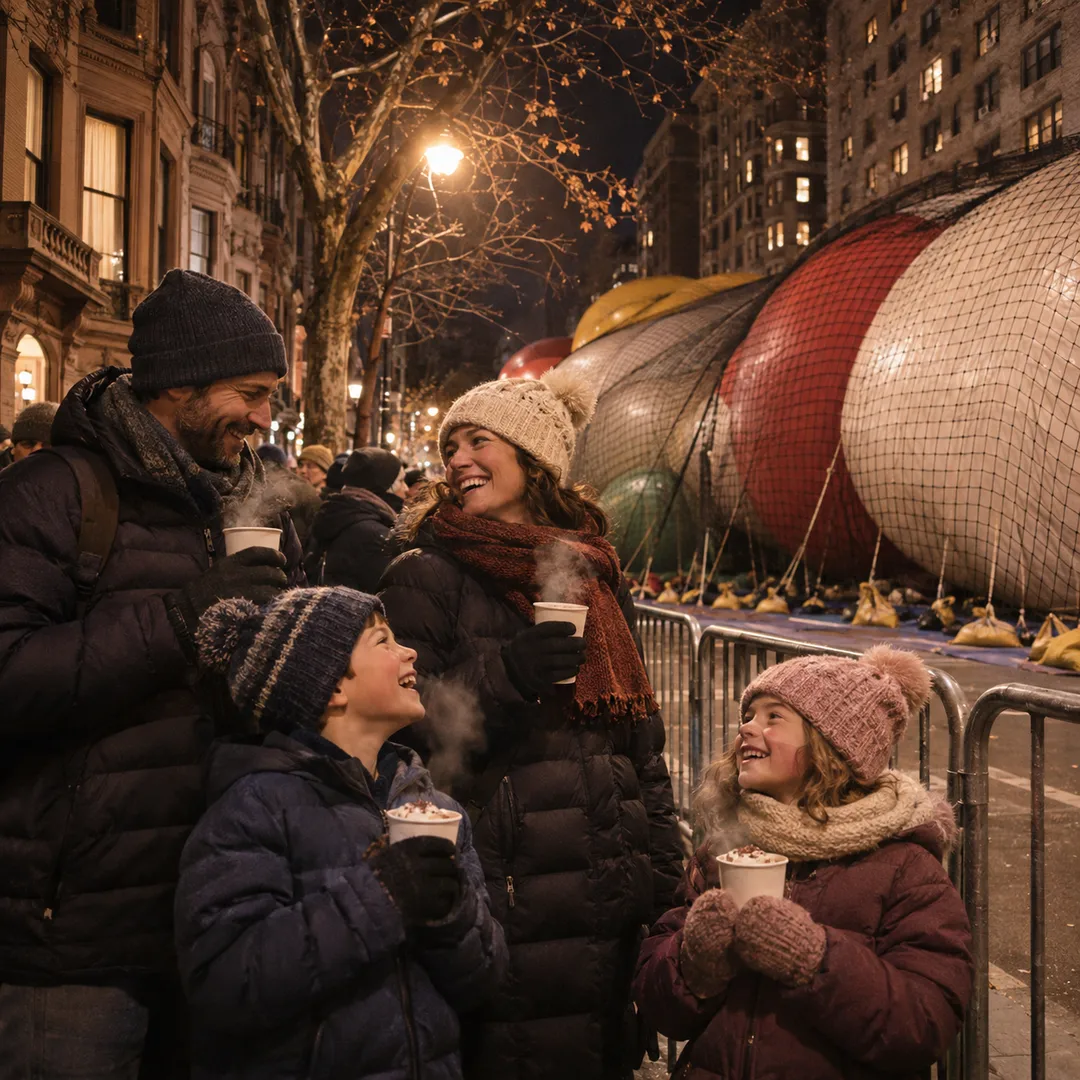
 Upper West Side Hot Chocolate Cafe Crawl on Balloon Eve
Coffee & Dessert
Upper West Side Specialty Coffee Bean Roaster: Pound a Week
Irving Farm, Joe and Variety all roast their own beans and pour on the Upper West Side. Here is how a pound-a-week home picks, splits and freezes each bag.
A pound of whole beans is roughly 454 grams, and a two-adult household brewing a full drip carafe each morning can empty one in about a week. On the Upper West Side, that habit can be fed by Irving Farm, Joe and Variety, three companies that each roast their own coffee and run cafes within a short walk of Amsterdam Avenue. This is a field guide to treating the neighborhood specialty coffee bean roaster run as a weekly errand that saves money, waste and morning arguments.
Three Roasters Within a Few Blocks of Amsterdam
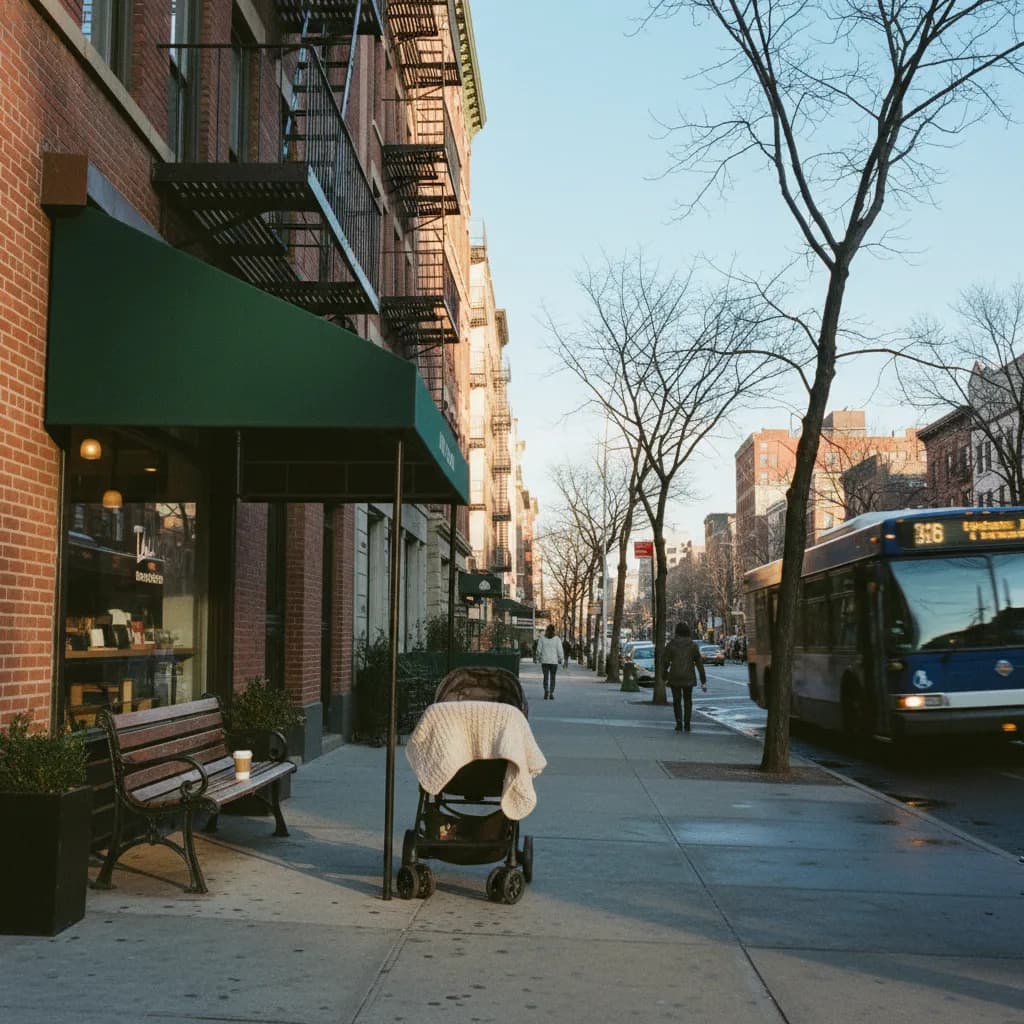
Irving Farm Coffee Roasters has a brownstone cafe on West 79th Street between Amsterdam and Broadway, and Time Out counts 74 seats inside. The company was founded in 1996 and roasts in Millerton, in the Hudson Valley, so the bags on its shelves travel down from upstate rather than across a bridge. For a household that wants one dependable house bag plus an occasional single origin, it is a sensible anchor, a block from the 1 train at 79th and Broadway.
Joe Coffee Company began in 2003, when Jonathan Rubinstein opened a cafe at Waverly Place and Gay Street, and it now describes its Long Island City space as the heart of its roasting operation. Uptown, Joe runs a cafe just off 85th and Columbus, where its own page describes mornings full of families heading to school, plus another at 68th and Columbus a few blocks from Lincoln Center. Two outposts on the same avenue make it the easiest place to repeat a bag without a detour.
Variety Coffee Roasters is the newest arrival, opening on the corner of 82nd and Amsterdam in September 2025 after founder Gavin Compton started the business in Williamsburg in 2008. Its line about roasting every day in Brooklyn signals a rotating, seasonal shelf, and the neighborhood blog that covered the opening quoted the company saying its menu changes frequently. That suits a household that likes to rotate one bag a month for variety while keeping a steadier blend as the weekday default.
Blends or Single Origins for a Drip Machine
A flat-bottom drip machine forgives a lot, which is why blends earn their place on weekdays. A roaster builds a blend to taste the same from bag to bag, so the kitchen ratio of about 60 grams of coffee per liter of water, close to 1:16, keeps working week after week. For a pound-a-week household, that predictability is the real value: fewer sink pours of a pot nobody liked, and less fiddling with grind settings before the 1 train.
Single origins are where the weekend fun lives. A washed coffee from East Africa tends to taste bright and tea-like in a drip carafe, while a natural-process coffee leans toward jammy fruit and can taste heavy if brewed too strong. Light roasts usually shine in filter brewers; medium roasts hold up better under milk. Skip single origins entirely if most mugs in your home get milk and sugar, because those delicate flavors vanish and a sturdy house blend does the job just as well.
Reading the Bag Before It Goes Home
Flip every bag and look for a printed roast date, not just an expiration line. For drip, beans usually taste their most balanced from about four to twenty-one days off roast; very fresh coffee can still be releasing carbon dioxide, which makes the bed bubble and the cup taste sharp. A pound that will last seven days is ideal when it was roasted four to ten days earlier, so the whole week lands inside that sweet window.
The quickest shortcut on Amsterdam or Columbus is to ask the barista what is on batch brew that morning and which bag it came from. They have tasted it from a large drip brewer, which is the closest thing to a home machine. Ask for whole beans and grind at home right before brewing, since pre-ground coffee goes stale within days. If the household lacks a burr grinder, a store grind set for flat-bottom drip is a reasonable stopgap.
Freezing a Pound in Weekday Portions
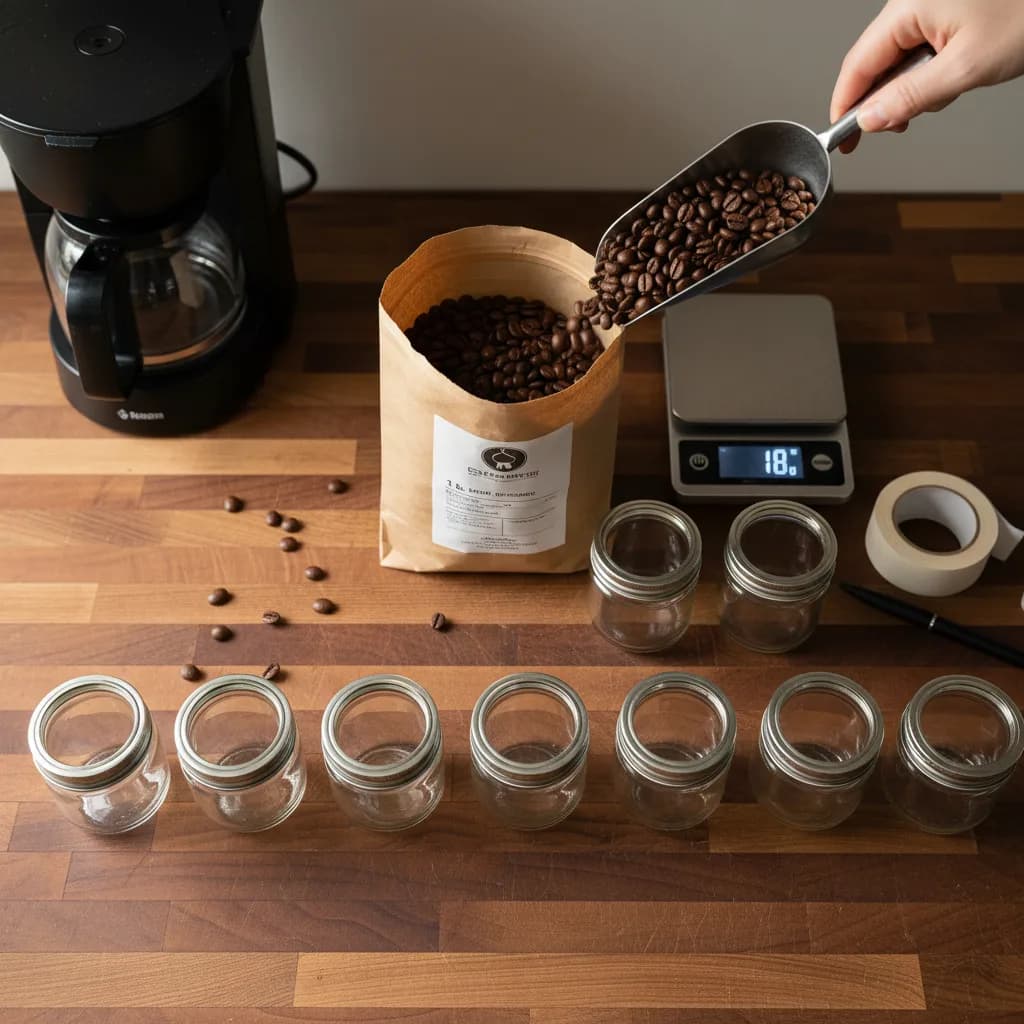
Prewar kitchens on the Upper West Side are short on counter space, which makes a small row of jars more practical than a giant canister. Weigh the pound into seven airtight jars of about 65 grams each, the dose for a liter of drip, label them with the roast date and freeze all but the next two. Seven jars fit in a freezer door, and every morning starts with a pre-measured portion instead of a scoop and a guess.
Freezing works only if the jar never cycles. Take tomorrow's portion out the night before and leave it sealed until it reaches room temperature, so moisture does not condense on cold beans. Never return a thawed jar to the freezer. Frozen whole beans hold their flavor for weeks, which lets a household stock up on a favorite seasonal bag before it leaves the shelf, while the open jar of the weekday blend lives in a dark cabinet away from the stove.
A Weekday-Morning Loop From Columbus to Broadway
A tidy loop starts at the 86th Street B and C station on Central Park West, walks one block west to Joe off 85th and Columbus, then cuts down to Variety at 82nd and Amsterdam. From there it is three blocks south to Irving Farm on West 79th Street and a short walk to the 1 train at 79th and Broadway. With a stroller, the wide sidewalks of Columbus make the first leg the easiest.
Zabar's, at Broadway and 80th since 1934, sits on that final stretch and is part of the neighborhood's coffee story: it was the first shop in the United States to sell the Wigomat and other drip coffee makers in the late 1960s. For a Plan B, if one cafe is crowded with the school-run line or out of your usual bag, walk to the next roaster on the loop rather than settling for an older bag.
Practical Notes for a West Side Bean Run
Keep one rule for the household: one blend that everyone drinks, plus at most one rotating bag. That limits waste and makes it obvious which roaster earns the regular slot. Take a photo of each bag's label before it goes into the jars, so the comparison is about origin, process and roast level rather than memory. After three or four weeks, the household will know whether Irving Farm, Joe or Variety fits its machine and its budget.
Karpo APP can shorten the comparison step. Ask Karpo in chat for a short list of Upper West Side roasters for a drip machine and a taste you describe, such as chocolatey and low acid, and it narrows the field to a few options with practical notes. Save that list, pull map links for the loop between Columbus and Broadway, and come back later to compare once each bag has had its week on the counter.
Ask Karpo for more information.
Keep reading
- Upper West Side Hot Chocolate Cafe Crawl on Balloon Eve
 Park Slope Hot Chocolate Cafe Crawl After a Snow Day Sled
 Upper East Side Hot Chocolate Cafe Crawl With a Grandparent