 Upper West Side Hot Chocolate Cafe Crawl on Balloon Eve
Coffee & Dessert
Lower East Side Specialty Coffee Bean Roaster Loop: 3 Bags
Restock whole beans on the Lower East Side by comparing single-origin bags at three nearby roasters. Learn to read roast dates and processing before you pick.
Three roasters that put their own beans on the shelf sit on one walkable loop that starts at the Delancey Street/Essex Street subway station: Café Grumpy on Essex Street, Caffe Vita on Ludlow Street, and Ninth Street Espresso up in Alphabet City. That makes the Lower East Side an easy place to restock for the week. This loop treats each specialty coffee bean roaster as a tasting stop, so you leave with bags you chose by roast date and processing, not by the prettiest label.
Why the Lower East Side Suits a Saturday Bean Run
The F, J and M trains all stop at Delancey Street/Essex Street, which drops you at the corner where the neighborhood's food history is easiest to read. Essex Market moved into its newer building across the street in May 2019, and the municipal market itself dates to 1940, when Mayor LaGuardia opened it for the immigrant families who lived in these walk-ups. Starting here puts you a few blocks from every stop on the loop, with breakfast options if you skipped it.
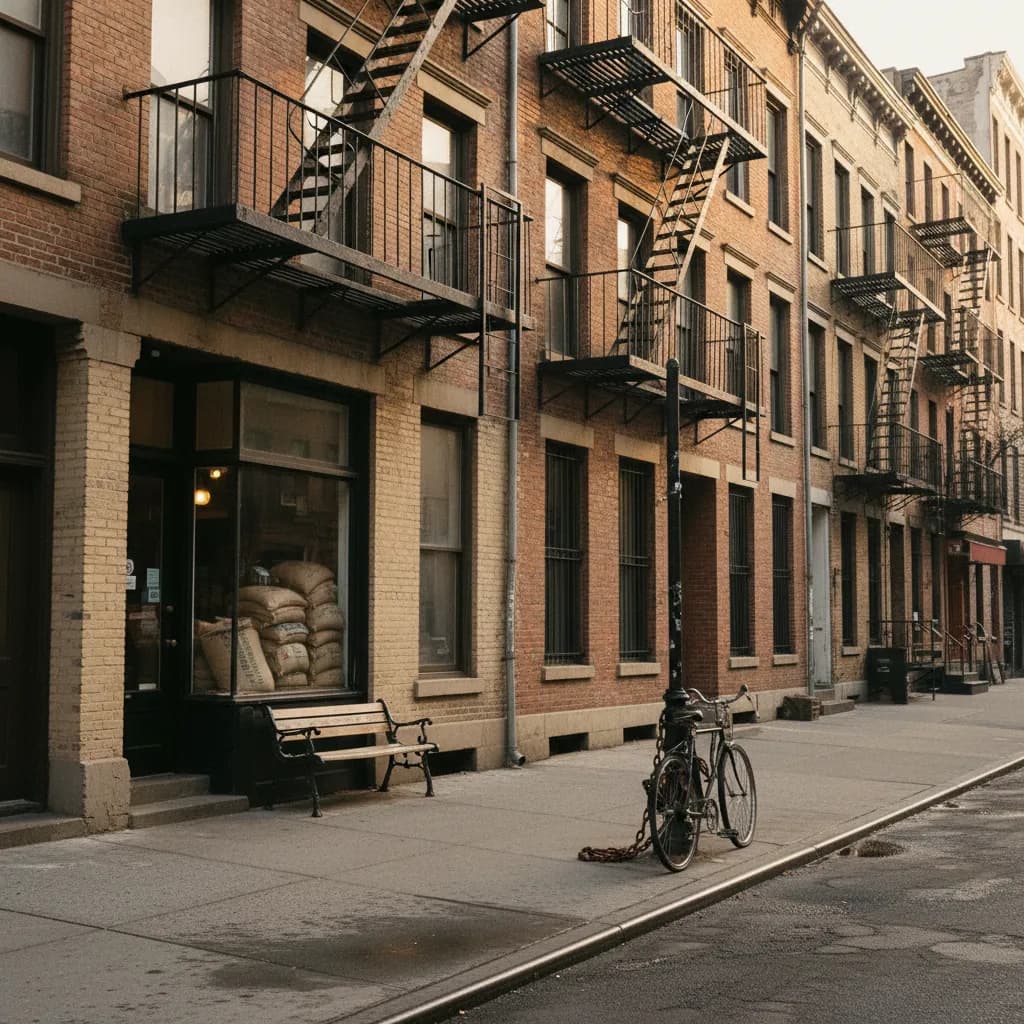
The blocks between Delancey, Orchard, Ludlow and Essex are mostly five- and six-story tenements with shops cut into the ground floor, so cafes here tend to be narrow rooms with a short counter and a shelf of retail bags near the register. That layout helps anyone shopping for beans. The bags are close enough to read, the baristas are close enough to ask, and a late-morning arrival usually beats the weekend crowd that builds once brunch spots on Orchard fill up.
Café Grumpy on Essex Street: Start With the Roast Date
Café Grumpy opened its Essex Street shop in the spring of 2011, in a storefront that once held Zelig Blumenthal's Judaica shop; the team exposed the original brick, uncovered two hidden windows and kept the tiled floor. The company began in Greenpoint in 2005 and has roasted its own coffee since 2009. It is a small room, so plan on reading labels at the shelf, then taking a cup outside to the benches while you decide.
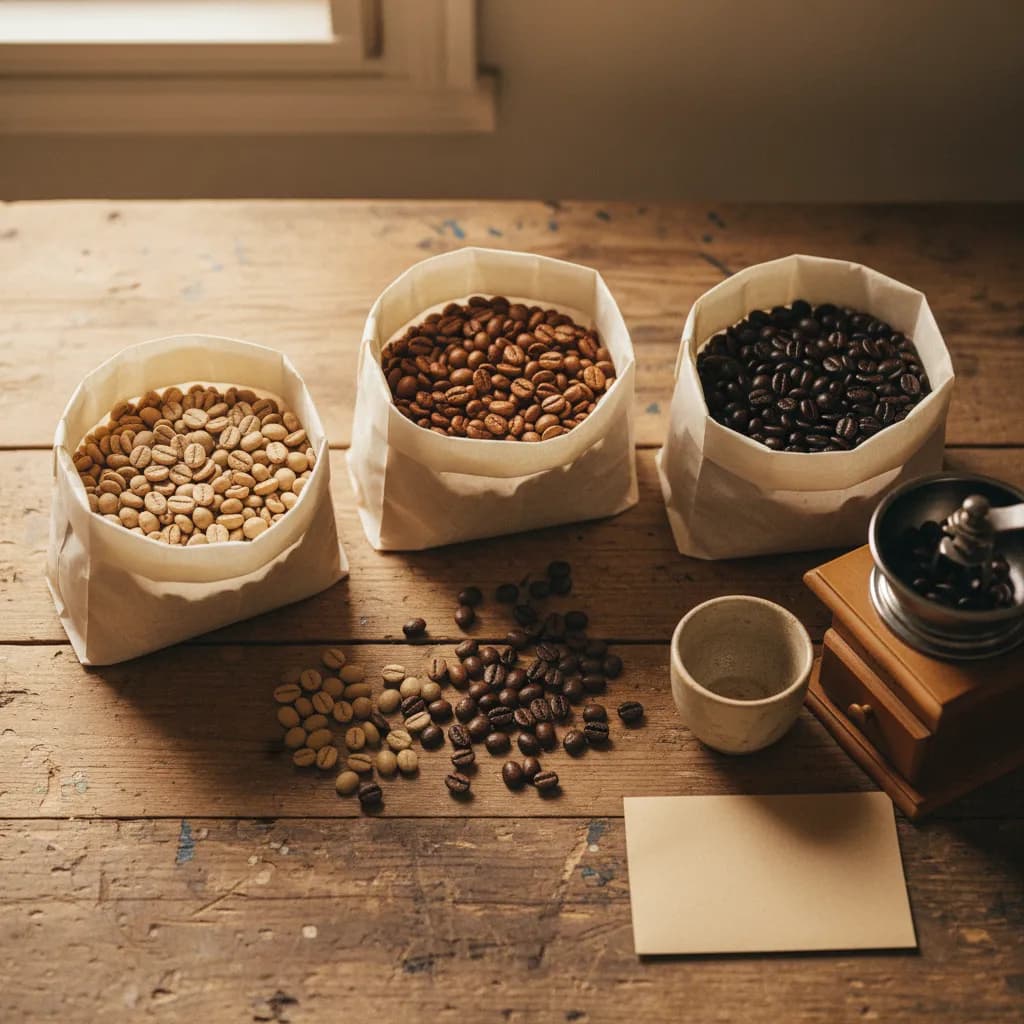
Make the roast date the first thing you look for on every bag. A use-by date tells you almost nothing, because it is often set a year out. For pour-over, most light roasts peak somewhere between about 5 and 21 days off roast; beans roasted yesterday can taste sharp and gassy, and you will see the bed puff wildly during the bloom. If the freshest bag on the shelf is only two or three days old, take it anyway and let it rest at home.
Caffe Vita on Ludlow: Comparing Washed and Natural Bags
Caffe Vita, a Seattle roaster that has been independent since 1995, made the Ludlow Street cafe its first New York shop in 2012. Its East Coast operations run out of a cafe and roastery in Bushwick, one of three roasteries alongside Seattle and Phoenix, where the coffee is hand-roasted on vintage German machines. Ludlow is the right street to slow down on, since the loop from Essex is only a couple of blocks and you have time to taste before choosing a second bag.
Look for the processing line on each label. Washed coffees have the fruit removed before drying, which usually gives a cleaner cup with brighter acidity, the kind that reads as citrus or black tea. Naturals dry with the whole cherry intact and tend toward jammy, winey, berry-heavy cups. Honey or pulped-natural sits in between. Picking one washed and one natural from similar altitudes is the fastest way to learn which style you actually enjoy across a whole week of brewing.
Ninth Street Espresso in Alphabet City: Bags for Espresso
For the third bag, walk north across Houston Street into Alphabet City, where Ninth Street Espresso keeps its shop near the avenues, with another by Tompkins Square Park. Ken Nye founded the company with a single East Village cafe in 2001, and it now roasts in Long Island City on a Diedrich IR12, in a roastery that opened alongside a small cafe. The longer walk is worth it if you pull shots at home, since the name says where the focus sits.
Roast level matters more for espresso than for filter. Very light roasts can taste sour and thin when pushed through a home machine, while medium roasts extract more evenly at a standard 1:2 ratio, such as 18 grams in and 36 grams out in roughly 25 to 30 seconds. Espresso beans also benefit from more rest than filter beans, often 10 days or longer off roast, so the bag you pick up here may hit its stride by the following weekend.
Practical Notes for a Saturday Bean Run
Ask each barista what they are brewing on batch or pour-over today and which bag they opened most recently. That answer tells you how a coffee tastes right now, not on the day it was cupped. Then get whole beans, not pre-ground. Ground coffee goes stale within hours, while a sealed bag of whole beans holds up well for two to three weeks. If you lack a grinder, a basic hand burr grinder pays for itself quickly.
Plan quantities with simple math. At a 1:16 ratio, a 20-gram dose makes about 320 grams of filter coffee, so a 12-ounce bag covers roughly 17 cups. Two bags last most single drinkers a week and a half. Store them in a closed opaque container at room temperature, away from the stove, and keep them out of the fridge, where moisture and odors from the next shelf get into the beans.
Skip the Alphabet City leg if you only brew filter and the morning is short: it adds the longest stretch of the loop and its strongest pull is for espresso drinkers. If Café Grumpy's small room is packed or the single origin you wanted is gone, walk to Caffe Vita first and circle back, or ask the barista for the closest substitute by processing and origin, a washed Central American for a washed Central American, rather than grabbing whatever is left on the shelf.
Keeping Your Lower East Side Shortlist in Karpo APP
Before you leave, you can ask Karpo in chat for a short list of roasters that match your brew method and taste, for example bright washed coffees for a V60 or chocolate-leaning bags for a moka pot. It narrows the options to a few stops with practical notes, and you can save that list and pull up map links, which helps when you are deciding between the Essex Street corner and the walk up toward the avenues.
After the week is over, come back to the same chat and compare. Note which bag you finished first, which one tasted better on day 12 than on day 5, and whether the natural from Ludlow or the washed coffee from Essex Street suited your mornings more. That record turns next Saturday's loop into a quicker decision: one familiar bag from the roaster you trust, plus one new single origin to test against it.
Ask Karpo for more information.
Keep reading
- Upper West Side Hot Chocolate Cafe Crawl on Balloon Eve
 Park Slope Hot Chocolate Cafe Crawl After a Snow Day Sled
 Upper East Side Hot Chocolate Cafe Crawl With a Grandparent