Brooklyn has always been a place where craft trades find patient audiences—bookbinders, saddle-stitchers, the woman who re-canes chairs in a Bushwick storefront. Knives, it turns out, fit this sensibility perfectly. Over the past half-decade, a scatter of specialized shops and itinerant sharpeners has woven itself into the borough's fabric, catering to home cooks who've moved past the wedding-registry block set and collectors who appreciate the heft of a hand-forged santoku. It's a quieter scene than the coffee or natural-wine booms, but no less considered. Late May humidity has settled over the neighborhood streets, and inside these shops the air smells faintly of honing oil and, sometimes, the cedar boxes that cradle Japanese blades.
The shift toward single-purpose retail
A decade ago, if you wanted a decent knife in Brooklyn, you drove to a restaurant-supply warehouse in Sunset Park or mail-ordered from Oregon. Now a handful of storefronts stock curated inventories: gyutos and nakiris alongside European chef's knives, whetstones arranged by grit, wooden sayas custom-fit to protect edges. The owners tend to be former line cooks or import dealers who tired of explaining the difference between stamped and forged over email.
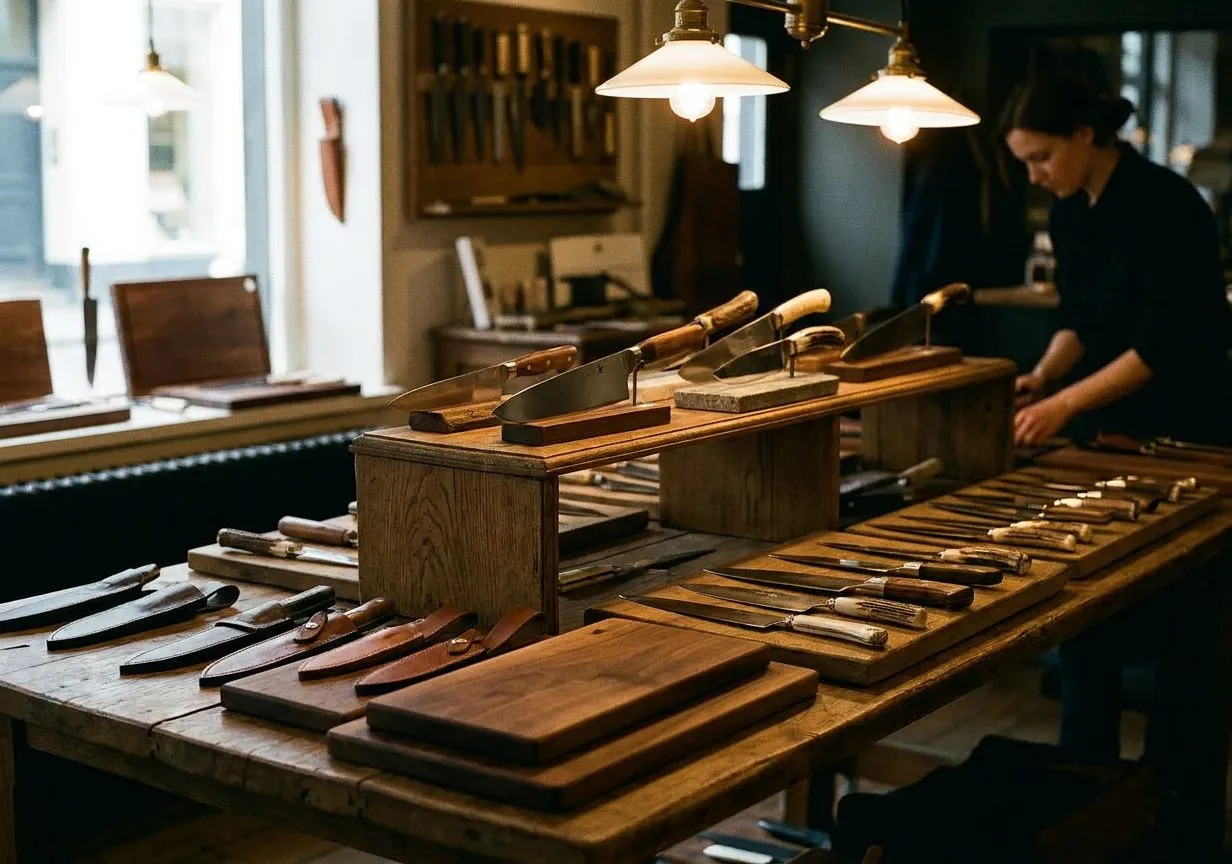
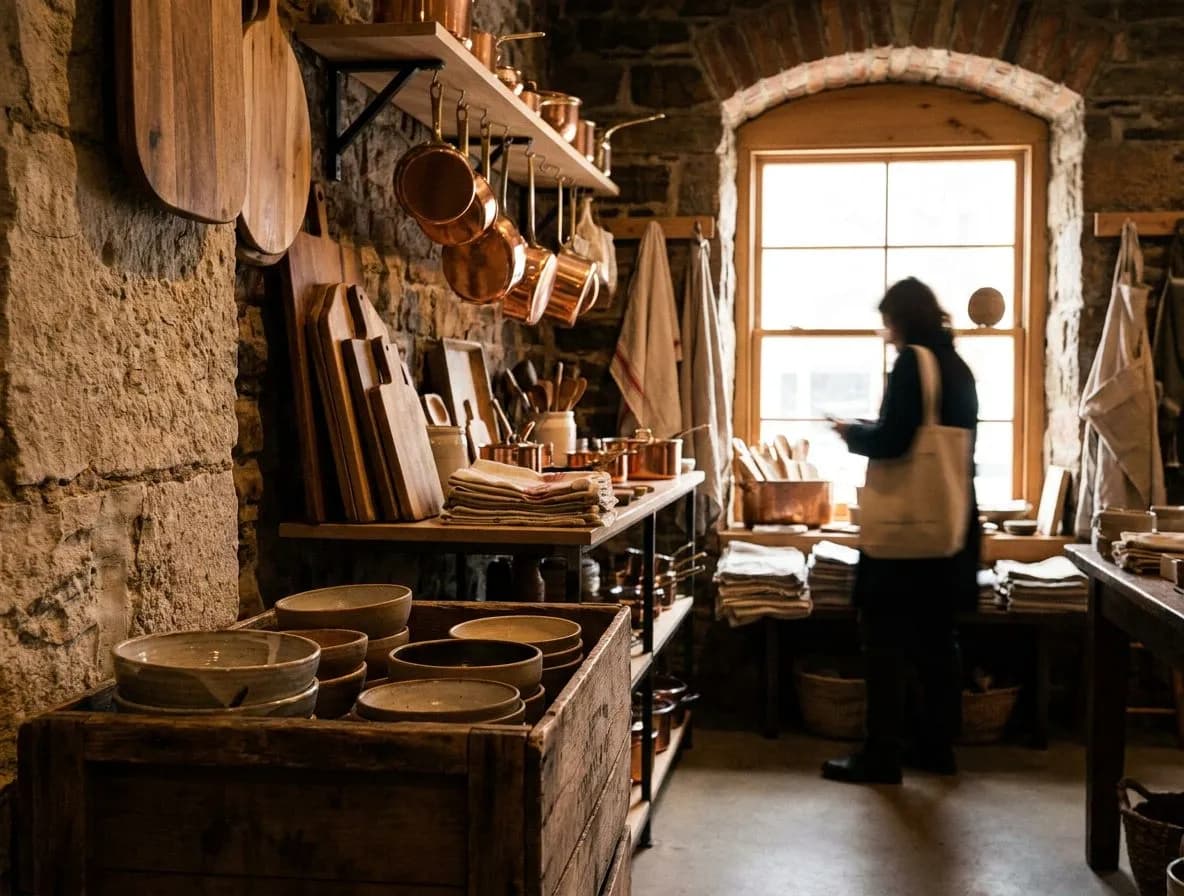
These aren't big-box appliance showrooms. The typical knife shop brooklyn setup runs narrow and deep—maybe four hundred square feet, a plank counter, good task lighting that lets you see the grain in a handle. Customers linger. They test the balance of a petty knife, ask about steel hardness, debate whether white carbon needs more babying than its stainless cousins. Transactions often take twenty minutes. There's no pressure, just a shared understanding that choosing the right blade matters.
Sharpening as neighborhood service
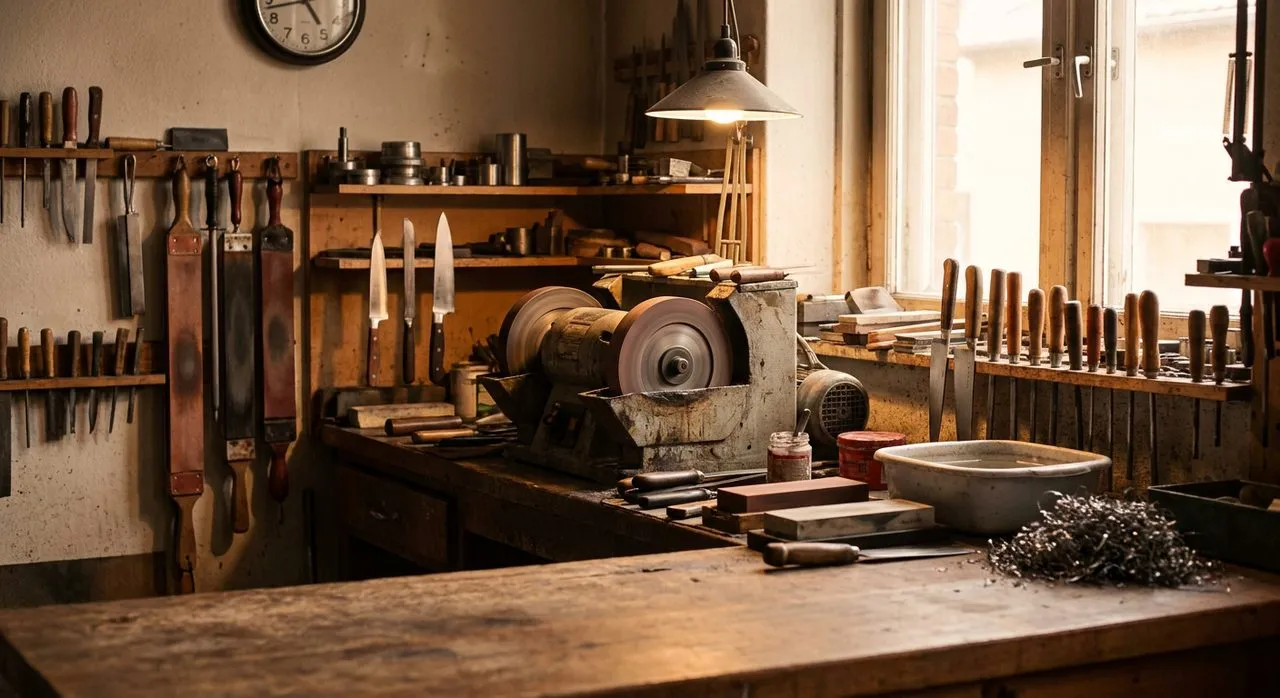
Parallel to the retail shops, a network of mobile sharpeners has emerged—craftspeople who set up folding tables at weekend farmers' markets or operate by appointment out of shared workshops. They arrive with whetstones, strops, and an unsettling ability to diagnose a dull edge by sound alone. A good sharpener will ask what you cook, how you hold the blade, whether you're comfortable maintaining a fifteen-degree bevel. It's forensic and a little bit tender.
Some services operate on preset schedules: first Saturday of the month outside a Prospect Heights grocery, Tuesday evenings in a Gowanus maker-space. Others prefer text-based booking and will meet you at a agreed corner, cash or Venmo, blade wrapped in newsprint when they hand it back. Turnaround is often same-day if you catch them early. Prices hover around twelve to twenty dollars per knife, more for repairs—rechipping a tip, thinning a bolster gone thick with repeated sharpenings. The work is methodical, almost meditative, and watching it happen makes you realize how much cuisine depends on geometry.
What collectors look for
Beyond the home-cook demographic, Brooklyn's knife scene serves a smaller cohort of collectors: people who chase limited blacksmith runs, who know the prefectures famous for bladesmithing, who own knives they'd never use on a butternut squash. For them, provenance matters—maker's stamps, the story of a particular forge, whether the handle is stabilized burl or traditional magnolia. Some shops maintain waiting lists for high-demand imports; others broker private sales.
There's an aesthetic pleasure in the objects themselves, of course. A well-made knife is sculpture that happens to be functional. The damascus patterning on a blade, the way a horn ferrule meets ebony, the slight taper in a hidden-tang handle—it all registers on a level beyond utility. And in late spring, when light slants through a shop's front window at the right angle, you see exactly what fifteen centuries of incremental refinement looks like.
The learning curve and community knowledge
Buying a serious knife is the beginning, not the end. Maintenance is its own education: how often to hone versus sharpen, the angle to hold against a whetstone, the difference between a leather strop and a felt wheel. Most Brooklyn knife shops offer informal tutorials—a ten-minute demonstration at the counter, or occasionally weekend workshops where a dozen people stand elbow-to-elbow practicing on beater blades before graduating to their own.
Online forums and subreddit threads help, but there's value in the physical apprenticeship. A sharpener can watch your wrist angle and correct it in real time. A shop owner might pull out three knives in your price range and let you chop carrots until you feel the difference in edge retention. This kind of situated knowledge builds slowly, but it transforms how you move through a kitchen. You start to notice when a cutting board is too hard, when a knife's been stored badly, when someone's using a serrated blade as a pry bar. It's part utility, part connoisseurship, part quiet vanity.
The ritual of bringing a knife back to life
There's something almost ceremonial about handing over a dulled blade and receiving it thirty minutes later, keen enough to split a sheet of paper with its own weight. Some longtime customers develop loyalties—they'll only let one particular sharpener touch their knives, will schedule appointments months ahead if that person's calendar is full. It's a trust built on small, repeated transactions: the knowledge that the blade will come back better than it left, that the geometry won't be ruined by a belt sander, that the edge will last.
On a warm June afternoon in Brooklyn, when the sidewalks smell like linden blossoms and someone's grilling on a fire escape, the sight of a sharpening station tucked beside a fruit stand or outside a hardware store feels both anachronistic and utterly right. It's a service that predates electricity, adapted to a borough where people still care about craft. You wait your turn, watch sparks fly from the whetstone if it's a big repair job, walk home with something sharp enough to remind you that kitchen knives nyc aren't appliances—they're tools that repay attention.
Practical notes
Knife shops in Brooklyn tend to cluster in Williamsburg, Cobble Hill, and parts of Park Slope, though mobile sharpeners range widely. Most storefronts keep limited hours—Thursday through Sunday is common—so verify directly before visiting. Subway access via the F, G, or R lines will put you within walking distance of several establishments; street parking is scarce but not impossible on weekday mornings. Many shops are street-level and accessible, though a few occupy basement or second-floor spaces. If you're bringing knives for sharpening, wrap them in a towel or cardboard sleeve; most services accept cash and digital payment. Expect to spend anywhere from sixty dollars for a solid entry-level gyuto to several hundred for collector-grade pieces. Some retailers offer consignment or trade-in programs for vintage blades.
Tags: #KarposFinds #TheOddEdit #BrooklynCraft #KnifeShop #KitchenKnives #NYC #Sharpening #HomeChef #CulinaryTools #BrooklynSmallBusiness #JapaneseKnives #JuneInNYC #SlowLiving #ArtisanGoods #NeighborhoodFinds
Please drink responsibly. Must be of legal drinking age.
Sources consulted: Kitchen Knife · Sharpening · Brooklyn Borough · Time Out New York · NY Times - New York Region
All trademarks are the property of their respective owners.