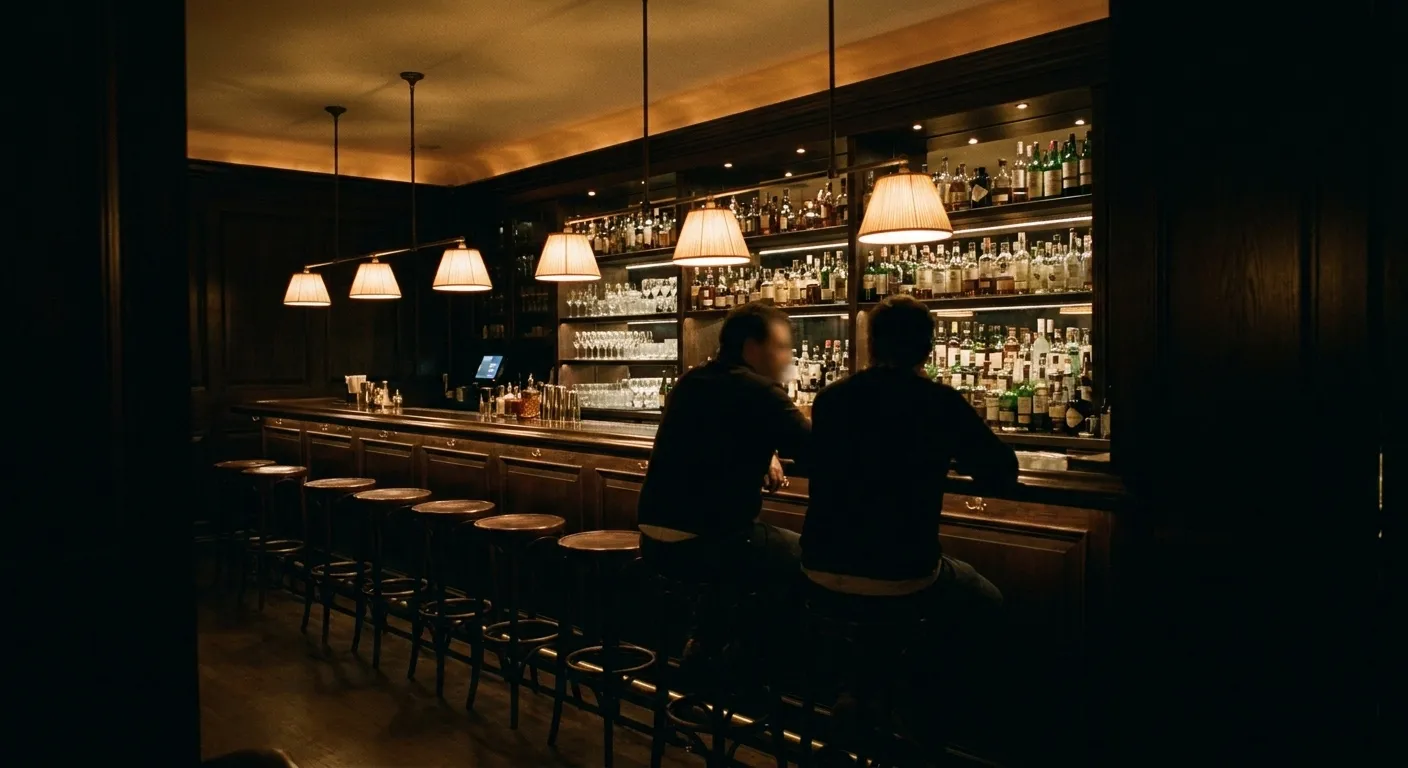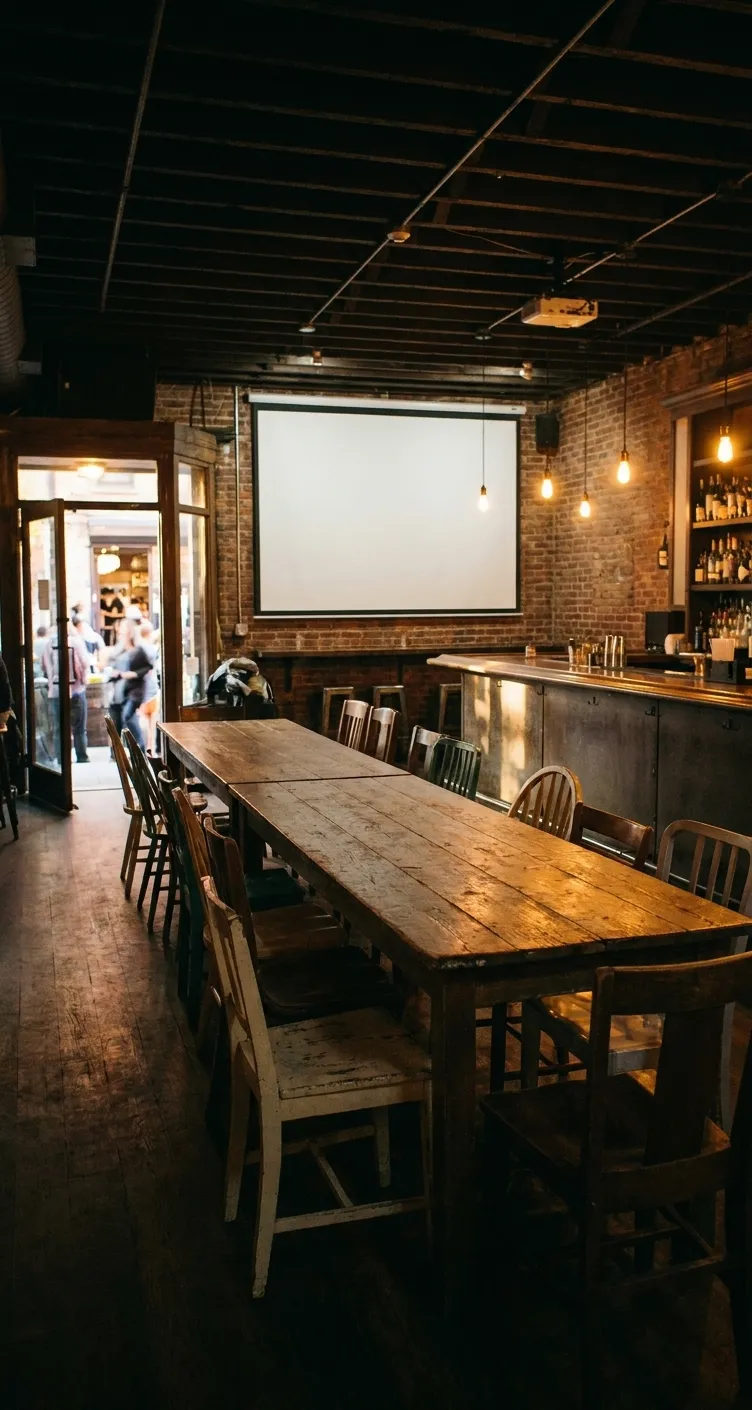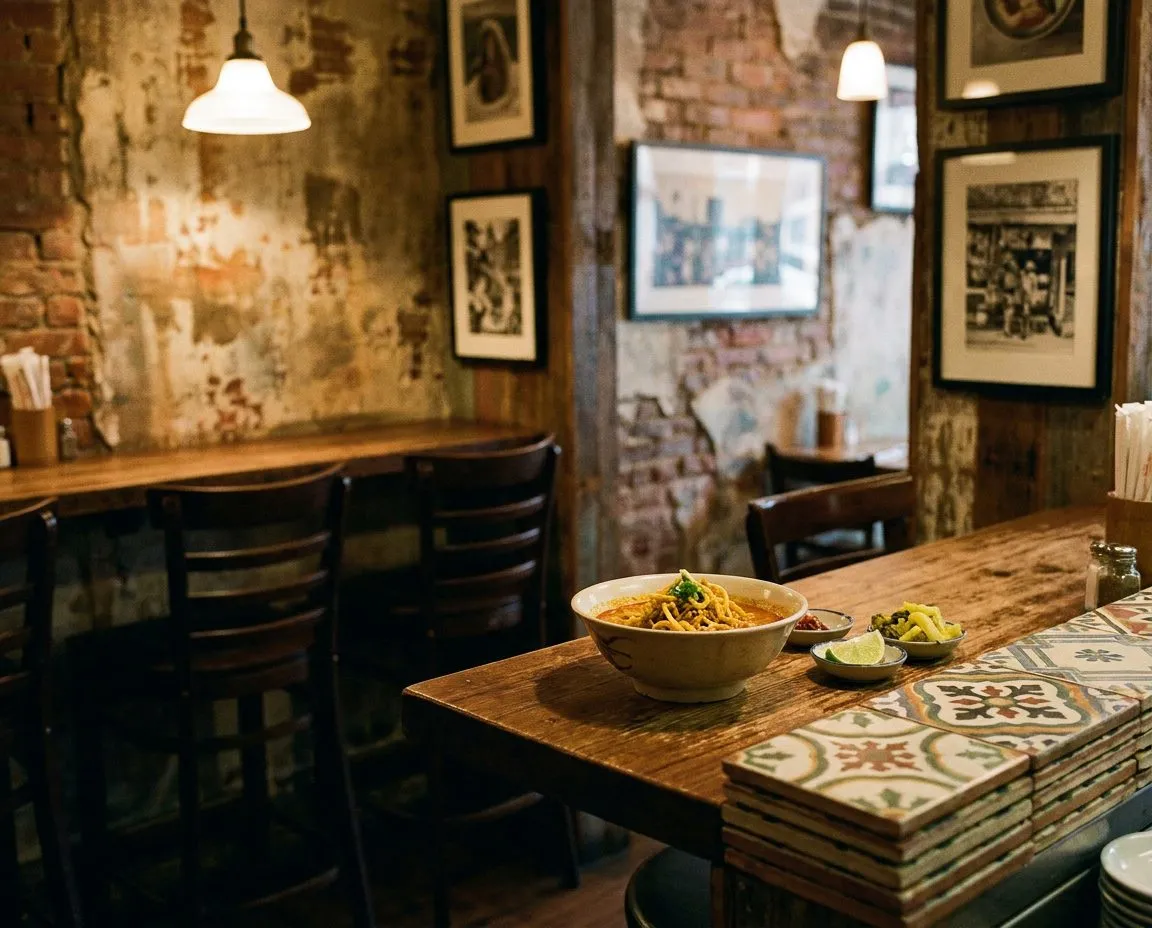
Hell's Kitchen has always been New York's quiet answer to the question of where to eat well, alone, without fuss. The neighborhood's Thai counter scene—a loose constellation of noodle bars, curry specialists, and late-night shophouse kitchens—delivers exactly that: a stool, a menu that doesn't apologize for fish sauce, and the kind of solo-diner hospitality that lets you read your book or watch the wok without anyone hovering. Late May means the dining rooms are warm, the doors prop open onto Ninth Avenue foot traffic, and the curry paste smells drift two blocks north. This is the map for when you want actual spice, a bowl bigger than your head, and a seat that doesn't require a reservation or a companion.
Why counter dining wins in Hell's Kitchen
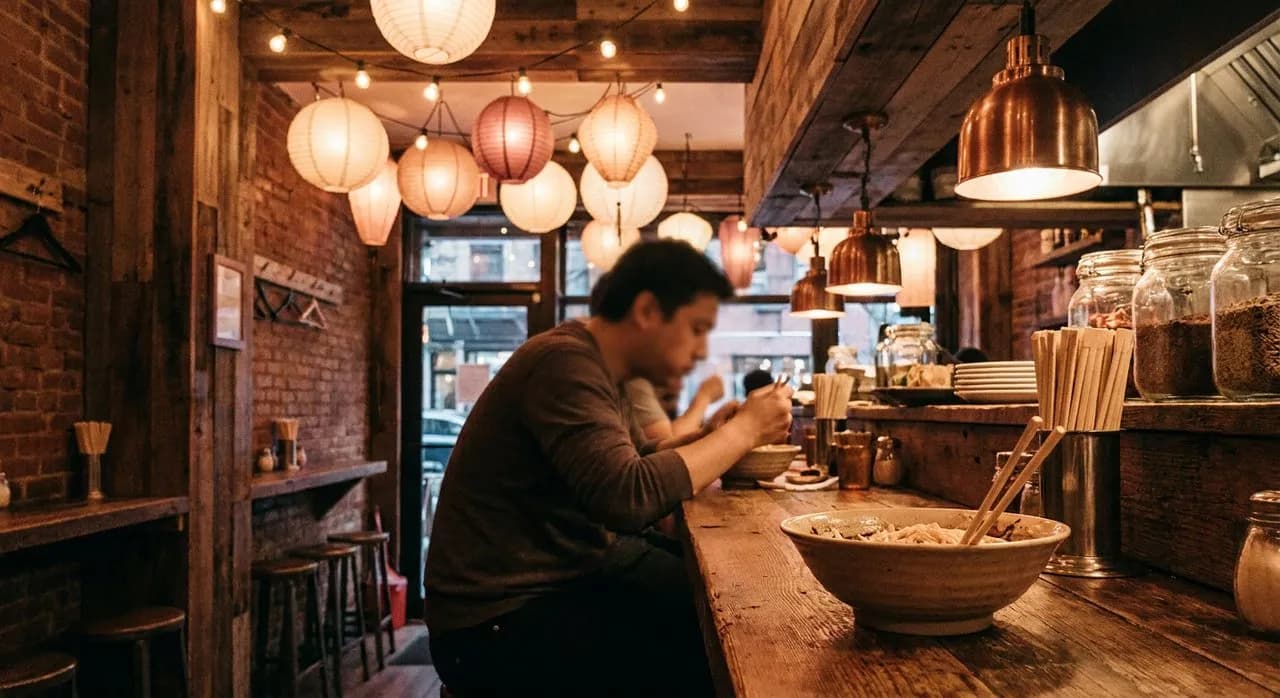
The Thai spots clustered between Eighth and Tenth Avenues, roughly 42nd to 57th Streets, have learned something most fine-dining rooms haven't: solo eaters don't want to be exiled to a corner two-top under a service station spotlight. Counters—whether they face the kitchen line, a narrow window, or simply the wall—offer a different contract. You get your food fast, the staff doesn't assume you're waiting for someone, and the person next to you is probably doing the same calculative dance between larb and boat noodles. In late May, when the evening light stretches past eight and the post-theater rush hasn't quite started, a counter stool is the best seat in the house.
The neighborhood's geography helps. Hell's Kitchen's blocks are dense with office workers, actors between auditions, and the kind of regulars who know which kitchen will honor a 'Thai spicy' request without a disclaimer. Most of these counters seat eight to twelve; a handful have L-shaped bars that wrap the open kitchen. You can smell the holy basil hitting hot oil before you've hung your jacket on the hook underneath.
The noodle soup specialists
Several counters along Ninth Avenue in the mid-forties have built reputations on Northern Thai noodle soups—khao soi, boat noodles, the occasional tom saep with enough funk to clear sinuses. These are small operations, often no more than twenty seats total, where the menu runs two laminated pages and the broth has been on since morning. The counters here face inward toward the kitchen or outward toward the avenue; either way, you're close enough to hear the ladle hit the bowl rim. Late May humidity makes the choice harder—do you want that coconut curry broth when it's seventy-eight degrees outside?—but the answer, if you're honest, is yes.
Look for the places where the menu lists Thai script next to English translations, where 'spicy' comes in gradations, and where the staff doesn't blink when you ask for extra phrik nam pla on the side. The solo rhythm here is easy: order, eat, pay, leave. No one's pushing wine pairings or asking if you're celebrating anything. The check arrives folded under a plastic tray, and the total rarely breaks twenty-five dollars even when you've added an extra skewer of grilled pork neck.
Curry bars and the spice negotiation
A few counters west of Ninth Avenue—closer to Tenth, where the rent drops and the dining rooms get narrower—focus on curries: panang, jungle, the occasional hanglay if the cook is from Chiang Mai. These spots tend to have fewer seats, slower turnover, and a more explicit conversation about heat level. The difference between 'medium' and 'Thai spicy' is not symbolic. If the server pauses and asks if you're sure, believe them. The solo advantage here is portion flexibility; some counters will do a half-order over rice or let you split a curry with an extra side of jasmine rice for less than the full entrée price.
Counter seating at curry-focused spots often means sitting elbow-to-elbow with someone working through the same internal debate: green curry with chicken or the crispy pork belly with Chinese broccoli? The sound design is better than most restaurants—gas burners, the scrape of a wok spatula, the rhythmic thwack of a mortar and pestle working through garlic and chilies. You smell the galangal and lemongrass before the bowl lands in front of you, and the first spoonful tells you whether this kitchen respects its audience.
Late-night counters and the post-show crowd
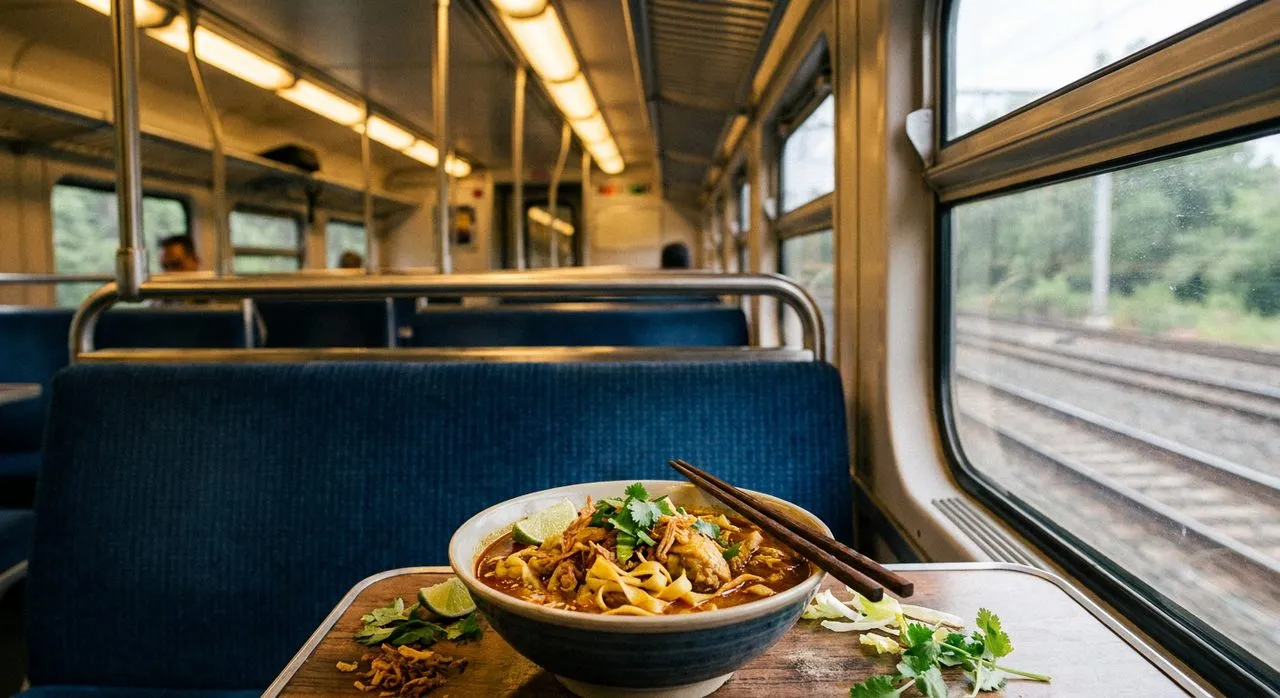
Hell's Kitchen's proximity to Broadway means a handful of Thai counters stay open past eleven, feeding stage crew, front-of-house staff, and the occasional actor still in stage makeup. These late counters skew toward fried rice, drunken noodles, and anything that can be plated in under six minutes. The vibe shifts after ten—quieter, more transactional, everyone too tired for small talk but grateful the kitchen's still firing. Solo diners fit seamlessly into this cadence; no one cares if you're eating pad kee mao at 11:30 PM in silence, staring at your phone.
The late-night spots tend to have shorter menus and lower lighting—overhead fluorescents dimmed or replaced entirely by the glow of the kitchen line. You order at the counter, sometimes pay upfront, and your number gets called when the plate's ready. It's efficient in a way that respects everyone's fatigue. The food isn't as nuanced as the dinner-hour stuff, but the basil is still fresh, the fish sauce hasn't been cut with sugar, and the rice comes in a portion size that assumes you've been on your feet since noon.
What 'Thai spicy' actually means (and how to order it)
Every Hell's Kitchen Thai counter has its own internal calibration for heat. At some, 'Thai spicy' is an invitation to see how much capsaicin you can tolerate before your vision blurs. At others, it's simply the level the kitchen would cook for itself—plenty of heat, but not punitive. The tell is usually how the server responds when you order it. If they smile and move on, you're probably fine. If they make sustained eye contact and ask a follow-up question, reconsider your bravado or at least order a side of cucumber salad as insurance.
Solo diners have an advantage here: you're not negotiating spice level with a table of four where someone inevitably insists they 'love spicy food' and then spends the meal gulping water. You can be honest about your tolerance, ask for spice on the side, or go full throttle without peer pressure. The kitchen will respect any of these choices as long as you're clear. And if you've miscalculated, most counters keep a small dish of sugar near the register—a spoonful dissolves some of the heat faster than water ever will.
The solo diner's unspoken contract
What makes Hell's Kitchen's Thai counters work for solo eaters isn't just the physical space—it's the social architecture. No host is scanning the room wondering why you're taking up a two-top. No server is assuming you're waiting for someone or, worse, that you've been stood up. The counter is implicitly solo-friendly; it's where people go when they want food, not theater. You can bring a book, your phone, a notebook, or nothing at all. The guy two stools over eating his tom yum in silence isn't judging your life choices, because he's made the same ones.
There's a particular relief in dining spaces that don't require performance. You don't have to smile at a sommelier or pretend to be delighted when the manager stops by. You order, eat, pay, and leave. The transaction is clean. And yet there's a warmth to these counters that sterile fast-casual chains never manage—a nod from the server, a 'see you next time' from the owner, the implicit understanding that you'll be back when you want massaman curry at 9 PM on a Wednesday in late May, alone, without explanation.
Practical notes
Most Hell's Kitchen Thai counters sit between 42nd and 57th Streets, concentrated along Ninth Avenue and the immediate cross streets. Subway access is straightforward: the A/C/E at 42nd or 50th Street, the N/R/W at 49th, or the 1 at 50th put you within three blocks of most spots. Street parking is functionally mythical; if you're driving, budget for garage rates ($30–45 for evening parking). Peak counter waits run 5:30–7:30 PM on weeknights, longer Thursday through Saturday; arrive before six or after eight to claim a stool without hovering. Hours vary, but expect most kitchens to serve until 10 or 11 PM, with a handful open past midnight Friday and Saturday. Many counters are small storefronts with one step up at entry; fully accessible seating is inconsistent, so call ahead if needed. Verify hours directly before making the trip—Hell's Kitchen restaurant schedules shift seasonally.
Tags: #PullUpAChair #HellsKitchen #ThaiFood #SoloDining #NYCEats #CounterCulture #NoodleSoup #SpiceLevel #MidtownWest #NYCThai #SoloTravel #MayInNYC #WhereToEatAlone #NinthAvenue #AuthenticThai
Please drink responsibly. Must be of legal drinking age.
Sources consulted: Thai cuisine · Hell's Kitchen, Manhattan · MTA subway & bus · Time Out New York Restaurants · New York Times Food
All trademarks are the property of their respective owners.