Late May in Midtown means the lunch crush peaks early—by 11:45 the sidewalks are thick with badge-wearing office workers hunting protein and speed. That's when the city's Japanese noodle counters shine. No reservation chess, no hostess small talk, just a stool at the bar, a laminated menu, and a bowl of soba or udon in front of you before your phone locks. The solo lunch here isn't lonely; it's efficient, warm, and strangely communal. You're shoulder-to-shoulder with analysts and architects, everyone slurping in sync, and out the door in twenty minutes.
Why the counter seat wins
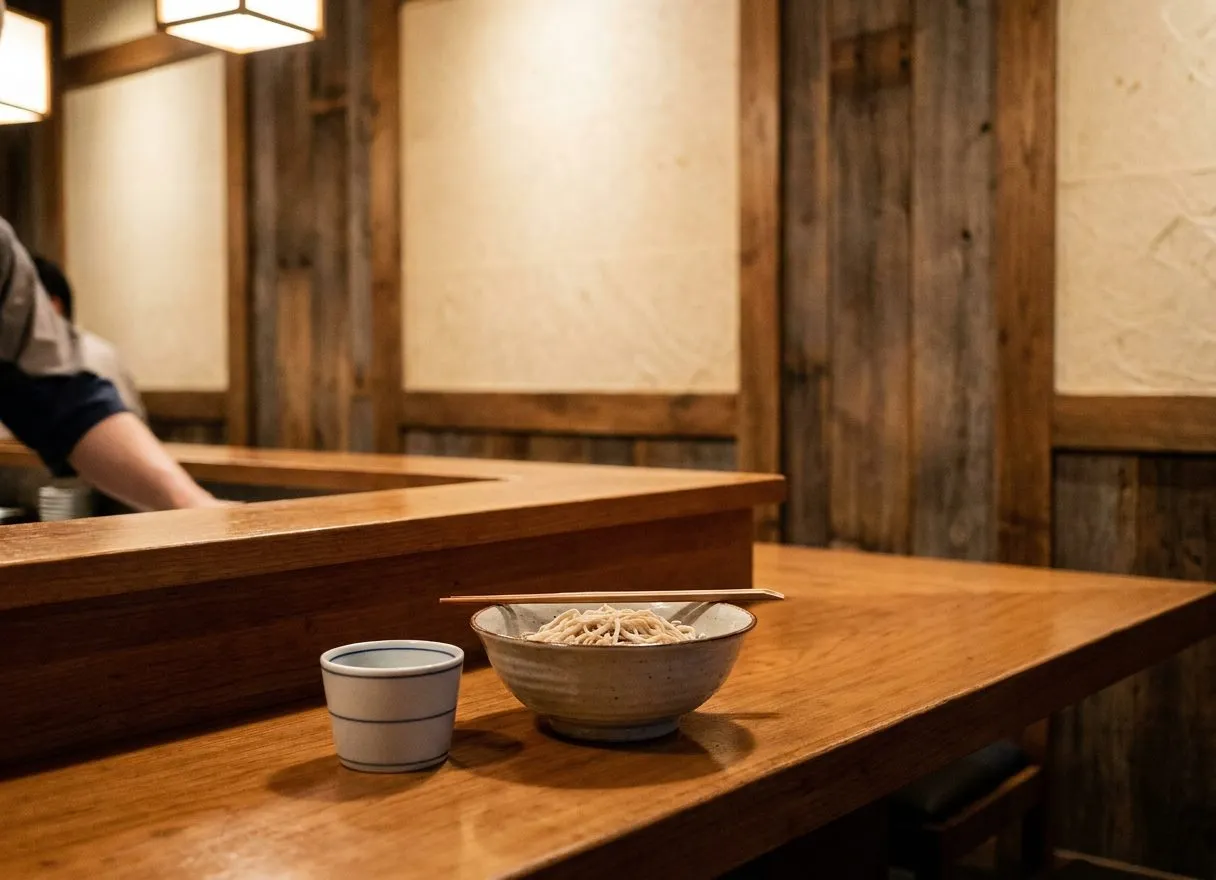
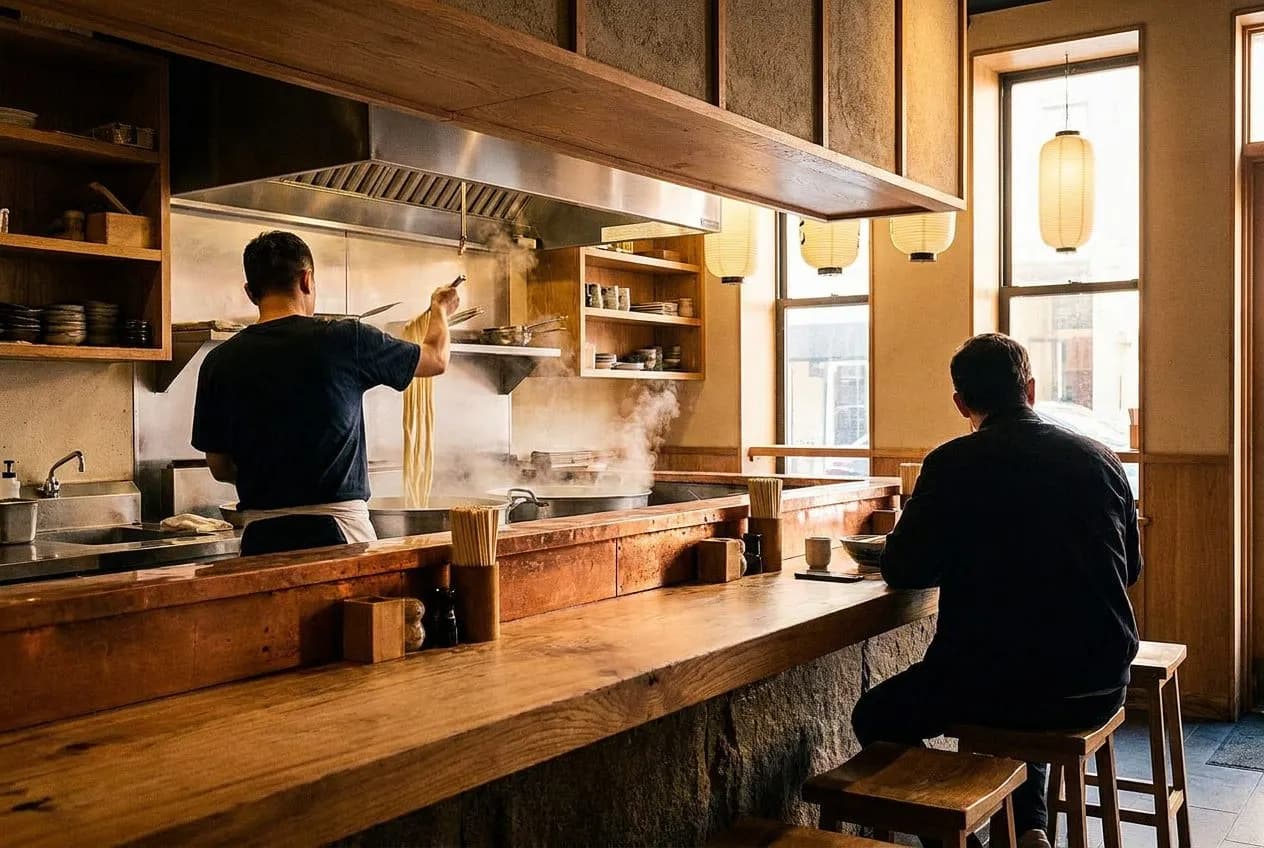
The counter isn't just faster—it's theater. You watch the cook portion noodles into wire baskets, dunk them into rolling water, shake off the starch. Steam rises in thick clouds that catch the kitchen's overhead fluorescents. The rhythm is hypnotic: order, boil, drain, assemble, serve. No wasted motion. The bowl lands in front of you still sending up heat shimmer, and you understand immediately why regulars never ask for a table.
In late May the open kitchen also means airflow—important when you're in a narrow shop with fifteen bodies and a pot of dashi simmering since dawn. The best counters angle their stools so you're not staring directly at the person next to you, just sharing peripheral space. It's the urban lunch equivalent of parallel play: together, but not.
The Midtown soba belt
Midtown's noodle geography clusters in two zones. The first runs along the east 40s, where older shops serve the Grand Central commuter crowd—places that have been ladling broth since the late nineties, with laminate counters worn smooth and ticket machines by the door. The second is the west 50s near Rockefeller Center, slightly newer, slightly brighter, catering to tourists by day and office workers who've learned to time their arrival for 11:30 or 2:00 to dodge the crush.
Both zones share a template: eight to twelve counter seats, a small kitchen visible through a cutout, minimal décor. Menus are often bilingual, sometimes just pictures. You'll see cold soba with dipping sauce, hot soba in broth, tempura options, and usually one or two udon offerings for the thicker-noodle camp. Prices hover between fourteen and eighteen dollars. No one lingers over green tea.
What makes the broth real
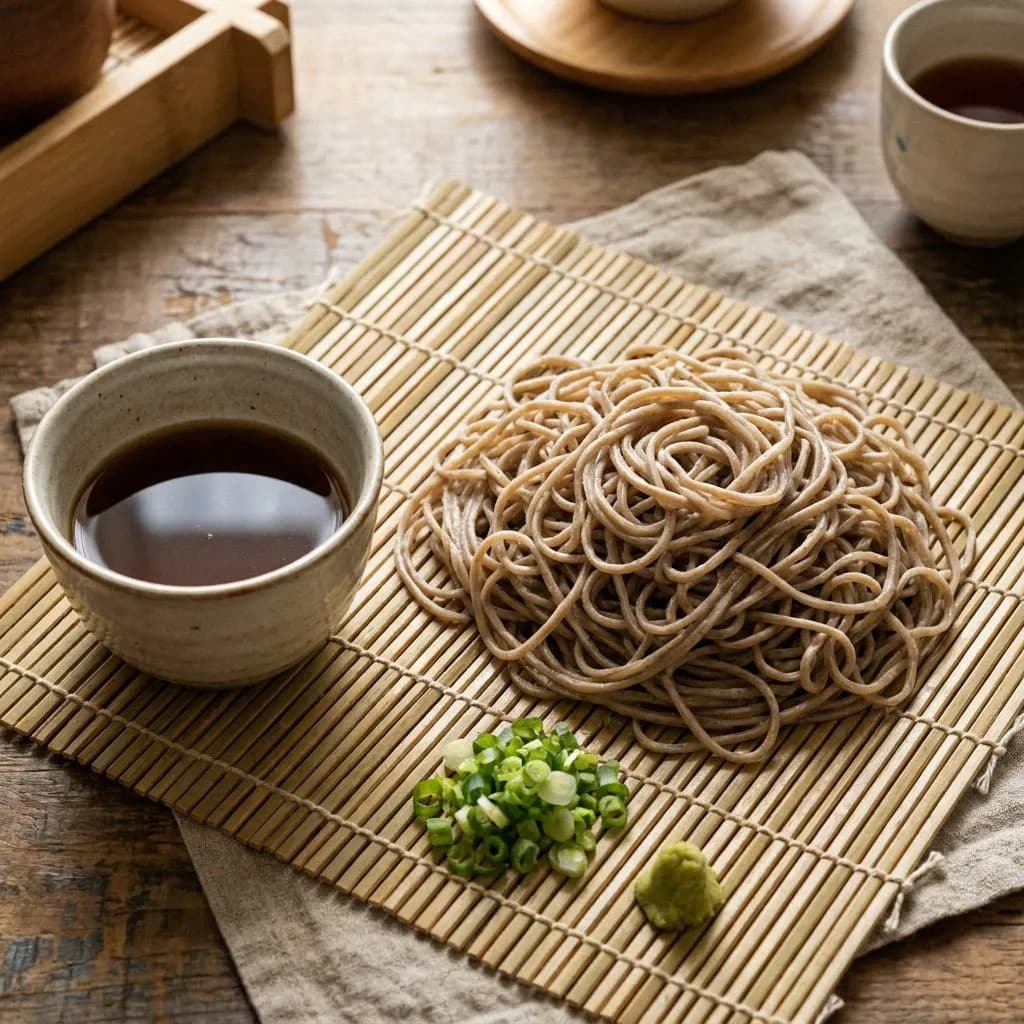
You can tell within three spoonfuls whether the dashi is built from scratch or reconstituted from powder. The real stuff has a subtle salinity, a faint oceanic sweetness from kombu, and that unmistakable kiss of bonito—smoky, almost fruity. It doesn't coat your mouth; it just warms and vanishes. The noodles should have tooth, a slight buckwheat bitterness if it's soba, and they should arrive Cool but not cold if you've ordered them on a bamboo mat, or fully submerged and steaming if you've gone for the hot bowl.
Late May means some shops start advertising their cold soba more prominently—chalk signs in Japanese and English promising "zaru soba" or "cold tanuki." The temperature outside is flirting with eighty; inside, the kitchen's still pushing heat, so a chilled option with a side of grated daikon and scallion hits differently than it would in February.
The lunch crowd as compass
The best signal that you've found a real spot? A line of Japanese salarymen and local office workers at 12:15. Not tourists consulting Google Maps, not couples debating where to sit—just people who know exactly what they want, who order by number, who finish and leave within eighteen minutes. That efficiency is contagious. You stop checking your phone. You focus on the bowl.
There's a particular kind of ambient sound in these rooms at peak lunch: the clatter of ceramic, the swish of noodles being lifted and dropped into broth, the low conversations in Japanese and English, the scrape of stools on tile. It's busy but not loud. No music, no televisions. Just the hum of people eating well and quickly.
Tempura, sides, and the add-on calculus
Most counters offer tempura—shrimp, sweet potato, squid—either on the side or atop your noodles. It's always made to order, which adds five minutes but transforms the meal from spare to substantial. The batter should be lacy, light, still crackling when it arrives. Dip it in the tentsuyu sauce, or let it soften slightly in your broth if you're into textural contrast. Some places also offer onigiri, a small side salad, or a soft-boiled egg. The egg is usually worth it.
A few counters run a small sake or beer list—a glass of cold Sapporo or a small carafe of junmai to accompany your soba if you're feeling expansive or it's Friday. It's not a boozy lunch, just a modest pour that pairs cleanly with buckwheat and dashi. By 1:00 p.m. most of the sake drinkers are gone, back to spreadsheets and conference calls.
Timing, rhythm, and the twenty-minute promise
Twenty minutes is realistic if you arrive off-peak—11:20 or 1:45—and you order fast. Peak lunch (12:00–12:45) might stretch it to thirty, but even then the turnover is swift. Countercultural truth: eating alone is faster. No menu negotiation, no "do you want to share the tempura?" You point, you eat, you pay at the register or with a ticket stub, you're out. The solo lunch isn't a compromise; it's the format these places were designed for.
Late May also means the post-lunch sidewalk feels especially good—full stomach, cold noodles settling, the transition from dim shop to bright midday almost cinematic. You've eaten something honest and fast, and you're back at your desk or your next appointment with time to spare and no food coma. That's the soba counter's gift: satisfaction without drag.
Practical notes
Midtown's soba and udon counters are scattered between Fifth and Eighth Avenues, roughly from 42nd to 57th Streets. Nearest subway access includes Grand Central (4/5/6/7/S), Rockefeller Center (B/D/F/M), and Times Square–42nd Street (N/Q/R/W/S/1/2/3/7). Street parking is scarce and expensive; if you're driving, budget for garage rates around forty dollars. Most shops open for lunch only, roughly 11:00 a.m. to 3:00 p.m. weekdays; some extend to dinner or open weekends—verify hours directly before making a special trip. Many counters are small and not wheelchair-accessible (narrow aisles, no accessible restroom). Bring cash or a card; most accept both now, though a few older spots remain cash-only. No reservations, no call-ahead—just show up, claim your stool, and eat.
Tags: #PullUpAChair #SobaCounter #MidtownLunch #SoloLunch #NYCNoodles #JapaneseNoodles #QuickLunch #NoodleBar #LateMay2026 #MidtownEats #UdonLover #CounterCulture #CityLunch #OfficeWorkerEats #NYCFoodie
Please drink responsibly. Must be of legal drinking age.
Sources consulted: Soba · Midtown Manhattan · Time Out New York Restaurants · New York Times Food
All trademarks are the property of their respective owners.