The solo diner used to navigate a landscape of pity and poor sightlines—hostess confusion, corner two-tops wedged beside the kitchen, the occasional well-meaning manager offering to move you somewhere "more comfortable." But along the bustling blocks of Flushing, a different model has taken root. Japanese and Taiwanese hot pot counters designed explicitly for one have turned solitary dining into something focused, even meditative. You claim a seat, tend your own burner, and slip into a rhythm that feels less like eating alone and more like practiced ritual.
The anatomy of the solo counter
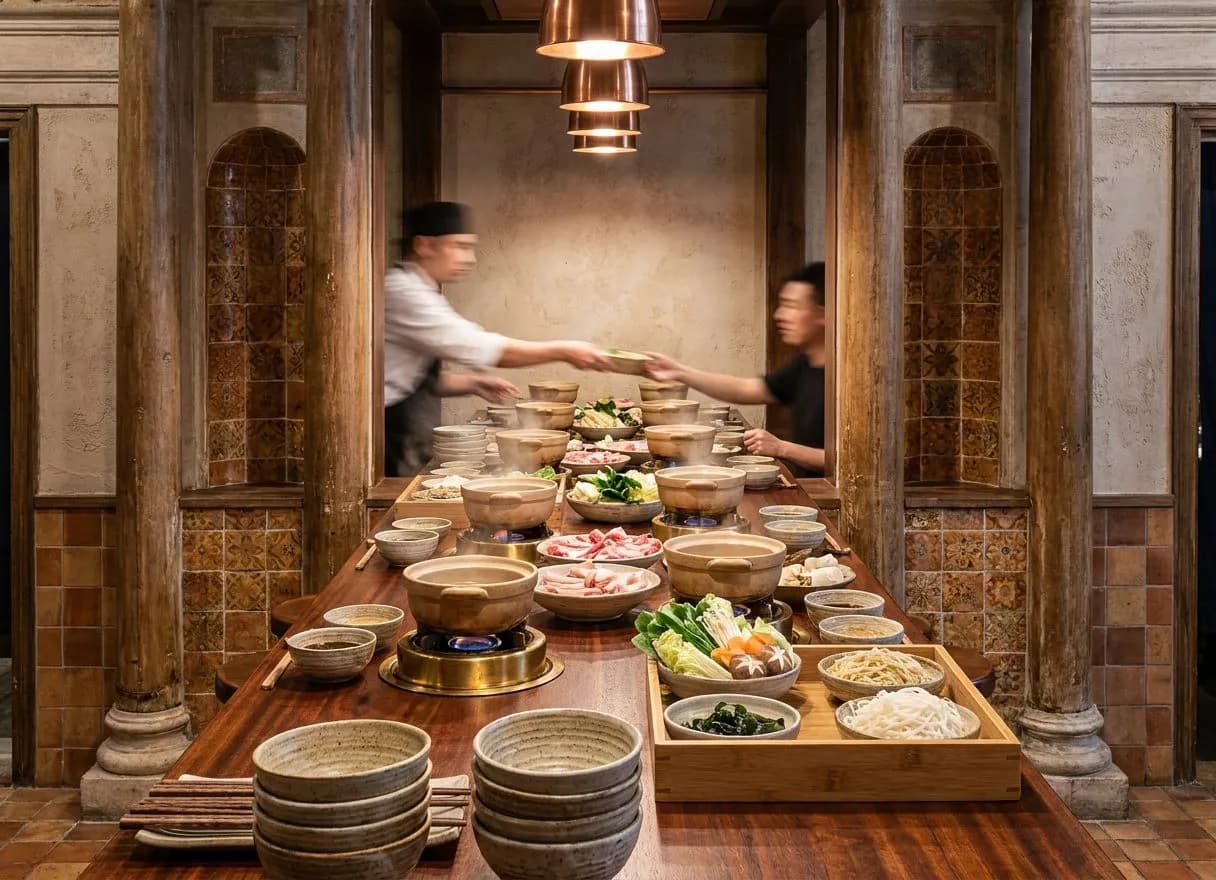
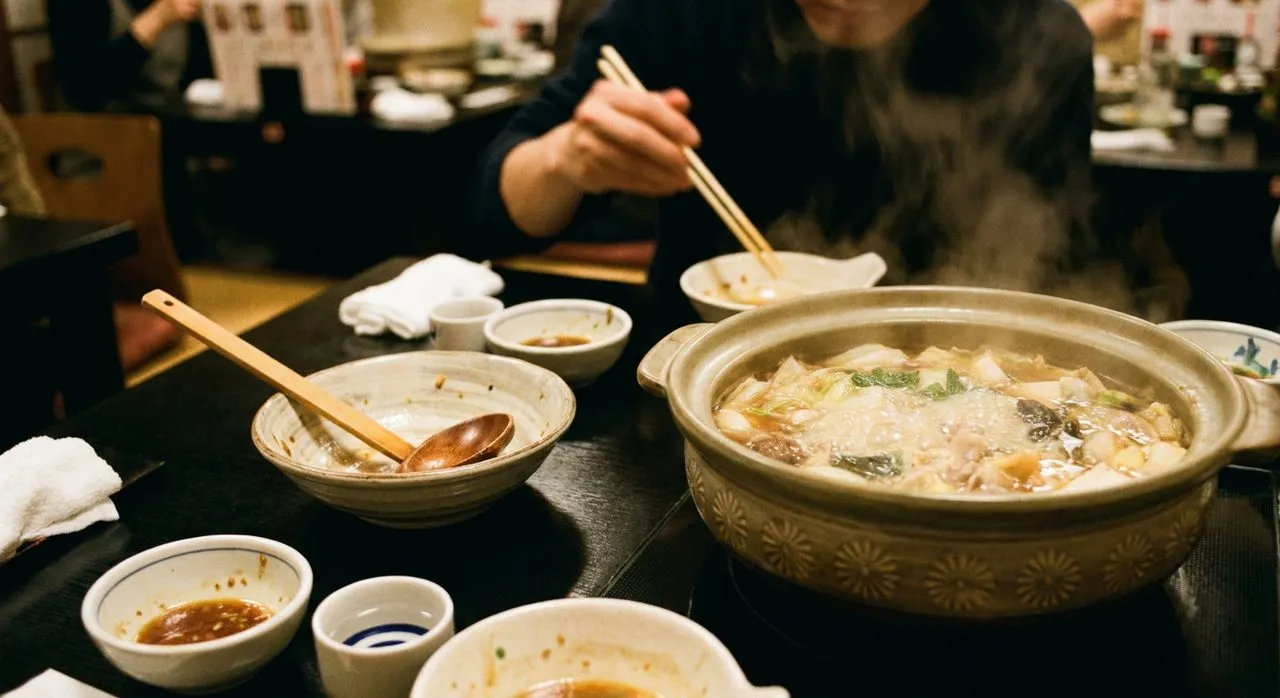
Walk into any of these spots and the setup is immediate: a linear counter, sometimes marble, often blonde wood, each seat anchored by its own induction burner sunk flush into the surface. No communal cauldron, no negotiation over spice level with a date who can't handle heat. You order your broth—kombu-forward, miso-spiked, a milky pork tonkotsu—and it arrives in a small pot scaled to one appetite. The kitchen portions everything accordingly: a palm-sized mound of thinly shaved beef, six prawns, a nest of enoki, a single square of tofu that threatens to break apart if you look at it wrong.
It's a format borrowed from Tokyo's standing soba bars and Taipei's late-night beef noodle counters, then adapted for the slower, more contemplative pace of shabu-shabu. The counter removes the choreography of shared cooking—no policing your friend's timing, no waiting for consensus before dropping the next round of greens. You're cooking for yourself, which means you're also accountable only to yourself. Overcook the beef? That's on you. Let the chrysanthemum leaves wilt into mush? Learn faster.
By late May 2026, the format has matured enough that regulars have staked out favorite seats—end spots for elbow room, middle perches for watching the line cooks work. The counters hum with a low, companionable silence punctuated by the hiss of meat hitting broth and the occasional satisfied sigh.
Why Flushing, why now
Flushing has long been the city's most confident Asian dining corridor, a place where trends incubate without waiting for Manhattan's approval. The solo hot pot counter fits neatly into that tradition—pragmatic, unpretentious, responsive to how people actually live. In a neighborhood where a significant slice of the population works irregular hours, studies late, or simply prefers efficiency over spectacle, the single-serving model makes sense. It's faster than a full-table hot pot service, cheaper than omakase, and infinitely more dignified than ordering delivery to eat in front of a laptop.
The spring of 2026 has seen the format spread beyond its initial foothold near the Main Street subway nexus. A handful of counters have opened along Roosevelt Avenue and Union Street, some attached to larger restaurants, others operating as lean, ten-seat specialists. The aesthetic varies—one skews minimal with white subway tile and Edison bulbs, another leans into dark wood and brass fixtures that recall an izakaya—but the core experience remains consistent. You are here to eat well, alone, without apology.
What lands in your pot
The menu at a typical solo shabu shabu Flushing counter runs lean. Three or four broth options, a choice of protein—beef, pork belly, lamb if you're lucky, sometimes a seafood assortment—and a vegetable plate that arrives looking like an ikebana arrangement. Lotus root coins, fat shiitake caps, blocks of silken tofu, a tangle of glass noodles. Some places offer add-ons: a raw egg to enrich the broth at the end, a side of house-made sesame or ponzu sauce, a small pour of sake that nobody judges you for ordering at 3 p.m. on a Tuesday.
The quality is quietly high. Beef arrives so thin you can read a menu through it, marbled just enough to turn the broth faintly milky. Vegetables taste like themselves—sweet, grassy, mineral—which means someone is shopping with care. The noodles, when you finally add them to soak up the enriched broth, have the kind of springy bite that suggests they were made that morning, or at least earlier that week.
This is not Instagram food. It doesn't arrive on planks or in Mason jars. But it's honest in a way that feels increasingly rare: good ingredients, careful technique, no storytelling required.
The counter as sanctuary
There's a particular pleasure to cooking your own dinner in public while being left entirely alone. The counter's design enforces a kind of polite distance—you're shoulder to shoulder with strangers, but everyone's eyes are on their own pot. Conversation, when it happens, is minimal: a nod to the person next to you when you both reach for the chili oil, a quiet "excuse me" when someone needs to squeeze past to the restroom. It's the opposite of the performative conviviality that defines so much of the city's dining culture, and the relief is palpable.
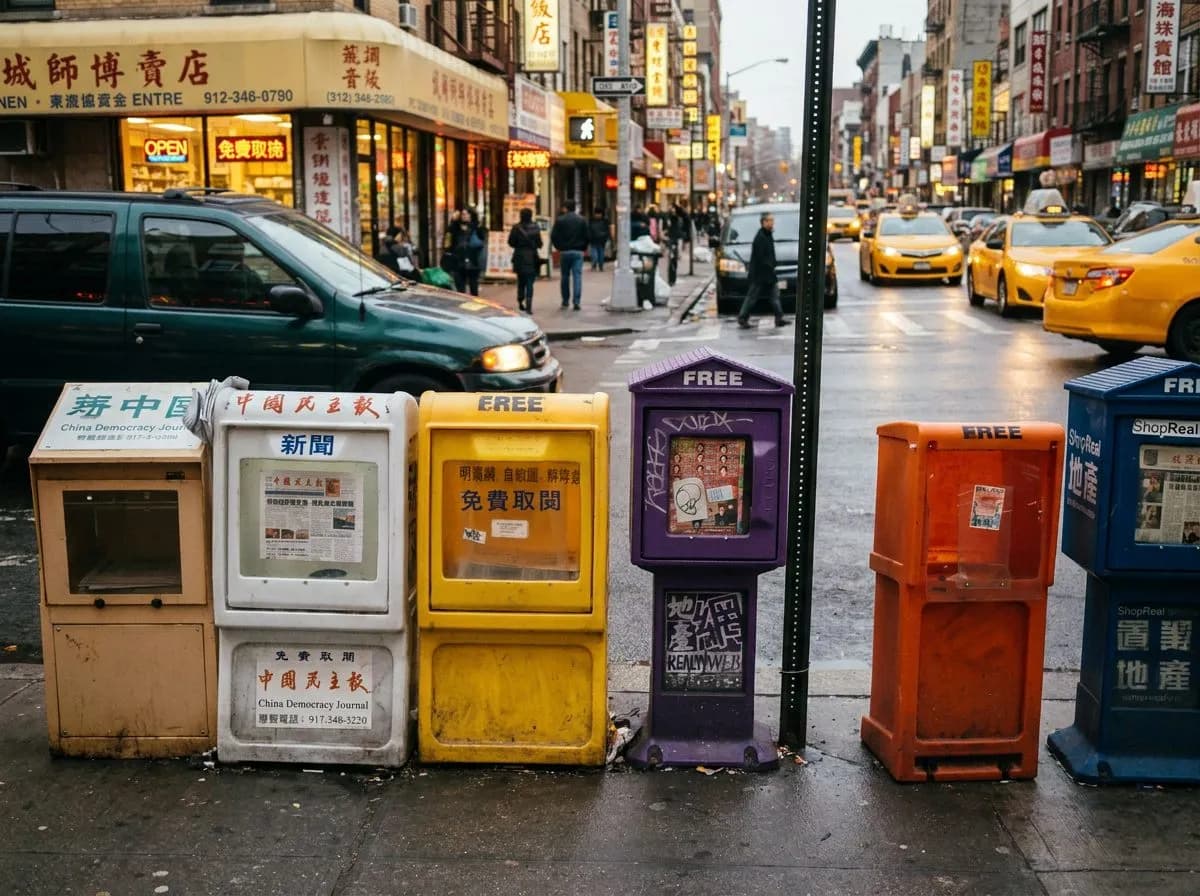
The soundscape helps. There's no music, or if there is, it's so low you barely register it. What you hear instead is the bubble and spit of a dozen private broths, the clink of chopsticks against ceramic, the soft scrape of a ladle. Outside, Roosevelt Avenue roars with buses and vendors and the doppler whine of passing motorcycles. Inside, the world shrinks to the circumference of your pot.
On a cool evening in late spring, the steam rising from the broth fogs your glasses and warms your face, and for twenty or thirty minutes you exist in a small, self-sufficient bubble. It's a peculiar kind of urban solitude—surrounded by people, alone by choice, content.
Who sits beside you
The clientele skews younger, but not exclusively. Students claim counter seats between library sessions, nursing a single order across an hour of studying. Office workers arrive solo after late shifts, still in business casual, scrolling their phones with one hand while tending their pot with the other. You'll see older regulars, too—men and women who've clearly been coming long enough to have a routine, a preferred broth, a rapport with the staff that requires no words.
What everyone shares is a kind of self-possession. Nobody here seems apologetic about eating alone. There's no performance of busyness, no propped-up book as social camouflage. People simply sit, cook, eat, leave. It's a small thing, but in a city that often makes solo dining feel like a minor failure of sociability, it registers as radical.
Practical notes
The solo hot pot counters cluster primarily along the blocks surrounding the Main Street–Flushing subway stop (7 train) and spill west toward Union Street. Street parking is a gamble; the municipal lot on Prince Street offers more reliable options. Most counters operate on a no-reservation, first-come basis—expect waits during weekday lunch and weekend dinner. Peak times run 12–1:30 p.m. and 6–8:30 p.m.; arrive outside those windows and you'll often walk straight to a seat. Hours vary by venue, but many open by 11:30 a.m. and stay live until 10 p.m. or later; verify hours directly before making the trip. Accessibility is mixed—some counters have step-free entries, others involve a short flight. Cash is still king at a few holdouts, though most now take cards. Bring patience, a tolerance for steam in your face, and an appetite for flushing queens dining that rewards the solo adventurer.
Tags: #SoloShabuShabu #FlushingEats #PullUpAChair #QueensFoodie #HotPotSeason #FlushingQueens #NYCDiningAlone #SingleServingMagic #TokyoVibesNYC #SpringDining2026 #CounterCulture #IndependentEater #NeighborhoodGems #EatLocalQueens #KarposFinds
Sources consulted: Shabu-shabu · Flushing, Queens · MTA - Getting to Flushing · Time Out New York Restaurants · NYT Food
All trademarks are the property of their respective owners.