There's a particular freedom to sliding onto a ramen counter stool alone on a warm May evening, when the city hums with possibility and you're accountable to no one but the bowl in front of you. No table politics, no splitting checks, no pretending you're not ready to order the second you sit down. Between the Lower East Side and Chinatown, a handful of counters have perfected the solo experience—not as afterthought seating but as the main event. These are the spots where regulars claim their favorite stools, where steam rises in companionable silence, and where a Tuesday night alone beats a crowded weekend reservation every time.
Why the counter wins
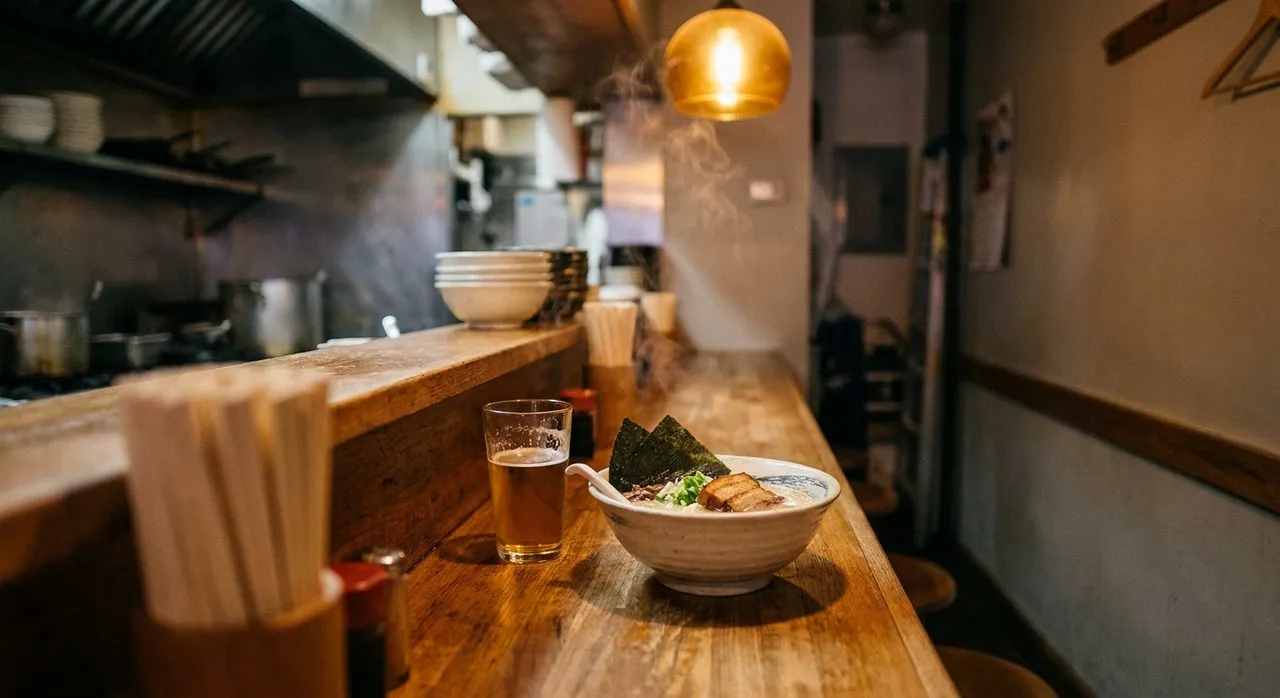
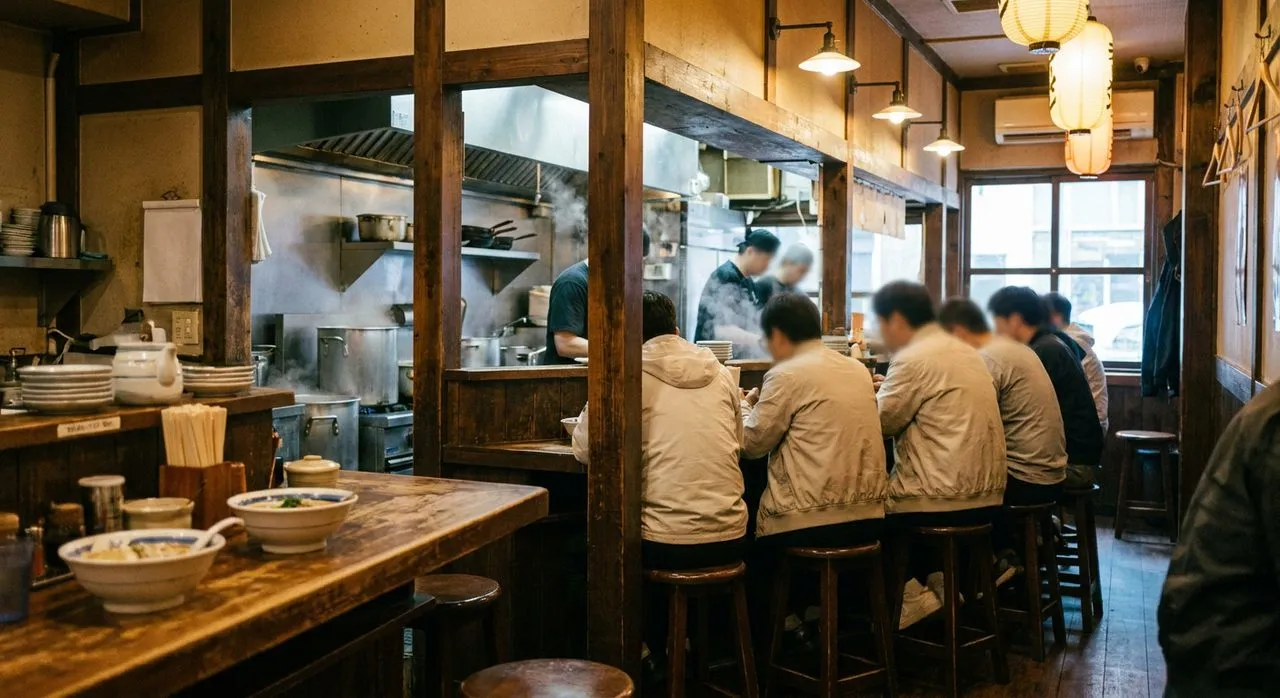
Ramen was made for counter culture. The format emerged from Japan's yatai street stalls, where speed and intimacy trumped ceremony, and that DNA persists in New York's best bowls. At a counter, you're close enough to watch the cook's hands work, to catch the exact moment your egg is halved, to smell the tare hitting hot broth. The rhythm is faster, the turnover brisk but never rushed. You're eating food at its optimal temperature, not waiting for a companion to finish their appetizer while your noodles soften into mush.
In late spring, when the humidity hasn't yet turned punishing, the appeal sharpens. Counter seats by open windows let the cross-breeze temper the steam. You're in and out in thirty minutes if you want, or you can nurse a cold beer and watch the sidewalk parade. Solo doesn't mean lonely here—it means liberated.
The Bowery corridor
The stretch of Bowery between Houston and Grand has quietly become solo-diner heaven, with several counters that prioritize the single seat. Look for the tight, twelve-stool operations where the kitchen is the dining room and the chef nods when you walk in for the third time that month. Blonde wood counters, overhead task lighting, the particular clatter of ladles against steel pots—these places share a functional elegance that never tries too hard.
The best among them pour a tight sake list and don't flinch when you order a second round. Late May means the hot sake season has officially ended, but a cold junmai pairs beautifully with pork broth when the evening hasn't quite cooled. Expect to wait on Friday and Saturday nights, but weekday evenings between six and seven-thirty offer the sweet spot: lively but not slammed, enough ambient conversation to feel part of something without needing to contribute.
Chinatown's hidden counters
Chinatown proper holds a few ramen counters tucked into blocks better known for hand-pulled noodles and roast duck. They're quieter than their Bowery cousins, often family-run, with menus that might list congee and wonton soup alongside tonkotsu. The counters here tend toward Formica and fluorescent light, no Instagram polish, just excellent broth that's been simmering since morning. You'll share space with regulars reading newspapers, delivery drivers on break, night-shift workers starting their day at 5 p.m.
These spots rarely take reservations. They don't need to. The counter seat is always available, or will be in five minutes. Bring cash—several are still cash-only—and don't expect English menus. Point at what your neighbor is eating if you're unsure. The pork belly will be good. The broth will be better.
Essex Street's new guard
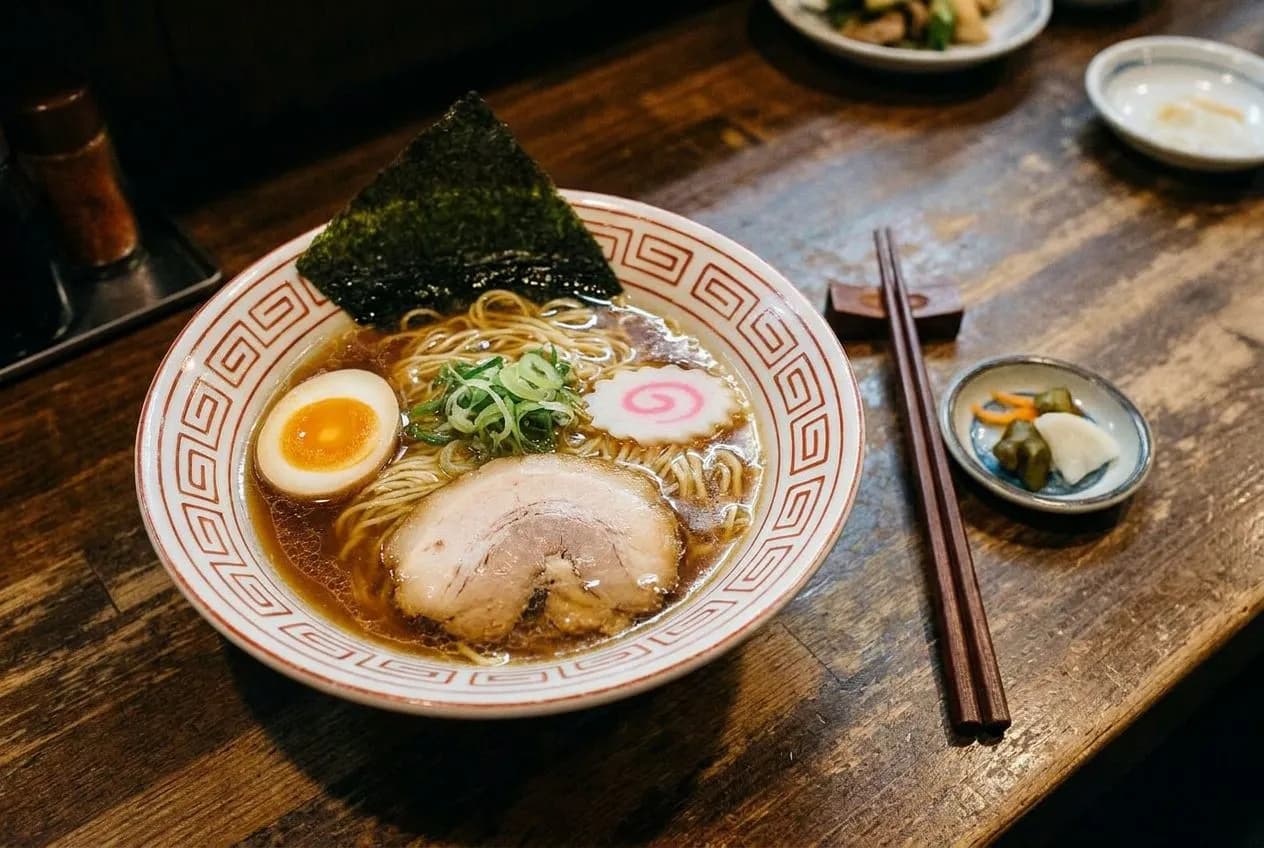
The blocks around Essex Market have seen a wave of openings in the past two years, and several have installed counters that feel both contemporary and classical. Pale stone, brass fixtures, natural light from oversized windows—the aesthetic borrows from Scandinavia but the soul is pure Tokyo. These are the spots pouring natural wine alongside Japanese whisky, where the soft-boiled egg is sourced from a Hudson Valley farm and the nori is from a fifth-generation supplier in Kyushu.
The cooking is serious but never solemn. Chefs chat with counter guests, explain the three-day dashi process if you ask, remember your usual order. Solo diners here skew creative-class—designers, editors, architects decompressing after deadline days. By late May, the after-work crowd spills onto the sidewalk with cold beers, waiting for counter seats. It's worth the wait. Once you're in, the theatre of the kitchen becomes your private show.
What makes a counter solo-friendly
Not all counters are created equal for the solo diner. The best offer actual back support—a shocking number of stools seem designed for penance—and enough elbow room that you're not jostling your neighbor every time you lift your spoon. Hooks for bags and coats matter. So does lighting that doesn't make you feel like you're being interrogated. The ideal counter height lets you watch the kitchen without craning your neck or hunching over your bowl.
Service style matters too. The best solo counters strike a balance between attentive and unobtrusive. Your water glass stays filled, but no one's hovering. There's a rhythm to it—eye contact when you need something, respectful distance when you're mid-slurp and clearly in the zone. Music should be present but not demanding. Conversation with staff is welcome but never mandatory. You're alone together, part of a temporary community of people who chose the counter on purpose.
The late-night advantage
Some counters in this corridor stay open late, and the late shift brings its own magic. The crowd thins after ten, the pace slows slightly, and the kitchen crew loosens up. This is when you might get a bonus slice of chashu, when the chef experiments with an off-menu broth, when the bartender pours a little heavier. Late May nights are long and generous—it doesn't get truly dark until after eight-thirty—and there's something perfect about ending a wandering evening with a solo bowl at eleven p.m.
The late counters also tend to draw hospitality workers wrapping their own shifts, which creates a particular camaraderie. Everyone's tired, everyone's hungry, and the shared understanding that you're all here for the same reason—a perfect bowl of ramen and twenty minutes of peace—makes even silence feel companionable. No small talk required. Just noodles, broth, and the quiet satisfaction of a day properly closed.
Practical notes
Most spots in this stretch are within a reasonable walk of Delancey/Essex and Grand Street subway stations. Street parking is limited; nearby garages may have hourly rates if you must drive. Peak times run 6–8 p.m. weekdays, 7–10 p.m. weekends, though waits rarely exceed twenty minutes for counter seats. Many shops close between lunch and dinner service—verify hours directly. Counter seating by nature presents accessibility challenges; several locations offer limited table seating with advance notice. Bring cash as backup even if cards are accepted. Leave the laptop at home—these counters are for eating, not coworking. A light jacket helps in spots with aggressive AC. Most importantly: come hungry, come solo, and come ready to slurp without apology.
Tags: #PullUpAChair #RamenNYC #SoloDining #LowerEastSide #ChinatownEats #CounterCulture #NYCFood #SpringDining #LateSpring2026 #BoweryEats #EssexStreet #SoloTravel #NYCNightlife #NoodleLife #CityEats
Please drink responsibly. Must be of legal drinking age.
Sources consulted: Ramen · Lower East Side · Chinatown, Manhattan · Time Out New York Restaurants · NYT Food
All trademarks are the property of their respective owners.