Manhattan's Koreatown runs a tight grid—32nd Street between Fifth and Sixth, plus the spillover blocks that hum past midnight. Most Korean BBQ houses pivot toward groups: long tables, double-portion menus, servers who eye a party of one with faint confusion. But a handful have installed counter seating where solo diners are not just tolerated but properly set up. You get your own inset grill, the full banchan carousel, and a stool that faces the kitchen or the street. Late May means the dining rooms stay warm even with the air conditioning laboring; the counters, often near an open door or service pass, catch the cross-breeze.
Why the counter matters
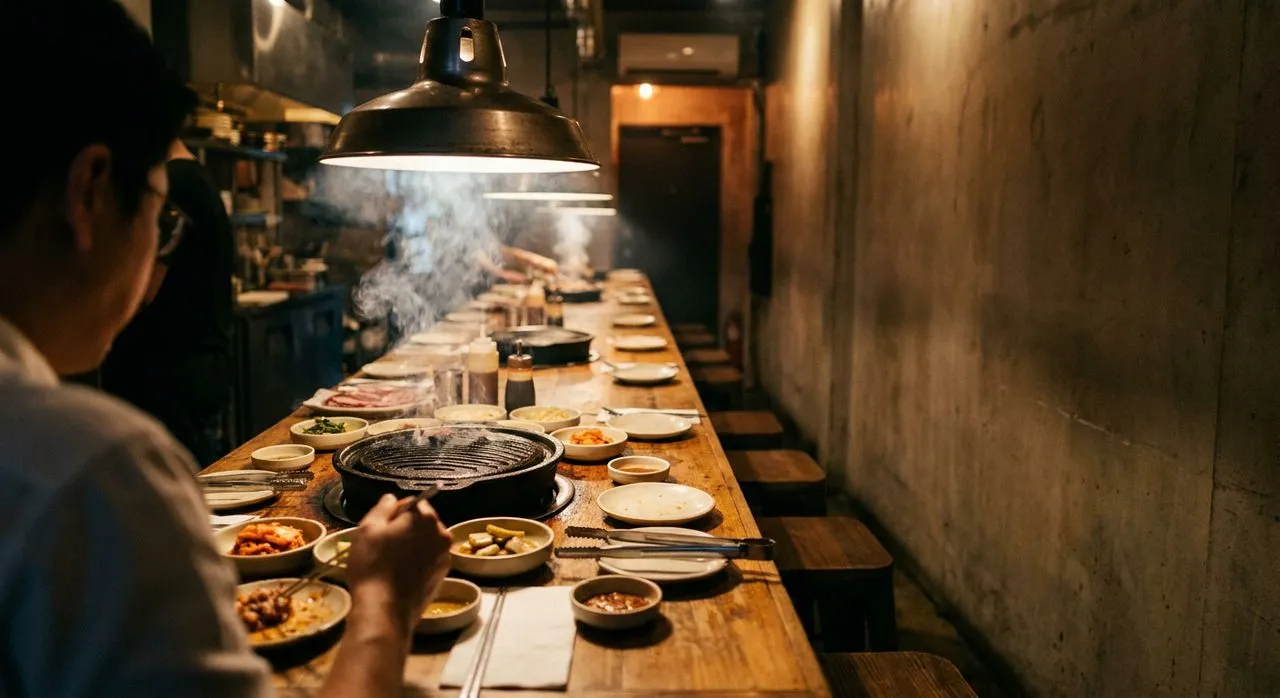
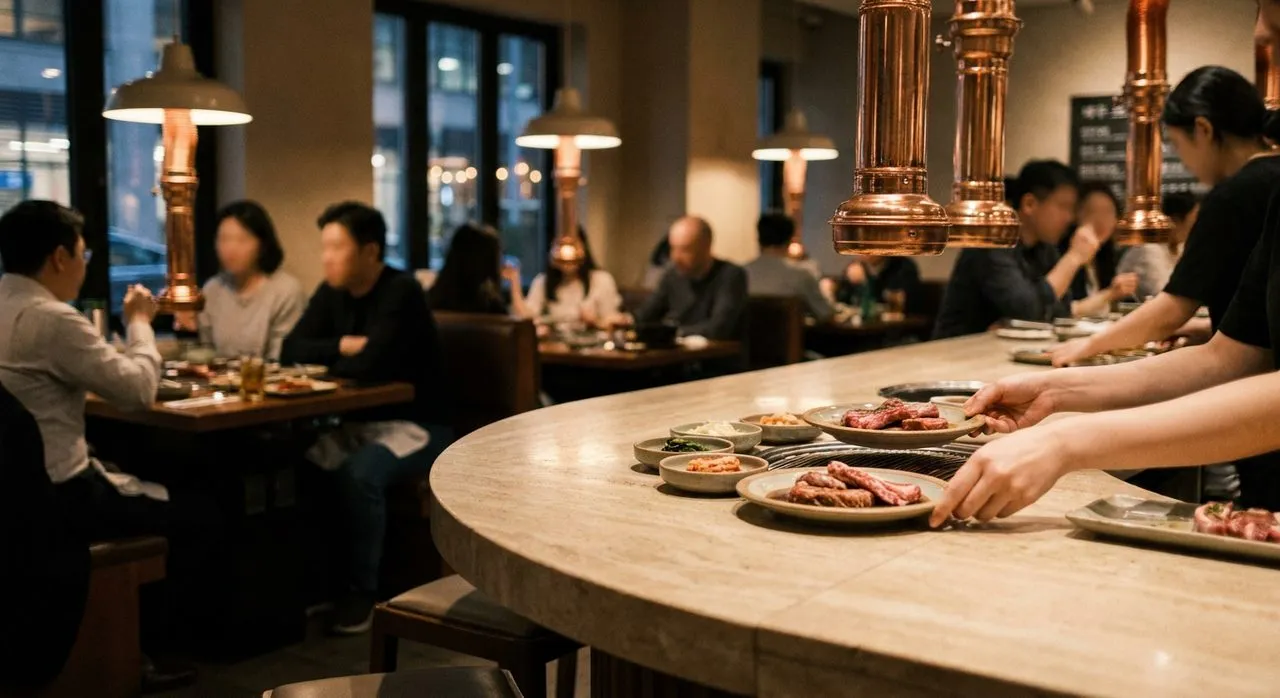
A two-top for one feels performative. You're aware of the empty chair, the server's split-second calculus about whether you're waiting for someone. The counter dissolves that. You're shoulder-to-shoulder with another solo eater or a couple splitting a lunch special, and the spatial logic makes sense. Most importantly, counter setups in korean bbq restaurants mean you control your own grill pace. No one's reaching across to flip your beef; no one's judging your decision to order a second round of pork jowl at two in the afternoon.
The counter also positions you near the kitchen's edge. You see the banchan being refreshed in stainless-steel bins, smell the sesame oil and doenjang before it reaches the table, hear the rhythm of tongs and exhaust fans. It's participatory without requiring conversation. If you want to read on your phone between bites, no one minds. If you want to ask the line cook about the marinade, they'll usually answer.
Eight spots, sorted by seating style
Not all counters are created equal. Some face the sidewalk through floor-to-ceiling glass—ideal for people-watching the lunch-hour crush of midtown office workers and culinary-school students. Others run along the back wall near the kitchen pass, darker and more insulated. A few are semi-counters: high stools at a bar-height surface with grills sunk in, but still part of the main dining room's sight lines. For solo comfort, the true counter—separate from the table section, with its own service flow—is what you're after.
The cluster of basement restaurants along 32nd Street's south side includes at least three with counter configurations that seat four to six. Some restaurants have counter seating with individual burners and a server who'll bring the marinated galbi still cold, letting you decide when to start. Another mid-block option offers a lunch counter deal with meat options, banchan, rice, and stew for a moderate price. The portions assume you're alone; no awkward half-orders or upcharges.
On the north side, closer to Sixth Avenue, two second-floor spots have installed window counters that catch the afternoon light. Late May means that light slants in hard around one-thirty, illuminating the smoke from the grills and making the whole counter shimmer. These tend to fill up fast on weekdays, empty out by mid-afternoon, then surge again after eight. If you're aiming for solitude, the three-to-five window is your friend.
Banchan equity and the lunch window
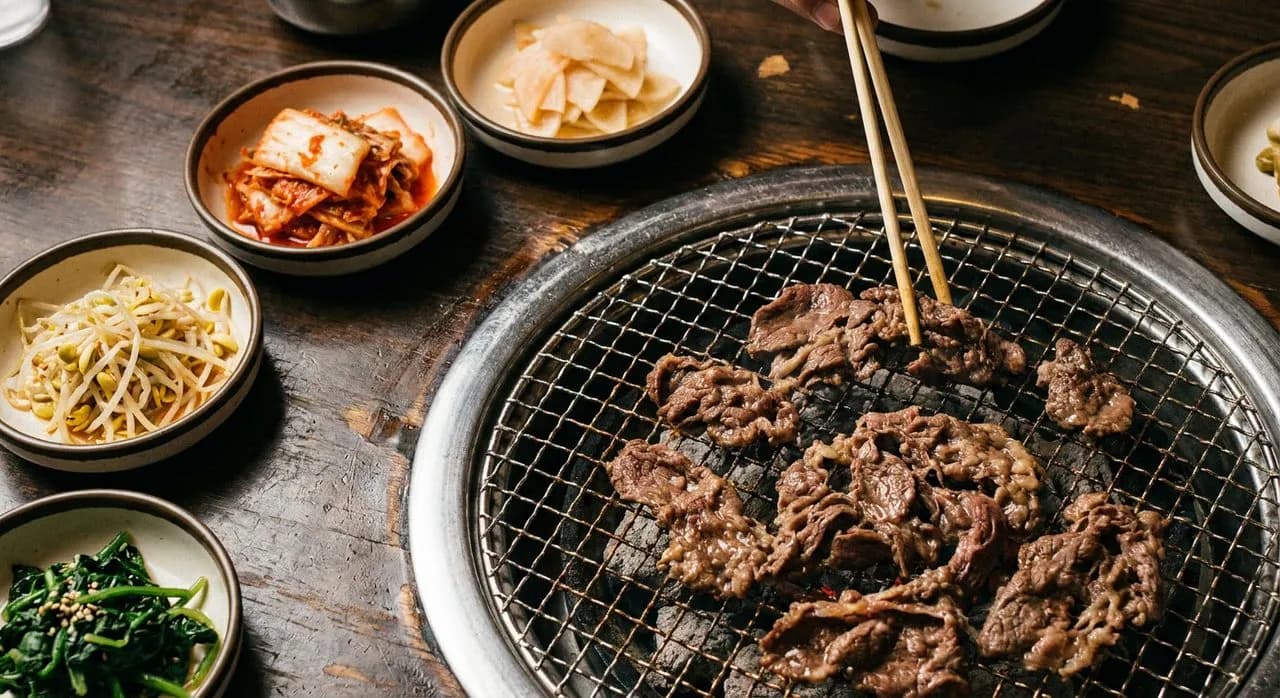
Solo diners often get short-changed on banchan—the small plates of kimchi, pickled radish, bean sprouts, and spinach that frame every Korean meal. Some restaurants assume one person doesn't need the full rotation and bring three dishes instead of six. The counter spots that treat solo eaters seriously deliver the same spread regardless of party size. You'll see the server set down the metal tray with the same choreography: kimchi at eleven o'clock, yellow pickled radish at one, glass noodles at three.
Lunch is when the solo-counter model shines brightest. Weekday service between eleven-thirty and two-thirty draws office workers on tight schedules, students between classes, and the occasional food writer testing whether the experience holds up alone. Servers move faster, the grill gets pre-lit, and the banchan arrives before you've settled onto the stool. Saturdays are trickier. Dinner service skews toward groups, and even with counter seating, the energy can feel off-kilter when you're the only single at the bar and every table behind you is a birthday party or a reunion.
What to order when you're cooking for one
The solo grill calls for strategy. Cuts that cook fast and don't require constant flipping—thin-sliced brisket, marinated short rib—are more forgiving than thick pork belly, which can char on you while you're mid-bite. Most counter menus offer a "one-person set" that includes two proteins, usually around eight ounces total, plus rice and soup. It's enough. If you're hungry enough for a third protein, order it halfway through, after you've gauged your appetite and the grill's temperament.
Resist the urge to order everything at once. The counter's advantage is that you can pace yourself—start with beef, add pork if you want it, finish with a bowl of cold noodles to cut the richness. Some spots will bring out a complimentary steamed egg or extra soup if they see you're alone and settling in for a longer meal. It's a courtesy that doesn't happen at the group tables, where the kitchen assumes speed and turnover.
When to skip the counter
Friday and Saturday nights, the counter can feel like a front-row seat to chaos you're not part of. The dining room swells, the music gets louder, and servers sprint past your stool balancing trays meant for six. If you thrive on that energy, fine. But if you came for the quiet concentration of solo grilling, aim for weekday lunch or the early-dinner slot before six. Sunday afternoons split the difference: busy enough that you're not conspicuous, calm enough that you can hear yourself think.
Also skip the counter if you want to linger over soju. Most counter setups don't stock full bar inventory, and the speed of service assumes you're there to eat and move on. A table gives you more room to stretch a meal into an hour and a half; the counter's rhythm is closer to forty-five minutes, start to finish.
The late-May context
By the end of May, Koreatown's sidewalks stay crowded until nearly eleven. The post-work, pre-show crowd thickens around seven, and the counter spots—especially those with street-facing windows—turn into stages. You'll catch your own reflection in the glass, backlit by the grill, while tourists and commuters pass inches away. It's oddly companionable. The heat from the grill mixes with the humidity pushing in from outside, and the cold soju or barley tea tastes sharper for it.
Late spring also means the banchan skews lighter: more cucumber kimchi, less of the heavier braised lotus root. Menus don't change dramatically, but the kitchen's instinct does. Servers will sometimes suggest the cold buckwheat noodles without you asking, a small seasonal tell that the kitchen knows you've been sweating over that grill for twenty minutes.
Practical notes
Koreatown's main stretch—West 32nd Street between Fifth and Sixth Avenues—is two blocks from Penn Station and Herald Square. Several subway lines serve the area, including the B, D, F, M, N, Q, R, and W Metered street parking is scarce; the closest garages are on 33rd and 31st, expect thirty to forty dollars for two hours. Most counter spots don't take reservations; arrive before noon or after two for weekday lunch, before five-thirty for early dinner. Many second-floor locations require stairs; call ahead if you need ground-level or elevator access. Bring cash as backup—some spots have card minimums or prefer cash for counter service. Verify hours directly, especially on Sundays and holidays, as schedules can shift.
Tags: #PullUpAChair #KoreatownNYC #SoloDining #NYCFood #KoreanBBQ #MidtownEats #CounterCulture #LateMay2026 #SeoulFood #NYC #ManhattanEats #SpringDining #LunchSpecials #EatAlone #Koreatown
Please drink responsibly. Must be of legal drinking age.
Sources consulted: Korean barbecue · Koreatown, Manhattan · NYC Official Koreatown Guide · Time Out New York Korean Restaurants
All trademarks are the property of their respective owners.