The best solo dining happens at counters where you're neither ignored nor overly attended to, where the rhythm of service creates its own companionship. Harlem's Ethiopian restaurants—clustered along stretches of Frederick Douglass Boulevard and the side streets threading east toward Lenox—have perfected this balance. Pull up a stool at the right spot and you'll find yourself elbow-to-elbow with regulars, the air thick with berbere and clarified butter, the hiss of the coffee ceremony just audible over quiet conversation. It's June, the light stays late, and there's no better place to be alone in good company.
Why counters work for solo Ethiopian dining
Ethiopian food is communal by design—meant to be torn and shared from a single platter—but counters short-circuit the awkwardness of dining alone at a table set for four. You're facing forward, not staring at an empty chair. The kitchen is often visible, or at least audible: the clatter of pots, the rhythmic slap of injera batter hitting the mitad. You can watch without being watched, and the bartender or server stationed nearby becomes an optional conversationalist rather than someone hovering.
The portion sizes, too, make more sense at the counter. Order a vegetarian combination or a single stew, and it arrives on a smaller tray, still generous but scaled to one appetite. You're not left with the guilt of waste or the logistics of takeout containers. And if you want to linger over Ethiopian coffee—three rounds, as tradition dictates—no one's rushing you for the table.
The architecture of the Harlem counter
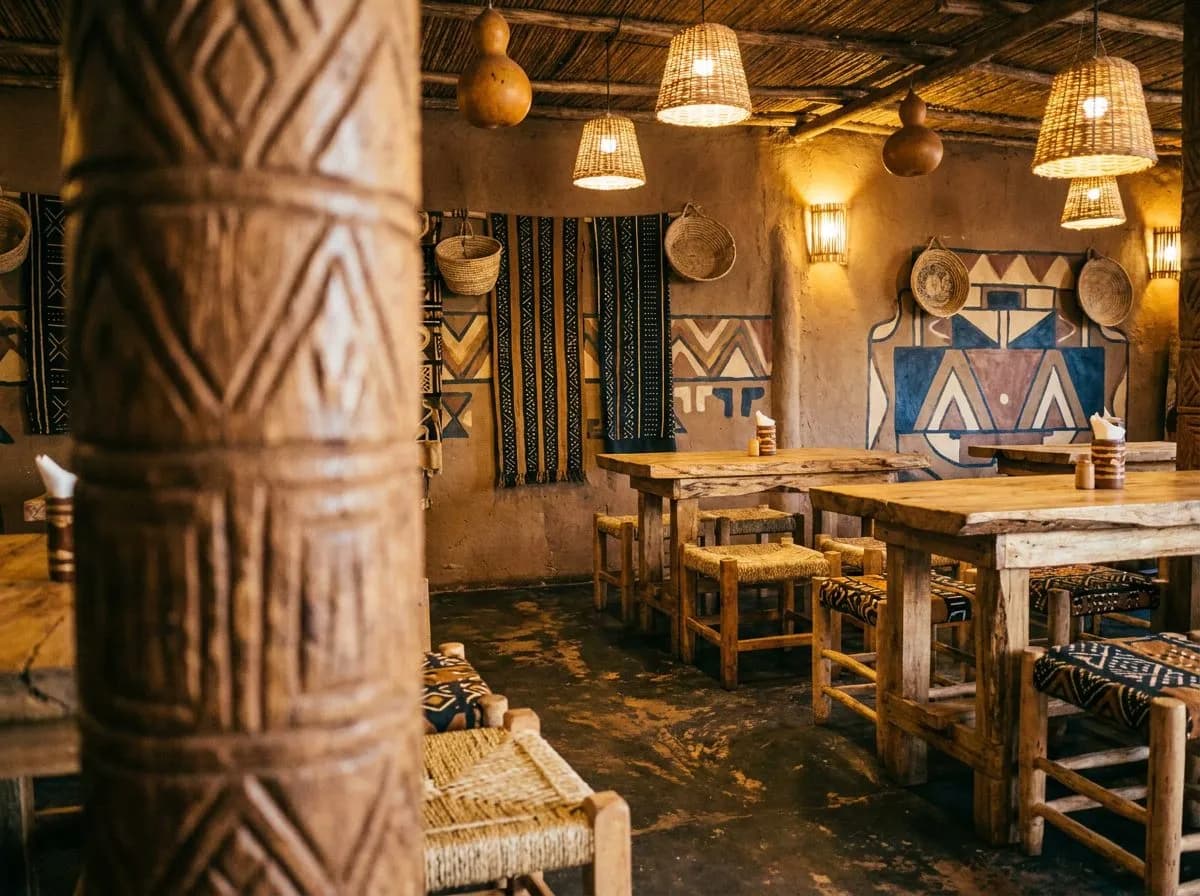
Most of the established spots along Frederick Douglass Boulevard in the 110s have counters that run narrow and long, pressed against the front window or flanking the espresso machine. The stools are often mismatched, wood or vinyl, some bolted down, some not. Morning light pours in from the east in late May; by evening, the interiors glow amber, candles on every surface, the scent of frankincense from the coffee ceremony drifting through.
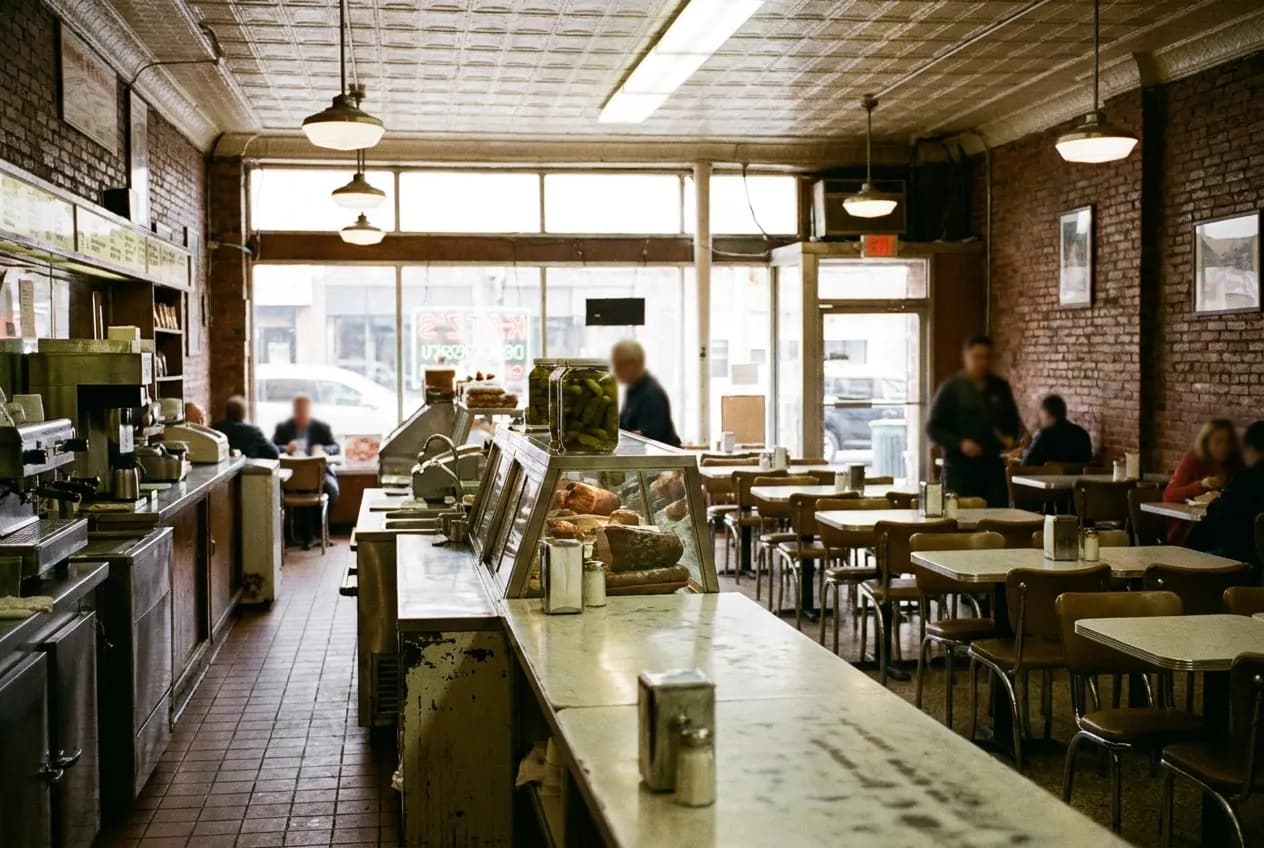
The counters themselves are Formica or laminate, occasionally real wood worn smooth by decades of elbows. They're close enough to the kitchen that you can see the injera being torn, the stews ladled, the whole choreography of ethiopian food harlem has made an art form. Some counters face mirrors, which either doubles your solitude or makes you feel part of a larger tableau, depending on your mood. Either way, it works.
What to order when you're flying solo
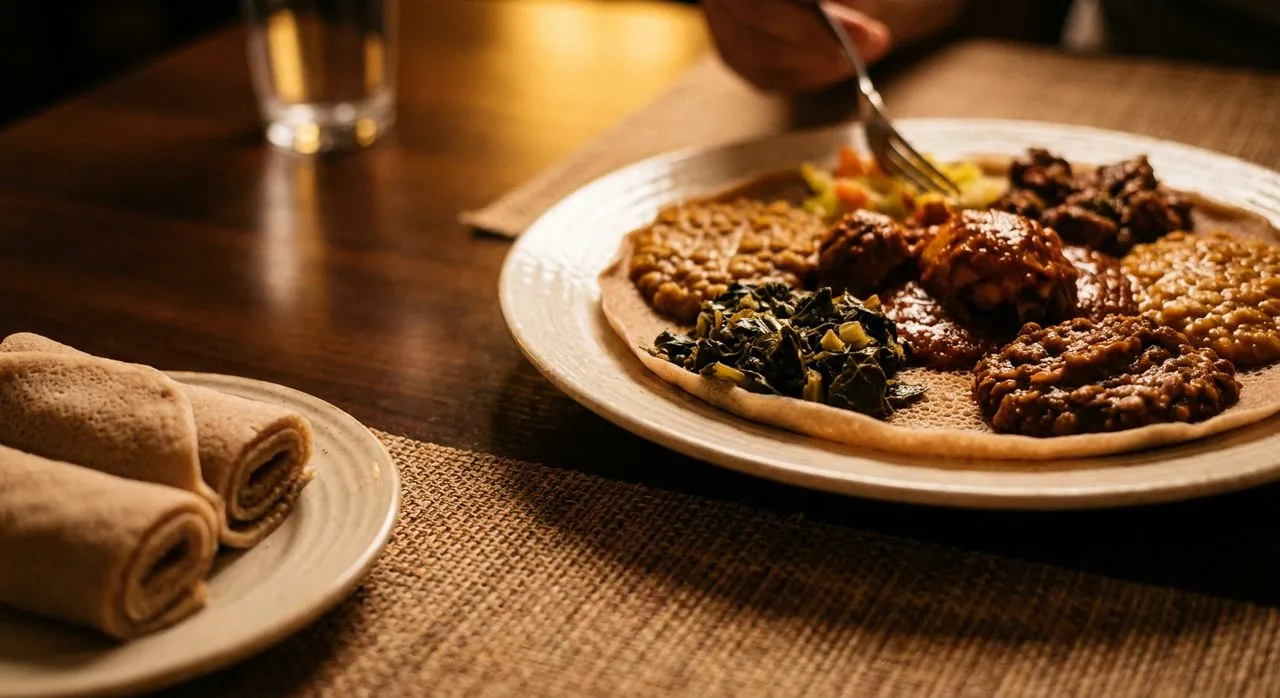
Skip the combo platters designed for two or more unless you're very hungry or planning to make dinner last. Instead, focus on one or two stews with a side of injera. The vegetarian options—misir wot, gomen, shiro—are reliably excellent and won't leave you in a food coma. If you eat meat, doro wot or tibs offer protein without overwhelming. Ask for extra injera if you're the type who mops up every last smear; no one judges.
Coffee is non-negotiable. The ceremony takes time—green beans roasted over charcoal, ground by hand, brewed in a jebena—and if you're sitting at the counter, you're in the best seat to watch it unfold. The first pour is strong and almost syrupy; the second mellows; the third is a gentle wind-down. It's theatre and caffeine at once, and it gives your solo meal a natural arc, a beginning and end that feels intentional rather than solitary.
The unspoken etiquette
Counters have their own social code. You can nod at your neighbor or keep your gaze on your plate; both are acceptable. If someone offers a taste of their dish—gursha, the tradition of feeding another by hand—you can politely decline or accept with grace. Most evenings, though, you'll be left to your own thoughts, which is precisely the point of nyc solo dining done right.
Bring a book or don't. Your phone is fine, but the counter invites a slower pace. Watch the street, the kitchen, the way the injera absorbs the stew's rust-red oil. Listen to the Amharic floating between tables, the clink of glasses, the low hum of a place that's been feeding its neighborhood long enough to have earned its rhythms. You're a guest in that rhythm, and the counter makes it easy to settle in without making a fuss.
Timing your visit
Early evenings in late May and June are ideal—the pre-dinner lull, when the kitchen is fully awake but the tables haven't filled yet. Counter seats are first-come, and they're claimed quickly on weekends. Weekday afternoons are quieter, almost meditative, though some spots close between lunch and dinner. Late-night counters exist, too, especially on Fridays and Saturdays, when the coffee ceremony runs past midnight and the crowd skews younger, louder, more celebratory.
Weather matters less than you'd think—these are indoor counters, insulated from the June humidity—but the quality of light changes everything. Golden hour through the front windows is its own seasoning. And if you time it right, you'll catch the transition from daylight to candlelight, the moment when Harlem's Ethiopian restaurants shift from functional to something closer to sacred.
Practical notes
Harlem's Ethiopian restaurant corridor runs primarily along Frederick Douglass Boulevard (Eighth Avenue) between roughly 110th and 125th Streets, with additional spots on side streets near Lenox Avenue (Malcolm X Boulevard). Nearest subway lines include the B and C (Cathedral Parkway–110 St, 116 St, 125 St stations) and the 2 and 3 (Lenox Ave stops). Street parking is possible but competitive; consider walking from the subway. Most counters are accessed via a single step up from the sidewalk; call ahead to confirm accessibility needs. Hours vary widely, but many open for lunch around noon and serve into late evening; verify hours directly before visiting. Bring cash—some spots are card-only now, but others prefer bills. A light jacket helps if you're counter-side near the AC vent.
Tags: #SoloEthiopianCounterDiningHarlem #PullUpAChair #NYCSoloDining #EthiopianFoodHarlem #HarlemEats #CounterCulture #FrederickDouglassBlvd #InjераAndCoffee #HarlemNeighborhoods #SoloTravelNYC #June2026 #LateMayDining #EthiopianCoffeeCeremony #NYCFoodScene #HarlemHistory
Sources consulted: Ethiopian Cuisine · Harlem · Time Out New York Restaurants · NY Times Food
All trademarks are the property of their respective owners.