 SoHo Scenic Courtyard Dining Finder for Autumn Patios
Restaurants
NYC Solo Dining Finder: Walk-In Bar Counter Strategy
A practical NYC solo dining finder for tavern counters, early arrivals, compact orders, and an easy West Village to Hudson River walk tonight.
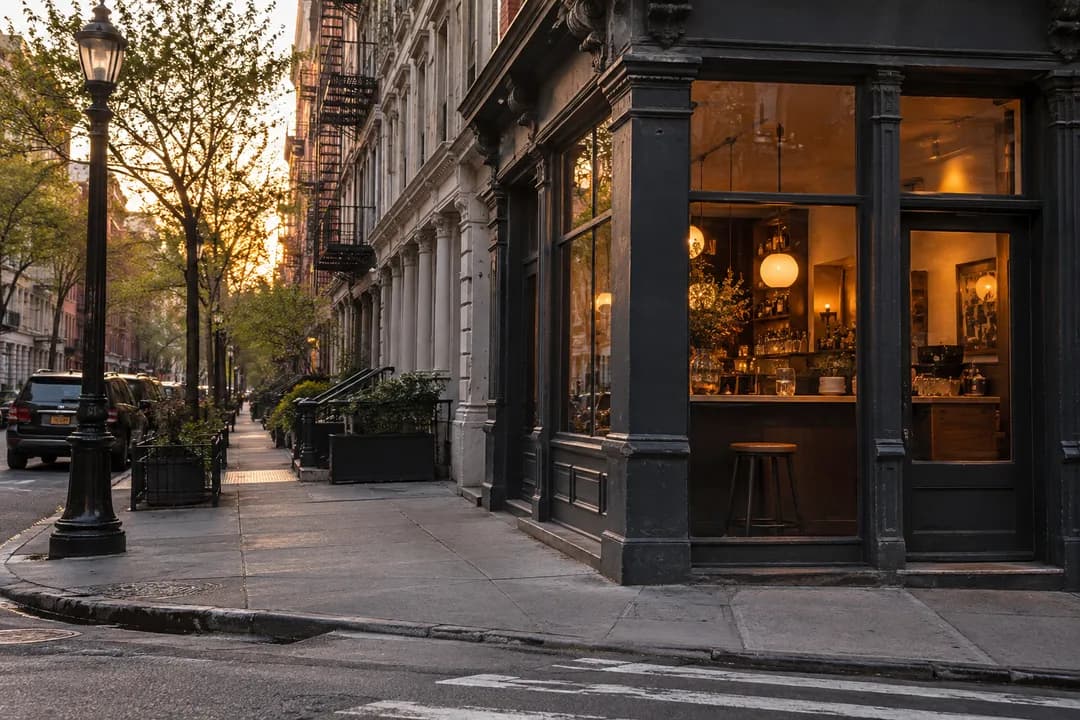
Dining alone in New York City is neither a compromise nor a solitary chore; it remains one of the greatest privileges of urban life. While group tables in the West Village and SoHo face three-week waitlists and impossible prime-time reservations, the solo diner armed with sharp timing can slip effortlessly into a single mahogany bar stool at five-fifteen in the evening. At the bustling curved counter of a neighborhood tavern on Hudson Street, the ambient roar of shucking oysters, shaking martinis, and clattering silverware creates an enveloping curtain of sound that provides absolute anonymity. Here, seated between a neighborhood regular finishing an evening paper and an off-duty line cook enjoying a plate of anchovy toast, eating by yourself feels entirely intentional. Use the Karpo APP to keep this neighborhood plan together while you choose a solo-friendly format and a comfortable route.
Mastering the Five O'Clock and Nine O'Clock Windows
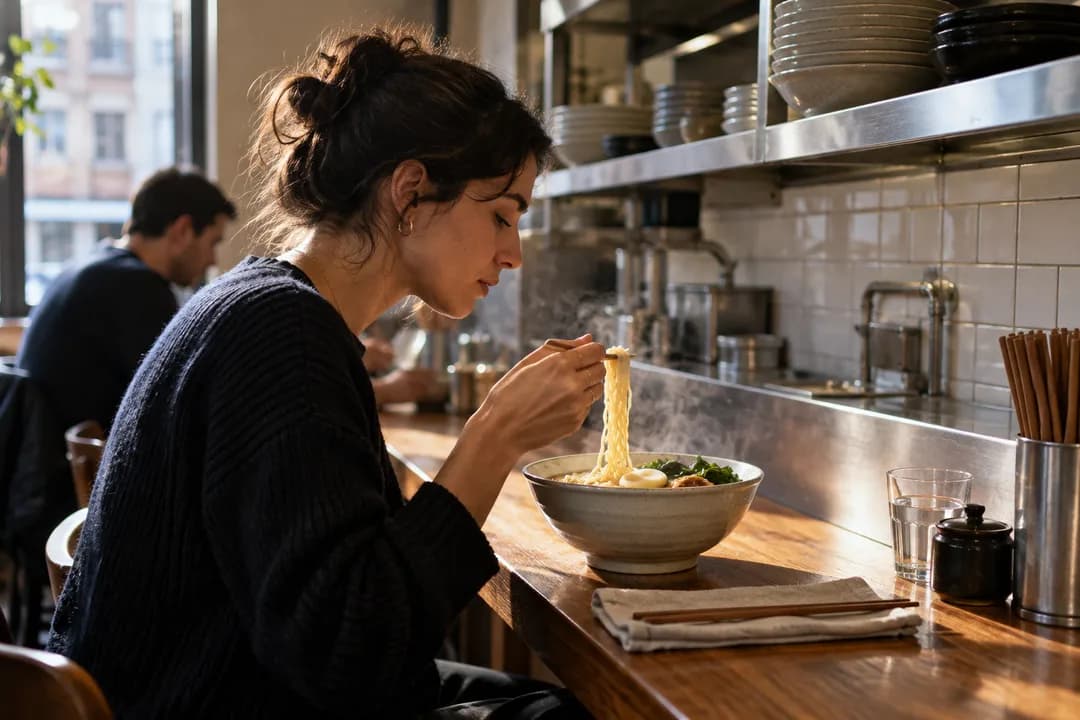
The fundamental secret to successful walk-in solo dining across Manhattan lies in respecting the natural rhythmic pulses of the service floor. Between six-thirty and eight-thirty in the evening, bar seating is routinely claimed by pairs waiting for dining room tables to clear, creating an artificial logjam of crowded shoulders. However, arriving precisely at opening door time—usually five o'clock or five-thirty—guarantees immediate choice of prime counter territory. At historic spots like Minetta Tavern or corner bistros like Buvette on Grove Street, early solo guests are welcomed with prompt attention, warm bread baskets, and unhurried hospitality. Alternatively, the second prime window opens after eight-forty-five at night, when the first dinner seating concludes and theatergoers disperse. Stepping into a warm, candlelit bar on MacDougal Street just as the dessert rush begins lets you order a late-night plate of steak frites and a glass of Gamay without competing against bustling four-tops.
Counter Etiquette and the Single Stool Advantage
Occupying a single seat at a crowded restaurant counter comes with an unspoken code that ensures mutual respect between guest and staff. Always check in with the host before slipping onto an empty bar stool, even if the seat appears completely unoccupied; some venues maintain a discreet clipboard waitlist specifically for bar spots. Once seated, keep your personal footprint tidy by hanging heavy winter coats and commuter backpacks on the brass hooks tucked beneath the bar rail rather than draping them across adjacent furniture. Bartenders and counter servers in New York are exceptionally attuned to solo guests: if you prop open a paperback book or sketch in a small notebook, they will provide swift service while maintaining respectful quiet. Conversely, if you sit attentively near the service pass, friendly conversation about seasonal specials, cellar selections, and kitchen techniques will flow naturally throughout your meal.
Building a Cohesive Solo Order Without Table Clutter
One common hesitation of solo diners is navigating a menu designed primarily for shared family-style feasting. The counter format elegantly solves this dilemma by encouraging focused, course-by-course pacing that keeps your limited marble space uncluttered. Rather than ordering an entire meal in a single breath, start simply with a single beverage and an immediate small plate—perhaps warm marinated Castelvetrano olives, plancha-seared razor clams, or a wedge of crusty sourdough with cultured butter. Once you assess the speed of the kitchen and your own appetite, follow with a singular centerpiece: a bowl of hand-rolled cavatelli tossed with spicy sausage ragu, or a crisp skin striped bass fillet over braised fennel. Bartenders appreciate this steady pacing because it distributes kitchen ticket volume smoothly, and it allows you to pause and evaluate whether you truly possess room for an espresso pot de creme before committing. A small field note makes the route easier to repeat: treat each counter as a chapter rather than a destination you must conquer. Begin with the nearest subway exit, leave room for a short pause outside, and let the room tell you whether the next move is another plate or a walk. West Village blocks reward a slow turn toward Hudson River Park; SoHo gives you cast-iron facades and changing window light; the Lower East Side turns the same solo meal into a louder, more nocturnal scene. The useful skill is reading the room without making it a performance. A single stool, a compact order, and a clean exit are enough to make a weeknight feel deliberately yours.
Decompressing with an Unhurried Post-Dinner Neighborhood Stroll
The pleasure of solo dining extends far beyond the final bite of dessert; it seamlessly integrates into the surrounding streetscape. After settling your tab, step directly into the cool evening air of Greenwich Village, where cobblestone streets, glowing brownstone stoops, and iron gates provide a peaceful decompression walk. Stroll west toward Hudson River Park to watch the distant river ferries glide past lighted piers against the dark water, or wander eastward past the vintage bookshops and jazz basements of Bleecker Street. The brisk walk allows your digestion to settle comfortably while letting the lively energy of the dinner service linger in your mind. Without the conversational obligations of group outings, you have complete freedom to pause before an architectural doorway, listen to a busker in Washington Square Park, or slip into a tranquil gelato parlor for a scoop of hazelnut.
Practical Notes for Navigating Manhattan Bar Dining
To guarantee smooth solo evenings across New York, keep a few logistical ground rules in mind. Peak weekend nights (Thursday through Saturday) naturally feature longer bar queues, making Tuesday and Wednesday evenings prime territory for spontaneous walk-ins. Solo diners are rarely permitted to camp out across multiple hours during dinner rushes, so aim for a relaxed yet respectful sixty to seventy-five minute dining window. When paying your bill, acknowledge the bartender's extra hospitality with a generous twenty to twenty-five percent gratuity, especially if they guided your wine pairings or held a stool while you visited the restroom. Keep a backup dining option located within a five-minute walking radius in case your first choice is unexpectedly buyout-closed for a private event; having a secondary ramen bar or historic diner nearby keeps your evening entirely stress-free.
Why Solo Dining Cultivates True City Fluency
Ultimately, dining alone at a restaurant counter teaches you to perceive New York as an active, living ecosystem rather than a spectator backdrop. From your vantage point beside the bar glass chiller, you observe the intricate choreography of the service well: the steady rhythm of orders called, the gentle clink of polished coupe glasses, and the unspoken signals exchanged between expediter and server. You begin to recognize familiar faces among neighborhood regulars, discover under-the-radar culinary gems that rarely show up on algorithm-driven listicles, and build genuine confidence navigating the city entirely on your own terms. The Karpo APP can hold this route together while you decide which counter, street, and pause fit your evening.
Ask Karpo for more information.
Keep reading
- SoHo Scenic Courtyard Dining Finder for Autumn Patios
 DUMBO Scenic Courtyard Dining Finder for Brick Patios
 Upper West Side Scenic Courtyard Dining Finder Guide