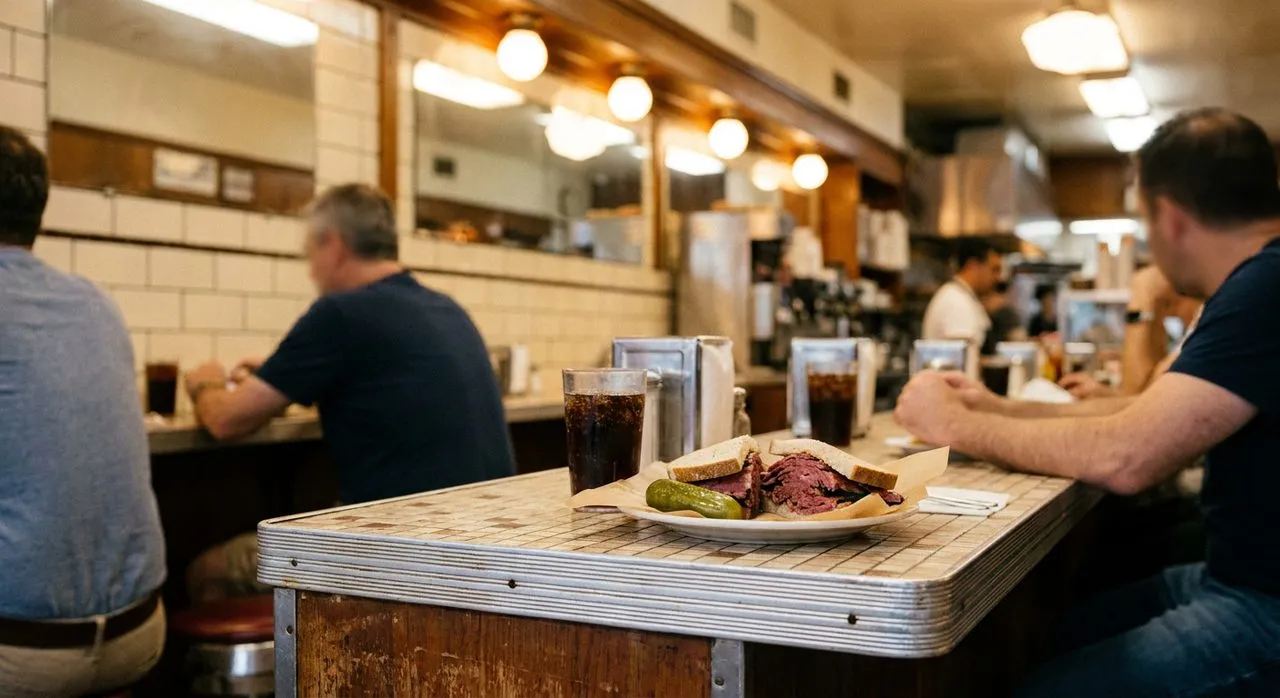
The solo diner at a Lower Manhattan counter isn't an outlier; they're the archetype. Late May, when the lunch rush spills onto sidewalks and the afternoon light slants hard through century-old windows, these counters hum with a particular rhythm. You slide onto a stool. Someone slides a napkin your way. The counterman knows what you want before you do. No small talk required, but plenty tolerated. This is where the city's individualists come to be alone together, elbow to elbow, pastrami to pickles.
The uptown cousin everyone knows
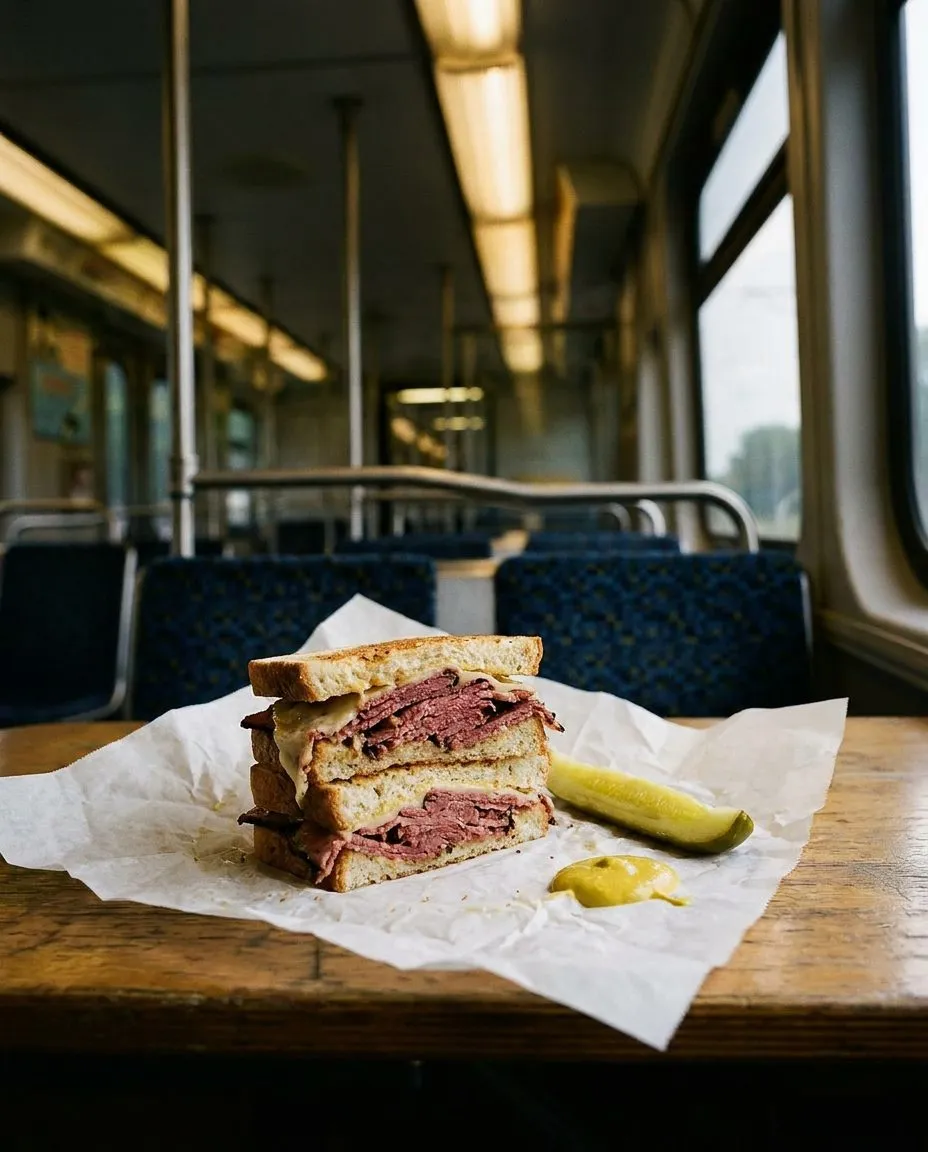
Katz's Delicatessen remains the gravitational center of this universe. Tourists queue for tables, but the counter regulars—the ones who've been coming since the Carter administration—know to head straight for the slicing stations. The fluorescent glare, the sawdust underfoot, the ticket system that feels like Cold War bureaucracy: none of it has softened. You stand at the counter. The slicer builds your pastrami on rye in real time, and if you're smart, you tip him mid-construction.
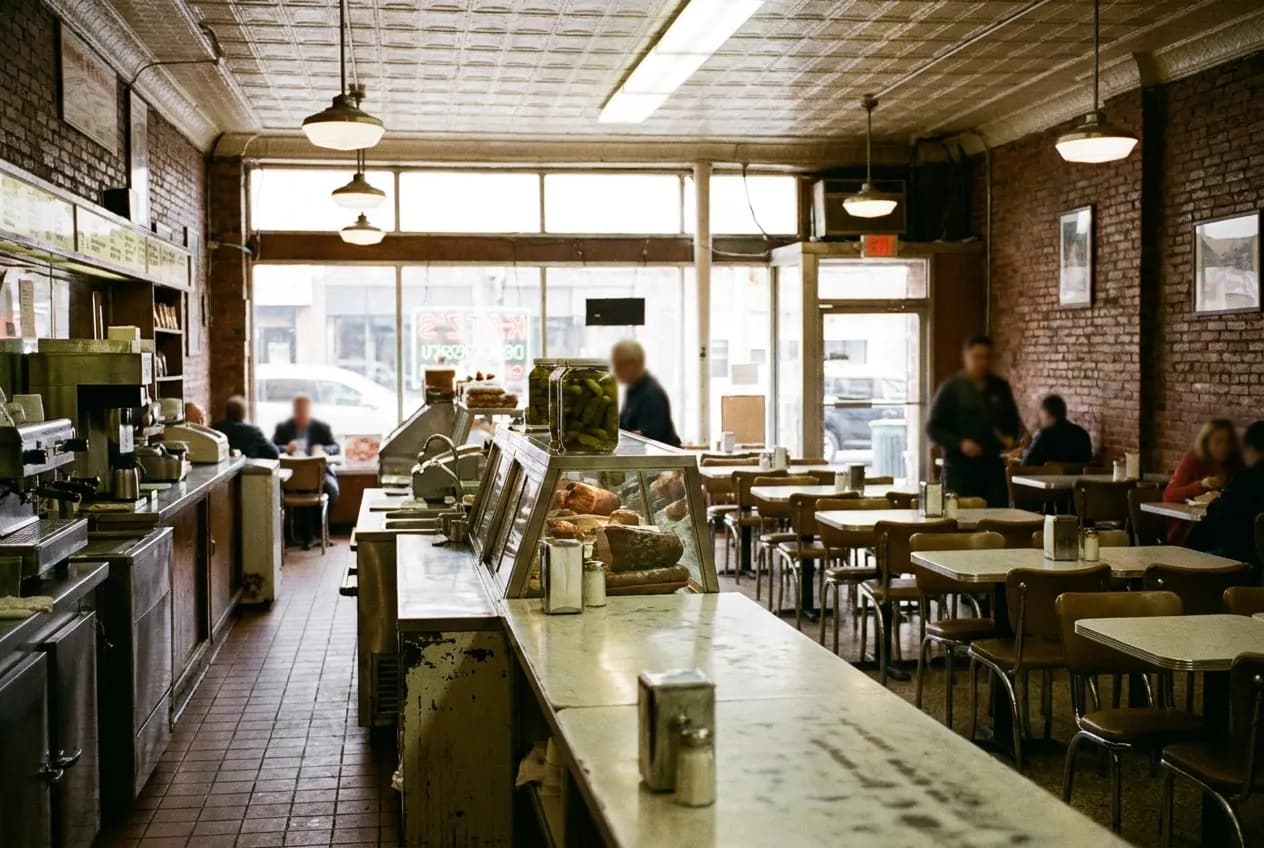
But solo doesn't mean standing. A handful of stools line the far wall, underneath framed celebrity photos yellowed by decades of steam. Late May means the front doors stay propped open, and Houston Street exhaust mingles with rendered fat and pickle brine. It's not romantic. It's better than that—it's reliable. The countermen work with the efficiency of pit crews, and the solo diner is their ideal customer: decisive, hungry, gone in twenty minutes.
Italian counters where salumi is the script
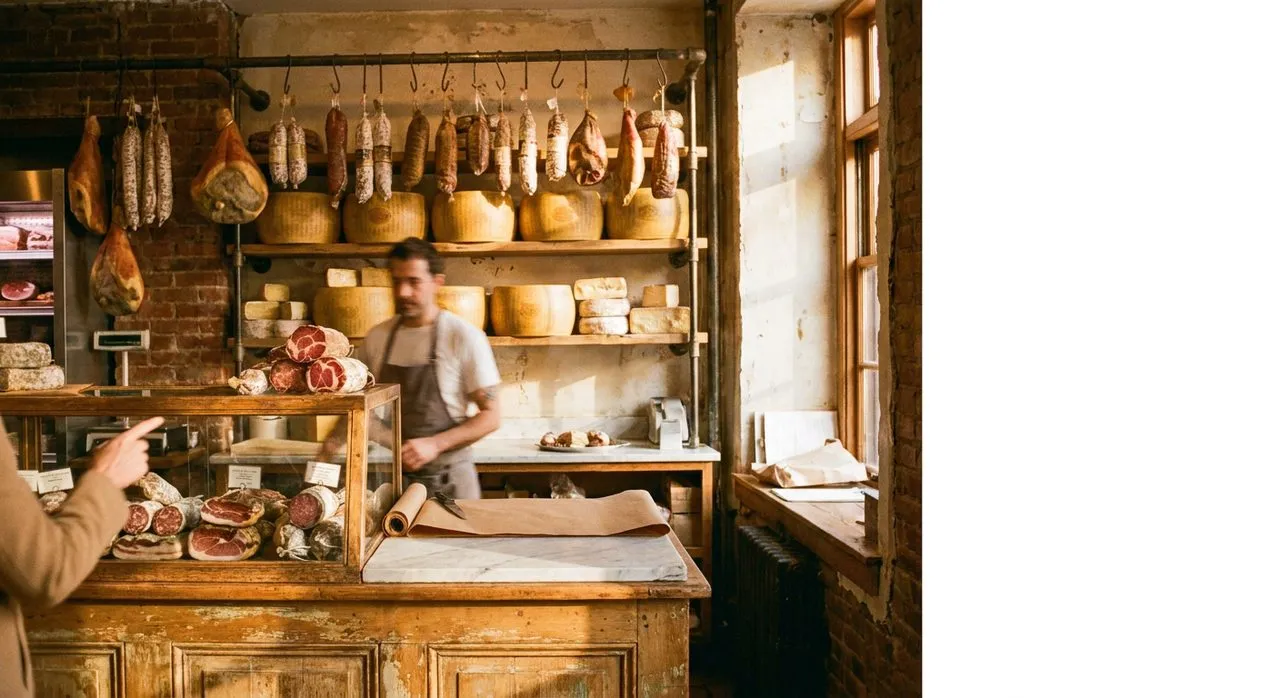
A cluster of Italian provisions shops and salumerias still hold ground in the blocks surrounding the old Fulton Fish Market. These aren't restaurants, exactly—they're grocers with counters wedged into corners, where a stool or two materializes near the slicer. You order by the ounce. Mortadella, soppressata, provolone sharp enough to clear sinuses. They'll build you a sandwich on semolina if you ask, but the real regulars just take the paper-wrapped stack and eat standing up, one translucent slice at a time.
The light in these places is different—dimmer, cooler, filtering through plate glass smudged with decades of handprints. Wooden shelves stacked with imported tins and dried pasta create a kind of edible architecture. The countermen speak in dialect, or don't speak at all. You point. They slice. The rhythm is older than the neighborhood's current lease rates, and every solo luncher knows it's borrowed time. But for now, the stools remain.
The Fulton fish legacy reimagined
One new opening—a narrow counter near the South Street Seaport—has quietly joined the lineage. It's modeled on Tokyo's standing sushi bars: nine stools, no tables, a marble counter, and a menu built around Hudson Valley trout and East Coast oysters. The owner, a Tribeca native, wanted to honor the Fulton Market's ghost without cosplaying it. The result feels less nostalgic than pragmatic. Solo diners cycle through every thirty minutes during lunch. No reservations. No lingering.
The spring menu leans into shad roe and soft-shell crab, both of which arrive on the counter still glistening, barely touched by heat. It's a deli counter in spirit—fast, egalitarian, built for people eating alone—even if the product has shifted from cured beef to raw fish. The solo diner's posture is the same: leaned in, elbows on marble, eyes on the chef's hands.
The bagel counterman's ballet
Essex Street's long-running bagel bakeries maintain a different counter tradition: the rapid-fire call-and-response of breakfast orders shouted across a room. You don't sit here; you post up at a waist-high Formica ledge along the wall, your paper bag already splitting from the weight of a still-warm everything bagel loaded with scallion cream cheese. Late May means iced coffee sweats through wax cups in under five minutes.
The solo dynamic here is compressed, almost athletic. You order in shorthand. You pay in cash. You claim six inches of counter space and eat fast, grease pooling in the bag's corners. Around you, a dozen other solitary diners do the same, all of you performing a kind of synchronized individuality. The counterman's hands never stop moving—slicing, schmearing, wrapping, ringing up—and you're part of the choreography whether you like it or not.
Chinatown's shoulder-to-shoulder noodle bars
Just south and east, Chinatown's hand-pulled noodle counters and dumpling bars offer another model: communal tables where solo is simply the default. You perch on a backless stool, your bowl arrives in under three minutes, and the person next to you is close enough that you're sharing air. It's intimate without being social. No one makes eye contact. Everyone eats with purpose.
The late-spring heat turns these cramped rooms into steam baths. Ceiling fans churn the humid air. Soy sauce and black vinegar bottles crowd the counter, their labels peeling. The solo diner here isn't seeking solitude—they're seeking speed and a particular kind of anonymous companionship. You finish your noodles, you leave your crumpled napkin on the counter, and you're back on the street in fifteen minutes, the whole transaction wordless and perfect.
Why counters endure
Lower Manhattan's counter culture survives because it solves a problem that never goes away: how to eat well, alone, without ceremony or shame. Tables require decisions—where to look, what to do with your hands, whether to bring a book or risk the phone. Counters eliminate the question. You face forward. You eat. The architecture does the social work for you, arranging solitary diners into an accidental community, each person locked into their own experience but aware of the others. It's the city's best trick: making loneliness optional even when you're by yourself.
By late May 2026, as rents creep and dining trends churn, these counters feel both endangered and essential. The solo diner knows this. That's why we keep coming back, claiming our stools, ordering the same thing we always order. Not out of nostalgia—though there's some of that—but because a good counter, like a good city, lets you be alone without being lonely. And because pastrami on rye, eaten standing up at noon on a Thursday, still tastes like the best decision you'll make all week.
Practical notes
Katz's Delicatessen sits at 205 East Houston Street (nearest subway: F to 2nd Avenue or F/M to Delancey-Essex; also J/Z to Essex Street); verify hours directly, but expect long weekend lines. The Italian salumerias cluster along Mott and Grand; explore on foot. Essex Street bagel bakeries and Chinatown noodle counters are densest between Canal and Hester. The new fish counter near South Street Seaport is open for lunch on select days. Most spots are cash-friendly; few take reservations. Accessibility varies widely in these older buildings—narrow doorways and no restrooms are common. Bring small bills, an appetite, and willingness to eat fast. Street parking is mythical; rely on subway or plan to walk from adjacent neighborhoods.
Tags: #PullUpAChair #LowerManhattan #NYCDelis #SoloDining #CounterCulture #DeliCounter #LateSpring2026 #EssexStreet #Chinatown #SeaportEats #PastramiOnRye #NYCLunch #CityEating #ClassicNYC #AloneTogether
Sources consulted: Delicatessen · Lower Manhattan · NYC Lower Manhattan · Time Out New York Restaurants · NY Times New York
All trademarks are the property of their respective owners.