The best solo meals in New York happen at counters. Not because you're hiding or hurrying, but because a good counter—marble, zinc, wood worn smooth by decades of elbows—turns solitude into front-row theater. And nowhere is this truer than at the raw bars and clam bars scattered through the Financial District and wider Lower Manhattan, where the culture of the quick, excellent lunch has kept counter seating sacred. Late May in 2026, with warm air finally loosening winter's grip and the lunch hour stretching luxuriously toward three, these spots hum with the particular energy of people eating very well, very much alone, very much by choice.
The geometry of the solo counter
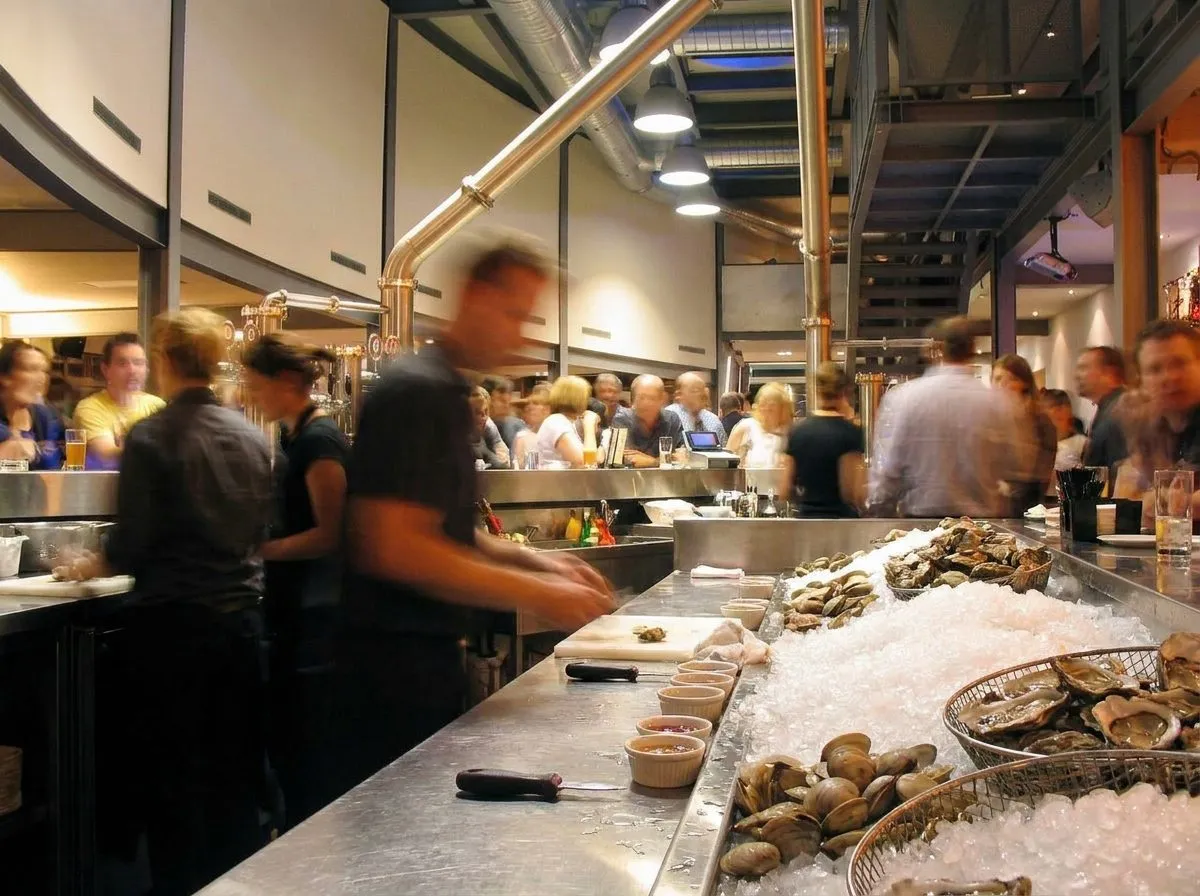
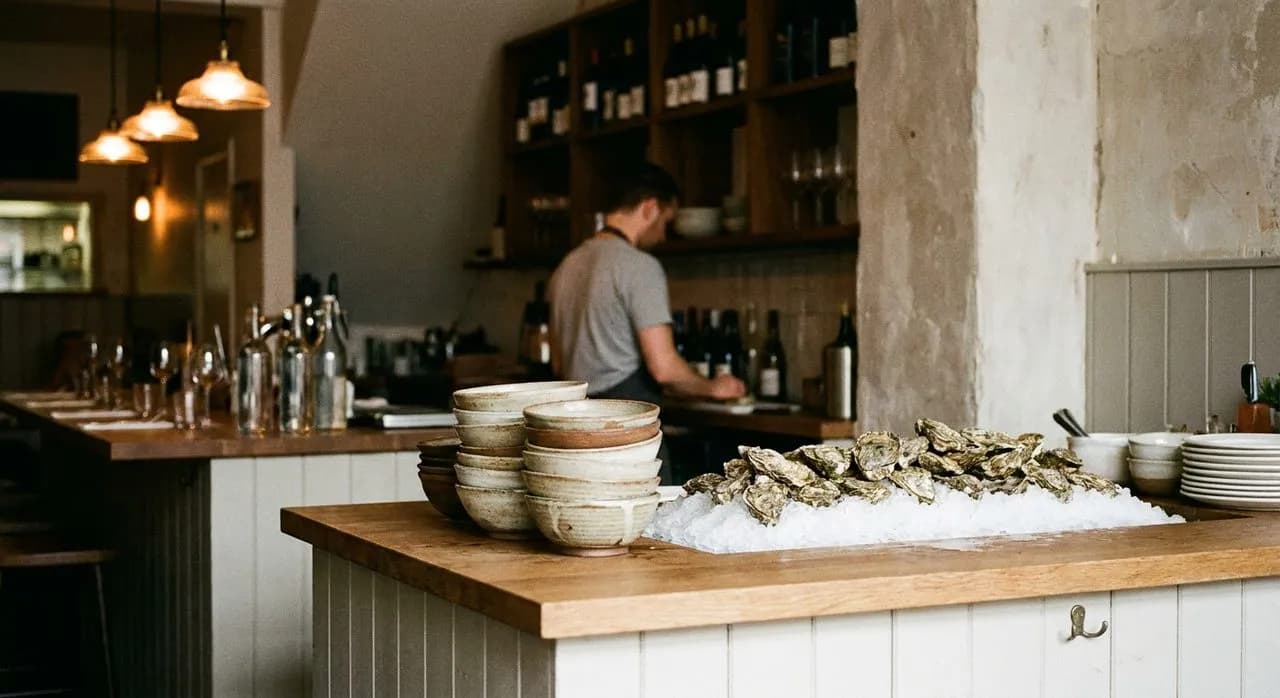
There's a reason raw bars tilt toward counter seating. Oysters and clams arrive in waves—six, then six more, then maybe a half-lobster and another round—and the counter lets you pace yourself without a server hovering. You're close enough to watch the shucker work, to see the knife find the hinge, the top shell lifted, the quick inspection for grit. It's a rhythm you fall into. One Kumamoto. A sip of something cold. A Malpeque. The bright sting of mignonette.
The Financial District has always understood this geometry. The neighborhood was built on men eating alone at counters—diners, automats, oyster saloons—and while the aesthetics have evolved, the underlying logic hasn't. You slide onto a stool, you nod at the person working the station, and for the next forty minutes you exist in a bubble of brine and lemon and Tabasco, the rest of the world reduced to pleasant background hum.
What makes a clam bar different
Clam bars—distinct from their oyster-forward cousins—skew democratic and a little rowdier. You'll find steamers, cherrystones, littlenecks, razor clams if you're lucky, all of it served with drawn butter and hot sauce and none of the precious ceremony that oysters sometimes demand. The best clam bar nyc counters feel more like seafood shacks than temples of gastronomy, even when they're charging Manhattan prices. Which, let's be honest, they are.
But the trade-off is immediacy. Clams come to you minutes after the order leaves your mouth. The broth is still bubbling. The shells are too hot to touch without a napkin. And because clams are less expensive than oysters—by a margin that matters when you're ordering for one—you can be generous with yourself. A dozen cherrystones, a bowl of chowder, a cold beer, and you're out the door for less than some places charge for a grain bowl.
The Financial District advantage
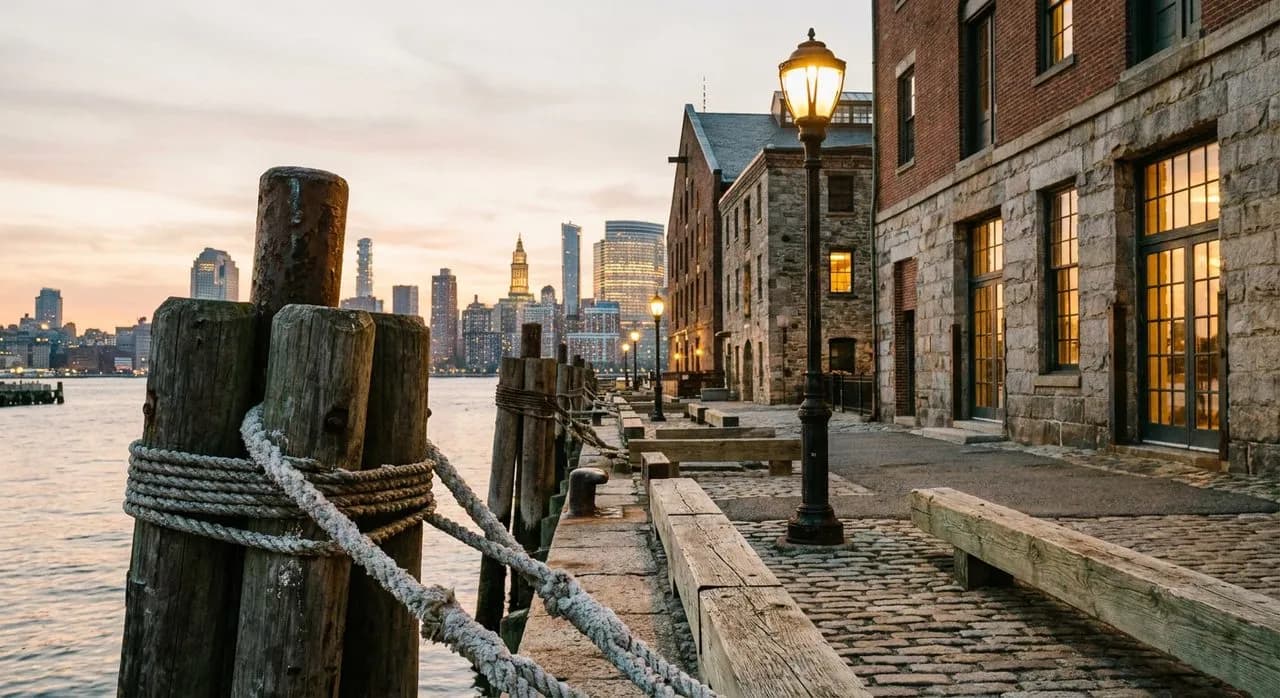
Lower Manhattan has always had excellent access to fish. The Fulton Fish Market may have relocated to the Bronx decades ago, but the supply chains remain tight, and the neighborhood's old-guard seafood spots still source carefully. Walking through the Financial District on a late-May afternoon, you catch the smell before you see the signs—that clean, mineral scent of ice and ocean, drifting out every time a door swings open.
The other advantage here is operational. Financial District restaurants built their reputations on feeding bankers and lawyers who had forty-five minutes and high standards. That pressure forged a certain efficiency. Counters turn over quickly but never feel rushed. Orders land fast. Checks appear the moment you make eye contact. The whole experience is designed for people who are alone, who know what they want, and who have somewhere to be—even if that somewhere is just a park bench with a book and an extra half-hour of sunshine.
What to order when you're ordering for one
Start with a half-dozen of whatever's in season. Late spring means East Coast oysters are plump and sweet—Wellfleets, Blueprints, Widow's Holes—though you'll also see West Coast varietals for contrast. Don't overthink it. If you're at a good counter, everything they're shucking is good. Add a plate of littlenecks or cherrystones on the side; the textural shift from oyster to clam keeps your palate awake.
Then consider something warm. Clam chowder if it's a Friday and they made a fresh batch. A bowl of steamers if you want to get your hands dirty. Grilled sardines or mackerel if the kitchen is doing more than raw prep. The beauty of counter seating is that you can see what other people ordered, and if something looks good, you just ask what it is. Solo dining is permission to be curious.
The light, the sound, the season
Late May is when these places come alive. The winter coats are gone, the tourists haven't fully descended, and the light streaming through old Financial District windows—those tall, narrow panes that predate modern glass—hits the marble and ice at an angle that makes everything look like a still life. You hear the crack of shells, the scrape of a knife, the low chatter of regulars who've claimed the same three stools for years.
By June, some of these spots will add a few sidewalk tables, but the real action stays inside at the counter. That's where the theater is. That's where you can watch a shucker open sixty oysters in twenty minutes without breaking a sweat, where you can eavesdrop on two strangers debating whether Kumamotos are worth the upcharge, where you can sit with your thoughts and a glass of Sancerre and feel, for once, like the city is exactly the right size.
Why solo works here
Eating alone at a clam bar isn't a compromise. It's the point. You're not splitting anything. You're not negotiating. You order exactly what you want, you eat at exactly your pace, and when you're done, you're done. There's no performance, no need to fill silence with chatter. The food is the event, and the counter is the stage, and you're both audience and participant.
Lower manhattan seafood counters understand this in their bones. They've hosted solo lunches for a century—clerks and captains, traders and tourists, people who wanted a good meal and a moment of peace before the afternoon roared back to life. That tradition hasn't disappeared. It's just evolved, absorbed new faces and new tastes, but kept the essential promise: sit down, eat well, leave satisfied. No fanfare required.
Practical notes
The Financial District's raw bar and clam bar counters cluster primarily along Stone Street, Water Street, and the blocks radiating from the South Street Seaport. Nearest subways include the Wall Street stations (2, 3, 4, 5 lines), Fulton Street (A, C, J, Z, 2, 3, 4, 5), and Bowling Green (4, 5). Street parking is scarce; if you're driving, aim for a garage near Battery Park. Most spots open for lunch around 11:30 a.m. and serve through early evening; some keep weekend hours, others go dark Saturday and Sunday, so verify hours directly before heading over. Counters are typically bar-height; step-free entry varies by building age. Bring cash for the occasional old-timer that hasn't updated their payment systems, though most now take cards. Reservations aren't standard for counter seating—it's first-come, first-served, which is part of the charm.
Tags: #PullUpAChair #SoloDiningNYC #FinancialDistrict #LowerManhattan #RawBar #ClamBar #OysterBar #CounterSeating #NYCSeafood #SeafoodLovers #LateSpringEats #NYCLunch #CityLife #EatAlone #SoloTravel
Please drink responsibly. Must be of legal drinking age.
Sources consulted: Financial District, Manhattan · Oyster Bar · Best Seafood in NYC · MTA Info · NYT Dining
All trademarks are the property of their respective owners.