 Shuffleboard Bar Near Me in NYC: Cellar Dog West Village
Bars & Nights Out
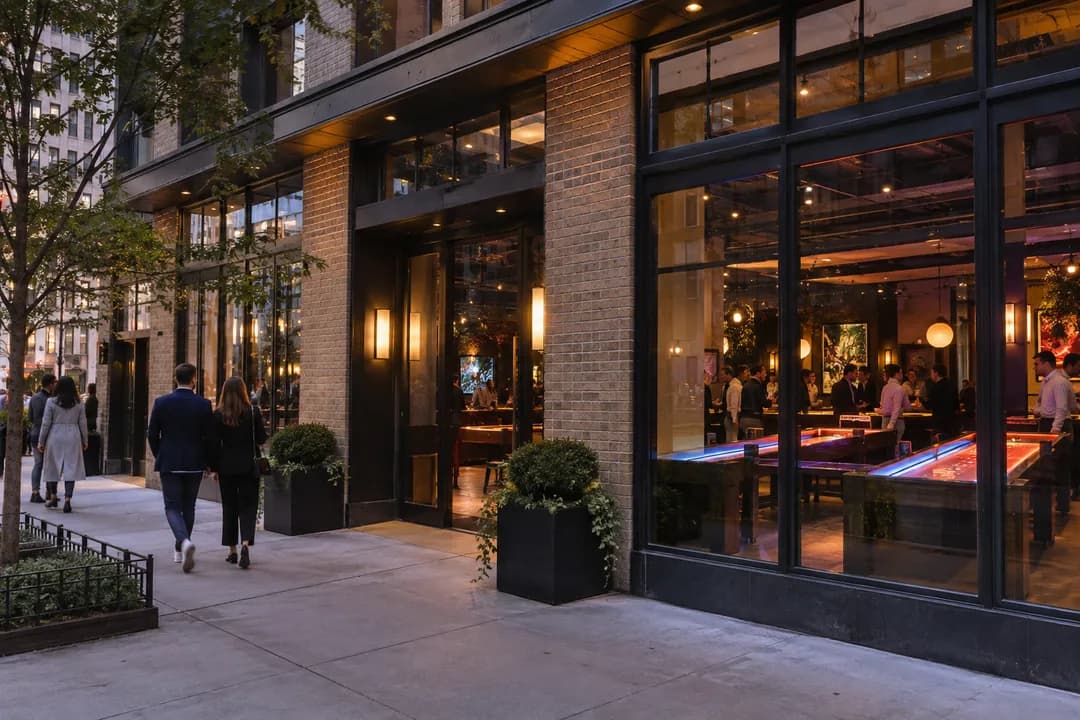
Shuffleboard Bar Near Me in NYC: Electric Shuffle NoMad
A NoMad guide to Electric Shuffle NYC with session pricing, food details, booking strategy, and a Midtown walk.
Electric Shuffle NYC turns shuffleboard into a scheduled group experience at 44 West 30th Street in NoMad. The point is not to stumble across an old table between bar stools; it is to book a session, arrive together, and let the venue's sensors, scoring system, and hosted format do the organizing. For a party searching for a shuffleboard bar near me, that distinction matters. The game is the center of the evening, while the food and drinks keep everyone in place between rounds.
The arrival window deserves respect. A timed booking starts working best when the whole party is present, coats are out of the way, and the group has already chosen who wants to play first. The host can explain the table and the scoring interface, but the guests still need to move with purpose. Late friends should join the conversation without holding up the opening instructions, because a programmed session has less flexibility than a casual bar lane.
The first game feels different from traditional shuffleboard because the table and the scoring screen share the work. Let the system teach the basic rhythm, then pay attention to release speed rather than trying to impress the room. A clean defensive puck can be more valuable than a risky shot toward the far scoring zone. Electric Shuffle rewards teams that communicate: one person chooses the target, another watches the rebound, and everybody remembers the score without arguing over chalk.
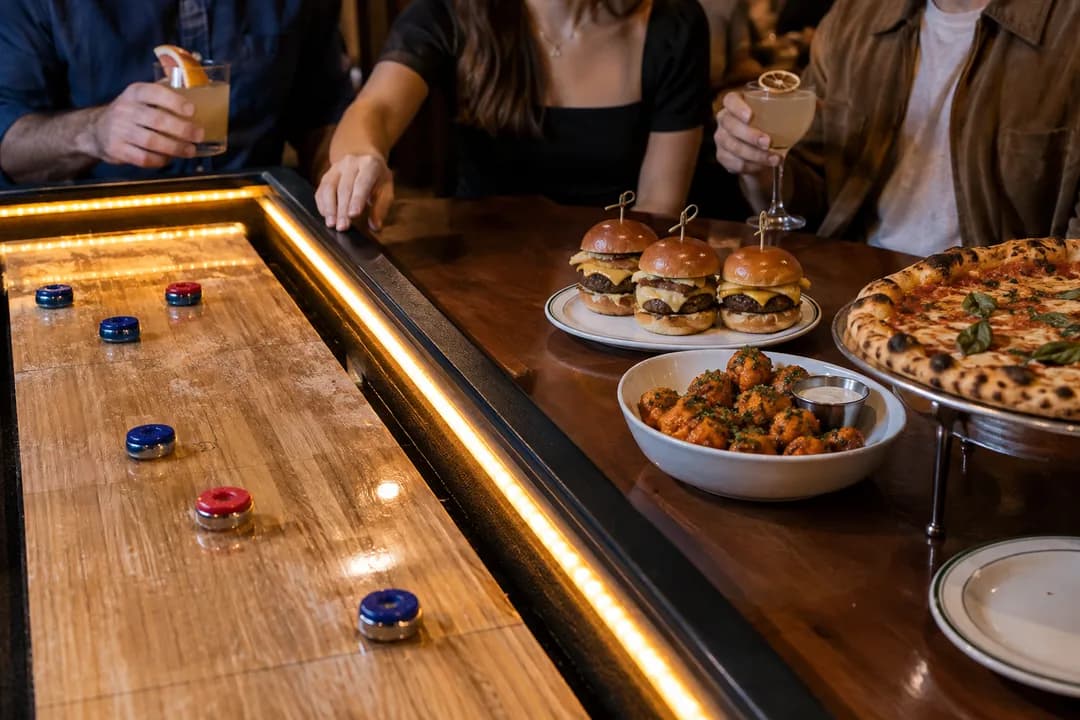
Pricing is easiest to understand when it is separated into play and food. A 90-minute shuffleboard session is listed at $25 per person. The weekend brunch package is $60 per person, while the menu lists boneless wings at $16 and classic fries at $10. Those figures make planning straightforward. Decide whether the group is buying the full experience or simply pairing one game with a meal.
The food arrives in a format designed for a team. Sliders and wings can be shared without stopping every player for a formal dinner break, and fries are the obvious bridge between one round and the next. Put the first plate down before the opening match, then avoid ordering the entire table at once. A paced order keeps the playing surface clear and prevents the host from having to work around plates while the clock is running.
Electric Shuffle's atmosphere is polished, but the best behavior is still ordinary courtesy. Keep the lane clear, listen when the host explains a challenge, and let the next booking enter without turning the end of your session into a photo shoot. The venue is built for groups, so the queue moves quickly when each party knows its headcount. That makes the experience feel smoother and protects the time the group paid to use.
The programmed games also change how a mixed-skill group can play together. A newcomer can follow prompts without knowing traditional scoring, while a competitive friend can focus on angles and placement. Do not let the most experienced player take every difficult shot. Rotate roles, call out the target, and use the live score to keep the stakes playful. The room is at its best when the technology creates conversation instead of replacing it.
NoMad is an effective setting for this kind of plan because the neighborhood already supports an evening with several chapters. A group can meet after work, play the session, and continue toward Koreatown or Herald Square without coordinating a second complicated reservation. The Empire State Building blocks provide a recognizable backdrop for visitors, while the north end of the High Line is a longer post-game option for a group that still has energy.
The venue's story is about converting a familiar bar game into an immersive night out. Sensors and live leaderboards make the table feel responsive, while hosted rounds give the group a reason to pay attention. That is why Electric Shuffle is better for a birthday, team outing, or planned first date than for an improvised drink. The guest list and booking time are part of the product, not administrative details to solve after arrival.
A smart booking plan assigns one person to the reservation and another to the food order. The first person handles the check-in and the session clock; the second watches for the moment when the group needs water, fries, or another round. Separating those jobs keeps the game from pausing every time somebody wants to make a decision. It also stops one guest from becoming the unofficial manager of the whole night.
The most enjoyable match usually has a warm-up game and a rematch. In the first, let the table show the group its speed and use the scoring prompts to learn the system. In the second, make a team rule such as protecting a lead or forcing a bank shot. The small structure creates a satisfying arc without turning the night into league play. When the rematch ends, the group can leave with a clear winner and no unresolved booking logistics.
This is not the place for guests who want to drift in, nurse one drink, and quietly watch the room. It is the right choice for people who want a polished plan and a visible activity. The NoMad address, the timed format, and the shareable menu all support that use. The most useful expectation to set before inviting friends is that everybody should arrive ready to participate, even if participation means cheering and keeping score.
Practical Notes: Electric Shuffle NYC is at 44 West 30th Street, New York, NY 10001, with the listed phone number (646) 307-1795. Published pricing includes $25 per person for 90 minutes of shuffleboard, a $60 weekend brunch package, $16 boneless wings and $10 classic fries. The venue's 2024 opening and current booking page support its place in a 2026 NoMad plan. Bring the full party before the session begins.
If the search phrase is shuffleboard bar near me and the desired answer is a complete night rather than a spare table, Electric Shuffle is the cleanest fit in this group. Book the NoMad session, let the scoring system provide the structure, choose food that can circulate, and walk south after the final leaderboard settles. The experience works because every part of the venue points toward the same shared match.
Ask Karpo for more information.
Keep reading
- Shuffleboard Bar Near Me in NYC: Cellar Dog West Village
 Shuffleboard Bar Near Me in NYC: Sugar Mouse East Village
 Shuffleboard Bar Near Me in NYC: Plug Uglies Gramercy Guide