 Chelsea Consignment Shop Crawl Planner for Your First Studio
Hidden Gems & Odd Finds
Village Shoe Repair Shop Finder: 3 Specialist Questions
Find a Village shoe repair shop through the Karpo APP by matching sole, heel and upper work to your pair, then prepare questions for a direct assessment.
Choose a Village shoe repair shop by the work your pair needs: a sole problem, a heel problem, or a change to the upper. These are three starting questions for a better shortlist, not diagnoses. In the Karpo APP, describe the shoe and the result you want, then ask for candidates whose published services fit that task. Leave the final assessment to a cobbler who can inspect the construction and explain what the proposed work will change.
Start With the Shoe You Actually Own
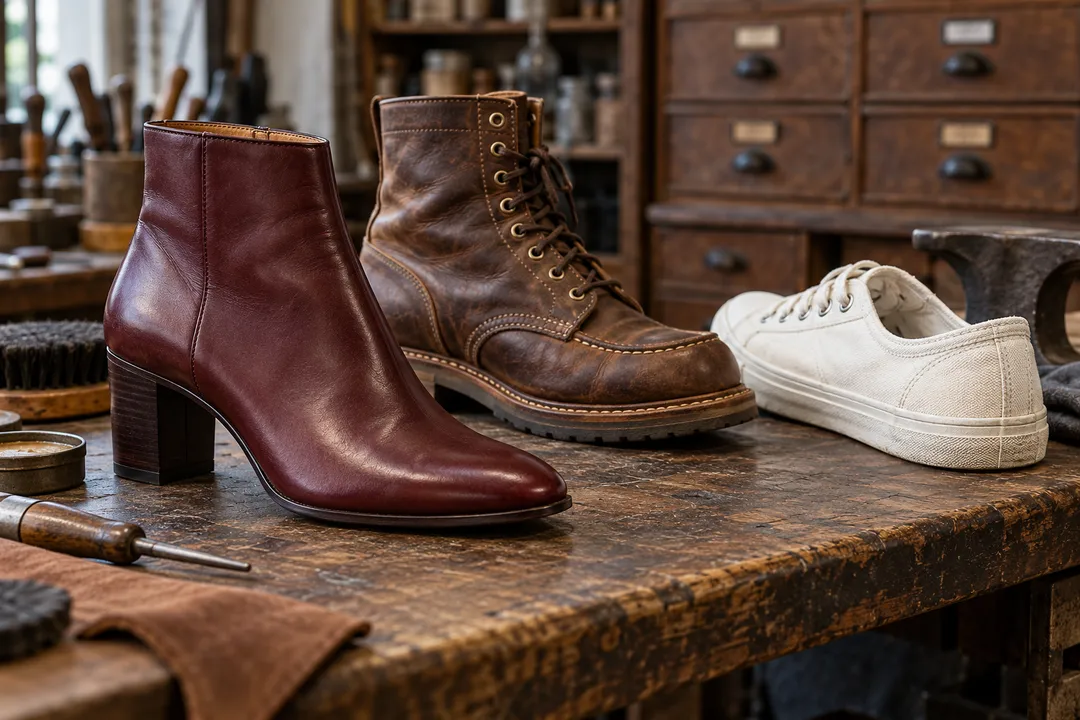
A welted boot, a glued sneaker, and a delicate heeled shoe should not be treated as interchangeable examples of leather repair. Look at the pair before searching, and record what you can identify confidently. That might be a visible seam around the sole, a fabric upper, or a narrow heel with a worn tip. You do not need to name the construction correctly. A plain description preserves useful information without turning a guess into a requirement for the wrong service.
Consider the intended use as well. The pair you wear across Manhattan every day has a different job from the one you save for an indoor event. Decide whether your priority is stability, appearance, traction, or preserving the original feel. You may care about more than one, but put them in order. That gives the specialist a meaningful tradeoff to discuss. “I need grip on wet pavement but want to keep a slim profile” is a clearer brief than “use the strongest sole.”
Read Service Descriptions as Evidence
A candidate's own description of sole replacement, heel work, stretching, cleaning, or color restoration is a reason to ask a focused question. It is not proof that every model can receive that treatment. Read the detail behind a broad claim about luxury repair or restoration. Does the page explain the kind of work you need, or only show attractive shoes? Ask Karpo to help separate a relevant service description from a general promise so your shortlist has a visible rationale.
Photographs can also help frame questions without proving a guaranteed result. A before-and-after example may involve a different material or a different construction from yours. Note the resemblance and the difference. If the example is a leather sole and yours is molded rubber, that is a question to raise, not a reason to assume the same process applies. Favor a candidate who can explain that distinction during assessment over one selected only because the finished photographs look dramatic.
Build a Shortlist for Sole Work
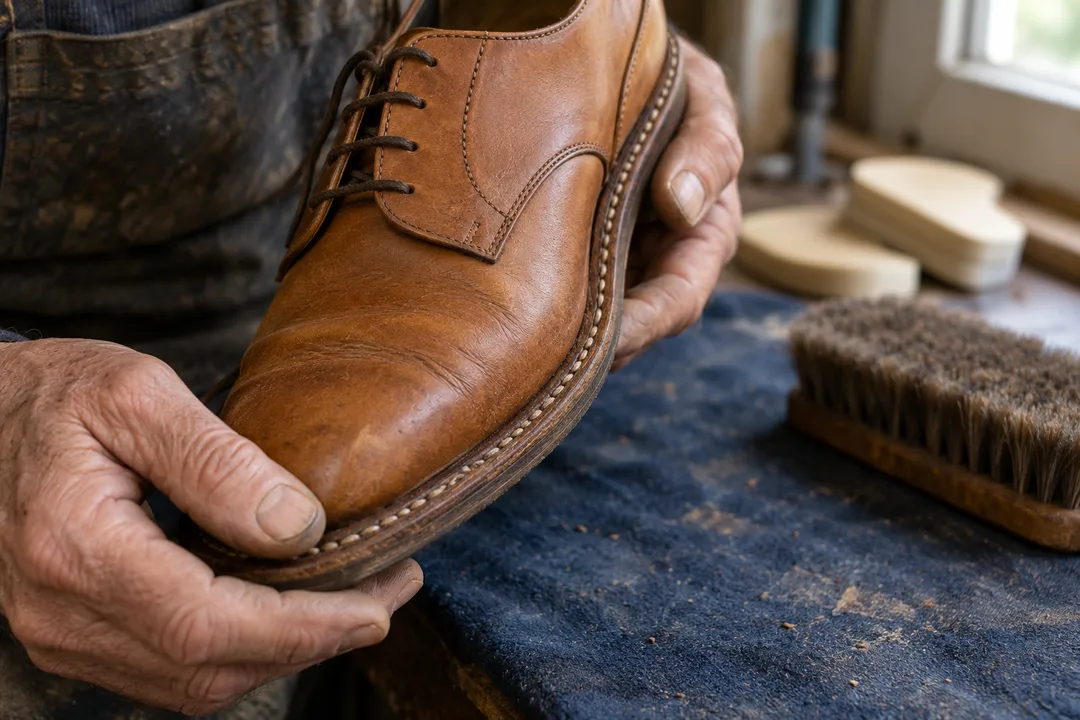
For a sole-related problem, tell the search what you observe: the bottom is worn thin, a section is separating, or the edge is catching as you walk. Avoid declaring that the pair needs a full replacement before anyone examines it. Use a request such as “Help me compare Village shoe repair shops that describe sole work, with attention to the construction and the finished walking feel.” Ask for a short explanation of each candidate's relevance and the next question to take to the counter.
At assessment, ask which parts would be retained and which would be replaced. Find out whether the recommendation changes flexibility, thickness, or the contact surface underfoot. A treatment that suits an everyday boot may be unsuitable for a shoe whose appeal is its lightness. If the shop recommends less work than you expected, ask why. A limited intervention can be a sensible choice when the remaining material is sound, but that judgment should come from inspection rather than a search result.
Treat Heel Repairs as a Pair Question
For heels, describe both the visible wear and any change in how the pair feels. One side may look worse while the other has also developed an uneven surface. Bring both shoes and ask whether the proposed work should be matched across the pair. The useful comparison concerns height, balance, appearance, and the materials being replaced. A quote for a small heel tip is not directly comparable with a proposal that rebuilds a larger part of a heel assembly.
If the shoes feel unstable or painful, do not keep wearing them solely to reach an appointment. Carry them and use another pair for the journey. Tell the shop what you experienced without asking it to solve a medical problem. A cobbler can discuss the shoe's condition; discomfort may also involve factors beyond a repair. Keep that boundary clear when writing your brief. The purpose of the shortlist is to find an appropriate repair conversation, not to promise that a changed heel will resolve every symptom.
Separate Surface Appearance From Structure
An upper can have surface marks, damaged stitching, a torn lining, or a deeper split. Describe the location and material instead of using “restoration” as a catch-all request. If appearance matters most, ask what matching color or finish would involve and whether an altered patch could remain visible. If the concern is structural, ask what material is still strong enough to support the repair. These questions help distinguish a cosmetic treatment from work intended to make the shoe functional again.
Skip a dramatic color change when the main goal is simply to keep a familiar pair wearable. It creates a separate decision about finish and maintenance that may have little to do with the original damage. You can still choose it after an assessment, but make that an explicit choice. Ask for a description of the expected visible change before authorizing work. The honest outcome may preserve creases and signs of age while addressing the fault that actually prevents regular use.
Compare Recommendations Without a Brand Contest
Give each candidate the same initial brief so you can understand why recommendations differ. Record the proposed method, the parts included, the anticipated visible change, and the collection arrangement. If two shops suggest different interventions, ask what condition each is trying to solve. Do not reduce that difference to which business names more expensive materials. The right specialist is the one whose explanation and proposed outcome fit your pair, your priorities, and the amount of change you are prepared to accept.
Karpo can help organize the information you bring back from those conversations into a comparison. Ask it to identify unresolved questions rather than select a winner from incomplete notes. For example, one proposal may explain the outsole clearly but say nothing about matching edge color; another may prioritize appearance without answering your walking-feel concern. That leaves a precise follow-up for each shop. It is a more useful next action than collecting another page of unexplained recommendations.
Practical Notes for the Village Visit
Pack the shoes clean enough to handle, bring both sides, and keep detachable parts with the pair. Describe any product you already applied if it may affect the work. Take your own condition photographs, then retain the claim record and agreed repair scope after handover. Do not assume that a verbal discussion about several possible treatments means all of them were authorized. Choose the work explicitly, and ask how a further decision will reach you if the assessment changes during the job.
Your next Karpo request can be narrow: “Help me shortlist Village shoe repair shops for this construction, then organize the questions about the sole, heel, and finish into one visit.” Add your priority and acceptable travel area. Contact the shortlisted business to discuss the pair, arrange the handover directly, and let its inspection guide the final repair choice. The search has done its job when you can explain why a candidate fits and what answer you need next, without a fictional price or guaranteed transformation.
Ask Karpo for more information.
Keep reading
- Chelsea Consignment Shop Crawl Planner for Your First Studio
 East Village Consignment Shop Crawl Planner: Leather Jackets
 Harlem Consignment Shop Crawl Planner for a Jazz Night Look